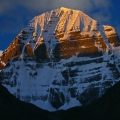
In an ancient funerary tradition from the Japanese island of Shikoku, when a person died, their relatives would go to the cemetery and perform a singular gesture: they would bend forward as though about to carry someone on their back. They would then set out along a mountain road, symbolically bearing the spirit of the deceased with them. On reaching their destination they would perform rites of farewell and return home. According to some versions of the custom, they had to do so without looking back, to prevent the dead person from following them on the return journey.
The mountain was called Iyadani, and had long been regarded as a place to which the spirits of the dead made their way. Accompanying them there constituted a last family obligation, a way of helping them find their place in the world of the ancestors.
That custom, documented by scholars of Japanese folklore, forms part of a far broader religious tradition in which death does not always bring the road to an end. In numerous cultures, the living have created routes, ceremonies and pilgrimages to accompany their dead, to pray for them, to ease their passage toward the hereafter, or to keep their memory alive.
In France, thousands of people go to a sanctuary to pray for the souls of those who have died — including those who no longer have anyone to remember them. In Mexico, families prepare paths of flowers to welcome the ancestors who, according to their beliefs, return once a year. In India, there are people who leave their homes to spend the last days of their lives in a sacred city, convinced that dying there may bring them closer to spiritual liberation.
These are very different traditions, born of religious conceptions that do not always have points in common. But all of them grant a particular significance to physical movement: the road allows the expression of a relationship with death that does not necessarily end at a grave.
Montligeon: Pilgrimage for the Forgotten Dead
In 1884, the French priest Paul-Joseph Buguet, parish priest of a small town in Normandy, launched an initiative that answered a very specific concern: who prayed for those who had died and no longer had family or friends to remember them?
Buguet was convinced that prayer for the dead was a responsibility that should extend beyond family ties. He founded an association dedicated especially to the souls in purgatory he considered most abandoned, and began to gather people willing to pray for them.
That initiative grew until it gave rise to the Sanctuary of Our Lady of Montligeon, whose monumental basilica stands today amid the rural landscape of the Perche.
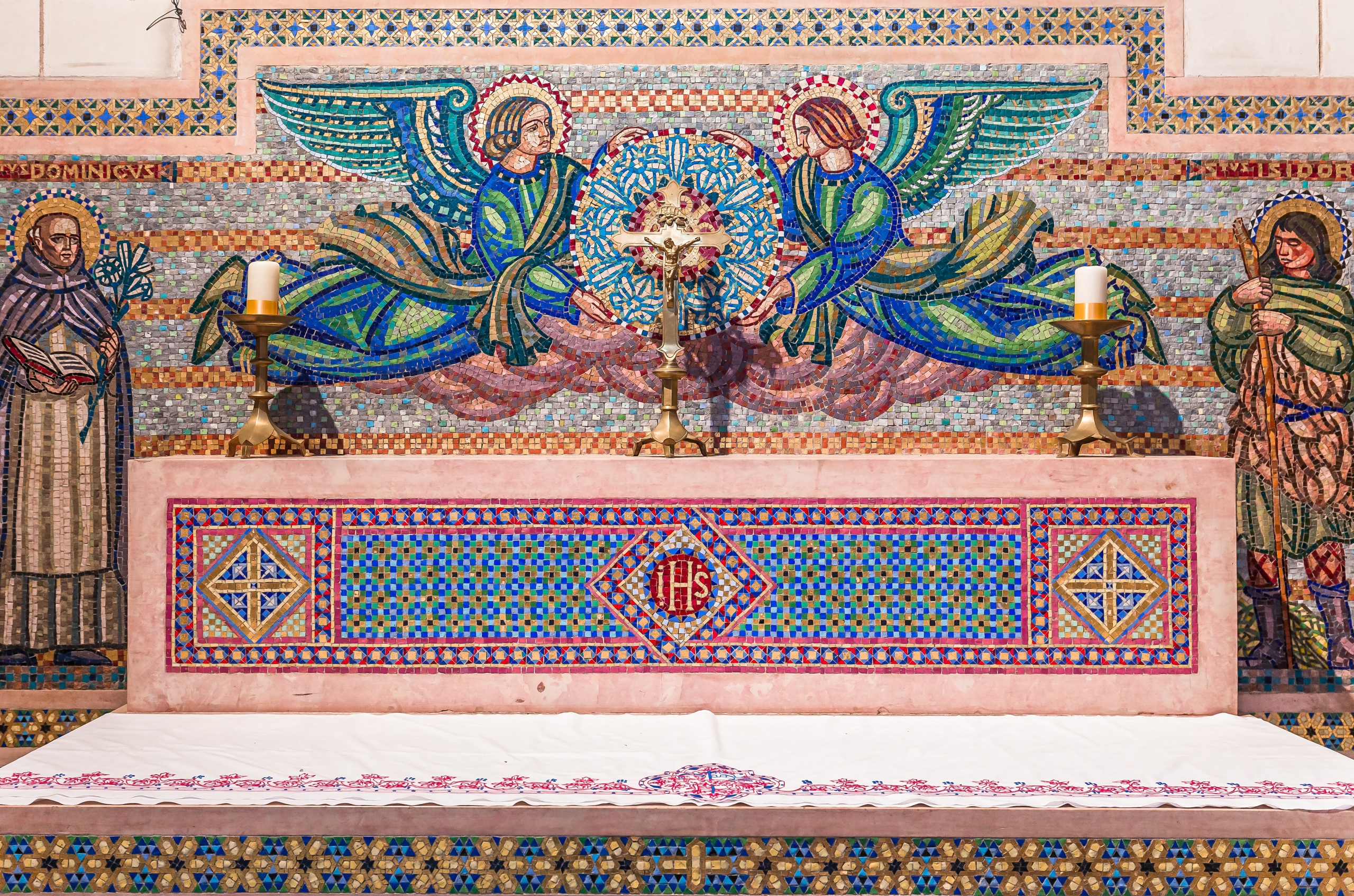
Its significance is deeply bound to the Catholic doctrine of the communion of saints, according to which death does not entirely break the spiritual union between the members of the Church. The living may intercede for the dead through their prayers, especially for those who, according to Catholic doctrine, require purification before attaining full communion with God.
Every November, coinciding with the celebrations of All Saints and All Souls, the sanctuary organises what are known as the Pilgrimages of Heaven. Families and groups of pilgrims take part in Masses, prayers and gatherings dedicated to Christian hope in the face of death. Many arrive after losing someone dear to them and find there a space in which to share and express their grief.
But Montligeon also preserves Buguet’s original intuition. One may make a pilgrimage to pray for someone who died centuries ago, for a person entirely unknown, or for someone who no longer has a grave for anyone to visit.
It is a particularity that distinguishes this sanctuary from other places of pilgrimage associated with the tombs of saints and venerated figures. At Montligeon it is not necessary to know the place where the mortal remains of the deceased rest, because what gives the journey its meaning is intercession.
Mexico: the Roads by Which the Ancestors Return
In many Mexican communities, the relationship between roads and the dead takes on an almost inverse meaning. During the celebrations of late October and early November, it is the living who prepare the route so that the dead may return to their former homes.
The petals of the cempasúchil, a flower of intense orange, mark the path symbolically. Candles illuminate the offerings, while food, drink and personal objects recall the tastes of those who are no longer there. Families gather to receive their ancestors, convinced — according to their respective traditions — that during those days an encounter between the two worlds becomes possible.
The Day of the Dead brings together elements drawn from indigenous cosmovisions and from the Catholic celebrations of All Saints and All Souls. It is not, however, a uniform tradition. Each region preserves its own practices, some of which have acquired extraordinary international prominence.
Four Destinations to Experience the Day of the Dead in Mexico
In the Purépecha communities of Michoacán, especially around Lake Pátzcuaro, the Noche de Ánimas gathers families in the cemeteries. Graves are adorned with flowers and candles while relatives take part in the vigils and symbolically accompany their dead.
The island of Janitzio has become one of the best-known images of this celebration, although other towns in the region preserve equally significant traditions.
In the Huasteca, an extensive cultural region of eastern Mexico, the Xantolo is celebrated. During these festivities, the inhabitants prepare altars, share food and take part in traditional dances. In certain communities, masked dancers represent the ancestors returning to visit the living. The memory of the dead is thus expressed through music, processions through the streets and collective participation.
In San Andrés Mixquic, southeast of Mexico City, the celebration culminates in the Alumbrada of 2 November. Families light candles beside the graves, illuminating the cemetery at the moment of bidding farewell to the souls who must once again set out on their way.
In 2003, UNESCO recognised the indigenous festivities dedicated to the dead as intangible cultural heritage, underlining their importance for the identity and continuity of communities.
In all these traditions, the family journeys toward the cemeteries combine with a deeply rooted idea: for a few days, the dead may once again symbolically occupy their place among the living.
Varanasi: the Pilgrim Who Does Not Expect to Return
On the banks of the Ganges in northern India, Varanasi has been drawing pilgrims seeking the sacred for centuries. Also known as Benares or Kashi, the city occupies a central place in Hinduism through its relationship with the god Shiva and through the beliefs that associate death in this place with the possibility of attaining spiritual liberation.
To understand its significance it is necessary to approach one of the fundamental concepts of many Hindu traditions: samsara, the cycle of birth, death and rebirth to which living beings are subject. Liberation from that cycle is called moksha and constitutes one of the great spiritual aspirations of Hinduism.
Various religious traditions hold that dying in Kashi may favour that liberation, thanks to the special sacredness of the city and to the intervention of Shiva. This does not mean that all Hindu schools interpret the destiny of the soul identically, nor that cremation in Varanasi automatically ensures moksha.
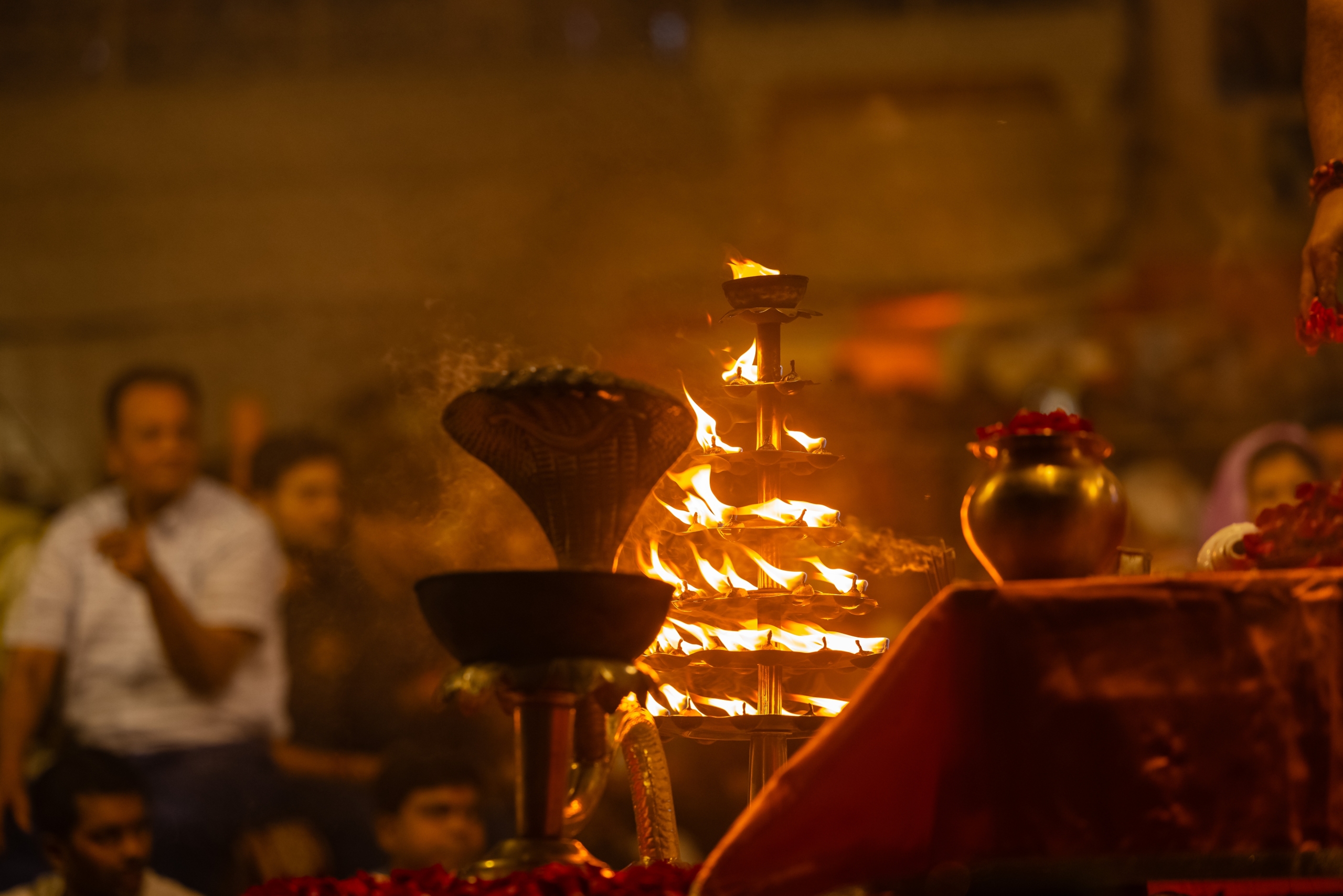
What is singular is that this belief has given rise to a form of pilgrimage in which the traveller may have no intention of returning. Some people — especially the elderly who feel death approaching — move to Varanasi to spend their final days there. There are religious institutions and residences dedicated to receiving those who wish to die in the sacred city. For them, the journey constitutes a spiritual preparation for the end of life.
Other pilgrims arrive after the death of a relative, accompanying the body to perform the funeral rites or carrying the ashes to the Ganges. At the ghats of Manikarnika and Harishchandra, traditional cremations are performed. Relatives take part in ceremonies intended to fulfil the religious obligations owed to the deceased, while the waters of the river occupy a central place in the rites of purification and farewell.
Varanasi thus reveals a particular dimension of funerary pilgrimage. The road leads not only toward the memory of those who have died, but also toward one’s own death, understood as an event for which it is possible to prepare by means of a final journey.
Japan: Accompanying the Dead to the Mountain
The Japanese tradition with which this account began is bound to Mount Iyadani, in Kagawa Prefecture, on the island of Shikoku. There stands Iyadani-ji, temple number 71 on the celebrated Buddhist pilgrimage of the 88 temples, associated with the figure of Kūkai, known as Kōbō Daishi, one of the great masters of Japanese Buddhism.
The mountain was long connected with local beliefs about the destiny of spirits. The tradition known as Iyadani-mairi consisted of symbolically accompanying the deceased to that place by means of a journey that relatives could undertake after the burial.
Japanese ethnographic studies document various forms of this rite, which included gestures such as miming the carrying of the spirit on one’s back, bringing objects connected with the deceased, and performing ceremonies of farewell at the sanctuary.
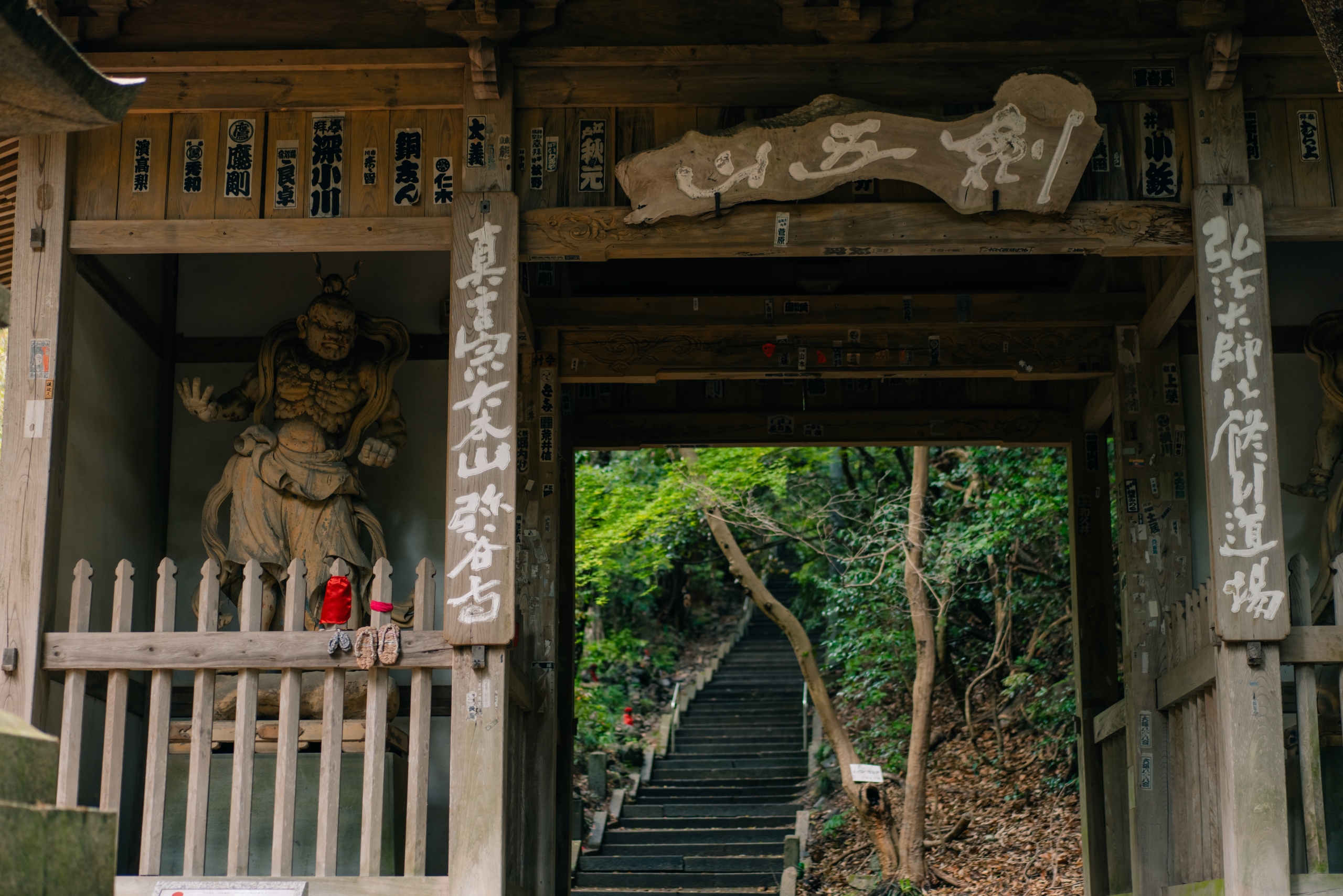
In some localities there was also the custom of returning without looking back, a gesture that expressed the need to leave the deceased at their new destination.
The practice was connected with other religious routes in the region, especially the Nanakashomairi, a circuit of seven temples beginning at Iyadani-ji and ending at Dōryū-ji, temple 77 of Shikoku.
Although this pilgrimage remains recognisable and walkable today, it should not be confused with an exclusively funerary itinerary. Its history brings together various Buddhist devotions, practices for obtaining spiritual merit, and local traditions concerning the ancestors.
The old custom of accompanying spirits to Iyadani nevertheless illustrates a very concrete conception of the bond between the road and death: relatives undertake one last journey in order to help the deceased, symbolically, to reach their destination.
Walking to Accompany an Absence
These four traditions answer profoundly different religious conceptions. Christian hope in the resurrection, indigenous Mexican beliefs about the return of the ancestors, the Hindu search for liberation from samsara and Japanese funerary traditions cannot be reduced to a single explanation of life after death.
Nor are all these journeys pilgrimages in the strict sense. Some constitute funeral rites, family visits to cemeteries, or ceremonial processions. They share, however, one significant characteristic: the relationship with the dead finds concrete expression in territory and in movement.
Walking toward a sanctuary, preparing a path of flowers, travelling to a sacred river or climbing a mountain makes it possible to give visible form to beliefs that would otherwise belong exclusively to the realm of the spiritual.
Anthropological studies have shown how funeral rites help communities to face the transformations that death brings about. They concern themselves not only with the destiny of the deceased, but also with those who remain alive and must reorganise their existence around an absence.
In this sense, the journey can represent a transition. The pilgrim leaves their habitual space, performs gestures prescribed by their tradition and, in many cases, returns having completed a farewell.
The old Japanese custom of Iyadani allows us to understand this with particular eloquence. The relative who had symbolically accompanied the dead to the mountain had to return home without looking back. The moment of separation had come: one remained among the living, and the other had found their place among the ancestors.
In France, Mexico, India and Japan, the roads of the dead answer different ways of understanding that separation. Some seek to maintain spiritual communion, others make possible the ritual return of the ancestors, and others accompany the passage toward a final destination.
All of them show the extent to which societies have needed to make death into something that could be accompanied through gestures, places and journeys. Because in many cultures, the last farewell also requires setting out on the road.
AI Transparency Notice
PilgriMaps uses artificial intelligence tools to assist in the research, drafting and translation of editorial content. All AI-assisted content is reviewed, edited and verified by our editorial team before publication. We contrast information against primary sources, specialist literature and on-the-ground knowledge to ensure accuracy, cultural sensitivity and editorial integrity.
AI is one tool among many in our workflow. The judgement, curation and responsibility for everything published on this platform remain entirely human.
Viator Media S.L. — in compliance with the EU Artificial Intelligence Act (Regulation EU 2024/1689).
This post is also available in: