The Day of the Dead (Día de Muertos) stands among Mexico’s most emblematic cultural expressions. Its symbolic and ritual force has long transcended national borders. While observed throughout the country, certain regions preserve particularly rich and distinctive forms of commemoration—expressions shaped by the interplay of Indigenous heritage, community traditions, and contemporary reinterpretations.
Through four emblematic destinations, one can trace how memory, artistry, and belonging converge around the remembrance of the dead.
1. San Andrés Mixquic, Mexico City: The Vigil of Light and Silence
Located in southern Mexico City, the Indigenous town of San Andrés Mixquic embodies one of the most enduring manifestations of the Day of the Dead. Designated a Barrio Mágico (Magical Neighborhood), Mixquic preserves a tradition where family and community intertwine through a syncretic vision of death.
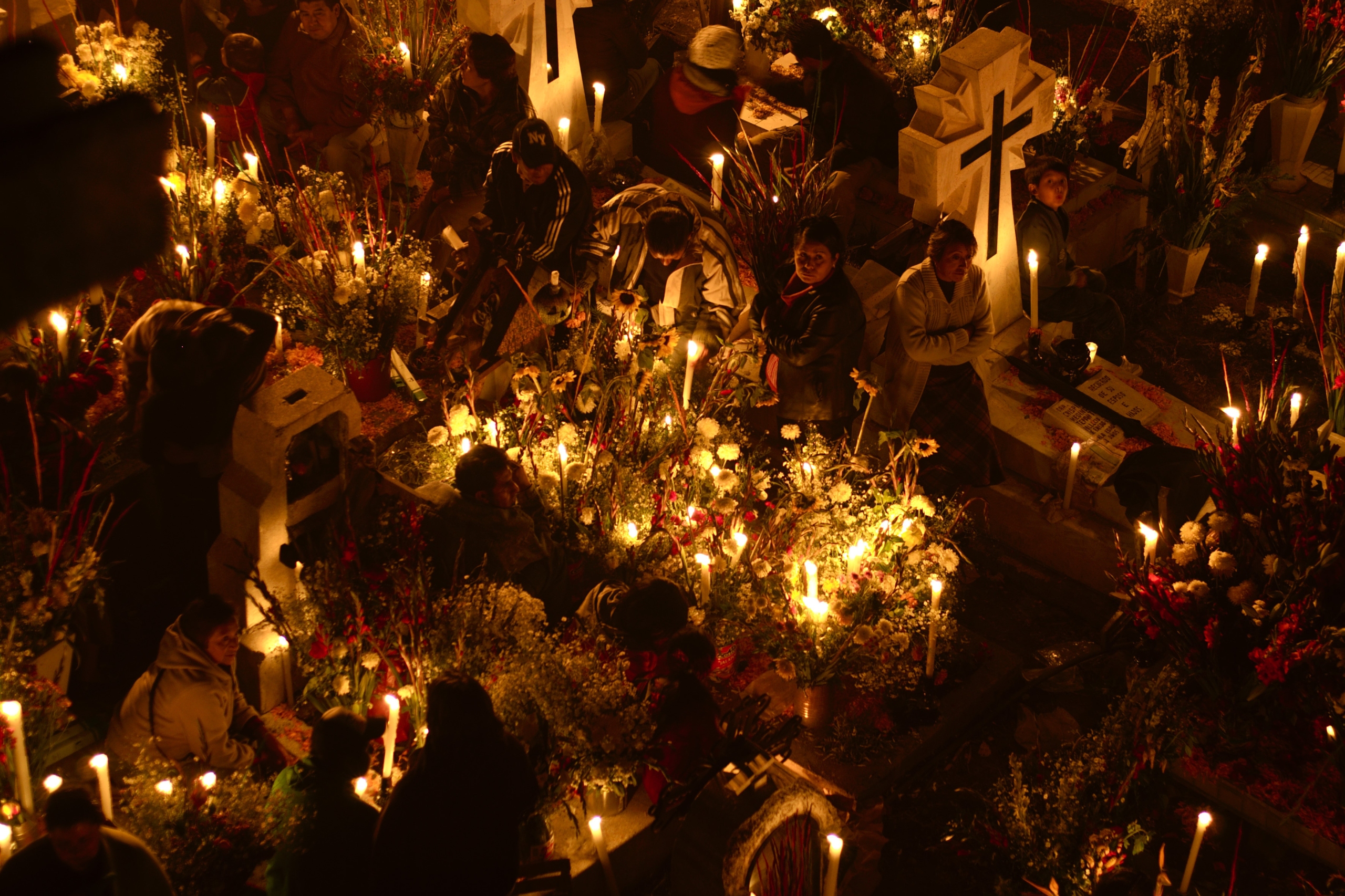
During the first days of November, residents prepare domestic altars, decorate graves with cempasúchil (marigolds), light candles, and keep vigil beside their deceased relatives. The celebration reaches its climax on the night of November 2, known as La Alumbrada (“The Lighting”), when the cemetery becomes a luminous landscape of remembrance and quiet continuity.
Beyond household rituals, the community organizes processions, theatre performances, and fairs that reinforce the event’s collective dimension. Despite growing tourist attention, local authorities and residents have preserved the celebration’s intimate and spiritual integrity, clearly defining how visitors may participate in what remains a deeply meaningful communal rite.
2. Pátzcuaro and Janitzio, Michoacán: Purépecha Cosmology and the Return of Souls
In the lake region of Michoacán, the Day of the Dead serves as a reaffirmation of Purépecha identity and worldview. The town of Pátzcuaro, once the Purépecha capital and today a Pueblo Mágico, hosts a diverse program combining ritual and artistry: collective altars in public squares, floral carpets, gastronomy fairs, and cultural performances that unite nearby communities.
On the night of November 1, known as the Noche de Ánimas (“Night of Souls”), families travel by candlelit canoes toward the islands of the lake, especially Janitzio. The flickering light on the water symbolizes the spirits’ return. In the island and lakeside cemeteries, vigils unfold in the Purépecha language, accompanied by songs, floral arches, and offerings of traditional food.
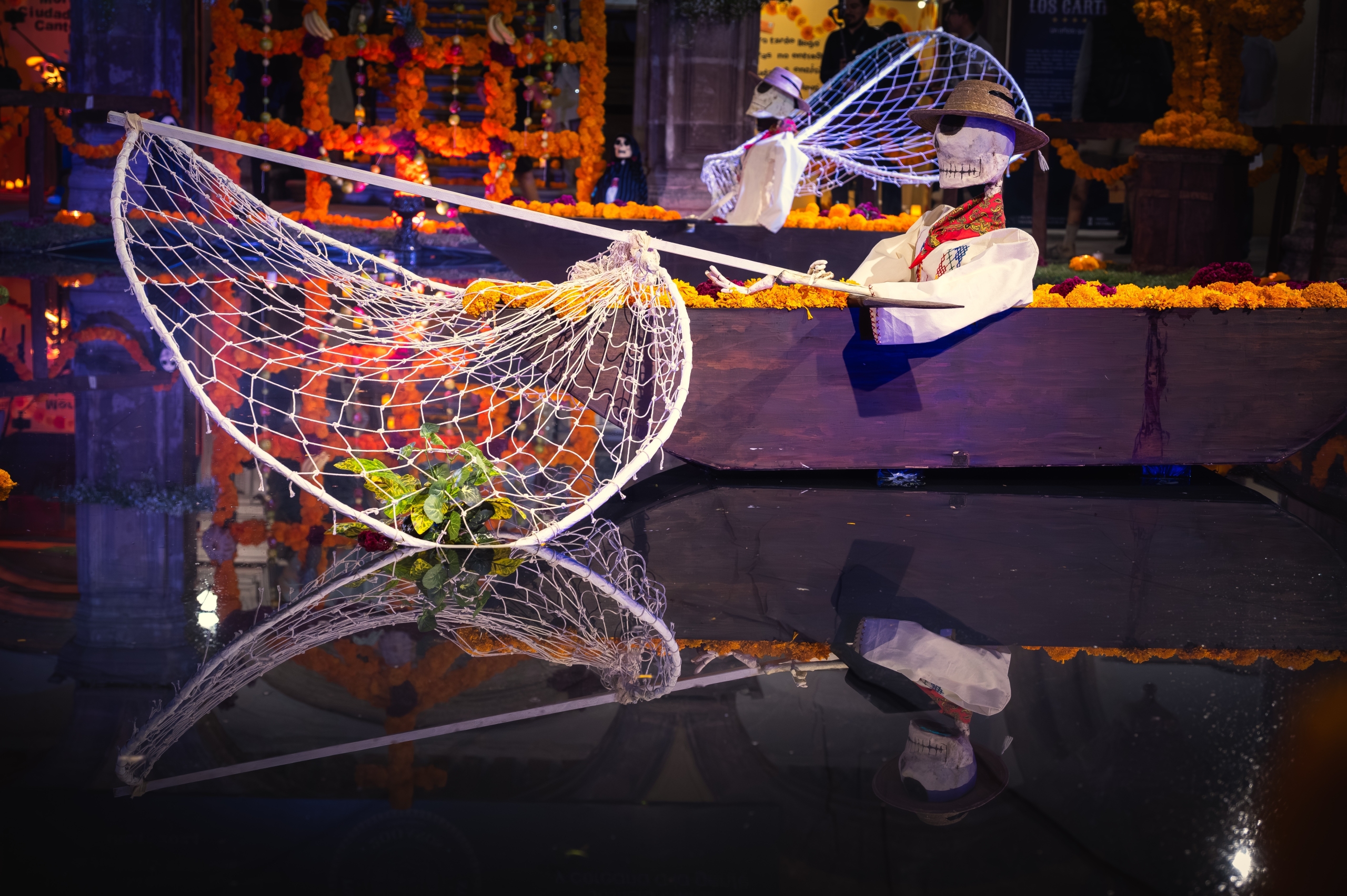
Among Janitzio’s most distinctive traditions is the symbolic dance of fishermen with butterfly nets—an ancestral performance that preserves the relationship between nature, memory, and ritual continuity. The celebrations of the Pátzcuaro Basin are regarded as among the most significant in Mexico for their strong foundation in Indigenous practices still alive today.
3. Oaxaca de Juárez, Oaxaca: Diversity and Creative Expression
In southern Mexico, the city of Oaxaca de Juárez hosts one of the country’s most visible and multifaceted Day of the Dead celebrations. Beginning on October 27, a citywide cultural program transforms the historic center into a vast commemorative stage, where traditional and contemporary artistic forms coexist.
The most characteristic elements include monumental altars, sand tapestries with funerary motifs, and comparsas—festive parades featuring costumes, music, and dance organized by neighborhoods, collectives, and schools. Meanwhile, cemeteries in the city and nearby towns such as Xoxocotlán and Santa María Atzompa fill with families who gather to remember their dead through music, flowers, prayers, and shared meals.
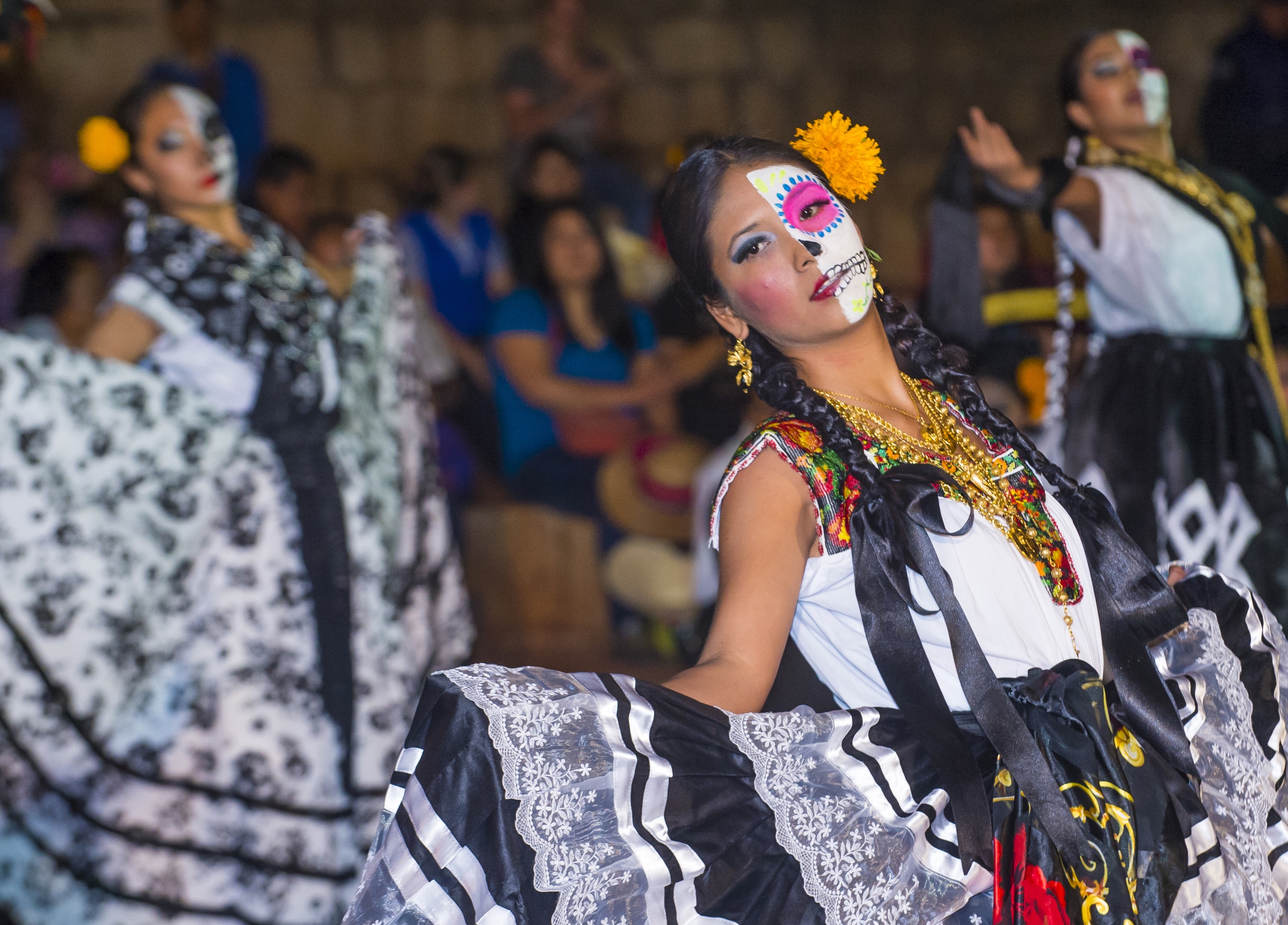
Oaxaca’s observance also reflects the state’s remarkable ethnic diversity. Its sixteen Indigenous peoples and Afro-Mexican communities present offerings with distinct elements—from ritual foods like mole negro and pan de yema to symbolic items such as the iguana or pulque. This plurality makes Oaxaca a living mosaic where death is approached through color, artistry, and collective celebration.
4. Pomuch, Campeche: Unearthing the Dead
In the Yucatán Peninsula, the Maya community of Pomuch maintains one of Mexico’s most singular forms of remembrance. Unlike other regions where offerings center on images or symbolic representations, here families engage directly with the physical remains of their loved ones. Each year they exhume the bones, carefully clean them, and place them in visible wooden boxes wrapped in embroidered cloths.
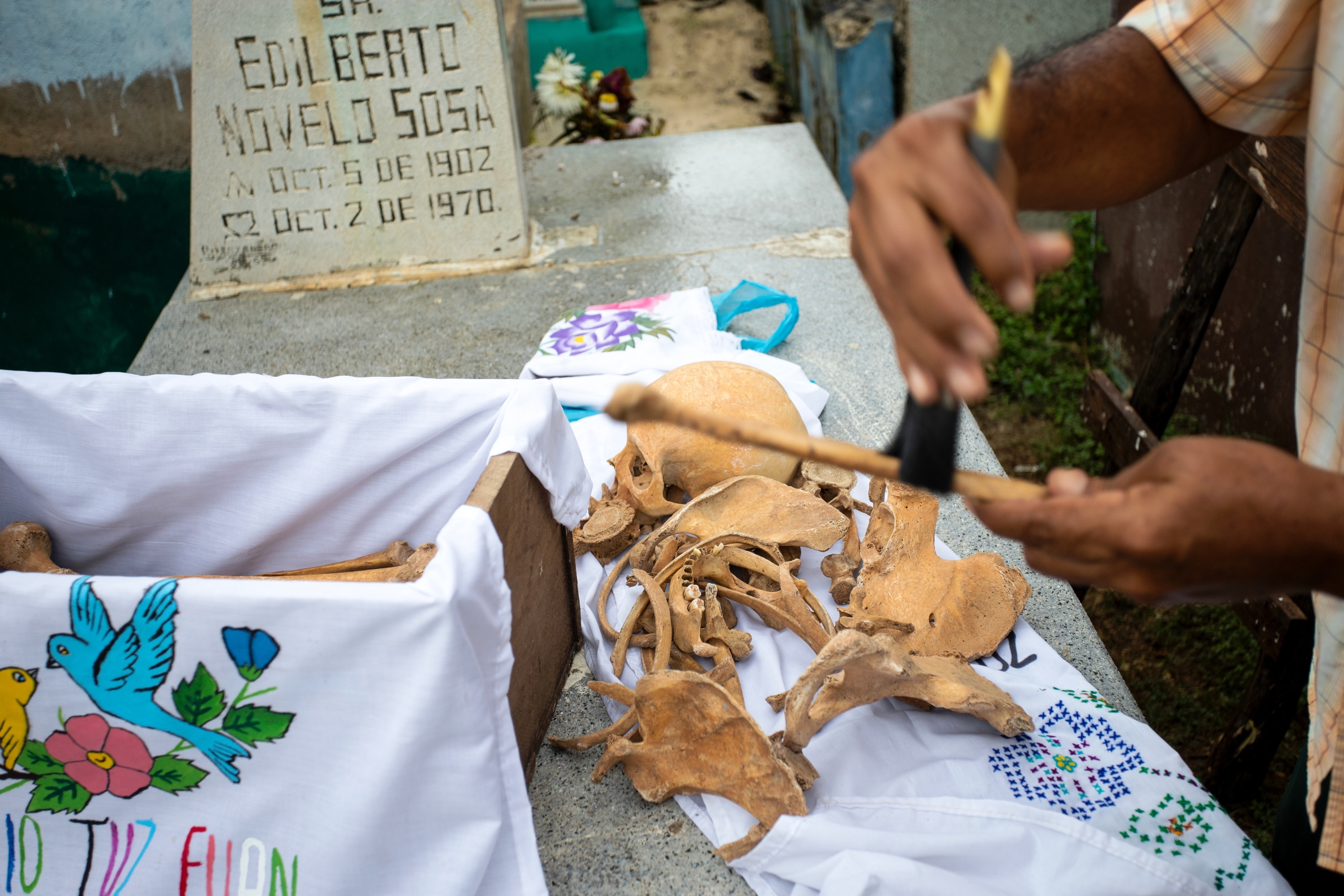
This ritual, known as Choo Ba’ak, takes place in late October as part of Hanal Pixán, the Yucatec Maya name for the festival. Cemetery visits on November 1 and 2 are primarily daytime events, involving prayers in both Maya and Spanish, floral offerings, and shared foods such as pibipollo (a baked corn dish) and Pomuch’s artisanal bread.
Far from a morbid act, this intimate practice expresses a serene and cyclical understanding of death. The closeness to ancestral remains reflects a worldview of continuity between the living and the dead, positioning Pomuch as a profound example of cultural resilience and ritual preservation.
A Ritual Cartography of Memory
These four destinations reveal the diversity of meanings embedded in Mexico’s Day of the Dead. From the glowing vigil of Mixquic to the tangible intimacy of Pomuch, each community articulates its own relationship with memory and time.
Rather than denying or fearing death, these traditions integrate it as a vital element of social and aesthetic life. Visiting them means not only witnessing rituals but also recognizing the strength of the communities that sustain them. Amid the global standardization of celebrations, such places preserve authenticity rooted in history, territory, and collective identity.
Across Mexico’s landscapes, death becomes a shared language—one that unites past and present, tradition and transformation.
AI Transparency Notice
PilgriMaps uses artificial intelligence tools to assist in the research, drafting and translation of editorial content. All AI-assisted content is reviewed, edited and verified by our editorial team before publication. We contrast information against primary sources, specialist literature and on-the-ground knowledge to ensure accuracy, cultural sensitivity and editorial integrity.
AI is one tool among many in our workflow. The judgement, curation and responsibility for everything published on this platform remain entirely human.
Viator Media S.L. — in compliance with the EU Artificial Intelligence Act (Regulation EU 2024/1689).
This post is also available in: