In Bolivia, there exists a natural corridor so vivid and diverse that some early travelers imagined it as a fragment of earthly paradise. It is the region of the Yungas — a steep descent from the Andes toward the Amazon Basin, a living mosaic of cloud forests, rivers, and dense vegetation.
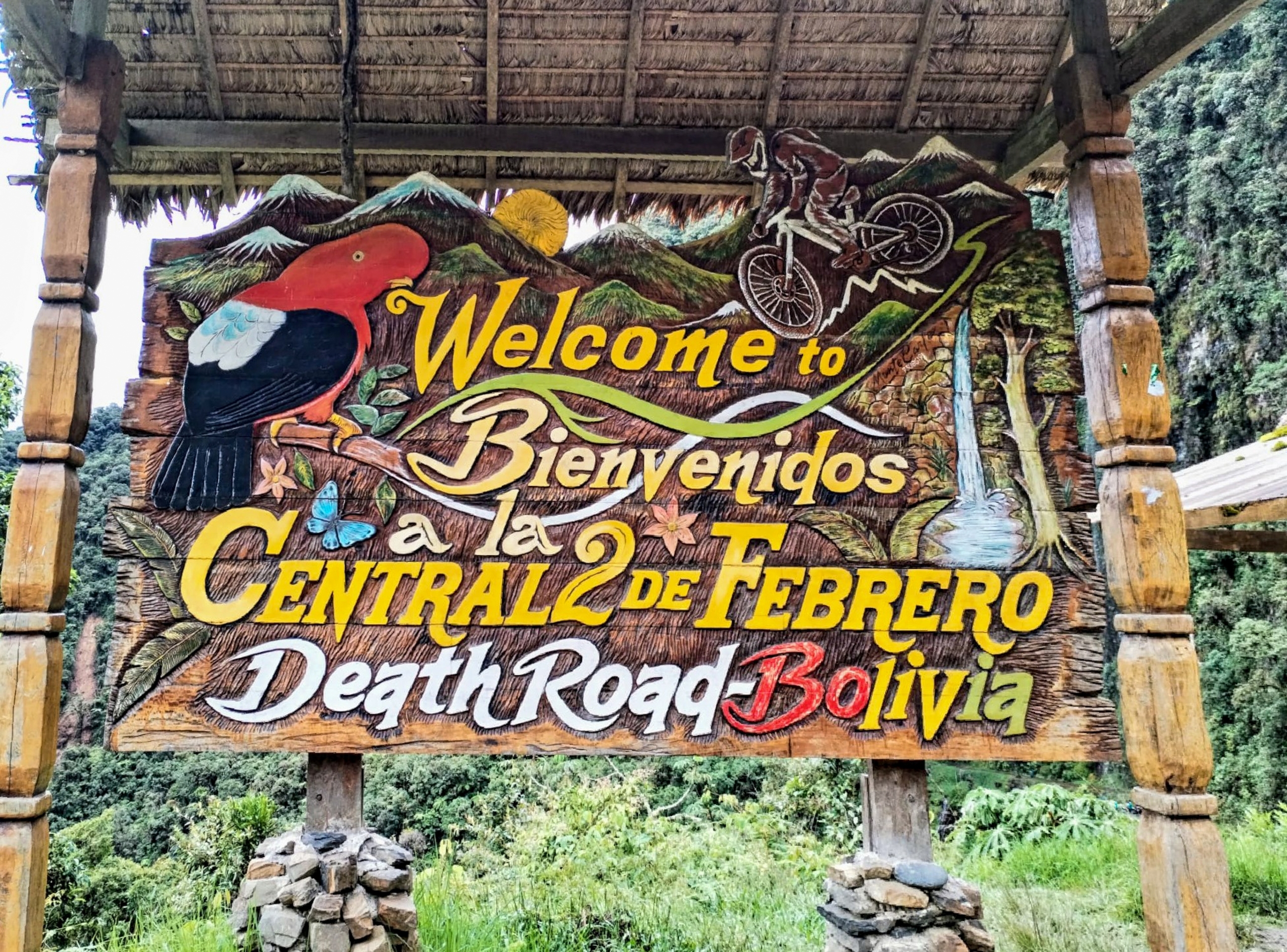
Across this landscape runs a path of legend: the so-called Franciscan Route of Death. More than a road, it is a journey through risk, faith, and rediscovery — a historical trail that now invites the traveler to reflect as much as to move.
From Lifeline to Test of Endurance
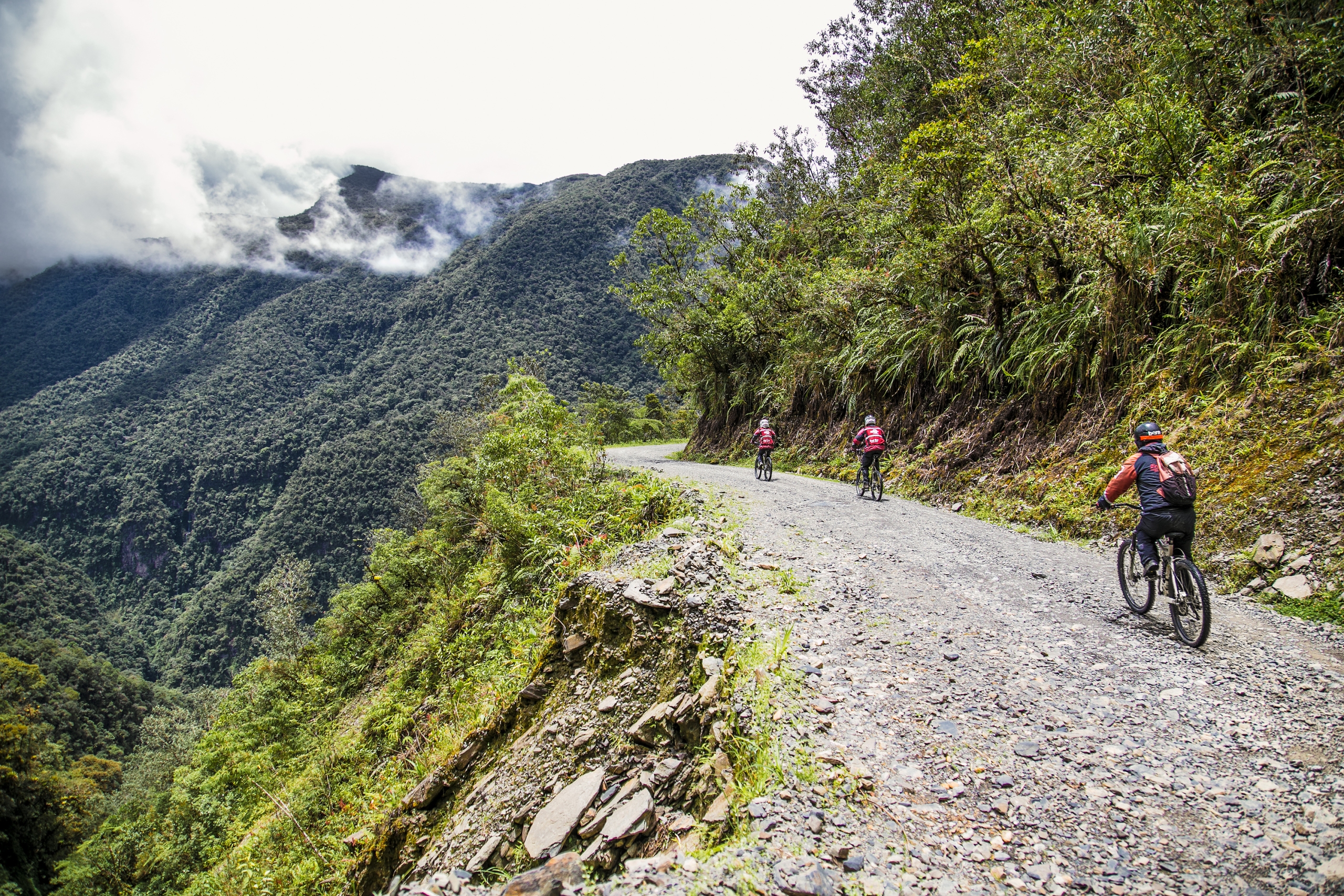
The physical reality of the “Route of Death” is as striking as the spiritual symbolism once attached to it. Originally, it formed part of the main road linking La Paz with the Yungas region — roughly 80 km of narrow, unstable terrain edged by sheer drops, thick fog, and constant danger. In its most dramatic stretch, the path plunges more than 3,600 meters over just 64 km.
For decades, it was the only land route between La Paz and Bolivia’s eastern lowlands, carrying produce, people, and expectations. Yet this lifeline was also a site of tragedy: in the 1990s, more than 200 accidents occurred annually, many of them fatal. In 1995, the Inter-American Development Bank named it “the most dangerous road in the world.”
Along this same road, Franciscan missionaries once traveled to reach their outposts in the Yungas, facing severe risks. In some stretches, the path measured barely three meters wide, lacked guardrails, and often collapsed under torrential rain or landslides.
A new highway, the Cotapata–Santa Bárbara route, has since absorbed most vehicle traffic. The old road is now largely reserved for cyclists, hikers, and adventurers, its traffic reduced by more than 90 %. This withdrawal of noise and machinery has brought an unexpected revival: wildlife has returned. Recent studies record dozens of species — mammals, birds, and insects — reinhabiting the quiet landscape.
Today, the route has become an icon of extreme cycling, attracting thousands of visitors each year. Yet beyond adrenaline and altitude, it also offers a space for contemplation — a descent not only through geography but through layers of memory and meaning.
Missionaries at the Edge of the World
Franciscan missionaries began arriving in Bolivia’s highlands in the 17th century, drawn by the vitality of the eastern valleys. In 1670, the first five friars, led by José Vascones, established a mission under precarious conditions — isolation, disease, and unfamiliar climate. Despite these hardships, their efforts marked the beginning of a sustained presence in the region.
By the 18th century, new missions arose in Apolobamba, radiating from the settlement of Apolo toward the dense frontier between mountains and forest. These communities became contact zones between European and Indigenous worlds, places where language, ritual, and cosmology intersected.
In 1835, the Missionary College of San José de La Paz was founded under the influence of Propaganda Fide, expanding Franciscan activity with European support — Spaniards, French, Italians, Portuguese. Their work extended across the Yungas, Copacabana, Puno, and Sorata, linking distant Andean and Amazonian territories.
For these missionaries, the “route of death” was not a morbid image but a term for endurance and exposure — a passage through risk toward encounter. Their legacy endures as part of Bolivia’s cultural and spiritual heritage.
The Route as Inner Landscape
To travel this road today is to engage a powerful metaphor. The descent from the Andes to the Yungas mirrors an inward journey — a passage through fear, surrender, and discovery. The fragility of the path, suspended between mountain and void, evokes both physical and existential thresholds.
For the early travelers, the route demanded vulnerability: solitude, openness, and attention. For the modern pilgrim, it suggests the same — a space where landscape becomes language, where mist, waterfall, and forest articulate the dialogue between human and terrain.
The so-called Route of Death thus transforms into a route of perception — a reminder that danger and contemplation often share the same path.
A Contemporary Itinerary
For travelers seeking a contemplative or cultural experience, this itinerary follows the historical arc of the Franciscan road:
- La Paz – San José Convent / San Francisco Basilica
A symbolic departure point. The Franciscan presence began here, where architecture and intention intersect. A space for centering before the descent.
- Coroico
The heart of the Yungas region, with warm climate, Afro-Bolivian heritage, and vibrant ecology. Sites such as the Church of Saints Peter and Paul and the Poor Clares Convent recall the missionary past amid a pace conducive to reflection.
- Caranavi
Known as Bolivia’s coffee capital, Caranavi preserves traces of the Franciscan network. Visitors find eco-trails, waterfalls, and coffee routes — ideal for contemplative travel that blends nature and livelihood.
- Guanay – Tipuani – Mapiri
Gold-mining zones where natural splendor meets human impact. These sites invite ethical reflection on extraction, survival, and the fragile balance between creation and destruction.
- Apolo and Apolobamba
Once the center of Franciscan activity, Apolo remains a crossroads between cultures and ecosystems. Nearby lie Madidi National Park and kallawaya communities known for ancestral medicine. Here, diverse cosmologies coexist — Indigenous, colonial, and modern.
- Sorata and Mount Illampu
At the foot of the snow-covered Illampu, Sorata offers tranquility and sweeping views. A setting for rest and introspection.
- Copacabana (optional extension)
Travelers may end their journey at the lakeside town of Copacabana, a historic convergence point of Andean and colonial routes — a fitting conclusion for those seeking symbolic closure.
Guidance for the Modern Pilgrim
Physical and mental readiness: The route demands endurance, balance, and awareness.
Local guidance: Engage local communities and guides; their knowledge deepens the cultural experience.
Environmental respect: Leave no trace; honor the silence and biodiversity of the region.
Time and pacing: Allow pauses for observation and rest; the journey’s rhythm is part of its meaning.
Moments of reflection: Bring readings that resonate with the landscape’s themes — humility, gratitude, interconnection.
Listening to the environment: Let waterfalls, birds, and wind shape the tempo of the walk.
A Path for Contemplation
Today the Franciscan Route of Death stands as more than a challenge for thrill-seekers. It has become a bridge between history and ecology, between human aspiration and the immensity of nature.
To walk it attentively is to read a living text — written in stone, mist, and memory. What was once a path of peril now reveals itself as a route toward renewal.
AI Transparency Notice
PilgriMaps uses artificial intelligence tools to assist in the research, drafting and translation of editorial content. All AI-assisted content is reviewed, edited and verified by our editorial team before publication. We contrast information against primary sources, specialist literature and on-the-ground knowledge to ensure accuracy, cultural sensitivity and editorial integrity.
AI is one tool among many in our workflow. The judgement, curation and responsibility for everything published on this platform remain entirely human.
Viator Media S.L. — in compliance with the EU Artificial Intelligence Act (Regulation EU 2024/1689).
This post is also available in: