For centuries, the image of the pilgrim has been tied to European paths: ancient trails, Romanesque churches, stone-built villages. In recent decades, however, that idea has begun to shift. The model of the Camino de Santiago has crossed borders, inspiring routes in places as diverse as Japan, Canada, and Australia.
Within this context emerges the so-called Aussie Camino, a contemporary route that does not attempt to replicate Europe but to reinterpret the meaning of the journey in a radically different landscape. There are no cathedrals every twenty kilometers, nor a tightly organized network of pilgrim hostels. Instead, there are open horizons, long distances, and a direct relationship with the land.
Although it now has a defined route – between Portland (Victoria) and Penola (South Australia) – and a developing identity of its own, the Aussie Camino remains, in many ways, an evolving experience. A way of walking that brings together history, territory, and personal search in one of the least densely populated continents on Earth.
A recent yet concrete origin
Unlike Europe’s great pilgrimage routes, the Aussie Camino does not emerge from a continuous medieval tradition. Its origins are recent and clearly documented: it was conceived in 2013 by a group of Australian pilgrims inspired by the Camino de Santiago.
Since then, it has taken shape as a defined route, with a registered name, a pilgrim credential, and organized walking initiatives. At the same time, its institutional development and infrastructure remain limited when compared to major European routes.
This dual nature—structured in concept, yet open in evolution—defines its identity.
A short route with its own logic
One of the most distinctive features of the Aussie Camino is its scale.
The main route covers approximately 200 kilometers between Portland and Penola. This distance may vary slightly depending on chosen variants, but remains within that general range.
Rather than a journey spanning thousands of kilometers, it is a route that can be completed in around ten to twelve days. Its logic is not primarily geographical, but biographical: it connects places significant in the life of Mary MacKillop.
There are proposals to extend the route further north, incorporating cities such as Adelaide or even Port Augusta. However, these extensions are not part of the core established itinerary.
Mary MacKillop: history and legacy
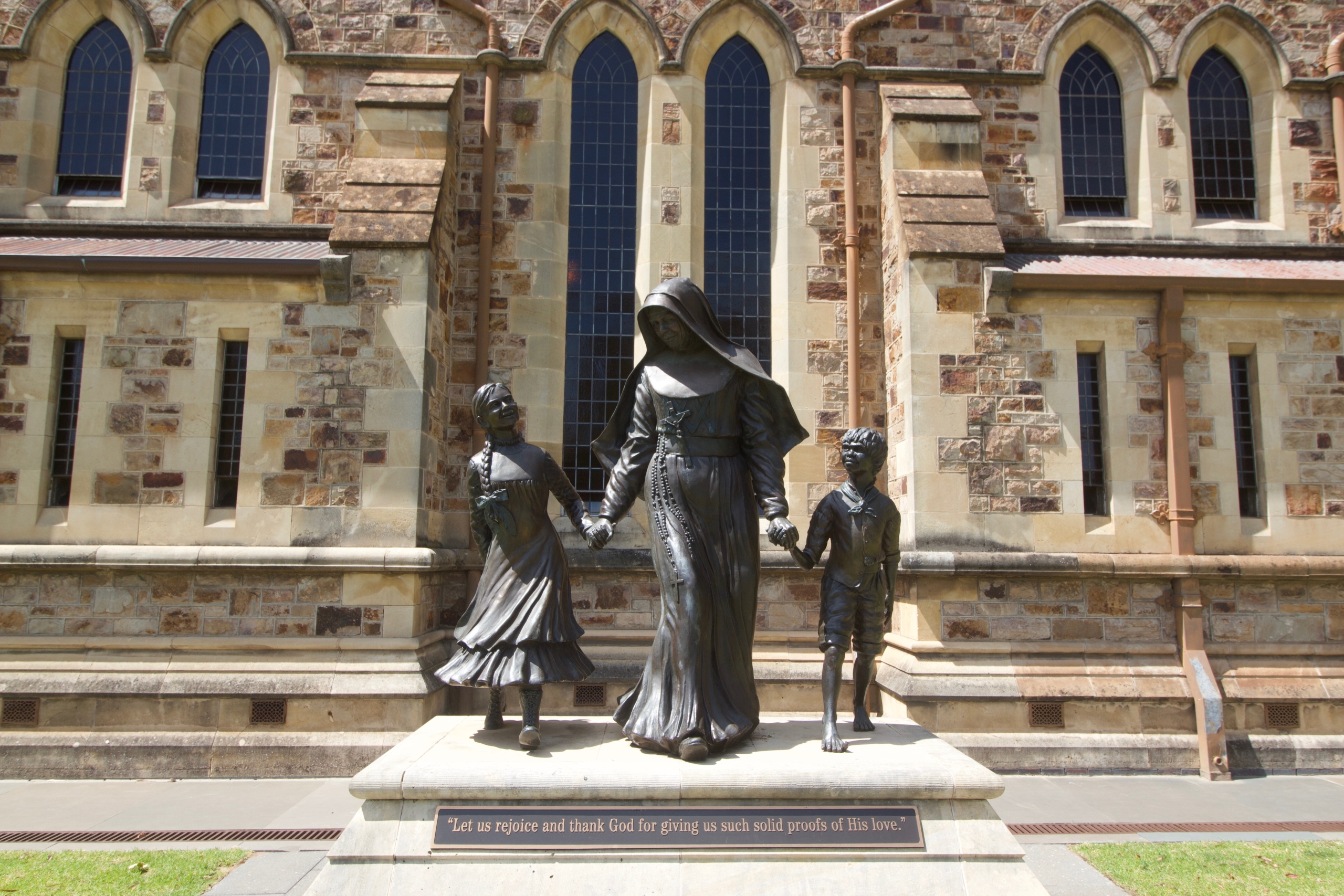
To understand the meaning of the Aussie Camino, it is necessary to consider the figure of Mary MacKillop, born in 1842 and deceased in 1909.
Her relevance extends beyond religious contexts. She played a significant role in Australia’s social and educational history, particularly through her work in rural communities and among populations with limited resources. As co-founder of a network of schools, she contributed to expanding access to education in regions where institutions were still emerging.
Canonized in 2010, she remains a cultural and historical reference point. The route that bears her name allows travelers to engage not only with a landscape, but also with a life marked by movement, commitment, and education.
The aesthetics of openness
If there is one element that defines the Aussie Camino, it is the landscape – or more precisely, the experience of space.
Unlike Europe, where the human imprint is almost always visible, here vastness dominates. The horizon stretches outward, the sky becomes central, and the sense of scale is constant.
The route alternates between coastal stretches, agricultural land, and areas of scrub. In many places, the earth takes on the characteristic tones of southern Australia, reinforcing the sense of being in a more elemental environment.
Beyond the visual, the landscape is experienced sensorially: wind, silence, the repetition of long, straight roads. The relative absence of constant stimuli fosters a particular kind of introspection. Here, walking is not just about moving forward – it is about inhabiting space.
Between rural and historical landscapes
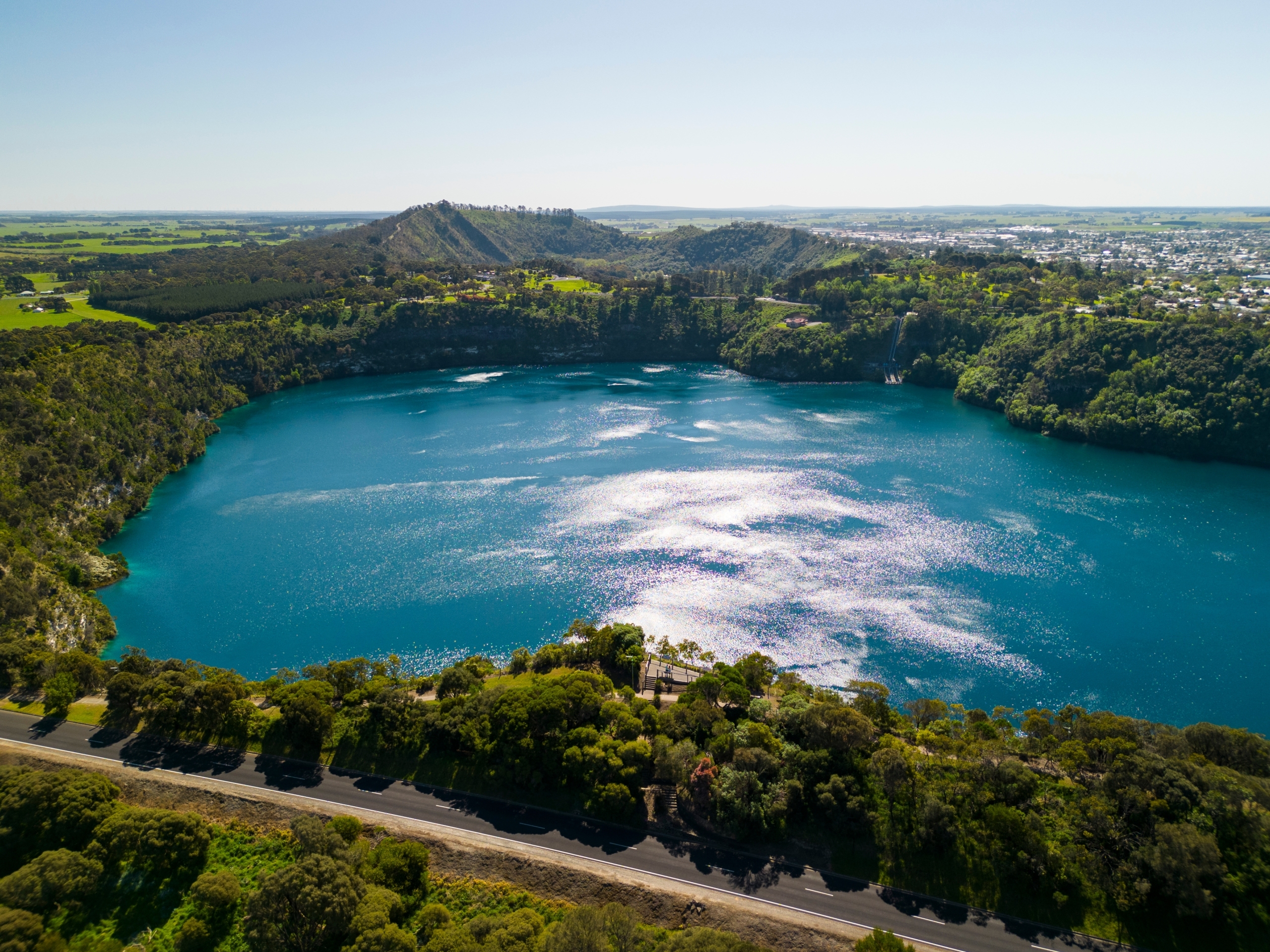
The route connects several locations that are less tourist destinations than part of a broader historical network.
Portland, the usual starting point, is a coastal town with a colonial past. From there, the path heads inland through Port MacDonnell and Mount Gambier, one of the most significant stops along the way, known for its volcanic landscape.
The final destination, Penola, holds central symbolic importance. It is here that Mary MacKillop carried out part of her work, and it remains the spiritual focal point of the route.
The regions crossed are predominantly rural, shaped by agriculture, livestock farming, and low population density. Local culture reflects a blend of British heritage, later migration, and Indigenous presence—an essential dimension of the territory that requires contextual and respectful engagement.
Stages: a manageable structure
Given its relatively short length, the Aussie Camino can be organized into ten to twelve stages.
A common structure includes segments such as: Portland → Cape Nelson; Cape Nelson → Port MacDonnell; Port MacDonnell → Mount Gambier; Mount Gambier → Tarpeena; Tarpeena → Penola. Daily distances range between 20 and 30 kilometers, allowing for a steady yet accessible walking pace.
This structure reinforces one of the route’s defining traits: its human scale. It is not an extreme undertaking, but rather a concentrated experience.
Practical guide: essentials for the traveler
Walking the Aussie Camino requires preparation, though less so than longer routes.
The total duration typically ranges from ten to twelve days. The best seasons are spring and autumn, avoiding the austral summer due to high temperatures.
Infrastructure is limited compared to European routes: waymarking may be inconsistent, and accommodation is not always abundant, particularly outside main towns.
Key challenges include weather conditions, exposure to coastal winds, and the need for careful stage planning. Even so, the route is not extreme, but it does require a degree of autonomy.
Carrying sufficient water, planning each segment in advance, and using reliable navigation tools are strongly recommended.
A new meaning of pilgrimage
The Aussie Camino invites a reconsideration of what pilgrimage means today. Here, the religious dimension coexists with broader motivations: connection with nature, personal reflection, and cultural interest.
Its still-developing structure and lighter institutional framework make it a more open experience than many European routes, where each walker defines the meaning of the journey to a greater extent.
In this sense, Australia becomes a place where the idea of pilgrimage is being reshaped. The Aussie Camino is not a replica of the Camino de Santiago. It is a different proposal: shorter, more recent, and still in the process of consolidation.
To walk this stretch of southern Australia is to accept a certain lack of structure – but also to discover a more direct, essential form of travel.
In a world where many routes are already fully defined, the Aussie Camino offers something less common: the opportunity to walk a path that, although it already has a name and a route, is still being built step by step.
See more at https://www.aussiecamino.org/
AI Transparency Notice
PilgriMaps uses artificial intelligence tools to assist in the research, drafting and translation of editorial content. All AI-assisted content is reviewed, edited and verified by our editorial team before publication. We contrast information against primary sources, specialist literature and on-the-ground knowledge to ensure accuracy, cultural sensitivity and editorial integrity.
AI is one tool among many in our workflow. The judgement, curation and responsibility for everything published on this platform remain entirely human.
Viator Media S.L. — in compliance with the EU Artificial Intelligence Act (Regulation EU 2024/1689).
This post is also available in: