Somewhere between the twelfth and thirteenth centuries, a Castilian boy named Domingo de Guzmán became the founder of one of the most influential religious congregations in the Catholic Church: the Order of Preachers, or Dominicans.
More than eight centuries later, the Dominicans remain present in numerous countries, having left a deep mark on theology, philosophy, education, the arts, missionary activity, and the public debates of the Church. From their communities emerged figures as significant as Catherine of Siena, Albert the Great, the painter Fra Angelico, and above all Thomas Aquinas.
The importance the Order ultimately reached can make its founder seem from the outset a monumental figure, perfectly conscious of the destiny awaiting him. And yet the roots must be sought in a simple and austere corner of medieval Castile — in small villages, monasteries, and roads clustered around Caleruega.
This article follows the itinerary proposed by the Order of Preachers itself on the occasion of the 800th anniversary of its founding, celebrated in 2016, tracing the places that shaped the character of Domingo de Guzmán from his birth to the beginning of his public life.
Caleruega: kilometer zero
The route begins in Caleruega, a village in the province of Burgos associated with Domingo de Guzmán’s birth. In the second half of the twelfth century it was a small Castilian settlement set in a territory of cereal fields, vineyards, scrubland, and roads connecting villages, fortresses, and monastic communities.
There lived Félix de Guzmán and Juana de Aza, Domingo’s parents. Family tradition presents them as members of the local petty nobility, integrated into a society in which surnames, landholding, and alliances between lineages were closely intertwined.
Today Caleruega concentrates most of the sites that allow one to approach the future founder’s earliest years. These include the tower associated with his family, the parish church of San Sebastián where he is said to have been baptized, the convent of nuns, the friary, and the sixteenth-century church built over the space traditionally identified as his birthplace.
In the crypt, an opening connects to a well linked to the memory of that birth. As in many European sanctuaries, the place combines architecture, tradition, and symbols accumulated over centuries. Not all its elements belong to the medieval period, but together they show how a community constructed a geography around a historical figure.
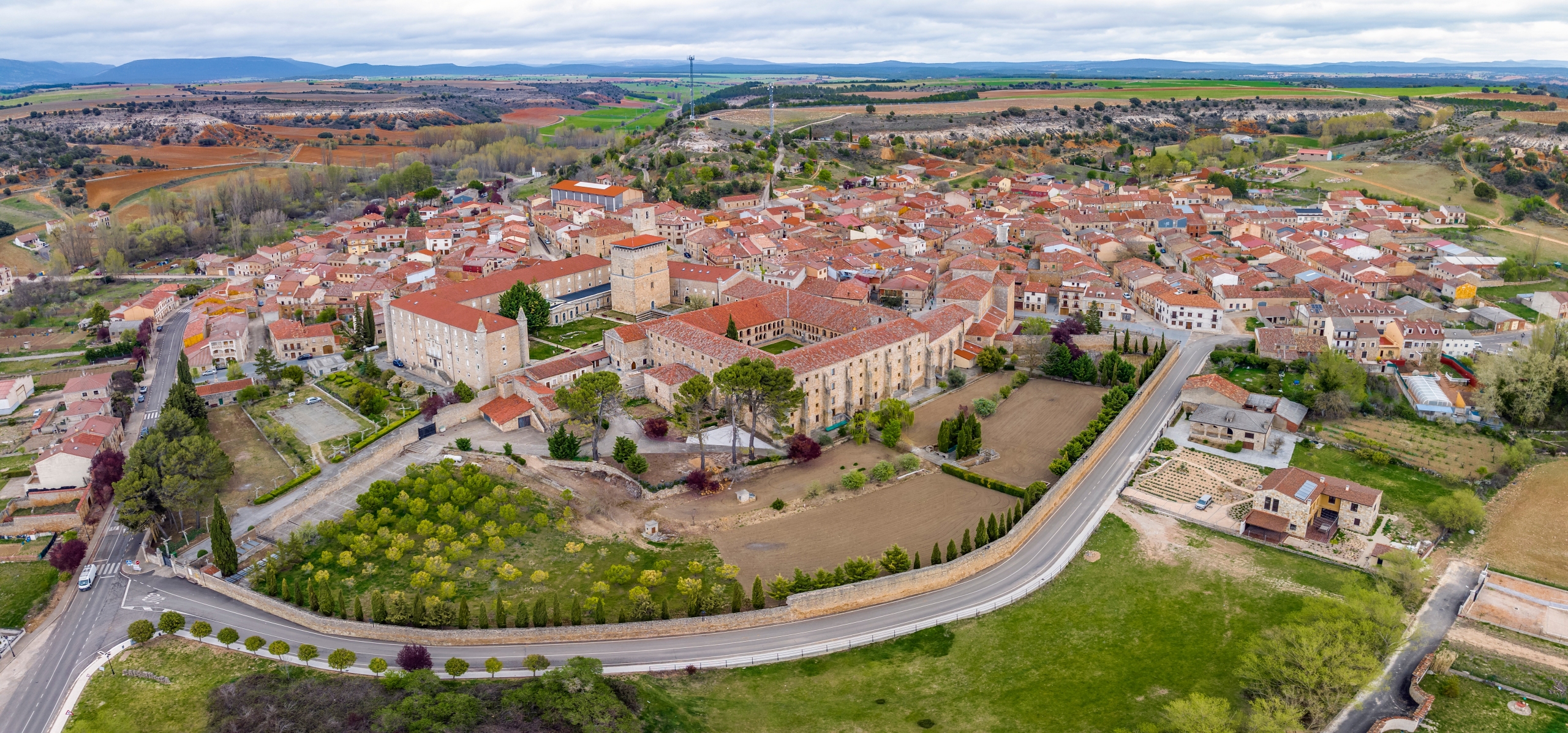
The parish church of San Sebastián also preserves that function of memory. The original baptismal font was transferred to Madrid and subsequently used in the baptisms of members of the Spanish royal family. The absence of the original object does not diminish the value of the space. On the contrary, it is a reminder that heritage associated with a historical figure can be dispersed and acquire new meanings over time.
One of the most evocative sites in Caleruega is the so-called bodega de la Beata Juana — the wine cellar of the Blessed Juana. It is connected to a legend about Domingo’s mother. According to the popular account, Juana distributed to people in need part of the wine stored by the family. Fearing her husband would discover the depleted reserves, she found the barrel full once again.
Caleruega should not be observed only as the birthplace of a saint. It is also an example of how a small village can become an international site of memory. Visitors from different countries arrive today in a locality that, geographically speaking, remains distant from the major urban circuits. That distance is part of its appeal: it allows one to discover that some stories of universal reach began in apparently peripheral places.
The first road
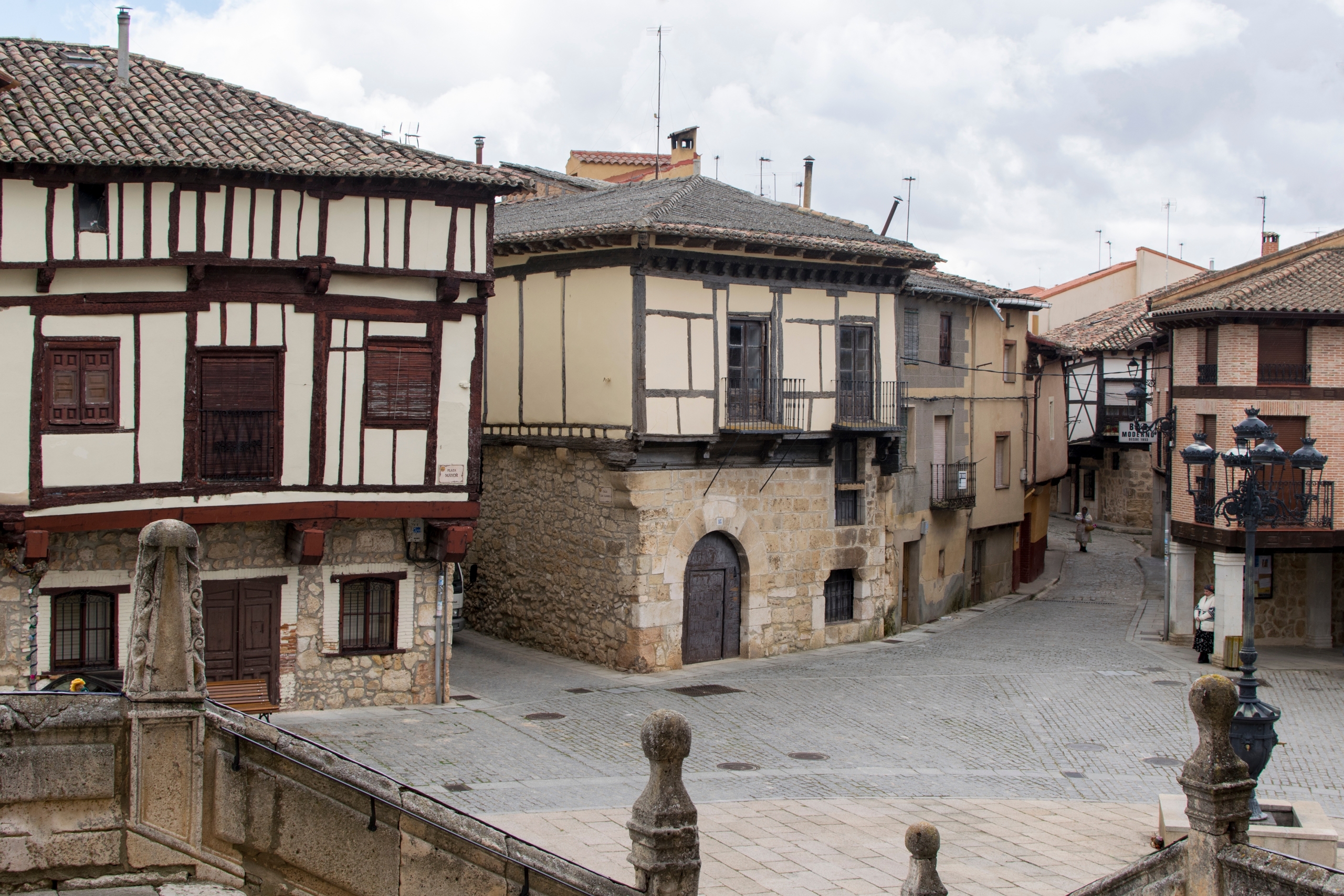
Domingo would have left Caleruega while still a child. Tradition places this departure around the age of seven, when he was sent to Gumiel de Izán to receive instruction under the tutelage of his uncle Gonzalo de Aza, archpriest of the town.
The currently marked route passes through Valdeande, Tubilla del Lago, and Villalbilla de Gumiel. It is not possible to establish that Domingo walked each of the sections that pilgrims follow today. Medieval roads shifted, were diverted according to the seasons, and responded to agricultural, pastoral, and commercial needs. The itinerary nonetheless allows one to grasp the scale of the territory in which his childhood unfolded.
The landscape of the Gromejón valley provides a guiding thread. Vineyards, hillsides, open fields, and small watercourses accompany a route that can be walked in its entirety or divided into stages. For a cultural group, it is also possible to cover it by vehicle, stopping in the intermediate villages.
Walking these paths, the monumental figure of Saint Dominic returns to a human scale. The European founder becomes again a child leaving home — probably accompanied, carrying few belongings, entering a world of new rules.
Gumiel de Izán: the first lessons
Gumiel de Izán forms the second major station of the route. Domingo is said to have lived there from approximately the age of seven to fourteen. The town is thus linked to his early education and to the beginning of the intellectual discipline that would later become one of the defining characteristics of his project.
The main square preserves the tradition that Domingo lived in one of its buildings alongside his uncle. The parish church is the principal monumental reference. Its main altarpiece, of great visual richness, belongs to a period after Domingo’s time. The parish museum likewise houses pieces that were not directly part of his experience.
The vanished monastery of San Pedro, associated by tradition with the family, adds another layer to the narrative. Its remains are a reminder that a significant part of the medieval landscape has disappeared. The visitor must reconstruct it through fragments, documents, and accounts transmitted across generations.
Gumiel offers the opportunity to present Domingo as student before he was master. Study was not for him a passing phase. Years later, the community he founded would attach extraordinary importance to intellectual formation, establishing its members near university centers and deploying knowledge as an instrument for intervening in the debates of their time.
Silos and the name received
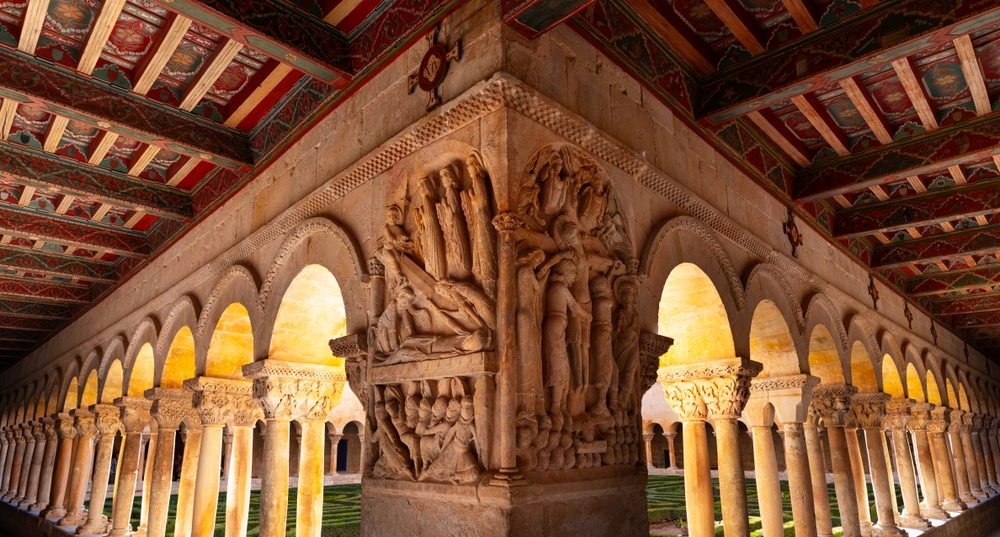
The second day of the route begins in Santo Domingo de Silos. The connection with Domingo de Guzmán rests not on a documented stay but on a tradition linked to Juana de Aza.
According to that account, his mother came to the Benedictine monastery and prayed before the tomb of Domingo de Silos, an abbot of the eleventh century. In some versions, the ancient monk appeared to her and announced that she would bear a son destined for an important mission. From that experience the name Domingo would have derived.
Other narratives link the pregnancy to the image of a dog carrying a burning torch. Centuries later, that figure became one of the most recognizable symbols in Dominican iconography — the animal running with a light in its mouth representing the spread of the Word, and allowing a Latin wordplay between dominicani and Domini canes, the hounds of the Lord.
Silos also introduces a change of pace. Against the movement of the road between Caleruega and Gumiel, the monastery proposes an experience of silence, repetition, and permanence. The relationship between the two Domingos — the abbot of Silos and the future founder — functions as a bridge between generations. Before building his own road, Domingo de Guzmán received a name already heavy with memory.
Haza and the memory of the mother
From Silos the route can turn toward Haza, a village associated with the maternal lineage. Tradition places the birth of Juana de Aza there around the middle of the twelfth century.
Haza allows one to pause on a figure who often remains hidden behind the biography of the son. Beyond the legendary elements, the stories reveal the importance of women in the transmission of domestic memory. The village also opens a window onto the world of local lineages. In medieval Castile, a family identified itself as much by its relationships as by the territory it belonged to. Surnames like Aza or Guzmán referred to specific places, fortresses, and lordships.
The village of Guzmán can be included as a complementary stop for that same reason. Its principal interest lies not in demonstrating that Domingo lived there but in showing the connection between name, land, and identity. Contemporary routes recover that relationship and turn genealogy into a tool for interpreting the landscape.
La Vid: a school of common life
The Premonstratensian monastery of Santa María de la Vid already existed in Domingo’s time. Its members were regular canons — clerics who lived in community under a rule, combining prayer, shared discipline, and pastoral care.
A later tradition, documented centuries afterward, holds that Domingo may have lived or made profession at La Vid. There is insufficient basis to present this as established fact. The monastery’s interest lies above all in its capacity to illuminate the institutional environment that surrounded the future founder.
Domingo did not create his project from nothing. He knew earlier models of communal life. The first Dominican constitutions drew on elements from existing canonical traditions and adapted them to a community defined by study and mobility.
La Vid offers an occasion to explain the difference between monks, canons, and friars. Monks were bound primarily to a single monastery; canons combined common life with ecclesial service; the mendicant friars, emerging in the thirteenth century, made urban mobility one of their defining characteristics.
Osma: the gateway to Europe
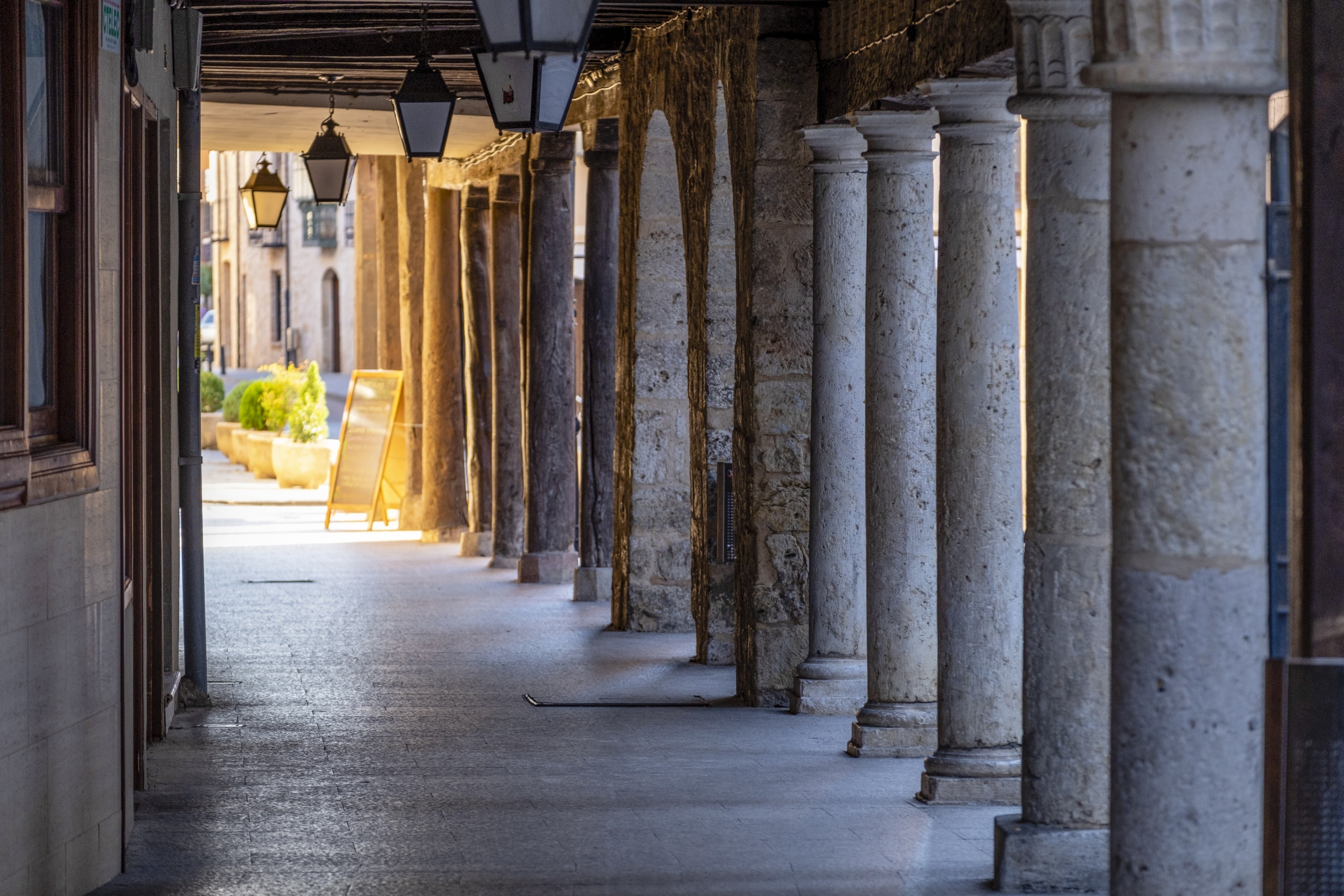
Domingo arrived in Osma around 1195 and joined the cathedral chapter. There he lived as a canon and gained experience within an organized institution. Common life, the sharing of responsibilities, prayer, and study ceased to be merely personal practices and became a stable form of existence.
In Osma he also came into contact with Diego de Acebes, the bishop who would play a decisive role in his first journeys beyond Castile. Together they took part in a diplomatic mission that led Domingo across Europe and brought him face to face with the religious conflicts of southern France.
The city functions, then, as a gateway. Up to Osma, the route follows the son, the student, and the canon. From there begins the story of the itinerant preacher.
A permanent road
The Way of Saint Dominic through the Ribera does not need to depend on an anniversary or jubilee celebration. Its strength lies in the territory itself and in the possibility of walking a biography before it became a monument.
Caleruega represents home and roots. The road toward Gumiel shows the first departure. Gumiel de Izán speaks of learning. Silos holds the tradition of the name. Haza and Guzmán recall the family lineages. La Vid introduces communal life. Osma finally opens the door toward Europe.
The route holds interest beyond any religious affiliation. It allows one to understand how a child was educated in the Middle Ages, how family networks functioned, what role monasteries and parishes played, and how villages construct memory from ruins, legends, and later buildings.
At the end, the traveler does not find a perfectly documented biography. They find something perhaps more revealing: a territory in which history and tradition are in constant dialogue.
Caleruega is not only the place where Saint Dominic was born. It is the kilometer zero of a story that began among vineyards, towers, and rural roads — and ended speaking to all of Europe.
AI Transparency Notice
PilgriMaps uses artificial intelligence tools to assist in the research, drafting and translation of editorial content. All AI-assisted content is reviewed, edited and verified by our editorial team before publication. We contrast information against primary sources, specialist literature and on-the-ground knowledge to ensure accuracy, cultural sensitivity and editorial integrity.
AI is one tool among many in our workflow. The judgement, curation and responsibility for everything published on this platform remain entirely human.
Viator Media S.L. — in compliance with the EU Artificial Intelligence Act (Regulation EU 2024/1689).
This post is also available in: