An interview with James Portelli, XirCammini
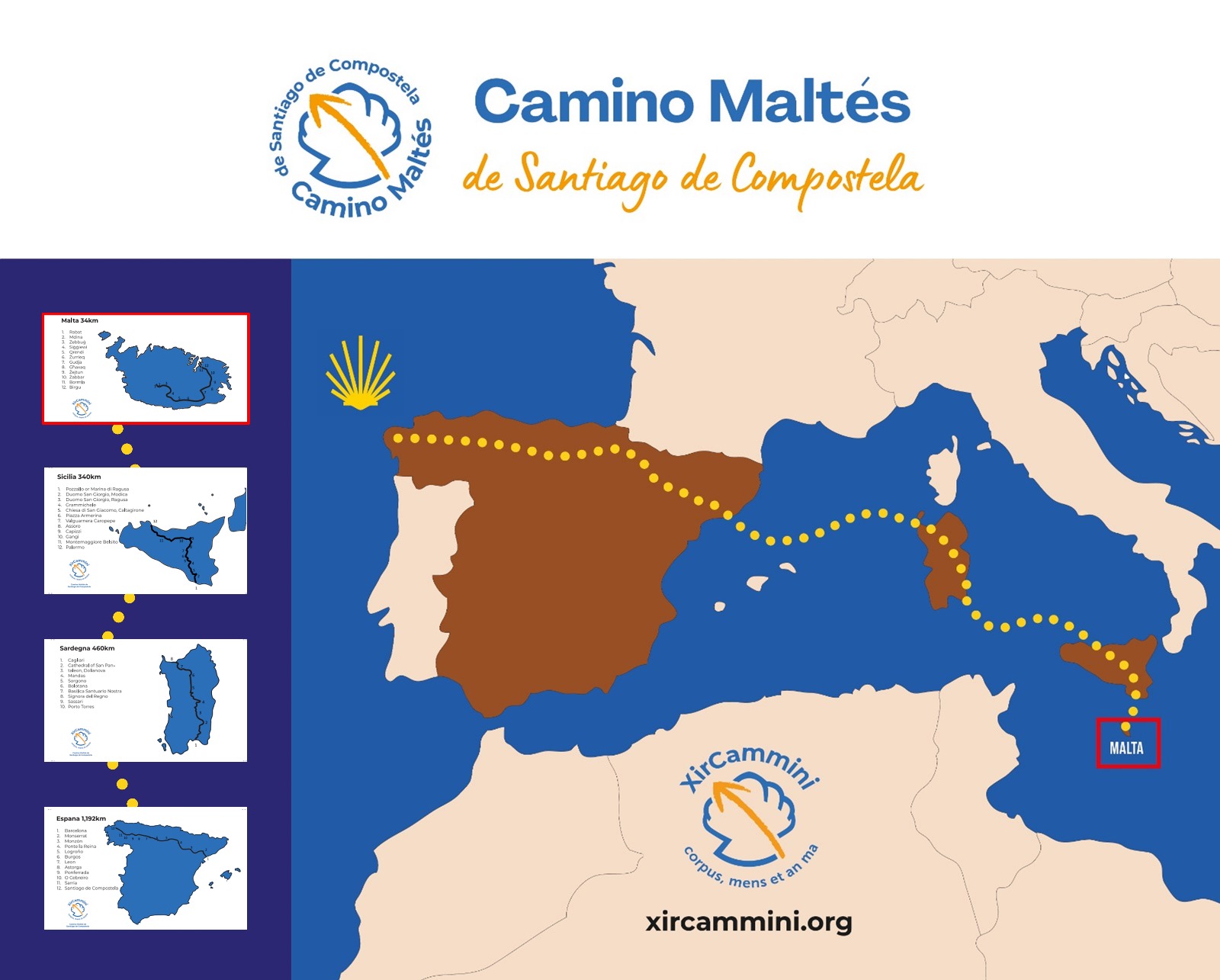
In the summer of 2026, after nine years of research, negotiation and volunteer work, the Camino Maltés was recognised in its entirety on the register of the Cathedral of Santiago de Compostela. It is now the longest Camino de Santiago on record: almost 3,600 kilometres from St Paul’s Grotto in Rabat, Malta, through Sicily, Sardinia and Catalonia, to the Obradoiro.
The recognition does something more than add a line to a register. It means that pilgrims setting out from Malta, from any of dozens of towns across Sicily, or from the central route of the Camminu Santu Jacu in Sardinia can now claim a Distance Compostela Certificate on arrival in Santiago — a possibility that did not exist before.
It is befitting that the Camino Maltés spans several regions across 3 countries (Malta, Italy and Spain), reflecting the rich historical tapestry and heritage of the island state of Malta then ruled by the Knights of St John.
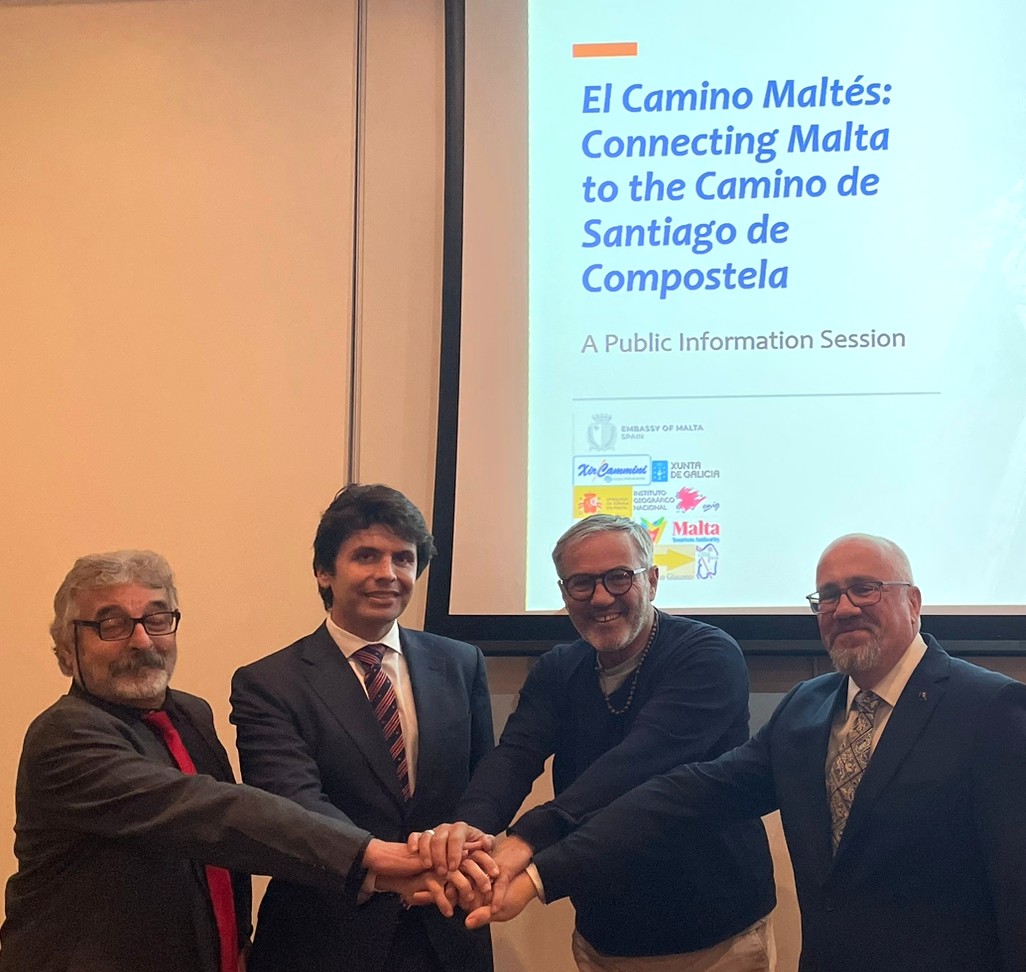
We spoke with James Portelli of XirCammini, the Maltese voluntary organisation that has driven the project since 2017, about the historical case that made it possible, the mechanics of what has changed, and what it means for the three islands at the southern end of the route.
- PilgriMaps: You’ve described this recognition using an idiom of your father’s. Can you explain it?
My father’s autobiography, Tifkiriet, covering 1934 to 2009, was described by a columnist as “Memoirs of a Mandarin.” He probably packed ten times the years into each one that he lived. He was a walking, talking fountain of knowledge and a source of inspiration to all who knew him. Despite holding high office for most of his career, he was always a man of the trenches, and he had no qualms about speaking truth unto power. He rubbed shoulders in rolled-up sleeves, ever conscious that he himself started from the bottom rung. He always walked the talk. I’d like to think the apple did not fall far from the tree.
He firmly believed that in every situation, it-tiġrija sal-barkun — literally, a race ends at the finish line. There isn’t a dignified English idiom that quite reflects it. The closest is perhaps “it isn’t over until the fat lady sings.”
For the Camino Maltés, the fat lady sang in summer 2026.
- PilgriMaps: What exactly has been recognised? What does “in its entirety” mean here?
The Camino Maltés is now recognised on the register of the Cathedral of Santiago de Compostela as a complete route. That route consists of five components.
First, the Malta segment, from Rabat to Birgu and the ferry crossing to Valletta.
Second, the Cammino di San Giacomo in Sicilia, from the Church of St James in Caltagirone to the Sanctuary of St James in Capizzi — plus the sections the Camino Maltés added in Sicily between Pozzallo and Caltagirone, and from Capizzi to Palermo, to complete the whole Sicilian route.
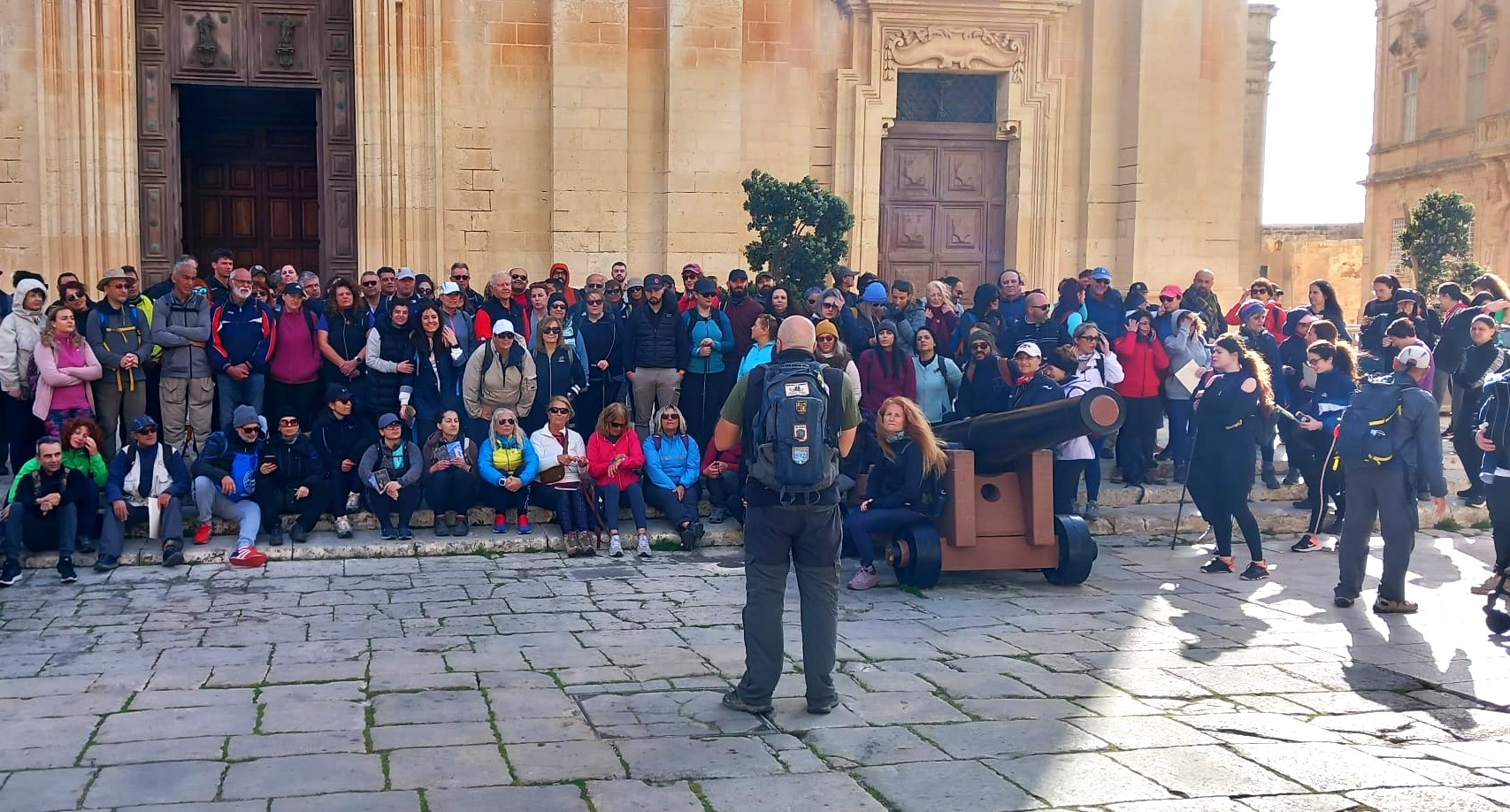
Third, the central route of the Camminu Santu Jacu in Sardinia.
Fourth, the sea crossings: between Malta and Pozzallo, between Palermo and Cagliari, and between Porto Torres and Barcelona, which XirCammini established with the assistance of the Spanish Federation of the Friends of the Way and the Spanish Maritime Institute.
And fifth, segments of the Camino Catalán-Aragonés and the Camino Francés until Santiago de Compostela. Taken together, it is the longest Camino de Santiago on record at almost 3,600 kilometres, including the sea crossings.
Needless to say, we also wish to acknowledge the support of the respective Camino associations in Sicily and Sardinia. The preamble of the Memorandum of Understanding that they presented to XirCammini for this project clearly defines the Camino Maltés from Malta to Santiago de Compostela. The three associations signed it, binding themselves to each develop the route in their respective territory and to assist each other in this endeavour.
- PilgriMaps: XirCammini has always described this as re-establishing a route rather than creating one. What is the historical basis for that?
We started working on re-establishing the Camino Maltés as early as March 2017, before we had even registered XirCammini as a Voluntary Organisation with the Office of the Commissioner for Voluntary Organisations and the Superintendence of Cultural Heritage in Malta. From the beginning the aim was to respect both history and current practical realities.
With the help of the late Rev. Can John Azzopardi, an eminent Maltese historian, and the National Library in Valletta, we worked from the Council notes of the Order of St John of Malta. What emerges from those notes is this:
In 1602, Don Juan Benegas de Córdoba undertook a series of pilgrimages including Santiago de Compostela. During his travels he also held audiences with Pope Paul V and (Camillo Borghese), and shared with him the vision of Grand Master Alof de Wignacourt to turn the Grotto of St Paul in Malta into a place of pilgrimage. The Pope donated to Malta several holy artefacts and relics towards that cause. These are now exhibited in the Wignacourt Museum in Rabat.
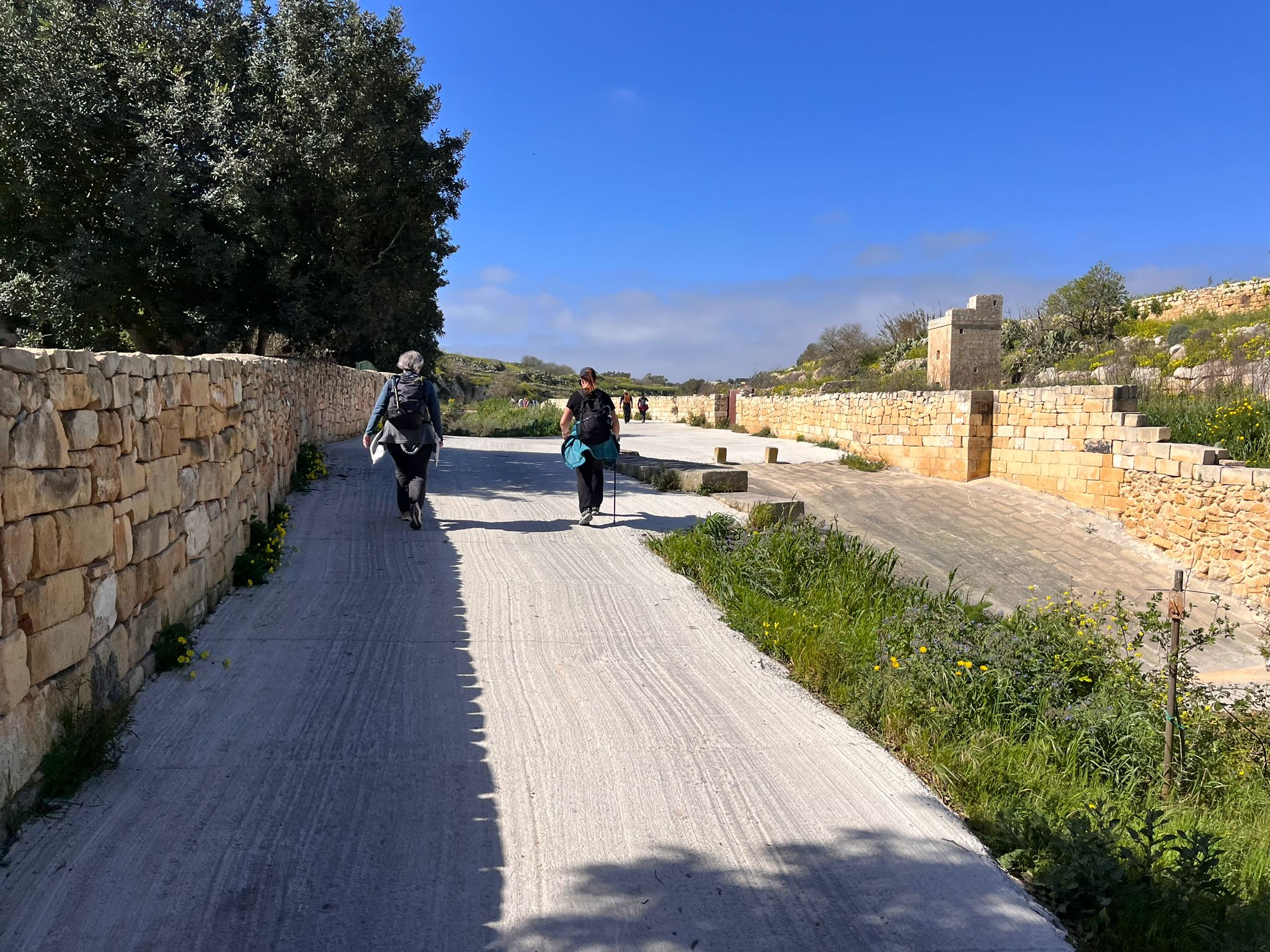
So there is a documented Maltese pilgrim, departing from a specific place, bound for holy places in Europe, including Santiago de Compostela. That is the foundation. There is also older, medieval, heritage that we are still researching in that certain members of Maltese nobility (with Spanish ancestry) before the arrival of the Knights of St John were members of the Order of St James.
- PilgriMaps: The present route goes by sea rather than through mainland Italy. Why?
Because that is how the Maltese actually travelled. The Maltese were less tied to the land (and the feudal system that persisted elsewhere in Europe) because of their seafaring background.
The present-day Camino Maltés does not travel via mainland Italy. Instead, it respects sea routes previously used by the Maltese, first under the Kingdom of Aragon and later as part of the Kingdom of Spain and under the Order of St John. Hence the route via Sicily, Sardinia, and Spain from Barcelona.
We argued this route viva voce with the Spanish Istituto Náutico and with the Spanish Federation of the Friends of the Way, and the route was approved on historical grounds. That mattered a great deal to us. We did not want a route that was merely convenient or scenic. We wanted one that could be defended as historically accurate.
- PilgriMaps: What changes in practice for pilgrims now?
The Camino Maltés has made it possible for pilgrims starting in Sicily and Sardinia to claim a Distance Compostela Certificate irrespective of where they started on the Camino Maltés route.
We worked very closely with the Pilgrims Office in Santiago de Compostela, providing them with the names of towns and villages in Malta, Sicily, Sardinia and from Barcelona to Santiago de Compostela, with the relative kilometres walked. We want to thank the Pilgrims Office for working with us to finalise this to the benefit of Malta, Sicily and Sardinia.
One point to be clear about: unless travelling between the ports by sail, the Register of the Cathedral of Santiago counts only the kilometres actually walked by the pilgrim. The sea crossings are not included in the certified distance.
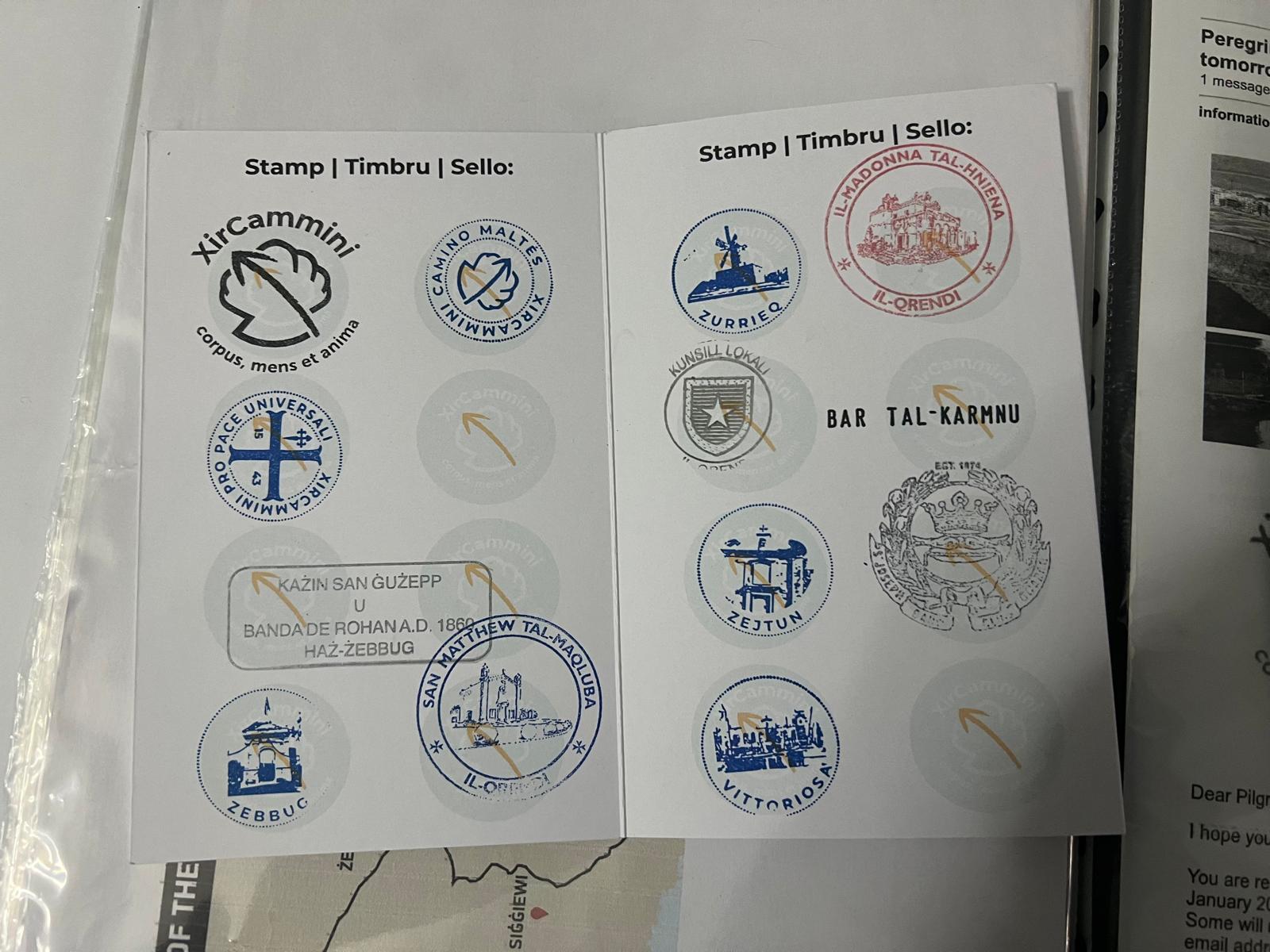
To give a couple of examples, using fictitious names. A pilgrim starting in Rabat, Malta — let’s call him Joe Borg — would be awarded a distance certificate establishing the start as “From Malta,” Desde Malta, recording 2,415 kilometres net of the sea crossings.
A Sicilian pilgrim starting in Caltagirone — Maria Russo — would receive a certificate establishing the start as “From Italy,” Desde Italia, recording 2,222 kilometres. If she started instead from Pozzallo, the certificate would record 2,372 kilometres.
And a Sardinian pilgrim starting from Monserrato — Antonio Sanna — would receive a certificate showing 1,885 kilometres.
- PilgriMaps: How many starting points does this open up?
Sicilian and Sardinian pilgrims can now claim a distance certificate starting from no fewer than 45 locations in their home territory. From Malta it is only two.
In Sicily, Maria Russo could begin from Ispica, Modica, Ragusa, Assoro, Nicosia, Capizzi, Monterosso Almo, Bagheria, Palermo and many other Sicilian locations on the route. In Sardinia, Antonio Sanna could start anywhere on the Ruta Central of the Camminu Santu Jacu — Meana Sardo, Belvì, Sorgono, Nughedu Santa Vittoria, Sedilo, Bolotana, Bonorva and all the other towns on the central route adopted by the Camino Maltés.
That asymmetry is deliberate and we are glad of it. The work we undertook with the Pilgrims’ Office benefits Sicily and Sardinia far more than it benefits Malta in raw numbers. These are territories with deep Jacobean traditions of their own, and they now have formal recognition attached to them.
- PilgriMaps: The Camino Maltés has also been registered as intellectual property at EU level. Why?
Not for us to exploit it commercially. Precisely the opposite — to prevent others from exploiting it commercially after so many volunteers have contributed time, energy, intellect and money to create this for the common good.
That distinction matters to us. This was built by volunteers. It should stay available to pilgrims.
- PilgriMaps: Who made it possible?
Many partners stood beside us from day one with unflinching commitment, and XirCammini is very grateful to all of them.
They include the Malta Tourism Authority and Visit Malta, Heritage Malta, the Spanish Federation of the Friends of the Way, Camino Europa Compostela, the Catalan Association of the Camino de Santiago, and PilgriMaps. Fr Walter Vassallo OFM and Benjamin Portelli who selflessly provided a free Camino Maltés app and website respectively. John Darmanin and Vince Tanti help maintain the waymarking — and much needs to be done again after this cruel summer. And there are all the XirCammini volunteers who helped in countless ways.
Nine years, and the race has reached the finish line.
Buen Camino.
The Camino Maltés begins at St Paul’s Grotto in Rabat, Malta, and reaches Santiago de Compostela via Sicily, Sardinia and Catalonia. Route information, maps and the free app are available through XirCammini. Read our full guide to walking the Camino Maltés from Malta:
AI Transparency Notice
PilgriMaps uses artificial intelligence tools to assist in the research, drafting and translation of editorial content. All AI-assisted content is reviewed, edited and verified by our editorial team before publication. We contrast information against primary sources, specialist literature and on-the-ground knowledge to ensure accuracy, cultural sensitivity and editorial integrity.
AI is one tool among many in our workflow. The judgement, curation and responsibility for everything published on this platform remain entirely human.
Viator Media S.L. — in compliance with the EU Artificial Intelligence Act (Regulation EU 2024/1689).
This post is also available in: