In the last days of his life, Francis of Assisi made a surprisingly earthly request: he wanted to taste once more a sweet that a friend used to make for him in Rome. Eight hundred years later, that small story of almonds and honey reveals a Francis far more human than the one handed down by iconography.
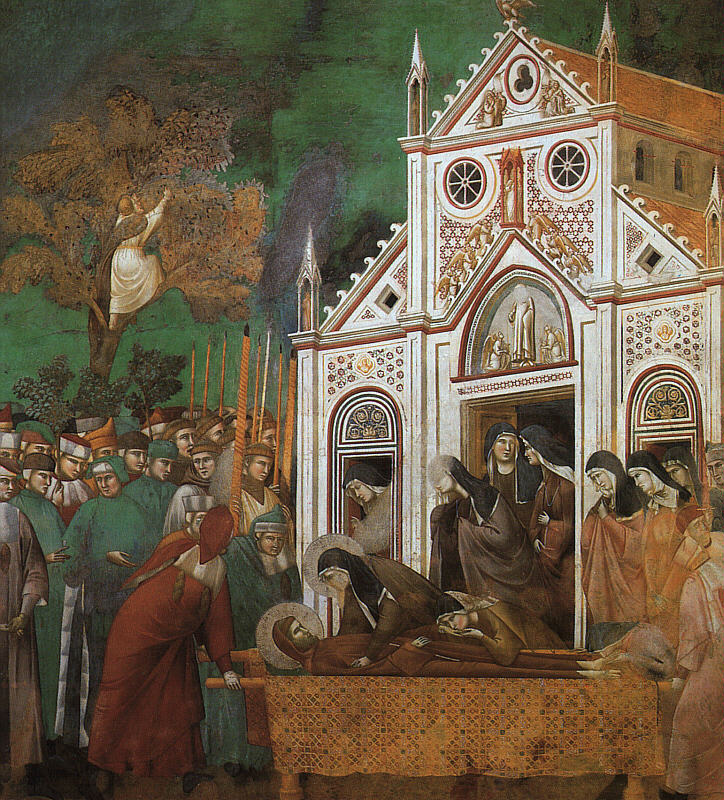
At the end of September 1226, Francis knows he has little time left. He is gravely ill, almost blind, and his body — worn down by years of privation and sickness — is giving way. He has asked to be carried back to the Porziuncola, the small church on the plain below Assisi around which the first Franciscan fraternity had been born. It is here that he will die on the evening of 3 October.
But before that happens, Francis expresses a wish. He wants to see a friend again. And he wants to eat once more a sweet she used to make for him.
The woman’s name is Jacopa de’ Settesoli. She belongs to the Roman aristocracy and is one of the most singular figures in the story of Francis. He calls her by a surprising name: frate Jacopa — Brother Jacopa. It is of her that Francis thinks as he feels death approaching.
A request from the Porziuncola
The account appears in the Compilatio Assisiensis, one of the thirteenth-century Franciscan sources, dated by scholars to around 1246. Francis asks his companions to inform Jacopa of his condition and to ask her for certain things. A coarse ash-coloured cloth, intended for the habit in which he would be buried. And then that food she had prepared for him several times during his stays in Rome.
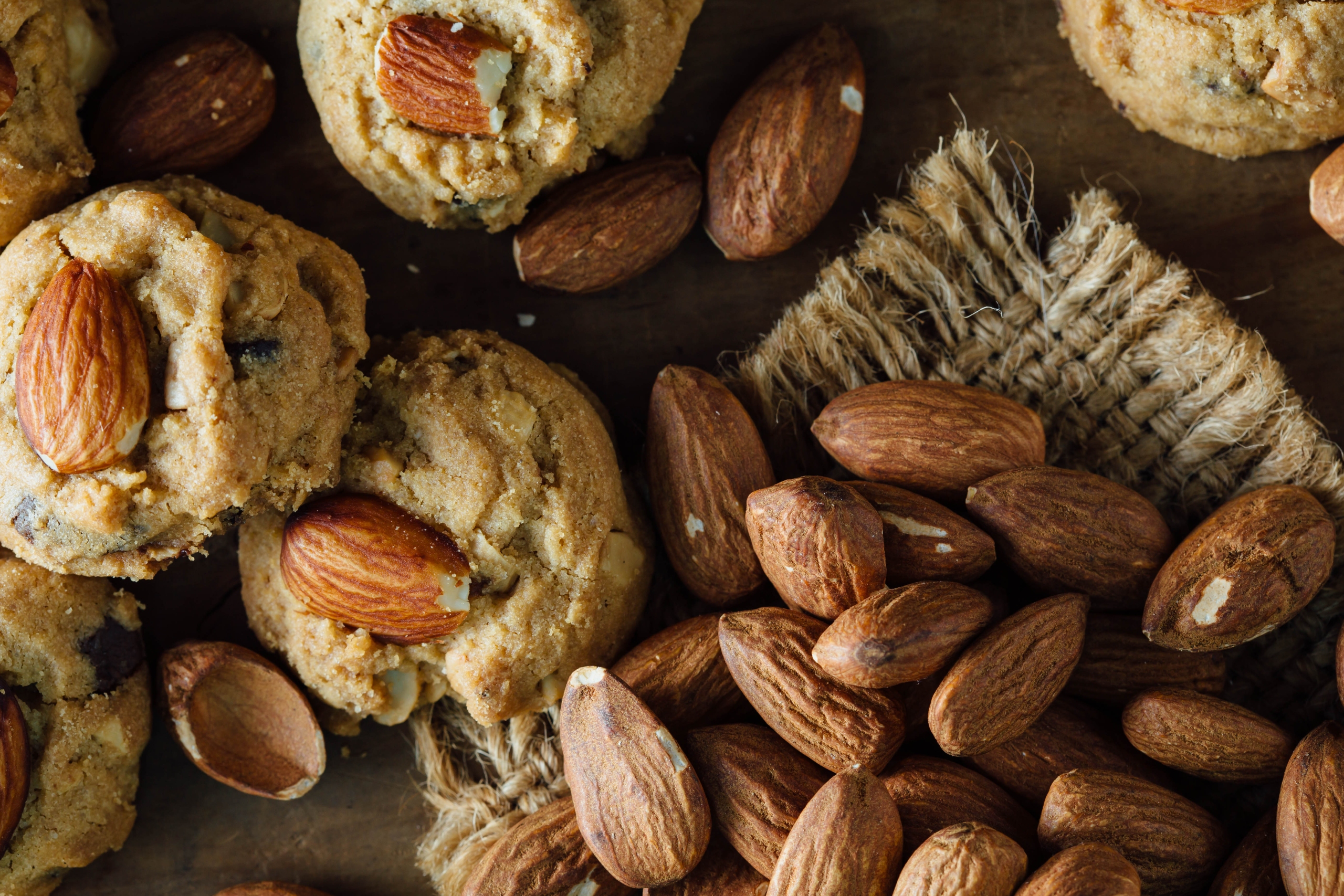
The Latin text calls it mortariolum and adds a precious detail: it was made with almonds, sugar or honey, and other ingredients. In the Italian tradition it has often been identified with the mostacciolo.
Here, however, we should pause. Because the mostacciolo we picture today may have little to do with what Francis was eating eight hundred years ago. We do not possess Jacopa’s recipe. We do not know the proportions of the ingredients, the texture, nor with any certainty the shape of the sweet. The term mortariolum may be connected to mortarium, the mortar in which almonds and other ingredients were pounded and blended. The historian Franco Cardini has drawn attention to precisely this interpretation.
More than a recipe, then, what the sources have left us is a trace. Almonds. Honey, or sugar. Other unspecified ingredients. And the memory of a flavour.
The woman who arrived before the letter
The story becomes more surprising still when the friars prepare to send the message. They do not have time. Someone knocks at the door of the Porziuncola. It is Jacopa.
According to the Franciscan account, the woman had sensed during prayer that Francis needed her and had set out from Rome. She brings with her exactly what he was about to ask for: the cloth for his burial and the food she had prepared for him before. She has also brought wax for candles, and incense.
The episode belongs to that zone of medieval history where document, religious memory and hagiographical narrative live side by side. We cannot verify every detail as we would with a contemporary chronicle. We can, however, establish that Jacopa’s presence in the Franciscan tradition is early: the Compilatio Assisiensis speaks of her roughly twenty years after Francis’s death, and the account is later taken up by other sources.
There is, moreover, one detail that captures the thirteenth-century world perfectly. At the Porziuncola, women could not enter the space reserved for the friars. When Jacopa arrives, the gatekeeper asks how he should proceed.
For her, Francis makes an exception. The friend who has come from far away may enter.
Who “Brother Jacopa” Was
Behind that plate of sweets lies a relationship that had lasted years. Jacopa belonged to the elite of Rome. She had been married to Graziano Frangipane of the Settesoli branch and had been widowed. The sources describe her as a wealthy and socially influential woman, but the reliable biographical details are fewer than later tradition has led us to believe. Even the often-repeated claim that she originally belonged to the Normanni family is not securely documented.
What we do know is that Francis knew her well, and that during his stays in Rome he had received hospitality and care from her. And it is probably here that the meaning of the mortariolum should be sought. Not in gastronomy — or at least not only there.
That flavour belonged to Rome, to the house of a friend, to moments lived together. When Francis asks for it at the end of his life, he is not ordering his favourite dessert. He is summoning a relationship through taste.
The flavour of memory
Today we know how powerfully taste and smell can detonate autobiographical memory. A flavour can suddenly return us to a house, a journey, a person. Eight hundred years ago nobody spoke of the neuroscience of memory. But the experience was the same.
It is difficult not to read something profoundly universal into this story. Francis has become one of the most recognisable saints in Christianity: the poor man of Assisi, the man of the Canticle of the Creatures, of the stigmata, of the Greccio crib, of the meeting with the Sultan, of fraternity with creation.
And yet, at the end of his life, the sources also preserve a far more intimate image. A sick man remembers something good that a friend used to cook for him. Sanctity, at least in this scene, does not cancel the senses. It passes through them.
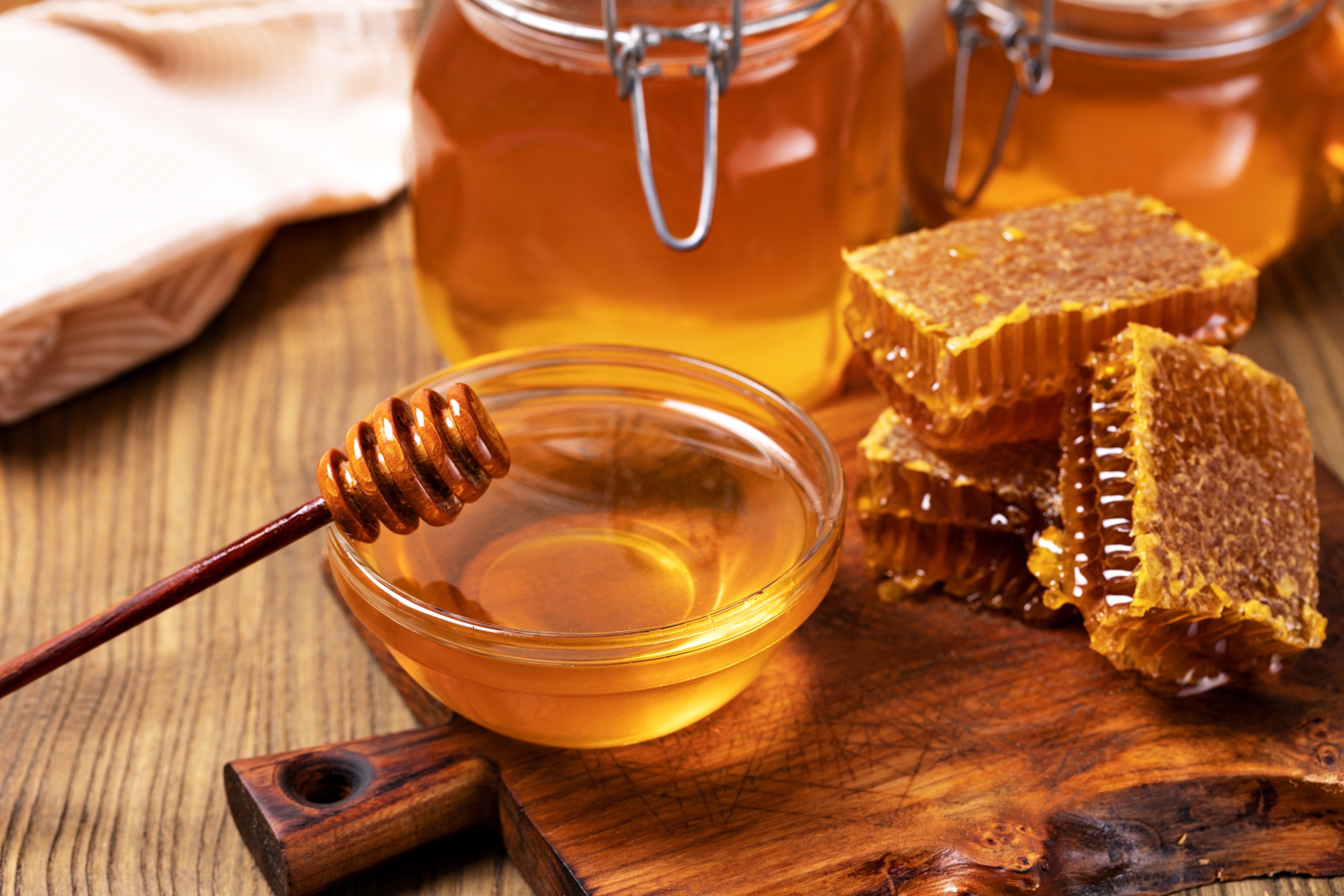
Sugar, honey and almonds: a sweet that was anything but poor
The ingredients tell a story of their own. Almonds have belonged to Mediterranean food culture for centuries. Honey was one of the principal sweeteners of medieval Europe. Sugar, by contrast, had another history: known through Mediterranean trade and the Arab world, in the thirteenth century it was still an expensive product, far from the everyday ingredient it would become many centuries later.
The fact that the source says “sugar or honey” therefore makes it impossible to establish which version Jacopa actually made. But the context is telling. Jacopa was a woman of the Roman aristocracy. Her sweet most likely came from a kitchen very different from the extremely poor table of the first friars.
And it is perhaps precisely that contrast that makes the episode so compelling. The man who had chosen poverty so radically does not seem to experience the pleasure of that food as a contradiction. He receives it as a gift.
From Rome to Assisi, on the traces of Jacopa
The story of the sweet also sketches a small Italian Franciscan geography. On one side there is Rome, where Francis stayed several times and where Jacopa’s memory is particularly bound to San Francesco a Ripa, in Trastevere. On the other there is Assisi, where the journey ends. And then there is the Porziuncola.
Today the tiny church is enclosed within the great Basilica of Santa Maria degli Angeli. Not far off stands the Cappella del Transito, built on the spot associated with the final moments of Francis’s life. For a contemporary pilgrim, knowing Jacopa’s story changes, almost imperceptibly, the way one moves through these places.
Sacred geography becomes human geography. Rome is not only the city of the popes Francis met. It is also the place of a friendship and a table. Assisi is not only the city of the saint. It is the place where that friendship arrived for the last time.
And in the crypt of the Basilica of San Francesco, the story finds one last material sign: Jacopa is buried near Francis and his first companions.
But can we taste Francis’s sweet today?
Not exactly. There are contemporary recipes for so-called mostaccioli di san Francesco and reconstructions based on almonds and honey. In the modern Franciscan tradition, especially during the celebrations of the Transitus, almond biscuits are also made in memory of the food Jacopa brought.
But to present any of these recipes as the authentic recipe eaten by St Francis would be historically reckless. The sources did not hand it down to us. And perhaps that is just as well. Because what survives is not a gastronomic formula to be reproduced to the gram, but something more interesting: the bond between food, travel, friendship and memory.
The last flavour
When Jacopa finally brings him the mortariolum, Francis can barely taste it. The illness is by now too far advanced. His strength is leaving him. The Compilatio Assisiensis records that he ate little of it, because death was near. A few days later, on the evening of 3 October 1226, Francis dies at the Porziuncola. In 2026, exactly eight hundred years later, the Franciscan family celebrates the eighth centenary of his Transitus.
Among the great episodes of his life, that of Jacopa’s sweet might seem marginal. In fact it tells us something that monuments and frescoes struggle to preserve. Saints become statues. People, on the other hand, get hungry, remember flavours, and wait for their friends. Perhaps that is why, after eight centuries, that handful of almonds and honey still speaks to us.
At the end of his extraordinary journey, Francis did not ask for something precious. He asked for something he knew. A flavour of Rome. A gesture received many times. The presence of a friend. And perhaps the true ingredient of his last sweet was exactly the one no medieval recipe would have needed to write down: the memory of having been welcomed at someone’s table.
The Canticle of the Creatures: a song born in darkness and turned into a road
AI Transparency Notice
PilgriMaps uses artificial intelligence tools to assist in the research, drafting and translation of editorial content. All AI-assisted content is reviewed, edited and verified by our editorial team before publication. We contrast information against primary sources, specialist literature and on-the-ground knowledge to ensure accuracy, cultural sensitivity and editorial integrity.
AI is one tool among many in our workflow. The judgement, curation and responsibility for everything published on this platform remain entirely human.
Viator Media S.L. — in compliance with the EU Artificial Intelligence Act (Regulation EU 2024/1689).
This post is also available in: