It’s half past six in the morning. The pilgrim hostel smells of instant coffee and foot cream. Someone is still snoring in the top bunk, while a headlamp casts circles of light across the ceiling. Outside, it’s still dark. The backpack that seemed so light at home now weighs as much as a promise you’re struggling to keep. Twenty-two kilometers lie ahead, and nobody is going to walk them for you.
Every pilgrimage begins this way: with someone sitting alone on the edge of a bunk, tightening their bootlaces and wondering why they ever decided to set out. It’s the first stage, the quietest of all, and overcoming it takes one tiny gesture: opening the door and stepping out into the cold morning air.
Anyone who has walked to Santiago, Rome, or any other pilgrimage destination knows this feeling. What carries you all the way to the end is the willingness to get up each morning, renewed with every sunrise. The journey is a staircase made of daily steps, each with its own struggles and rewards.
The next destination is just twenty-two kilometers away
Eight hundred kilometers is a daunting number. Twenty-two, on the other hand, is something you can picture. It has a name, a village waiting at the end, a bed to sleep in, a hot shower, and perhaps a bowl of lentils at a small restaurant along the way. One of the pilgrim’s secrets lies right there: stop staring at the distant destination and learn to look forward to the next one.
And so the day breaks down into smaller goals. The fountain just beyond the bridge. The café in the next village, where a café con leche tastes like victory. The bell tower that appears on the horizon and never seems to get any closer, until suddenly you’re standing beneath it. In Galicia, stone markers bearing the scallop shell count down the remaining kilometers, and every shrinking number feels like a gentle reassurance.
By evening, with your feet soaking in cold water, you realize you’ve accomplished something that seemed impossible that morning. And that small victory becomes the fuel that gets you moving again the next day.
When the initial excitement fades
Then comes the third day, or perhaps the fourth. The excitement of setting out has worn off, replaced by blisters, calves as stiff as boards, and shoulders marked by backpack straps. The afternoon climb seems endless. This is when many pilgrims sit down on a low stone wall, stare at the road winding uphill, and seriously consider catching a bus and going home.
This is where the pilgrimage truly begins. Because in the midst of that exhaustion, with no audience and no applause, you learn to speak to yourself differently. Some pilgrims recite a prayer in time with their footsteps. Others repeat the name of someone they love, someone who inspired them to undertake the journey. Some quietly hum a childhood song, while others allow themselves just three words: “One more kilometer.”
And that kilometer passes. Then another. The climb ends, as all climbs eventually do, and the landscape opens before you like an embrace. That evening, over dinner, you laugh at your own fears. Your limits have shifted a little farther away, and you know it because you felt it in your legs.
When your thoughts begin to walk, too
Once you’ve made it through that difficult stretch, something unexpected happens. Your body finds its rhythm, and your mind finally begins to unwind. Thoughts that kept circling endlessly back home start moving forward, too. A decision you’ve been putting off for months suddenly becomes clear somewhere between a wheat field and a row of poplars. An old resentment loses some of its weight. A new idea arrives without knocking.
The hours spent walking become precious time, an extended conversation with yourself that everyday life rarely leaves room for. Some people set out with a particular question about their career, a relationship, or their future, only to discover that the answer slowly ripens, step by step, like fruit in the sun.
That’s another reason getting up the following morning becomes easier. Every stage brings something worth holding on to, and curiosity about what the next one might offer becomes yet another reason to set out.
The strength we find in walking together
Halfway through the journey, the pilgrimage reveals its second source of motivation: other people. The young Korean woman you meet at breakfast who offers you half her apple. The hostel volunteer who tends to your blister with a mother’s patience. The retired Dutchman who slows down to wait for you on a steep climb and, once you reach the top, tells you why he has chosen to walk alone after forty years of marriage.
On the Camino, nobody asks what you do for a living. Everyone wants to know how your feet are holding up. People share Band-Aids, silences, and long, lively dinners around tables where five languages are spoken and everyone somehow understands one another. Sometimes you cry in front of strangers who will be miles away by tomorrow, and you don’t feel embarrassed. Exhaustion becomes easier to bear when it’s shared, and every arrival turns into a collective celebration.
The wonder waiting around every bend
And then there’s wonder, which catches you when you least expect it. A sunrise setting the plains of the Meseta ablaze in red and gold. The cool silence of a Romanesque church in the early afternoon, with a candle burning for someone whose name you’ll never know. The mist suddenly lifting at O Cebreiro to reveal Galicia stretching out before you, impossibly green and seemingly endless.
In those moments, you feel both small and immense, part of a story that began a thousand years ago and is now being written with your footsteps, too. Believers and nonbelievers describe the experience in different words, but the sense of awe is remarkably similar. And sometimes that feeling is precisely what gives you the strength to face another day on the road.
Reaching Santiago and learning how to return
Plaza del Obradoiro, noon. Backpacks drop to the ground. Someone lies flat on the stones with their arms outstretched, while others embrace without saying a word. There are tears between people who didn’t even know each other a month ago and now say goodbye like family. The cathedral stands before you, immense, almost as though it were watching you.
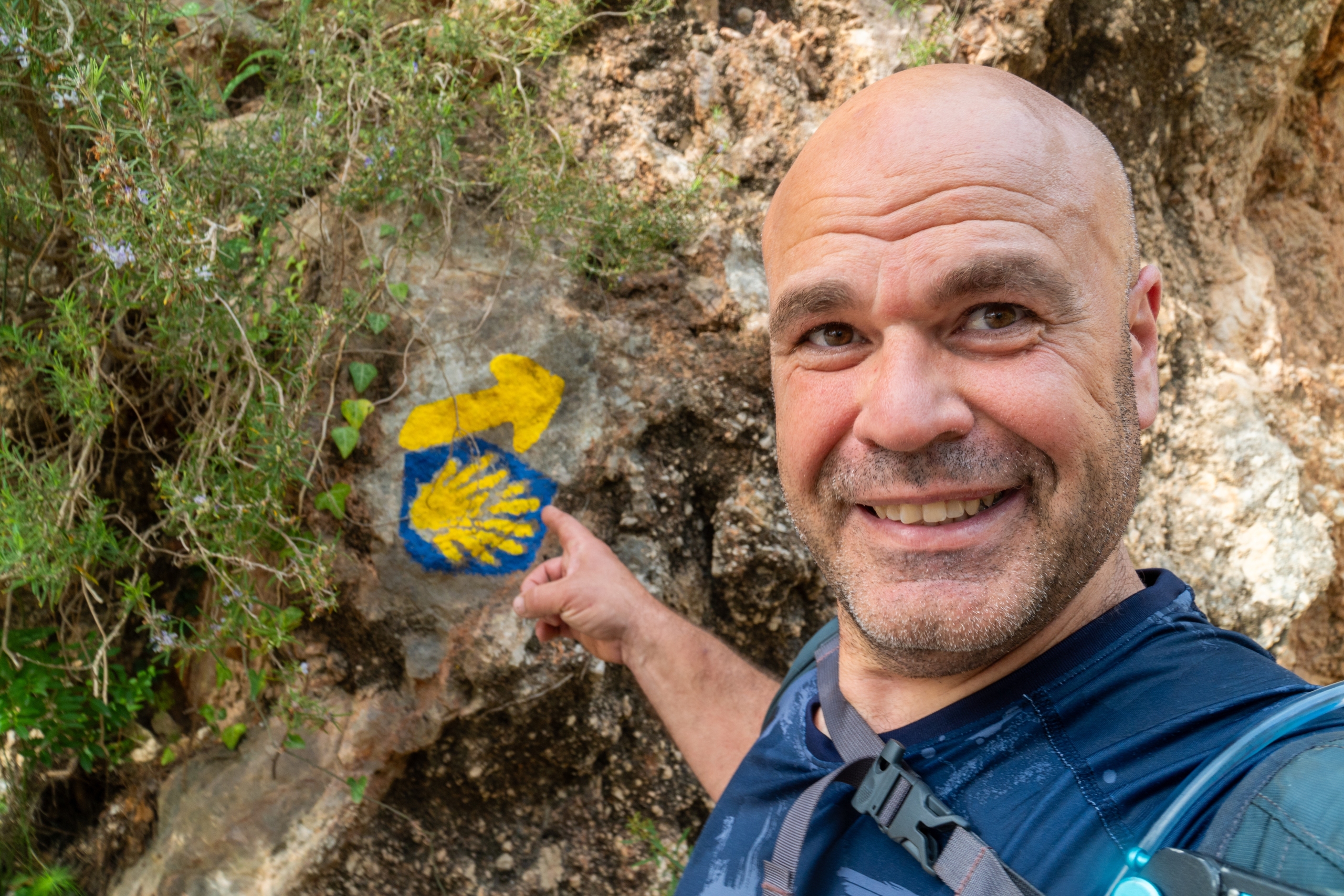
Then, in the days after returning home, a strange melancholy sets in. You’ve reached your destination, and the momentum that carried you there seems to have vanished. You miss the yellow arrows, the early morning alarm, even the exhaustion.
But the Camino has left you something more lasting: a different way of living. You can begin to see your days as stages, each with a nearby goal to reach before moving on to the next. You can hold on to the words that helped you through your hardest climb and occasionally find a trail to walk, unhurried, giving your thoughts room to breathe. You can surround yourself with people who help carry the weight of life’s difficulties and train your eyes to notice moments of wonder, even in your own neighborhood.
Anyone who has walked all the way to Santiago carries home a certainty etched into both muscle and heart: every uphill climb eventually ends, and another step is always possible. All it takes is lacing up your boots, opening the door, and stepping out into the morning.
AI Transparency Notice
PilgriMaps uses artificial intelligence tools to assist in the research, drafting and translation of editorial content. All AI-assisted content is reviewed, edited and verified by our editorial team before publication. We contrast information against primary sources, specialist literature and on-the-ground knowledge to ensure accuracy, cultural sensitivity and editorial integrity.
AI is one tool among many in our workflow. The judgement, curation and responsibility for everything published on this platform remain entirely human.
Viator Media S.L. — in compliance with the EU Artificial Intelligence Act (Regulation EU 2024/1689).