Almost everyone imagines the same frame before setting out. Themselves arriving at their destination — exhausted and radiant, the hardships of the journey already forgotten. It is a beautiful scene. It is also, according to the psychology of motivation, one of the most reliable ways of never getting there. Preparing for a pilgrimage means working on two bodies simultaneously: the one that walks and the one that imagines. The second is more treacherous than the first.
Start with the body that walks, because here the numbers are both merciless and clarifying. On the Camino Francés to Santiago, the average daily stage runs between twenty and twenty-five kilometers, repeated for four or five weeks. This is something quietly insidious: a moderate effort that never ends. The pilgrim’s true enemy is repetition.
Training for repetition
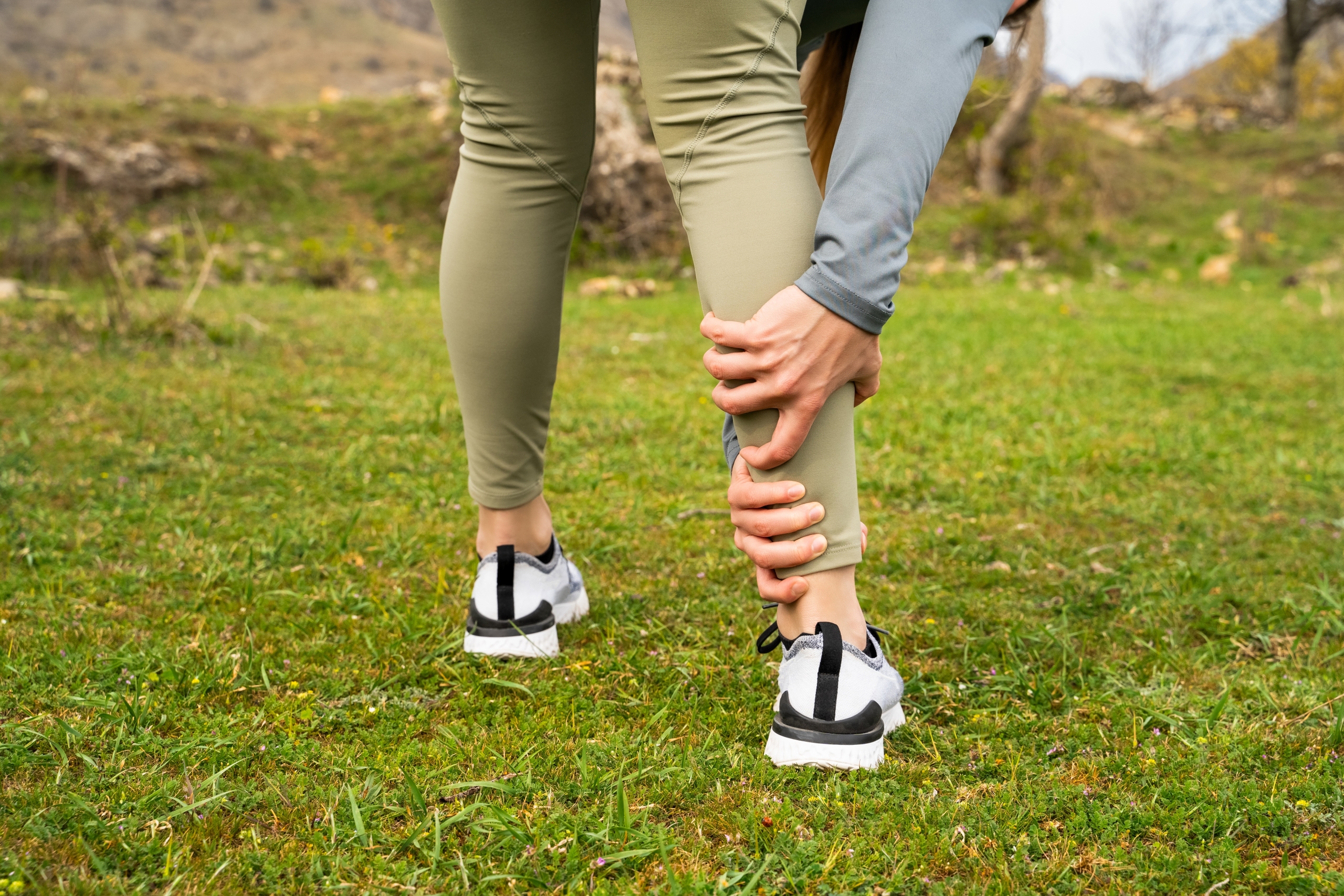
The classic mistake is to prepare by doing a few long, heroic walks. But the body on the Camino is not required to perform a feat — it is required to sustain the same effort day after day. Sports medicine is consistent on one principle: tissues — tendons and plantar fascia above all — adapt to load only when that load increases gradually. Ramping up kilometers too quickly is the direct route to overuse injuries, from tendinitis to periostitis. Effective preparation resembles organized tedium: frequent, progressive walks, with the pack one intends to carry, over the terrain one will encounter, until the body stops treating as extraordinary what will become daily.
Blisters — which send more pilgrims home than any climb — are not bad luck but physics: they form through repeated friction between skin, sock, and shoe in the presence of moisture and heat. They are prevented before departure, by choosing and breaking in footwear well in advance, managing foot moisture, and identifying one’s vulnerable points before they identify themselves. Anyone who sets out in new shoes bought the day before is, quite literally, sabotaging themselves.
One detail few people calculate: 93% of pilgrims arrive in Santiago on foot, but many do so by starting from Sarria — just over a hundred kilometers from the destination and the single most popular starting point of all. This is not cheating. It is strategy. Calibrating ambition to the actual body, rather than the imagined one, is already an act of mental preparation.
Fantasy lightens the weight of effort — and then removes it altogether
Which brings us to the imagination. Here the research delivers its most counterintuitive finding. The psychologist Gabriele Oettingen of New York University spent twenty years dismantling the dogma of positive thinking. In a series of studies, the people who fantasized most vividly about a desired future performed worst: graduates who dreamed most intensely about their ideal job received fewer offers and lower salaries; those who imagined their weight loss most vividly lost less weight (Oettingen and Mayer, 2002). The reason is almost cruel. Dreaming of the destination gives the brain a small anticipatory taste of the reward — a preview of arrival. And a brain that feels it has already arrived relaxes, lowers its energy, stops mobilizing. Pure fantasy is not fuel. It is a sedative in disguise.
The antidote Oettingen developed is called mental contrasting, and in its practical form carries the acronym WOOP: Wish, Outcome, Obstacle, Plan. One formulates the desire — reaching Santiago — and visualizes the result and the emotion it will bring. So far, this is standard positive thinking. Then comes the decisive move: imagining with equal concreteness the internal obstacle that stands in the way — the urge to quit at the twenty-fifth kilometer in the rain, the temptation to take the bus. And one prepares in advance a plan of the form: “if this happens, then I will do that.” The contrast between dream and obstacle transforms desire into commitment. In one health study, participants trained in this technique doubled their physical activity over the following four months compared to those who had received only information (Stadler, Oettingen, and Gollwitzer, 2009).
Translated to the Camino: it is not enough to dream of the cathedral. One must imagine, before leaving, the foot that hurts on day three, the homesickness that arrives in the evening, the precise moment when the body will ask to stop — and decide now what one will say to that voice. Less poetic, considerably more effective.
Mud as a training ground for the unexpected
There is a third preparation, subtler than the others, that concerns expectation itself. A significant part of a pilgrim’s suffering arises from the gap between the Camino as dreamed and the Camino as lived: the silence broken by snorers, the rain that was not forecast, the solitude that sometimes weighs rather than liberates. Managing expectation means preparing the mind not for a perfect experience but for a real one — one that includes boredom, blisters, and uncomfortable thoughts that physical exhaustion brings to the surface. Those who set out knowing they will suffer, suffer less, because they do not add to the physical effort the disappointment of having failed to anticipate it.
Perhaps the most honest preparation for a pilgrimage is precisely this double discipline: training the body for repetition and the mind for obstacle, letting go of the imagined ending and beginning to rehearse the middle. Not to extinguish the dream, but to give it legs — literally — capable of carrying it.
One question remains, and it reaches well beyond any trail. If imagining the finish line drains us of the strength to reach it, and imagining the obstacles restores that strength, how much of our lives are we spending dreaming of arrivals instead of preparing for the climbs that stand between us and them?
Sources: G. Oettingen and D. Mayer, “The Motivating Function of Thinking About the Future: Expectations Versus Fantasies,” Journal of Personality and Social Psychology, 2002; G. Stadler, G. Oettingen, and P. Gollwitzer, “Physical Activity in Women: Effects of a Self-Regulation Intervention,” American Journal of Preventive Medicine, 2009; G. Oettingen, Rethinking Positive Thinking, 2014; pilgrim data and stage breakdown, Oficina de Acogida al Peregrino, Santiago de Compostela, 2024–2025; sports medicine literature on overuse injuries and blister prevention.
AI Transparency Notice
PilgriMaps uses artificial intelligence tools to assist in the research, drafting and translation of editorial content. All AI-assisted content is reviewed, edited and verified by our editorial team before publication. We contrast information against primary sources, specialist literature and on-the-ground knowledge to ensure accuracy, cultural sensitivity and editorial integrity.
AI is one tool among many in our workflow. The judgement, curation and responsibility for everything published on this platform remain entirely human.
Viator Media S.L. — in compliance with the EU Artificial Intelligence Act (Regulation EU 2024/1689).
This post is also available in: