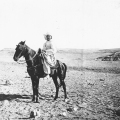
At dusk, when the sun hangs heavy over the sand, an unexpected bell shatters the devotional silence of the monastery. On the horizon, an irregular column of horsemen takes shape. This is no caravan. It carries no goods, no banners. It advances quickly, raising a threatening cloud of dust.
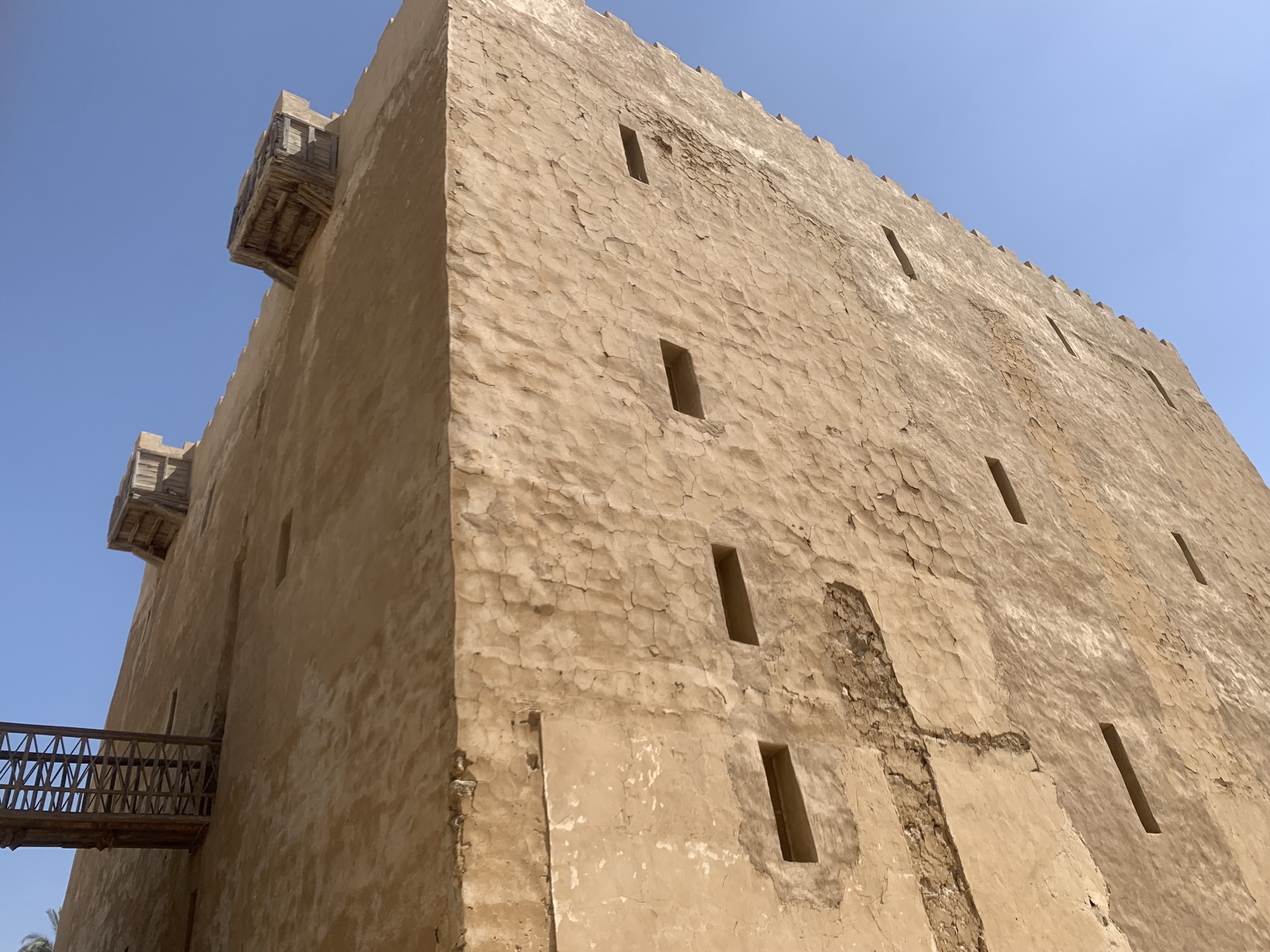
Below, in the ochre courtyards, the monks abandon what they are doing. Within minutes, bent figures clutching scrolls of parchment and papyrus are running toward the fortress. The drawbridge rises with a deep groan. From outside come war cries as the raiders begin scaling the walls.
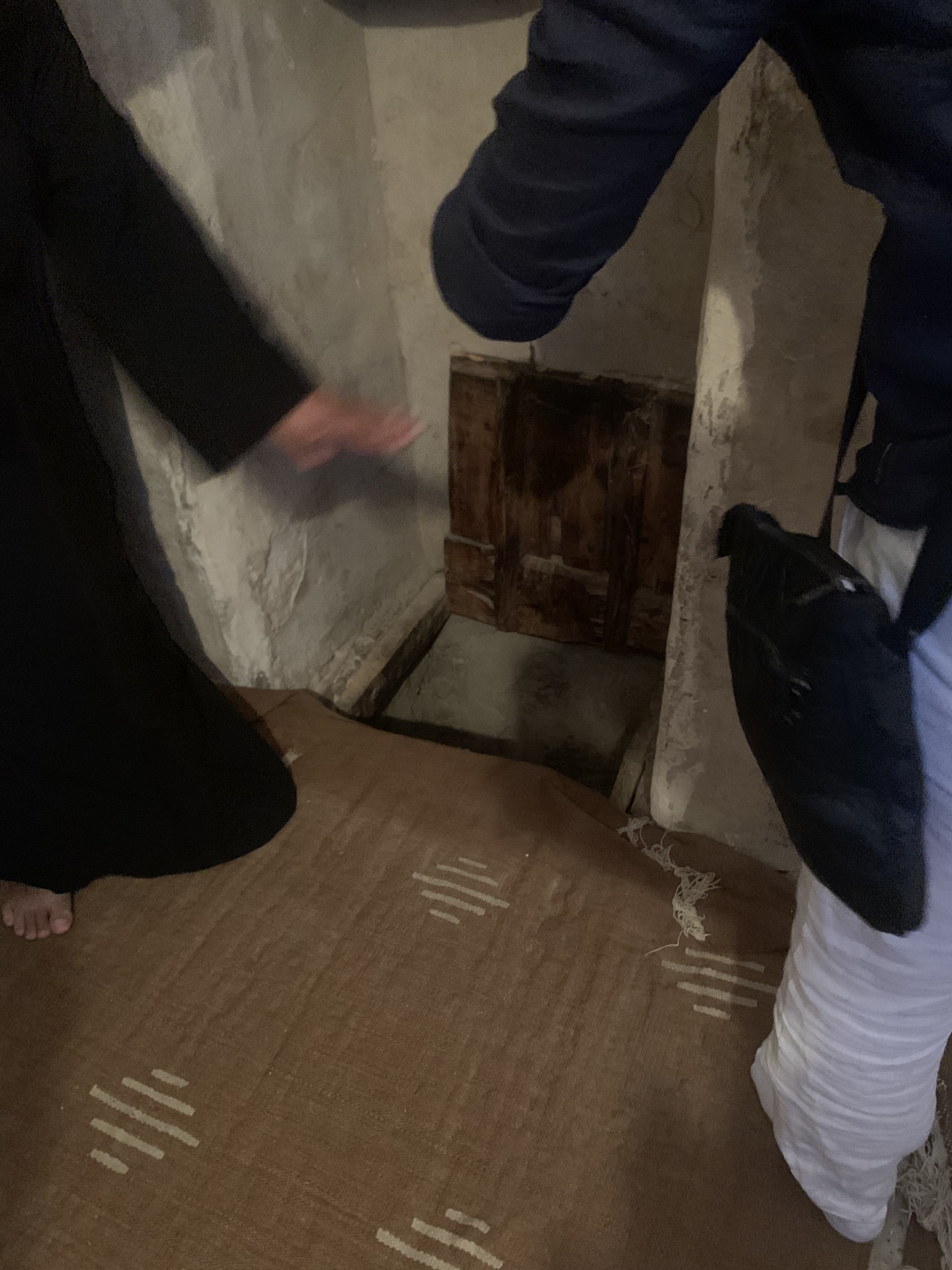
Inside the fortress, the monks climb narrow stairs to a high, almost secret chamber. There, one of the eldest kneels and lifts a floorboard. Beneath it opens a dark cavity, barely ventilated.
One by one, the scrolls are lowered into that improvised hiding place. Sacred texts, commentaries, translations, fragments of ancient knowledge — everything that could be taken by fire or plunder now suspended in a fragile wager against oblivion.
An improbable valley
To understand the significance of that gesture — concealing manuscripts beneath a false floor — one must first understand the place where it occurred. Wadi El Natrun is not an obvious destination. Set in a desert depression northwest of Cairo, its landscape is dominated by salt lakes, dunes, and sparse vegetation that seems to persist through sheer stubbornness.
For millennia it was known for its deposits of natron, the mineral salt used since antiquity in processes including mummification. And yet this inhospitable terrain became one of the most influential spiritual centers of early Christianity — hallowed, according to tradition, by the passage of the Holy Family during the flight into Egypt.
From the fourth century onward, hermits and ascetics began withdrawing to this valley in search of solitude, silence, and discipline. Figures such as Macarius the Great are credited with consolidating the monastic communities that gradually evolved into organized complexes. These men — and, less frequently, women — were not fleeing the world out of contempt but exploring it through a radical turn inward.
Over time the desert ceased to be empty space and became a network of interconnected monasteries. Places like Deir el-Surian were not merely centers of spiritual life. They were cultural oases.
The desert as archive
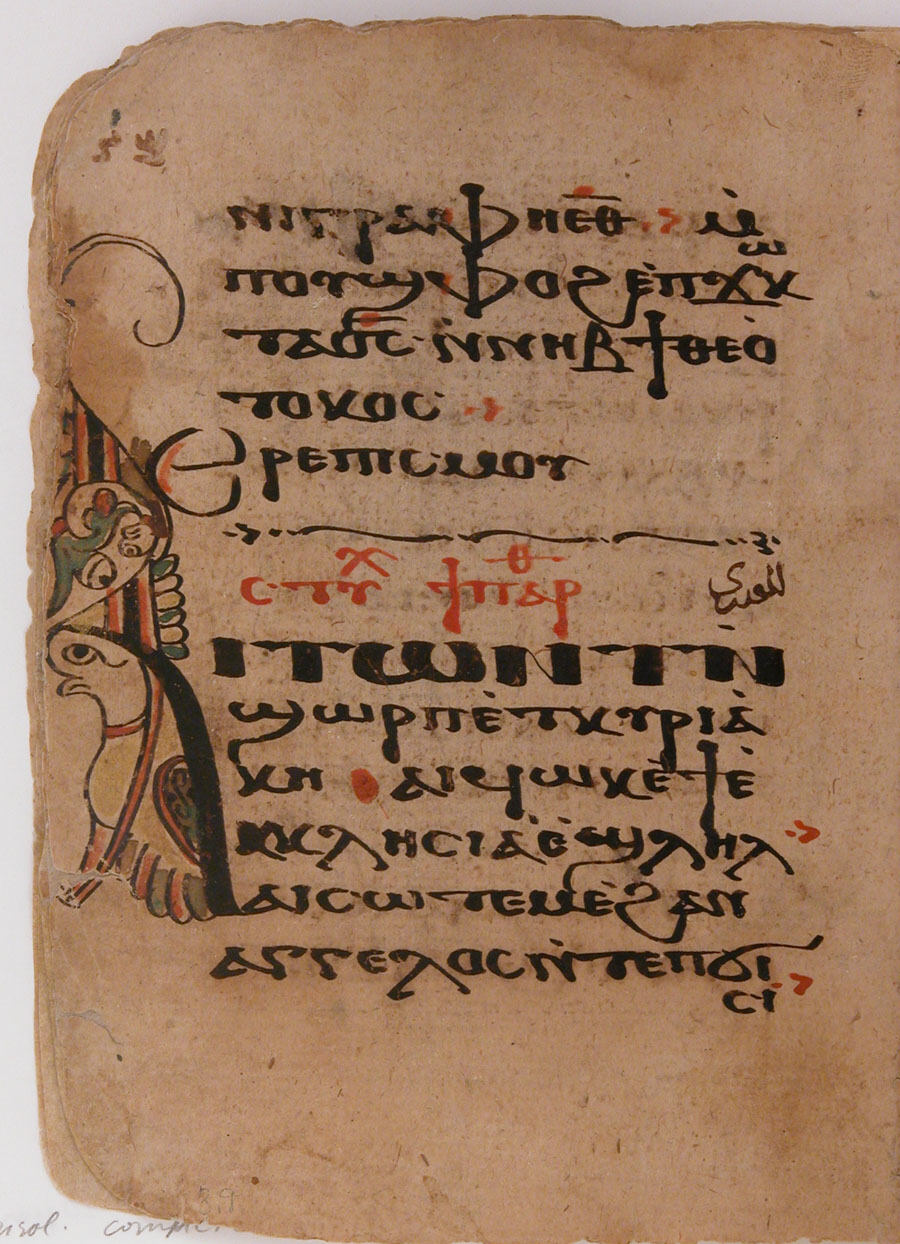
In their scriptoria, monks copied texts with a patience difficult to imagine today. Every word was traced by hand, every page prepared with care. But they did not limit themselves to religious scripture. Their libraries held multiple languages and traditions — Greek, Coptic, Syriac. Gospels, certainly, but also theological commentaries, philosophical treatises, works of medicine, fragments of classical authors.
The desert, paradoxically, became an archive. Not an institutional archive with precise inventories and shelves organized by modern criteria, but an organic repository of knowledge. Texts traveled, were translated, were adapted. A manuscript might have been copied in Syria, brought to Egypt, reinterpreted in Coptic, and discovered centuries later by a European scholar.
That silent circulation was essential to the cultural transmission between East and West. It was also fragile.
The monasteries of Wadi el Natrun were never completely isolated. Throughout their history they suffered raids, plunder, and periods of political instability. The bands that appeared on the horizon made no distinction between gold and parchment. Everything could be destroyed, sold, or repurposed without any awareness of its value.
Hence the importance of gestures like hiding manuscripts beneath the floor. These were not exceptional acts but practical responses to a constant threat. Because of them, part of that legacy survived the centuries.
Between forgetting and persistence
As Europe underwent profound transformation — the fall of empires, the reorganization of territories, seismic shifts in language and culture — the treasures of Wadi el Natrun remained largely unknown outside their local context.
The monks continued their work, though under increasingly difficult conditions. Libraries shrank, some texts were lost, others deteriorated. Yet the custodial tradition persisted — not always with modern conservation standards, but with a clear intuition: these documents mattered, even when their value could not be articulated in academic terms.
For centuries the valley existed in a kind of historical half-light for the Western world. Until, in the nineteenth century, that half-light began to lift — abruptly.
The manuscript fever
Nineteenth-century Europe was gripped by an intense fascination with the Orient. Travelers, diplomats, archaeologists, and collectors moved through territories they regarded as exotic, ancient, and in many cases available for exploration and extraction. In this climate, the monasteries of Wadi el Natrun became the destination of a new kind of visitor: the manuscript hunter.
One of the most representative figures of this phenomenon is Robert Curzon — British aristocrat, passionate collector of ancient books, who traveled through the Middle East in the 1830s with a clear objective: to acquire manuscripts for European collections.
His passage through the Egyptian monasteries is revealing. In his own accounts he describes negotiations with the monks — exchanges that frequently took place under conditions of profound cultural and economic inequality. For the monks, those texts carried spiritual and traditional value; for Curzon, they were pieces of an intellectual puzzle that Europe was beginning to reassemble.
The intentions were not always malicious. In some cases, acquiring manuscripts contributed to their preservation in institutions with superior material conditions. But the process was far from neutral.
The manuscript fever drove the mass removal of documents from their original contexts. Libraries in London, Paris, and Berlin began filling with texts from Eastern monasteries. Knowledge was preserved, yes — but also displaced, decontextualized, and taken from its rightful custodians.
Toward a more respectful inquiry
Not all visitors of the nineteenth and early twentieth centuries shared this approach. Over time, some researchers began adopting a more considered attitude toward monastic communities and their heritage.
Among them stands Hugh Evelyn White — historian and archaeologist who studied the monasteries of Wadi el Natrun in depth. Unlike the early collectors, his work was oriented less toward acquisition than toward understanding. White documented architecture, inscriptions, and living traditions. He attended to contexts, to the relationships between texts and the communities that had preserved them.
His approach marked a meaningful shift: from collecting to systematic study. It opened the way to a different understanding of the past — one that recognizes knowledge not as the accumulation of objects but as situated interpretation and ongoing dialogue with those who have been its guardians.
Reconstructing memory
Today the study of the Wadi el Natrun manuscripts continues in a profoundly transformed landscape. Academic institutions around the world collaborate on projects combining philology, history, technology, and conservation science. Universities including Yale have participated in cataloguing and digitization initiatives that aim to make these texts accessible to a global community. Manuscripts that spent centuries hidden in monastic cupboards or European display cases can now be consulted by researchers across continents.
Technology has expanded the possibilities considerably. Multispectral imaging allows scholars to read texts that appeared erased by time. Digital tools help reconstruct dispersed fragments, identifying correspondences between pieces held in different collections.
But beyond the tools, a fundamental question persists: what do these manuscripts say to us now?
The task is not simply to recover content — homilies, commentaries, treatises — but to understand the cultural networks that made them possible: how ideas circulated, how they were translated, how they adapted to different contexts. In this sense, Wadi el Natrun is not merely a place. It is a point of convergence in the intellectual history of the Mediterranean and the Near East.
What remains
Returning, finally, to the opening scene — the monk lifting a floorboard to hide manuscripts — the image acquires a different density. Each of those scrolls represented a chain of transmission: someone who wrote, someone who copied, someone who read and judged that text worth preserving. In hiding them, the monks could not know whether they would ever be recovered. Their gesture did not guarantee the future. It made the future possible.
That is, in the end, the story of the manuscripts of Wadi el Natrun: a story of fragility and persistence, of irreparable losses and unexpected survivals. A story in which anonymous figures — monks, copyists, guardians — stand alongside travelers, collectors, and scholars who each, in their own way, contributed to bringing that legacy to us.
Today, when we open a critical edition or a digital reproduction of one of those texts, it is easy to forget the journey that made it possible. Yet at some moment, in a wind-scoured desert, someone decided it was worth hiding beneath the earth. And because of that decision, we can still read it.
This content is brought to you in partnership with Synergy and the Egyptian Tourism Authority (ETA)
AI Transparency Notice
PilgriMaps uses artificial intelligence tools to assist in the research, drafting and translation of editorial content. All AI-assisted content is reviewed, edited and verified by our editorial team before publication. We contrast information against primary sources, specialist literature and on-the-ground knowledge to ensure accuracy, cultural sensitivity and editorial integrity.
AI is one tool among many in our workflow. The judgement, curation and responsibility for everything published on this platform remain entirely human.
Viator Media S.L. — in compliance with the EU Artificial Intelligence Act (Regulation EU 2024/1689).
This post is also available in: