In the heart of Egypt’s Western Desert, where the horizon takes on pale, saline hues and the wind carries echoes of distant centuries, a striking natural contrast emerges beside one of the country’s most saline lakes. There, amid waters dense with natron that have shaped the landscape over millennia, a freshwater spring surfaces – clear, still, and unexpected.
According to Coptic tradition, this spring appeared during the passage of the Holy Family in their flight into Egypt. Known as the Spring of Mary (also called the Red Spring), its presence – a source of fresh water at the edge of a lifeless, saline lake – has been interpreted as a symbol of renewal and possibility. Within an environment defined by mineral saturation and aridity, a point of sustenance appears.
This contrast – between salt that inhibits life and water that enables it – has long resonated in biblical imagery. Parallels are often drawn with the prophetic vision in the Book of Ezekiel, in which flowing water restores a dead sea. In this reading, Wadi el Natrun becomes a landscape associated with transformation and insight. Over time, such associations contributed to its later selection as a place of retreat by early Christian monastic communities.
A spring in the desert: the Holy Family in Wadi el Natrun
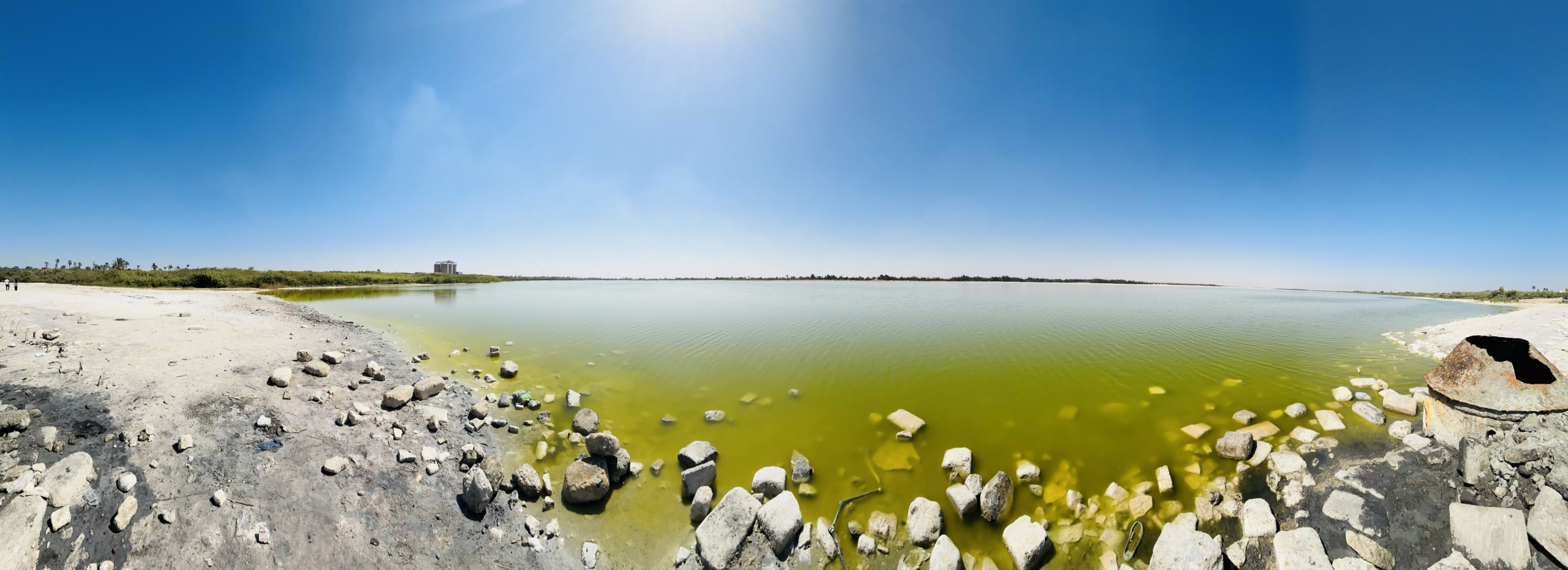
Egyptian tradition, preserved within Coptic sources, maintains that during their journey through Egypt, the Holy Family passed through this desert region. There, beside a salt lake, a freshwater spring is said to have emerged to quench their thirst. Named in reference to Mary, the spring became a symbolic marker of fertility and blessing and is now integrated into contemporary pilgrimage itineraries.
Although these accounts are not supported by direct historical documentation, their significance lies in how the landscape has been interpreted. The coexistence of fresh and saline water has been understood as an analogy embedded in place. From this perspective, Wadi el Natrun functions as a threshold—an environment where desolation and renewal appear in close proximity.
Wadi el Natrun in Pharaonic Egypt
Long before Christian narratives became associated with this desert, Wadi el Natrun held a distinct place in ancient Egyptian culture. Known as Sekhet Hemat – “the field of salt” – this depression in the Western Desert contained lakes rich in natron, a naturally occurring sodium carbonate essential to funerary practices in Pharaonic Egypt.
Natron was used in mummification as a desiccant to preserve bodies, and in the production of faience, a glazed ceramic employed in amulets and ritual objects. The material and symbolic value of the region suggests the presence of temples that no longer survive, though fragments remain. Columns, stone blocks, and inscribed elements have been reused in later Christian constructions, embedding earlier histories within new architectural forms.
The valley also appears in literary compositions such as the “Tale of the Eloquent Peasant,” indicating that it occupied a place in the cultural imagination of ancient Egypt, particularly in relation to themes of justice, mortality, and the afterlife, often associated with the cult of Osiris.
From desert silence to monastic life
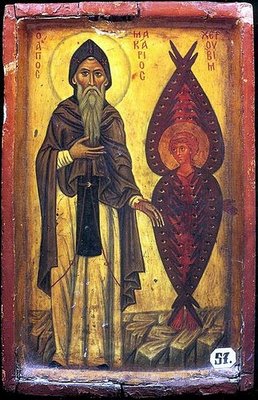
With the spread of Christianity, the meaning of the landscape was reinterpreted. Around 330 CE, Macarius the Great withdrew to this region – then known as Scetis or Shihet – to live in solitude. His example attracted followers, and over time individual cells gave way to structured communities, marking the emergence of Coptic monasticism.
This way of life combined withdrawal from society with communal organization under shared practices. Together with nearby Nitria and Kellia, Wadi el Natrun became one of the principal centers of early desert monasticism. The balance between solitude and collective life developed here would influence monastic traditions across both Eastern and Western Christianity.
The figures associated with this movement – often referred to as the Desert Fathers – shaped enduring models of discipline, reflection, and community that continue to inform religious practices.
A spiritual refuge amid instability
During the 4th and 5th centuries, the monasteries of Wadi el Natrun offered refuge during periods of religious tension and doctrinal conflict, particularly following the Council of Chalcedon, which contributed to the marginalization of the Coptic Church within the Byzantine imperial framework. In this context, monastic communities expanded as spaces of continuity and identity.
At its height, the region is thought to have contained more than fifty monasteries and hermitages. It also faced external threats: in 444 CE, a Berber raid resulted in the deaths of forty-nine monks, whose remains are still preserved in the Monastery of Macarius.
In response, fortified towers and defensive walls were constructed, many of which remain visible. These structures reflect the challenges of sustaining communal life in a remote and often unstable environment.
Four enduring monasteries
Today, four monasteries remain active, each representing layers of historical and cultural development.
- The Monastery of Saint Macarius the Great, founded in the 4th century, has been continuously inhabited and has played a role in modern spiritual renewal movements.
- The Monastery of Saint Bishoy is associated with the preserved body of its namesake and with Pope Shenouda III.
- Deir El-Surian (the Monastery of the Syrians), established in the 6th century, became a center for manuscript transmission, particularly texts brought from Mesopotamia.
- Deir El-Baramus, often considered the oldest, is linked to early Christian figures of Roman origin and is noted for its architectural coherence and medieval frescoes.
Cloister of the Deir el Baramus monastery, in Wadi el Natrun. Credits: Inma Alvarez – PilgriMaps
Beyond their religious functions, these monasteries hold considerable archaeological and historical value. Excavations have uncovered crypts, artifacts, and relics, including remains traditionally attributed to John the Baptist and the prophet Elisha in the Monastery of Macarius.
Monastic libraries – especially that of Deir El-Surian – contain manuscripts in Greek, Coptic, Syriac, and Arabic, contributing significantly to the study of Eastern Christianity. Many have now been digitized, allowing broader access to these materials.
In 2003, Egypt proposed Wadi el Natrun for inclusion on the UNESCO World Heritage list, and renewed its candidacy in 2020, recognizing its importance as both a cultural and historical landscape.
The Holy Family Trail
In 2018, Egypt’s Ministry of Tourism and Antiquities incorporated Wadi el Natrun into the Holy Family Trail, a route connecting sites traditionally associated with the journey of Mary, Joseph, and Jesus. While the historical basis for these associations remains uncertain, their symbolic and cultural significance has been formally acknowledged.
Within this framework, the Spring of Mary serves as a focal point, while the monasteries offer spaces for reflection that align with long-standing traditions of retreat and contemplation. The emphasis lies less on precise geography than on the capacity of the landscape to sustain meaning across generations.
Wadi el Natrun emerges, therefore, as a site of continuity across civilizations. From ancient Egyptian ritual practices to the formation of monastic communities, the valley reflects a sustained engagement with questions of mortality, transformation, and endurance. Along the edges of its salt lakes – where a freshwater spring still flows – the environment continues to suggest that even within conditions of apparent sterility, forms of life and meaning can persist.
AI Transparency Notice
PilgriMaps uses artificial intelligence tools to assist in the research, drafting and translation of editorial content. All AI-assisted content is reviewed, edited and verified by our editorial team before publication. We contrast information against primary sources, specialist literature and on-the-ground knowledge to ensure accuracy, cultural sensitivity and editorial integrity.
AI is one tool among many in our workflow. The judgement, curation and responsibility for everything published on this platform remain entirely human.
Viator Media S.L. — in compliance with the EU Artificial Intelligence Act (Regulation EU 2024/1689).
This post is also available in: