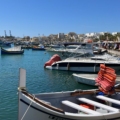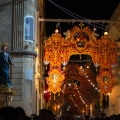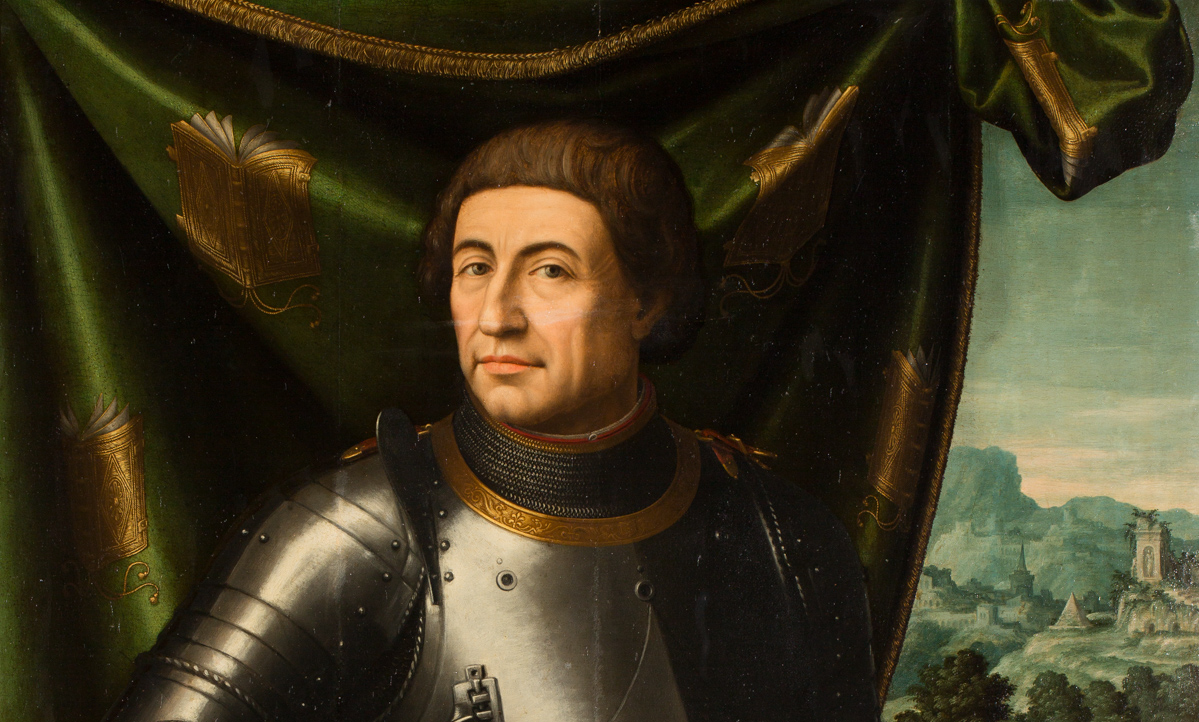
In 1432, King Alfonso V of Aragon – known as the Magnanimous – made a highly unusual decision. Amid a military campaign against the Hafsids in Djerba, he broke from warfare to undertake a pilgrimage. Rather than returning directly to Naples, he stopped in Malta, a territory still bearing the scars of revolt and invasion. From there, he traveled north toward a cave sanctuary: the Shrine of Our Lady of Mellieħa.
This gesture was not arbitrary. Alfonso was not solely a military strategist or political operator; he was also a ruler known for acts that expressed a distinct concern for the vulnerable. In Catalonia, he had lightened feudal burdens on rural communities. In Sicily, he introduced agricultural and fiscal reforms aimed at alleviating hardship. In Malta, that reformist impulse took symbolic shape: a monarch visiting the island’s most beloved Marian sanctuary, just a few years after a popular uprising and a brutal siege.
Rebellion, ransom, and royal concession
To understand the significance of Alfonso’s visit, it is necessary to revisit the events of a decade earlier. In 1421, the island of Malta was granted as a fief to Gonsalvo Monroy, a Catalan nobleman whose administration swiftly became despised. His imposition of heavy taxes led to widespread impoverishment, culminating in a revolt in 1425. The uprising began in Gozo and soon spread to Malta’s main island. Rebels looted Monroy’s residence in Mdina and besieged the Castrum Maris in Birgu, where his wife, Doña Costanza, had taken refuge.
At the height of the crisis, a prominent Maltese noble, Antonio Inguanez, offered his own children as hostages in exchange for her release – a striking act of local diplomacy under duress. The rebels negotiated a ransom of 30,000 florins to lift the feudal claim, a sum well beyond their means. However, Monroy eventually forgave the debt in his will.
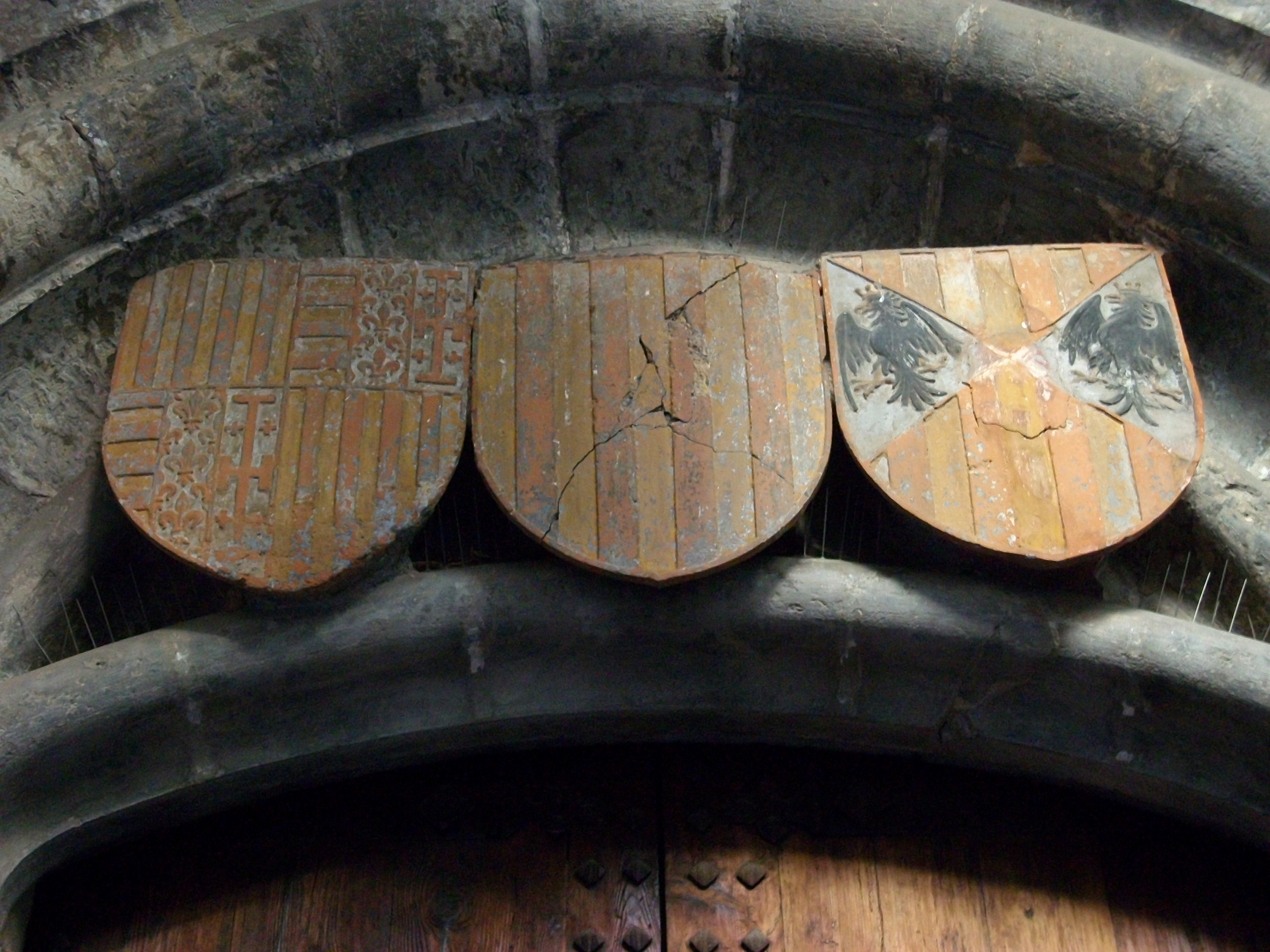
When Alfonso V confirmed Malta’s release from feudal obligation in 1428, he went further. He granted the Maltese the unprecedented legal right to resist future oppression – a radical concession in 15th-century Europe. Echoing his defense of serfs in Catalonia, this move elevated Alfonso’s reputation among Mediterranean communities who had long struggled under rigid hierarchies.
The Siege of 1429
The island’s hopes for stability were soon shattered. In 1429, a massive Hafsid fleet from Tunis, carrying more than 15,000 men and 200 horses, launched a devastating assault on Malta. Though the attackers failed to breach Mdina, they razed Rabat, looted much of the island, damaged the sanctuary at Mellieħa, and abducted between 3,000 and 4,500 people for enslavement.
The trauma of this siege entered Maltese collective memory, giving rise to legend. Medieval narratives tell of apparitions – Saint Paul, Saint Agatha, and Saint George – defending the city walls. Within Christian tradition on the island, the siege of 1429 became a watershed moment, often likened in importance to the more widely known Great Siege of 1565.
Mellieħa: A sanctuary embedded in stone
By the time Alfonso V visited the island, the Sanctuary of Mellieħa had long been central to the island’s devotional geography. Carved into a limestone cliff, the cave houses an icon once attributed to Saint Luke. Though the extant fresco dates to the 13th century and follows a Sicilian-Byzantine style, the sanctuary itself is older. Mary is depicted as Hodigitria—the one who shows the way.
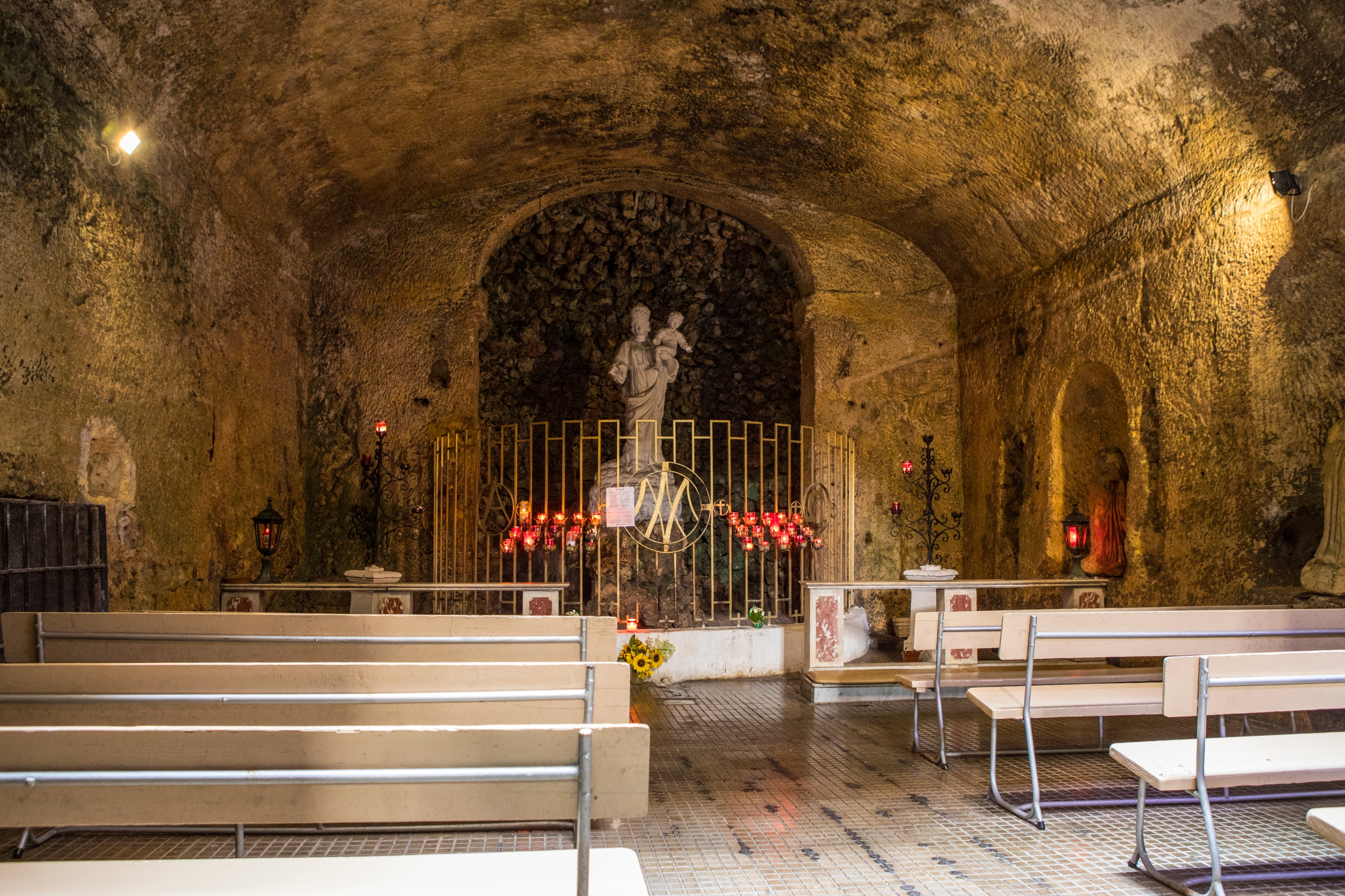
The site’s sacred associations date back at least to the early 5th century. Some accounts suggest it was consecrated in 409 CE, in connection with the Council of Ephesus (431), which defined Mary as Theotokos (God-bearer). During restorations carried out between 2013 and 2016, researchers uncovered traces of early veneration: inscriptions reading “MAT DEI” along the icon’s edge, a flower on Mary’s forehead, a cross within the child’s halo, and remnants of imperial purple—symbols indicating long-standing reverence.
Like many Marian sanctuaries in Europe, Mellieħa stands on ground that once hosted older traditions. Before Christianization, the cave was reportedly dedicated to Astarte, a Phoenician deity linked to the heavens, later replaced by the Roman Juno. Only after the legal recognition of Christianity was the site rededicated to Mary. This layered history parallels other examples, such as the transformation of the Temple of Artemis in Ephesus. It reflects a continuity in the human need for sacred space, protection, and symbolic orientation.
Castrum Maris: Fortress of memory
Near Mellieħa lies another site steeped in memory: the Castrum Maris, now known as Fort Saint Angelo. This medieval stronghold was a key site during the revolt against Monroy and has served as a bastion of civic identity since the 13th century. Within its walls stood two early churches—one dedicated to Mater Dei and the other to Saint Angelo.
For centuries, the fort embodied the intersection of power, commerce, and belief. It provided shelter to merchants, Hospitaller knights, and religious communities from across the Mediterranean. Today, it remains a visible marker of the island’s cultural and symbolic endurance.
A route reopened: The pilgrimage of Mariae Melitensis
Nearly six centuries after Alfonso’s visit, the route to Mellieħa has been retraced. In 2024, the Maltese association XirCammini inaugurated a new pilgrimage path named Mariae Melitensis. Spanning 60 kilometers between Fort Saint Angelo and the sanctuary, the route is part of a wider effort to document and map sites of Marian devotion across Malta.
Equipped with a guidebook, website, and digital app, Mariae Melitensis joins a growing network of European spiritual itineraries. It offers a journey through layered histories, natural landscapes, and enduring memory—one that blends cultural heritage with introspective travel.
A Monarch on his knees
When Alfonso V entered the cave sanctuary of Mellieħa in 1432, he did so not as a ruler asserting control, but as a pilgrim. His visit marked the culmination of a narrative shaped by political reform, social upheaval, and popular resilience. As in other regions under his reign, Alfonso recognized that legitimacy often stemmed not from conquest, but from the capacity to listen, restore, and respond.
Today, to walk the path of Mariae Melitensis is to follow the contours of that legacy: shaped by revolt, marked by suffering, and animated by the stories of those who sought shelter in a sacred cave carved from stone.
This content has been brought to you in partnership with VisitMalta
The Great Siege of Malta: A collective pilgrimage of Faith and Resistance
AI Transparency Notice
PilgriMaps uses artificial intelligence tools to assist in the research, drafting and translation of editorial content. All AI-assisted content is reviewed, edited and verified by our editorial team before publication. We contrast information against primary sources, specialist literature and on-the-ground knowledge to ensure accuracy, cultural sensitivity and editorial integrity.
AI is one tool among many in our workflow. The judgement, curation and responsibility for everything published on this platform remain entirely human.
Viator Media S.L. — in compliance with the EU Artificial Intelligence Act (Regulation EU 2024/1689).
This post is also available in: