A familiar question in Naples – T’ piac o presepio? – carries more weight than it seems. Locally, it works almost like a social password, a phrase that reveals sensibilities shaped by craft, memory, and the distinctive way Neapolitans interpret their surroundings. Here, the presepe, or nativity scene, functions less as seasonal décor and more as a cultural statement. It is inherited, curated, and fiercely protected. For centuries it has served as a mirror through which Naples has chosen to see itself: theatrical, baroque, vibrant, and marked by contrasts where the extraordinary grows directly from everyday life.
A living tableau
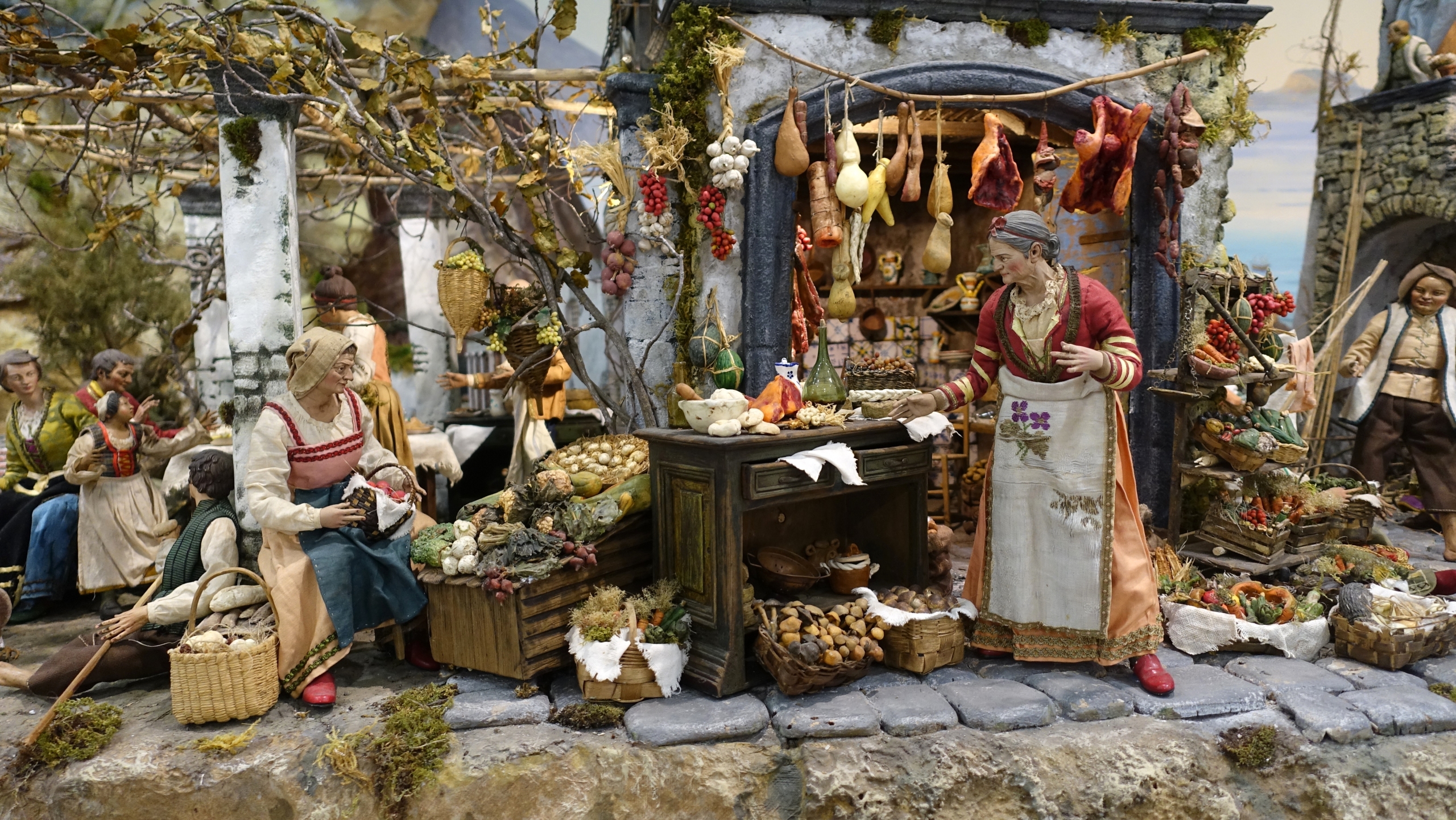
Encountering a traditional Neapolitan presepe for the first time often feels like entering another world. The central scene is only one element within a dense, animated landscape. The layout expands into terraces, staircases, improvised rooftops, crowded markets, and taverns that seem to emerge organically from one another. In the background, Mount Vesuvius rises as a constant reminder of the city’s geological and cultural horizon.
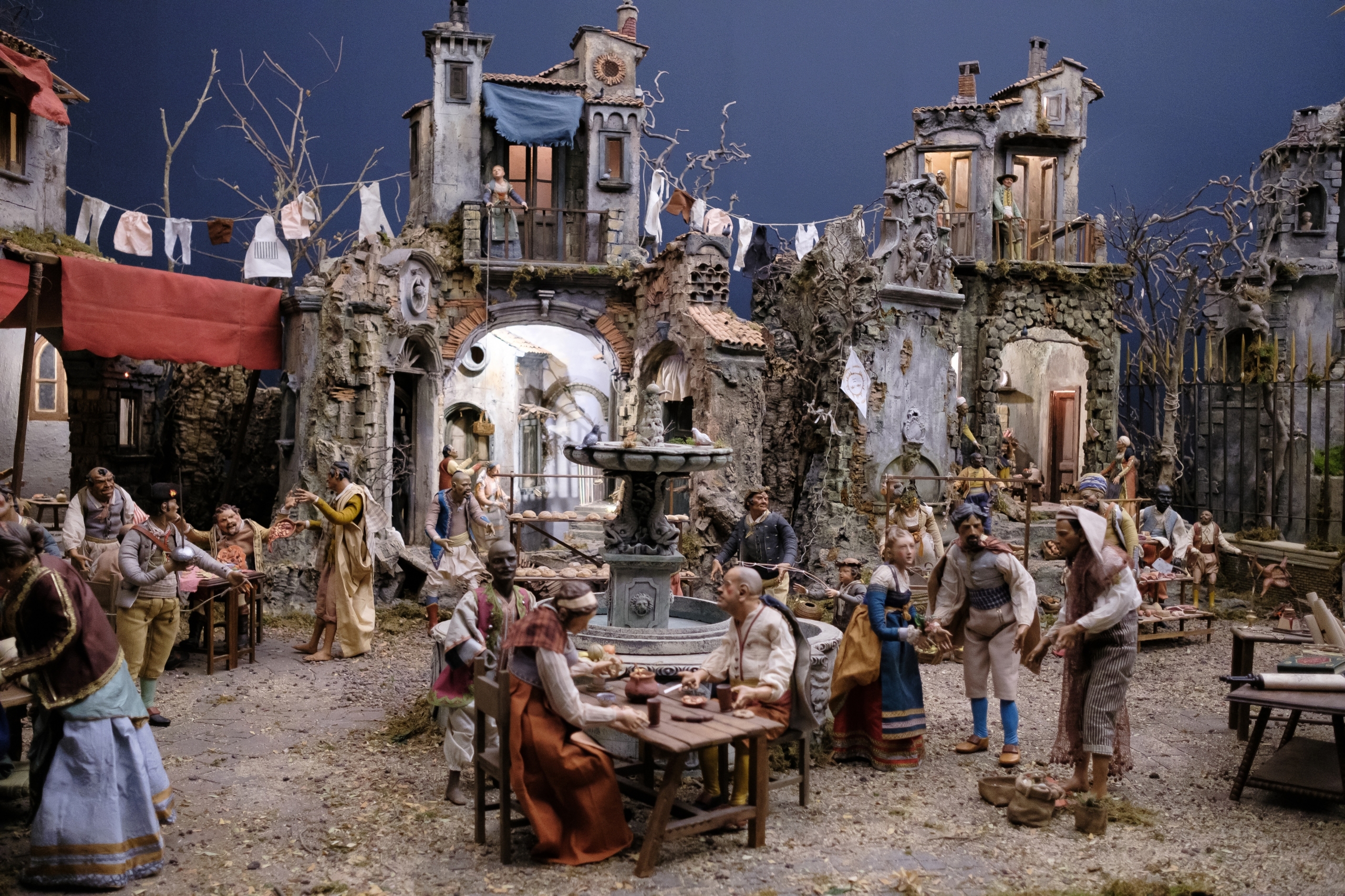
Lighting is carefully orchestrated not to highlight but to dramatize. Shadows shape the narrative. The Holy Family appears not as an isolated focal point but as part of a busy urban environment. The composition introduces an underlying symbolic geography: a bridge marking transitions between visible and invisible realms; a well linking the surface to subterranean beliefs; an oven recalling bread-making traditions that anchor communal life; and the marketplace, where vendors represent a full calendar year—each trade corresponding to a month in a cyclical vision of time.
The cast of figures is equally elaborate. Benino, the sleeping shepherd, opens the narrative through a dream; a fortune-teller stands nearby; fishermen, hunters, washerwomen, merchants, nobles, street performers, children, artisans, and beggars populate the scene. Their presence turns the tableau into a panorama of society, capturing both its aspirations and its imperfections.
From medieval origins to Neapolitan reinvention
The earliest documented nativity representation dates to 1223 CE in Greccio, when a simple living tableau was arranged to convey a biblical narrative to largely illiterate audiences. Naples encountered this tradition in the following centuries and reshaped it according to its own artistic language. By the 1500s and 1600s, nativity scenes appeared in churches and monastic settings across the city, but a major transformation unfolded through the influence of Gaetano da Thiene (1480–1547 CE).
Gaetano’s approach incorporated ordinary people—laborers, merchants, women with children, and itinerant workers—into the scene. The decision situated the narrative within the noise and texture of daily life. For Neapolitan artisans and patrons, this became an opportunity to portray themselves and their surroundings through miniature theatre. From that point forward, the presepe evolved beyond a devotional tableau and grew into a self-reflective urban portrait.
The eighteenth-century flourishing
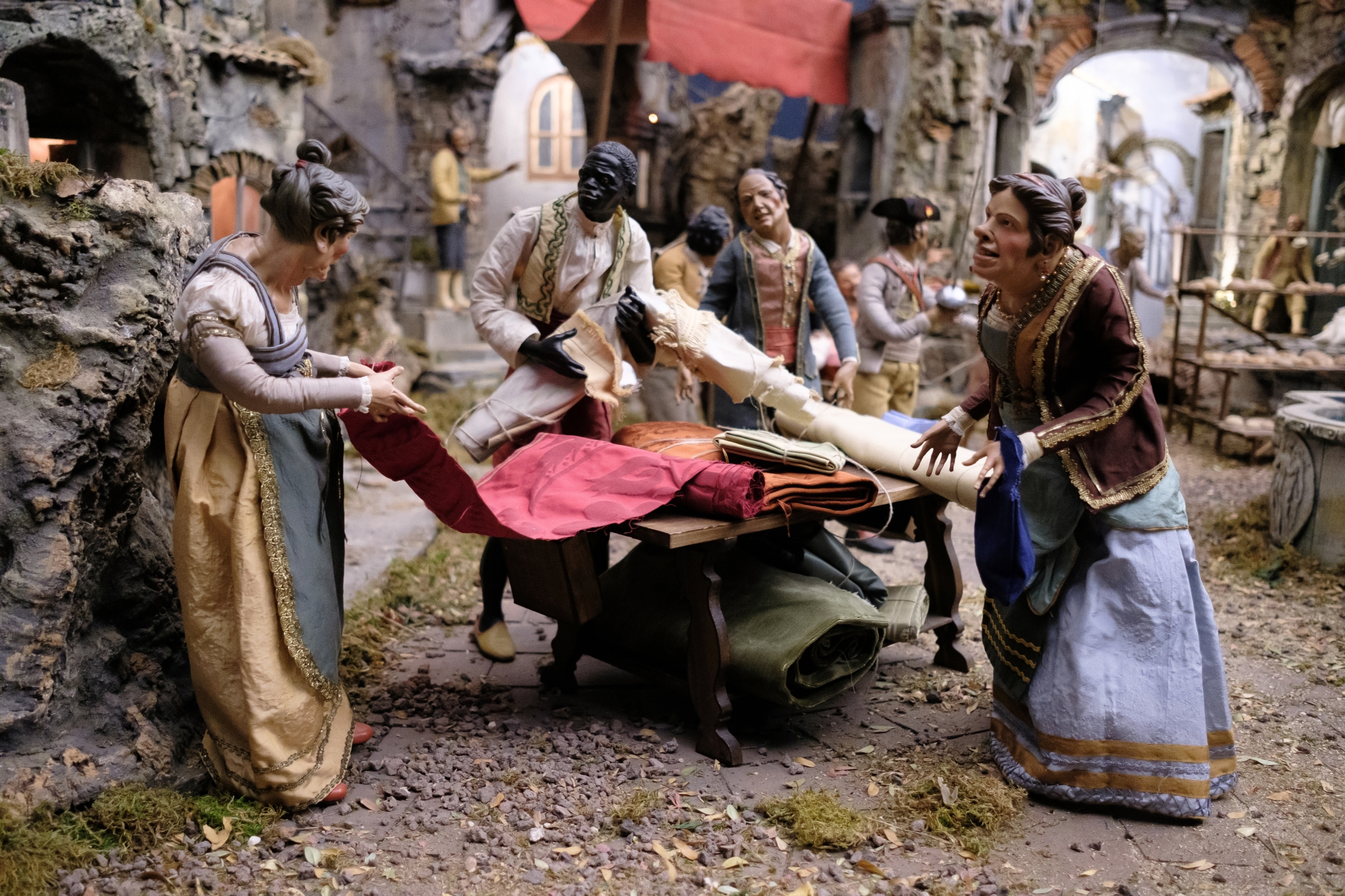
The 1700s marked the golden era of Neapolitan nativity art. Under the patronage of Charles III, Naples experienced intense artisanal innovation. The monarch reportedly assembled his own nativity scenes, and aristocratic families competed to create ever more elaborate installations in their palaces. These compositions reached operatic scale: architectural settings resembling stage sets, sculpted figures animated with meticulous realism, and costumes produced in the renowned San Leucio textile workshops.
Sculptors such as Giuseppe Sanmartino heightened the expressive quality of the figures, giving them gestures and gazes that suggest a pulse beneath the terracotta. As these works circulated through European courts—especially after Charles III moved to Spain—they became ambassadors of Neapolitan craftsmanship, eventually entering museums and private collections far beyond Italy.
Between the sacred and the ordinary
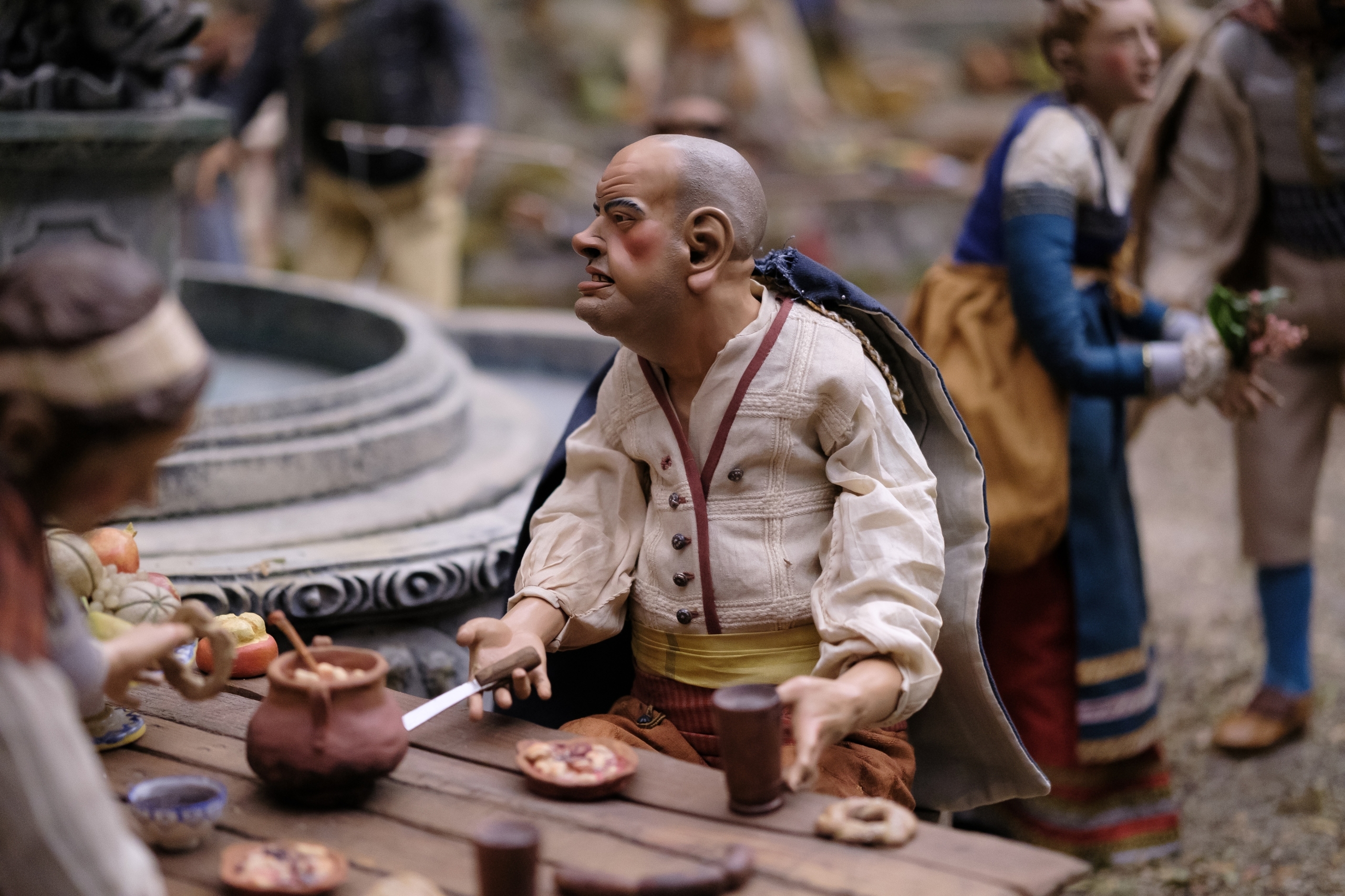
One feature that surprises many visitors is the deliberate coexistence of the extraordinary with the mundane. A card player, a tavern brawler, an aristocrat, or a courtesan might stand only steps from the central scene. This juxtaposition reflects a long-standing Neapolitan artistic principle: the representation of life in its full spectrum. The presepe does not isolate a moment but embeds it within a social environment where contradictions, humor, and vulnerability coexist.
This tradition continues in Via San Gregorio Armeno, where artisans produce figures ranging from the classic to the contemporary. Alongside eighteenth-century-style shepherds, visitors find caricatured versions of modern public figures, athletes, political leaders, and entertainers. Diego Armando Maradona appears frequently, reflecting his iconic status in the city; so do actors, chefs, and fictional characters. The presepe absorbs the present as readily as it preserves the past.
A tradition under pressure – and in renewal
Recent years have challenged this craft heritage. Economic strain and the pandemic threatened many family-run workshops. Yet initiatives by community groups, schools, and cultural associations have supported apprenticeships, promoted heritage-preservation programs, and sustained proposals for UNESCO recognition. Their work underscores the understanding that the Neapolitan presepe is not simply a collectible object. It is a system of knowledge—combining sculpture, set design, textiles, storytelling, and social commentary.
Ultimately, the presepe endures because it offers a vivid miniature of urban life. Its blend of baroque flair, humor, realism, and symbolic depth allows viewers to engage with a familiar narrative through the lens of human experience. In this miniature city carved from wood, clay, fabric, and imagination, Naples expresses its identity with remarkable clarity. Visitors often recall the moment they first looked into one of these scenes; its density and humanity leave a lasting impression.
AI Transparency Notice
PilgriMaps uses artificial intelligence tools to assist in the research, drafting and translation of editorial content. All AI-assisted content is reviewed, edited and verified by our editorial team before publication. We contrast information against primary sources, specialist literature and on-the-ground knowledge to ensure accuracy, cultural sensitivity and editorial integrity.
AI is one tool among many in our workflow. The judgement, curation and responsibility for everything published on this platform remain entirely human.
Viator Media S.L. — in compliance with the EU Artificial Intelligence Act (Regulation EU 2024/1689).
This post is also available in: