The United States has no Santiago de Compostela, no Canterbury, no Via Francigena. What it has is a constellation of potential sacred sites, a handful of candidates for canonization, and a pilgrimage culture that is beginning — tentatively, unevenly, with considerable energy — to invent itself.
There is a moment in the history of every pilgrimage tradition when the road does not yet exist. Someone walks anyway. Others follow. A path appears. Centuries later, what began as an improvised act of devotion has become infrastructure — waymarks, hospices, confraternities, maps, the whole apparatus of a living route. Europe’s great pilgrimage roads did not spring into existence fully formed. They were built by the accumulation of individual journeys, each one finding the next a little easier because someone had passed before.
The United States is, by the standards of pilgrimage history, a very young country with a thin sacred geography — at least in the Catholic and broadly Christian sense that underlies the European tradition. And yet the conditions for a pilgrimage culture are assembling themselves with unusual speed. A cluster of canonization causes is moving through Rome. An existing route in California connects historic sacred sites along the coast. A generation of American Catholics — and, increasingly, secular walkers drawn to the form if not the theology — is looking for something to walk toward.
The candidates
The pipeline of American canonization causes is longer than most people realize, and several are at stages that make them realistic prospects for the coming decade.
Saint Elizabeth Ann Seton
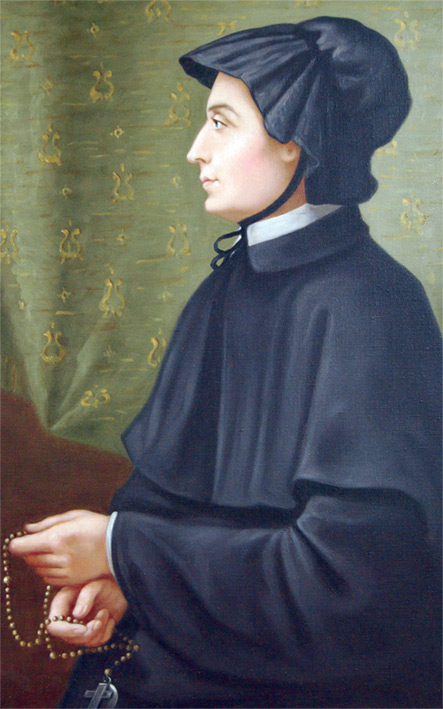
The first person born in the United States to be canonized — raised Episcopalian in New York, widowed at thirty, converted to Catholicism in 1805, and dead of tuberculosis at forty-six — left behind a legacy that reshaped American Catholic life in ways still visible today. Mother Seton founded the first free Catholic school for girls in the United States in Emmitsburg, Maryland, and established the Sisters of Charity, the first religious congregation founded by an American citizen. Pope Paul VI canonized her in 1975.
Her National Shrine in Emmitsburg — where she lived, founded her school, and is buried — is one of the oldest and most established Catholic pilgrimage sites in the country, drawing tens of thousands of visitors each year. The shrine sits in the foothills of the Blue Ridge Mountains and includes the Stone House where she first settled, the White House where her community grew, the chapel, and her tomb. A pilgrimage corridor connecting Emmitsburg to the Basilica of the National Shrine of the Assumption of the Blessed Virgin Mary in Baltimore — the first Catholic cathedral in the United States, where Seton worshipped after her conversion — covers roughly sixty miles and traces the geography of early American Catholicism with unusual coherence. It is one of the most ready-to-walk routes in the eastern United States, waiting only for the waymarks.
Saint Frances Xavier Cabrini
The first American citizen to be canonized — though her Americanness came late and almost administratively, after decades of work that had already transformed the landscape of Catholic charity on two continents — arrived in New York in 1889 with six sisters and instructions from Leo XIII to go west rather than east. Born near Milan in 1850, she had founded the Missionary Sisters of the Sacred Heart of Jesus and expected to go to China. Instead she spent the rest of her life crossing the Atlantic, crossing the Andes, and crossing the United States, founding hospitals, schools, and orphanages from New York to Colorado to Seattle. She died in Chicago in 1917 having founded sixty-seven houses; Pius XII canonized her in 1946 and named her patroness of all migrants.
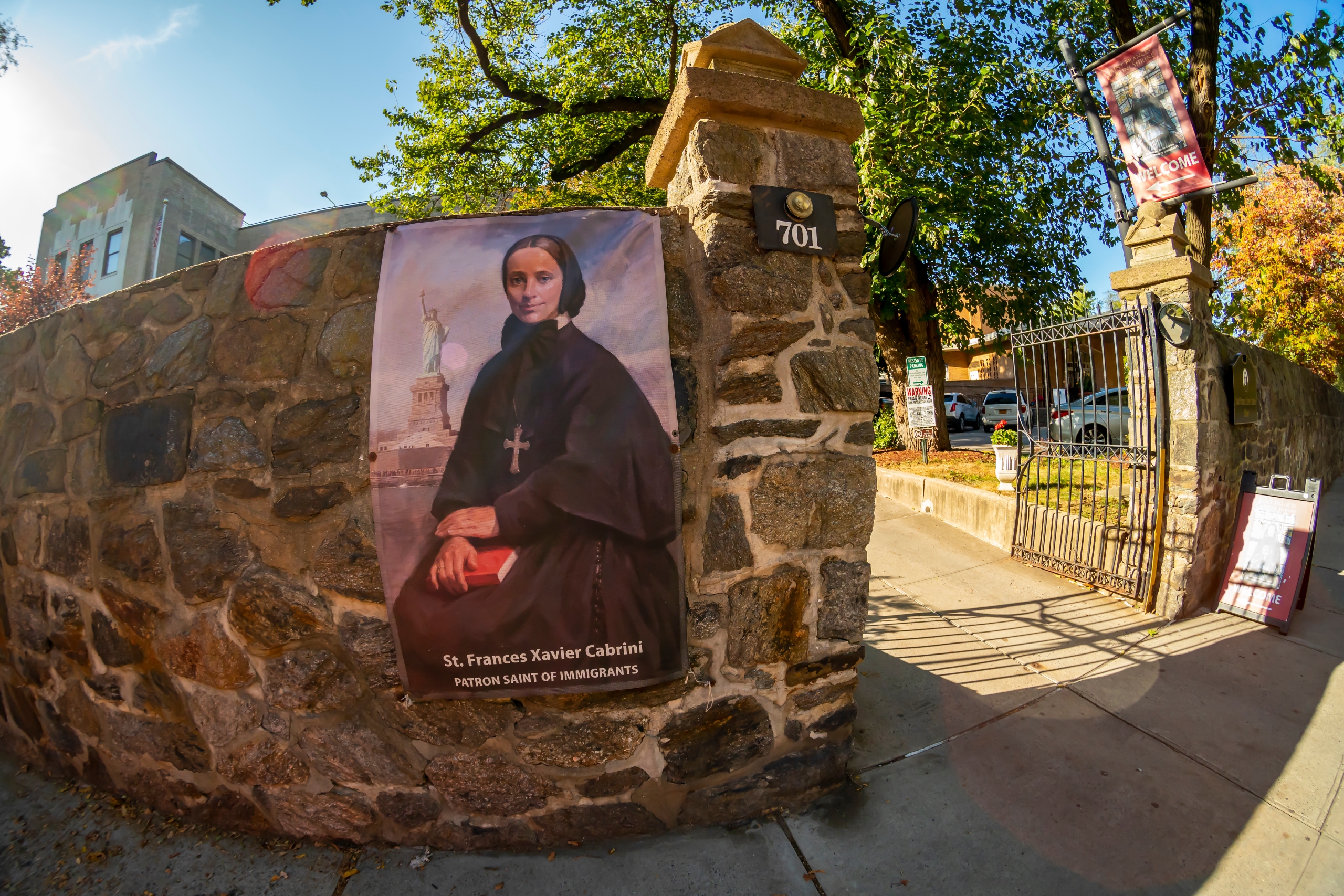
Her principal shrine in the United States is the Mother Cabrini Shrine in Golden, Colorado — set on a hillside above Denver, with a monumental statue of Christ of the Rockies visible for miles, and a spring whose waters Cabrini is said to have discovered by striking the ground and commanding water to appear. The site attracts pilgrims from across the country and is particularly cherished by Latino Catholic communities. In New York, the Saint Frances Cabrini Shrine in Washington Heights occupies the chapel where her body rested after death and where her arm remains as a first-class relic. Between Golden and New York lies the full geography of her American life — a transcontinental pilgrimage route that, if anyone chose to walk it, would pass through the cities and landscapes she spent thirty years crossing by ship, train, and on foot.
Blessed Carlos Manuel Rodríguez Santiago
Known simply as “Charlie” — was beatified by Pope John Paul II in 2001, the first layperson from Puerto Rico and the Caribbean to receive that honor. Born in Caguas in 1918, he died of cancer at forty-four, having spent his short life in intense liturgical and catechetical work, above all around the Easter Vigil. His canonization requires a second verified miracle following beatification. The Vatican investigated several possible miracles in the years after his beatification, and devotion to him remains strong in Puerto Rico and across the Latino Catholic world. His story has an inherently pilgrimage-friendly quality: a layperson, a music lover, a man who found the sacred in the most ordinary liturgical gestures, whose life traces a compact geography in Puerto Rico that could, in time, become a walking route.
Venerable Augustus Tolton
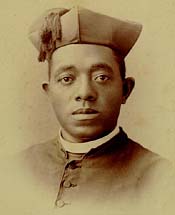
Born into slavery in Missouri in 1854, escaped with his family via the Underground Railroad, rejected by every American seminary, ordained in Rome in 1886, and dead of heat stroke in Chicago at forty-three — was declared Venerable by Pope Francis in 2019, meaning the Church has formally recognized that he lived a life of heroic virtue. His cause now awaits the verification of a miracle for beatification. The geography of Tolton’s life — Missouri, Quincy in Illinois, and Chicago — already draws organized pilgrimages, and in 2025 two separate Jubilee pilgrimages were organized in his honor, one during Holy Week beginning at a retreat center in Shelbina, Missouri, and ending at his grave in Quincy. A Midwestern pilgrimage corridor anchored by Tolton’s story is one of the most naturally compelling American routes waiting to be formally developed.
Servant of God Dorothy Day
Co-founder of the Catholic Worker movement, journalist, activist, and convert — presents a more complex canonization trajectory. Her cause was formally opened by the Archdiocese of New York in 2000, and she was named Servant of God at that time. The cause has moved slowly: evidence of her sanctity was sent to Rome in 2021, and in late 2025 the Dicastery for the Causes of Saints appointed a relator for the cause — Monsignor Maurizio Tagliaferri — a meaningful step forward. The next milestone would be a declaration of Venerable, recognizing heroic virtue, which has not yet occurred.
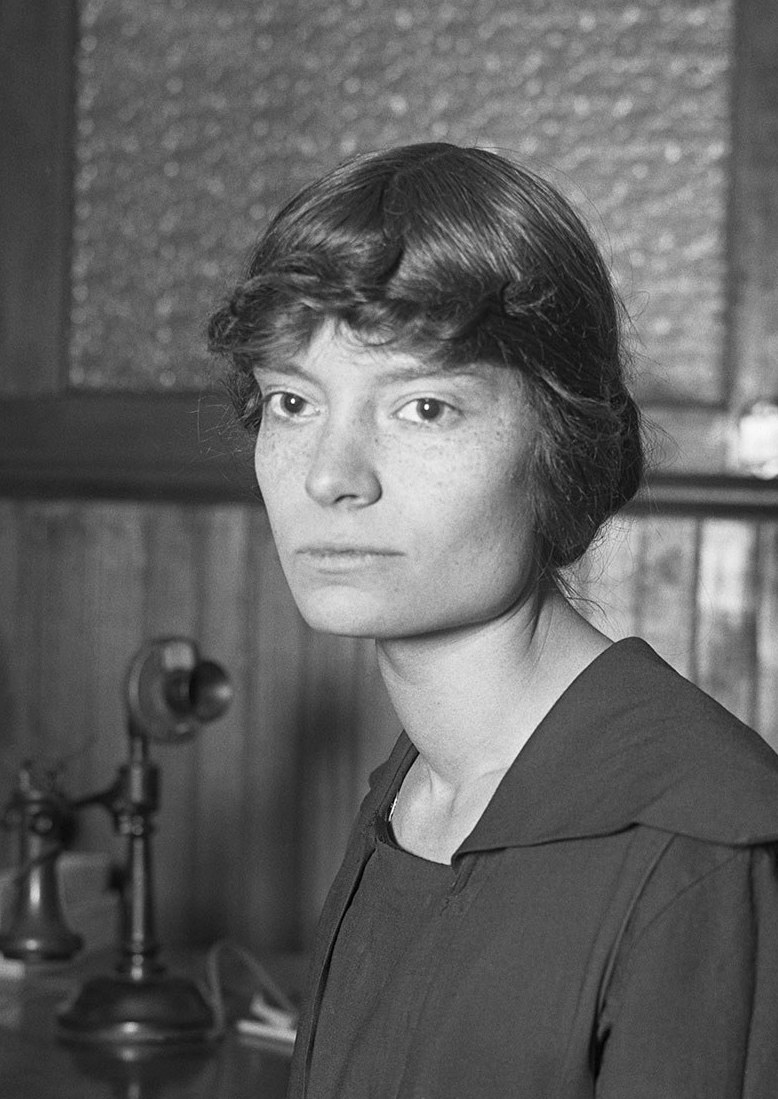
Day is theologically beloved but also contested, and the Vatican’s discernment of causes involving politically charged figures tends to proceed carefully. Nevertheless, her network of Catholic Worker houses across the country provides a ready-made pilgrimage infrastructure: a walker could trace a route between Worker houses in New York, Pittsburgh, Chicago, and Los Angeles, connecting sites of service and poverty that she visited throughout her life.
Servant of God Thea Bowman
Franciscan sister, theologian, singer, and the only Black woman ever to address the United States Conference of Catholic Bishops, which she did from a wheelchair in 1989 as she was dying of cancer — has a cause opened by the Diocese of Jackson, Mississippi, in 2018. The diocesan phase of her cause concluded in February 2026, when Bishop Joseph Kopacz sealed ten boxes of documents and findings for transfer to the Dicastery for the Causes of Saints in Rome. The Roman phase of her cause is now underway. She has not yet been declared Venerable, meaning the process is at an earlier stage than Tolton’s, but her popularity — particularly in African American Catholic communities and among those drawn to her extraordinary synthesis of Black spiritual tradition and Catholic theology — gives her cause considerable momentum.
Blessed Michael McGivney
Founder of the Knights of Columbus, the largest Catholic fraternal organization in the world — was beatified by Pope Francis in October 2021. Born in Waterbury, Connecticut in 1852 to Irish immigrant parents, he founded the Knights in New Haven in 1882 as a mutual aid society for working-class Catholic men. He died of tuberculosis in 1890 at thirty-eight. His cause for canonization is now active, with a second miracle required. Saint Mary’s Church in New Haven, where he founded the Knights, is already an established pilgrimage destination for members of the organization from around the world, and his remains enshrined in Waterbury draw steady devotion. A Connecticut pilgrimage route connecting these sites — walkable in two or three days — is one of the most geographically natural American pilgrimage circuits waiting to be formally marked.
Father Michael J. McGivney and the landscape of American pilgrimage
Blessed Stanley Rother
An Oklahoma priest and missionary murdered in Guatemala in 1981 — was beatified in 2017, making him the first American-born martyr to be beatified. His cause for canonization is active. His shrine in Oklahoma City is already a pilgrimage destination, and his story connects the American heartland to Guatemala in a way that resonates strongly with the large Central American diaspora in the United States.
The road that already exists
If American pilgrimage culture has an existing backbone, it is the California Mission Trail — the chain of twenty-one Franciscan missions established between 1769 and 1833 along the California coast from San Diego to Sonoma, connected by the historic road known as El Camino Real. A parallel, though lesser-known, route, the Camino Real, which connected the Florida missions, is beginning to re-emerge from oblivion.
The missions were founded under the direction of Junípero Serra, canonized by Pope Francis in 2015 in a decision that generated significant controversy given the missions’ role in the devastation of indigenous populations. Any honest engagement with this route must grapple with that history — not set it aside in favor of a purely devotional narrative. The missions are sites of both spiritual significance and historical violence, and the pilgrimage culture beginning to develop around them is most credible when it holds both truths simultaneously, as some indigenous-led organizations and Catholic communities in California are attempting to do.
As a physical route, El Camino Real has genuine pilgrimage potential. The missions are spaced roughly a day’s walk apart — they were designed to be — and the landscape between them, particularly in the central and northern sections, is some of the most beautiful walking terrain in North America. A small but growing number of walkers are covering sections of the route on foot, and several Catholic organizations have begun developing waymarking and hospitality infrastructure. It is not yet a pilgrimage route in the full sense — the cultural apparatus is thin, the waymarks are inconsistent, the hospice network barely exists. But the bones of a route are there.
A Spanish colonial legacy rediscovered in Florida’s Camino Real
The culture waiting to be built
What American pilgrimage is missing is not sacred sites. It has those. What it is missing — and what takes generations to develop — is the culture of the road: the network of hospitaleros, the pilgrim passports and stamps, the shared vocabulary of the journey, the understanding among local communities that walkers are passing through and that their passage carries a particular significance.
The Camino de Santiago did not become what it is because Spain decided to create a walking tourism product. It became what it is because centuries of tradition provided the cultural infrastructure — the language, the gestures, the hospitality, the meaning — into which twentieth-century pilgrims could step. The United States is trying to build that infrastructure more or less from scratch, in a country with a complex relationship to walking, to sacred space, and to the Catholic tradition that underlies most of the relevant history.
Several things work in its favor. The success of the Camino de Santiago among American walkers — the United States is consistently among the top sending nations for Compostela pilgrims — has created a generation of people who have experienced long-distance sacred walking and returned wanting something closer to home. The growth of the secular pilgrimage movement, which draws on the form without requiring the theology, widens the potential constituency considerably. And the Santuario de Chimayó in New Mexico, where every Good Friday tens of thousands of people walk in pilgrimage, is proof that American pilgrimage culture does not need to be invented from nothing. In certain communities — above all Latino Catholic communities — it is already old.
The canonizations, if and when they come, will help. A saint needs a shrine, and a shrine needs a road. Tolton’s canonization would give the Midwest a sacred geography anchored by a story of extraordinary moral seriousness — slavery, freedom, priesthood, poverty, service — that speaks directly to the deepest tensions in American history. McGivney’s would give Connecticut a short but meaningful walking route between sites associated with a figure beloved by millions of Knights around the world. Dorothy Day’s — if it comes — would give New York a saint whose story is precisely calibrated for the secular pilgrim: a journalist, a radical, a convert, a woman who found the sacred in the soup kitchen rather than the sanctuary.
What the United States does not yet have, and what cannot be manufactured, is time. The Camino de Santiago is believable as a sacred road in part because it has been walked for twelve centuries. The American routes being developed now will need walkers for generations before they acquire that quality of being genuinely worn.
But every road begins with a first step. And the first steps, in several places across the country, are already being taken.
Sources: United States Conference of Catholic Bishops, Office for the Cause of Saints; Archdiocese of Chicago, Cause of Venerable Augustus Tolton; Dorothy Day Guild, Archdiocese of New York; Diocese of Jackson, Cause of Servant of God Thea Bowman; Knights of Columbus, Cause of Blessed Michael McGivney; Diocese of Oklahoma City, Blessed Stanley Rother Shrine; Robert Ellsberg, All Saints (1997); Bryan Massingale, Racial Justice and the Catholic Church (2010).
AI Transparency Notice
PilgriMaps uses artificial intelligence tools to assist in the research, drafting and translation of editorial content. All AI-assisted content is reviewed, edited and verified by our editorial team before publication. We contrast information against primary sources, specialist literature and on-the-ground knowledge to ensure accuracy, cultural sensitivity and editorial integrity.
AI is one tool among many in our workflow. The judgement, curation and responsibility for everything published on this platform remain entirely human.
Viator Media S.L. — in compliance with the EU Artificial Intelligence Act (Regulation EU 2024/1689).
This post is also available in: