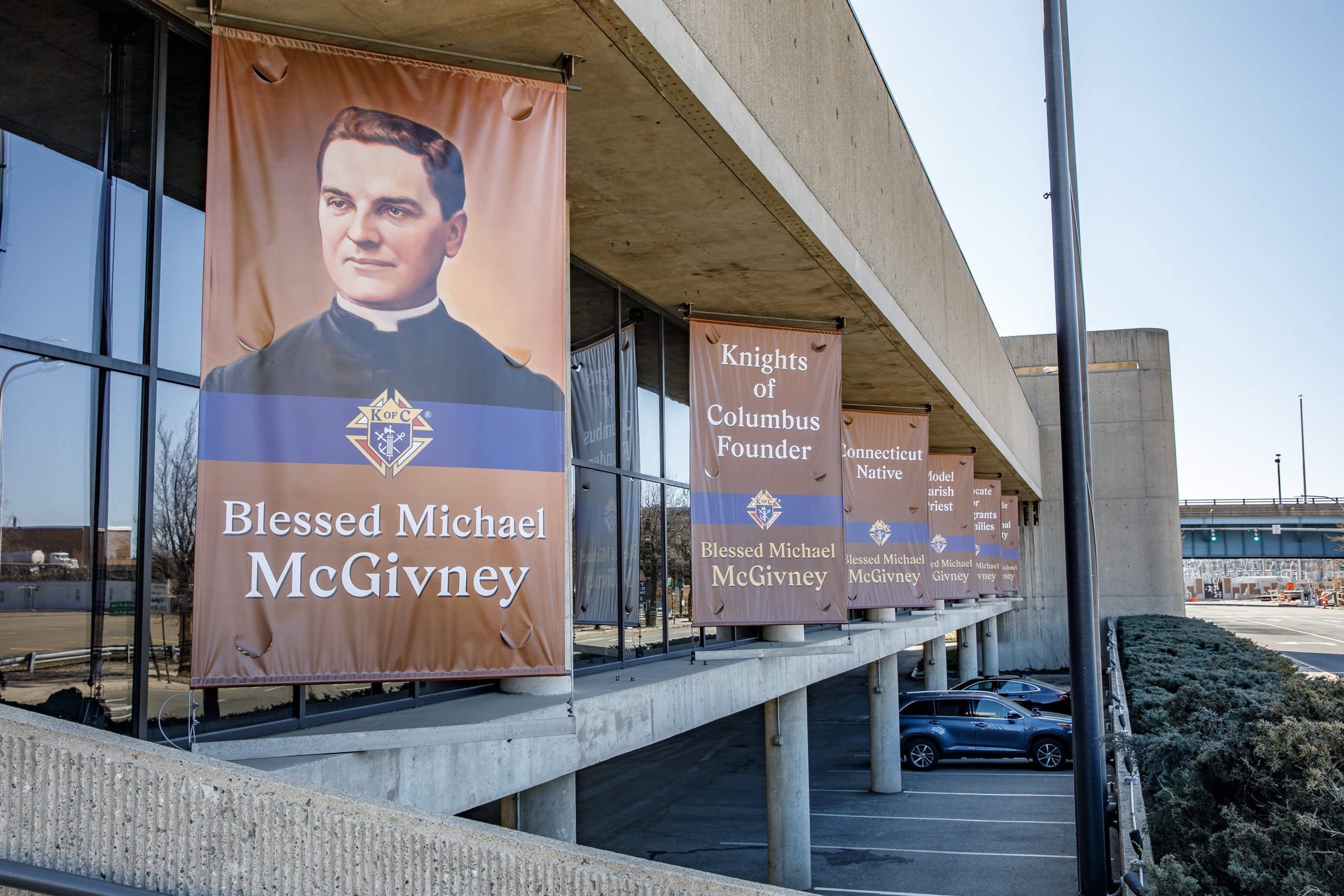
In the industrial cities of the northeastern United States, opportunity and insecurity often existed side by side during the late nineteenth century. Factories, railroads, and expanding ports drew migrants into rapidly growing urban centers, while new neighborhoods formed around parish churches and immigrant associations. For many families—particularly recent arrivals from Ireland and continental Europe—daily life depended on fragile economic stability. A workplace accident, sudden illness, or the death of a wage earner could destabilize an entire household within days.
Without modern welfare systems or reliable insurance, widows and children frequently relied on informal networks of neighbors, parish communities, and charitable societies. These conditions shaped the social landscape encountered by a young parish priest in Connecticut: Michael J. McGivney (1852–1890).
Assigned to St. Mary’s Church in New Haven, McGivney regularly encountered families struggling to maintain stability after the loss of a breadwinner. Parish life placed him in direct contact with the vulnerabilities of immigrant communities navigating industrial society for the first time. These experiences gradually convinced him that charity alone could not address the structural challenges confronting working families. What immigrant communities needed was a more durable form of collective support.
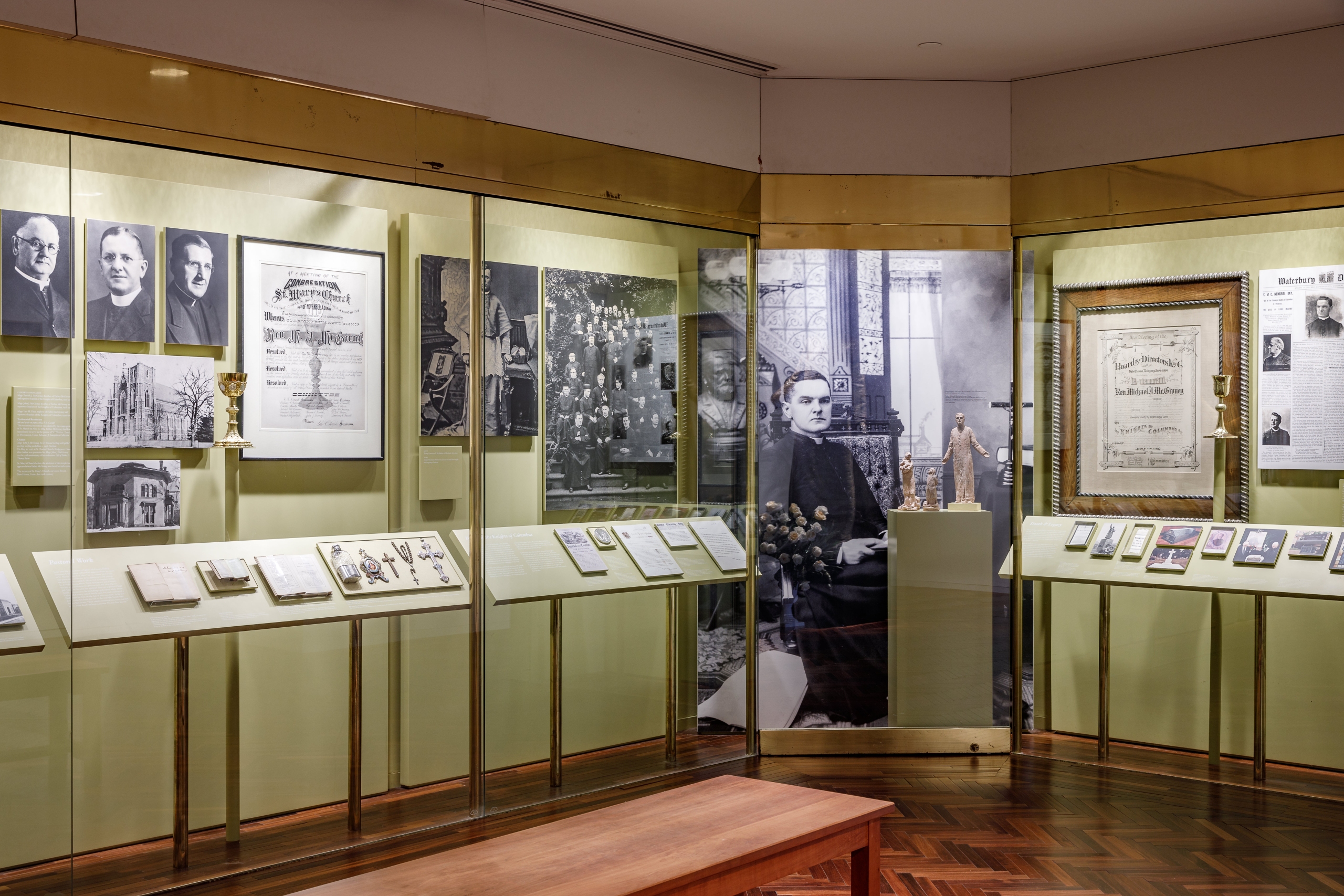
In 1882, that idea took institutional form. In the basement of St. Mary’s Church, McGivney and a small group of parishioners organized a fraternal association designed to provide mutual aid, financial protection for widows and orphans, and a framework for civic solidarity. The organization became known as the Knights of Columbus.
The name itself reflected the cultural environment of the period. In the late nineteenth century, Catholic immigrants in the United States often faced social suspicion and limited access to established fraternal societies. By invoking Christopher Columbus – a figure widely associated with the early history of the Americas – McGivney and his collaborators chose a symbol that connected Catholic heritage with the broader American narrative. The name expressed an aspiration shared by many immigrant communities: to affirm both religious identity and civic belonging within the developing society around them.
From its beginnings in a parish meeting room, the Knights of Columbus expanded rapidly. What started as a local initiative addressing immediate social concerns gradually developed into one of the largest lay Catholic organizations in the world. More than a century later, places connected with McGivney’s life form a modest but meaningful network of pilgrimage destinations. Together they trace a story shaped by migration, community organization, and the evolving role of voluntary associations in American society.
New Haven, Connecticut: The birthplace of the Knights
The central location associated with McGivney is St. Mary’s Church in New Haven. It was here, in 1882, that the meetings leading to the formation of the Knights of Columbus took place. Within the basement rooms of the parish, McGivney and several parishioners developed a structure that combined fraternal organization, financial protection, and community engagement.
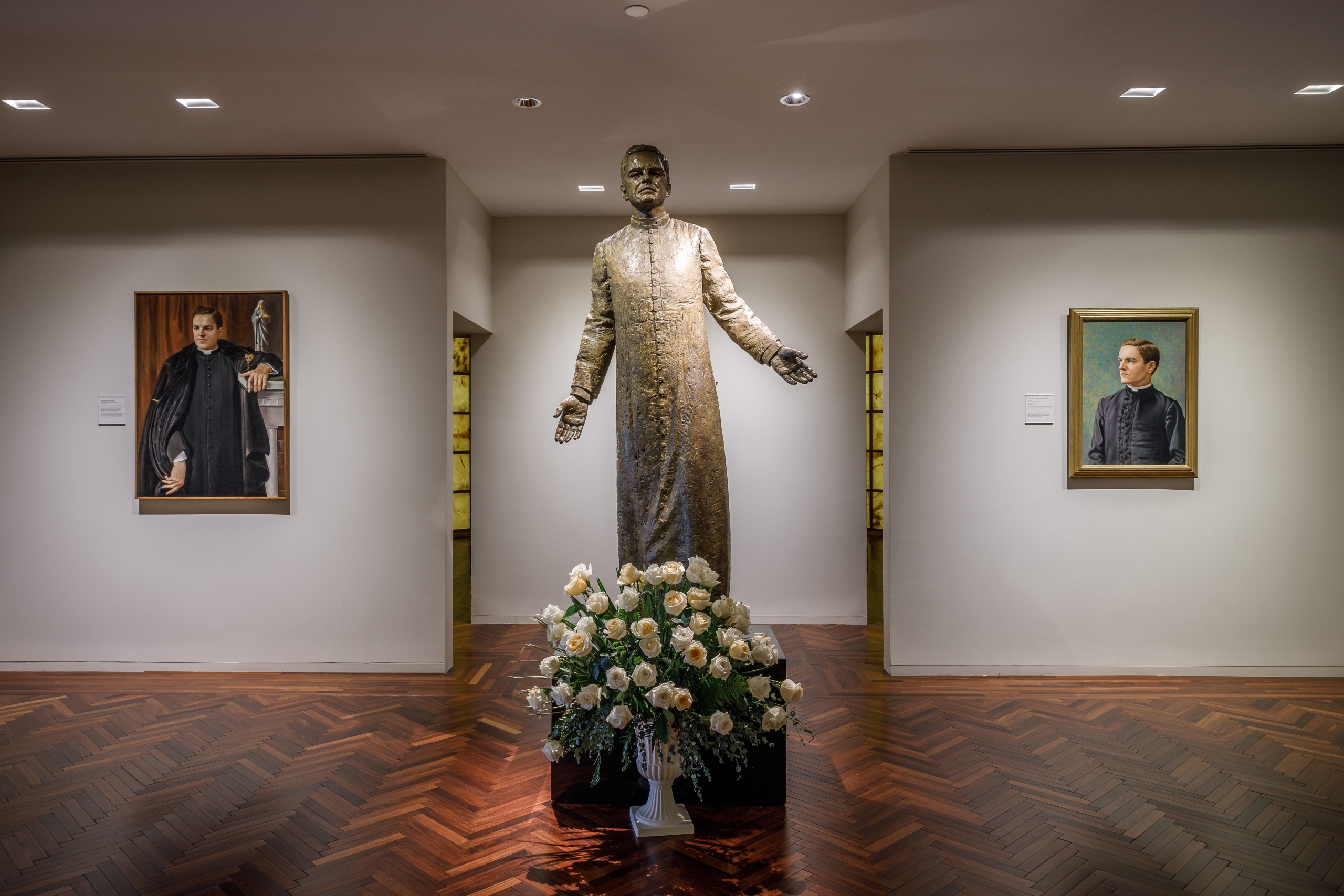
The church today remains both an active parish and a significant historical site. McGivney’s remains are housed within a granite sarcophagus located at the rear of the nave of St. Mary’s Church. His body was transferred there in 1982, the centenary year of the Knights of Columbus, after being exhumed from the McGivney family burial plot in Waterbury. The church has therefore become an important destination for visitors interested in the historical origins of the organization.
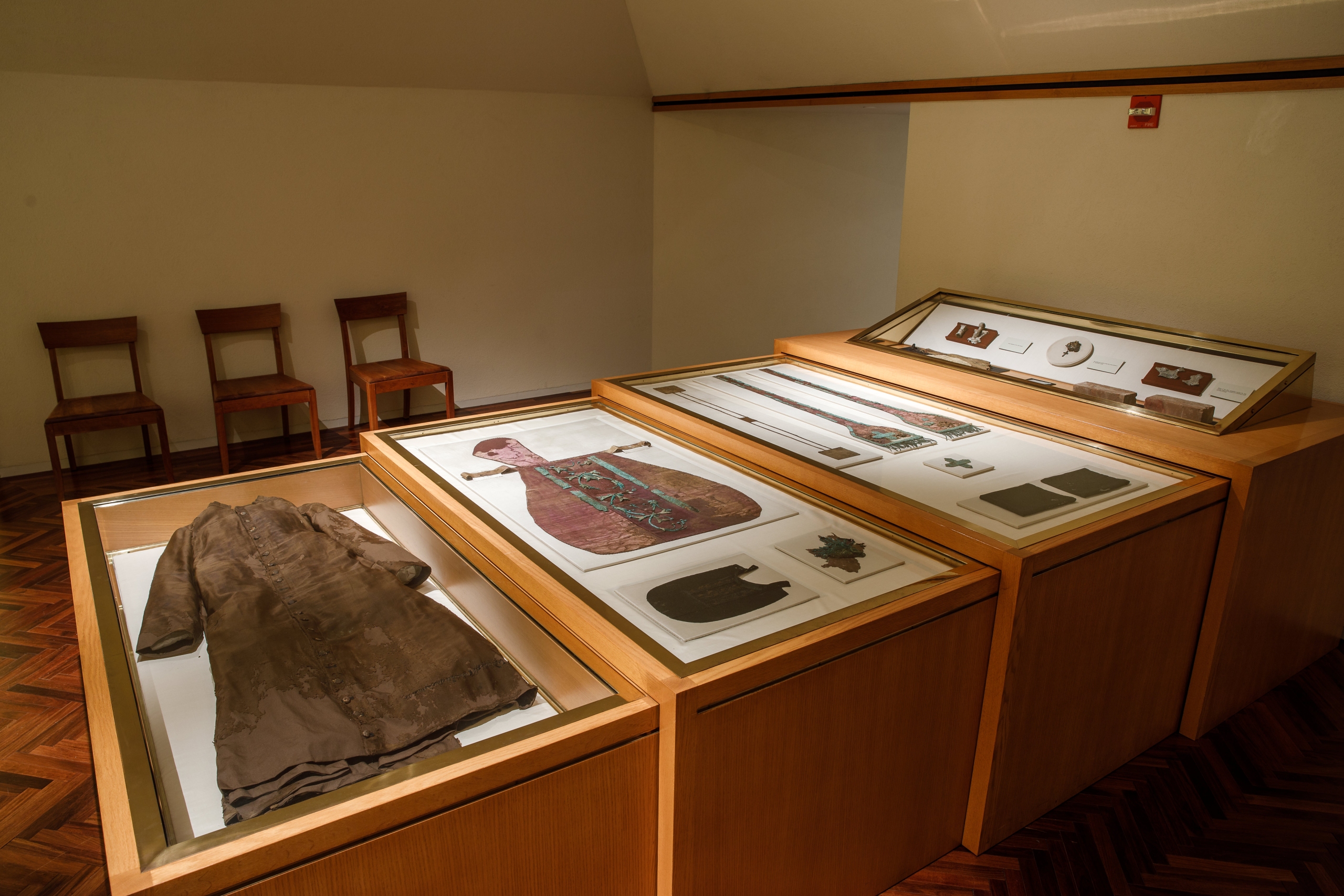
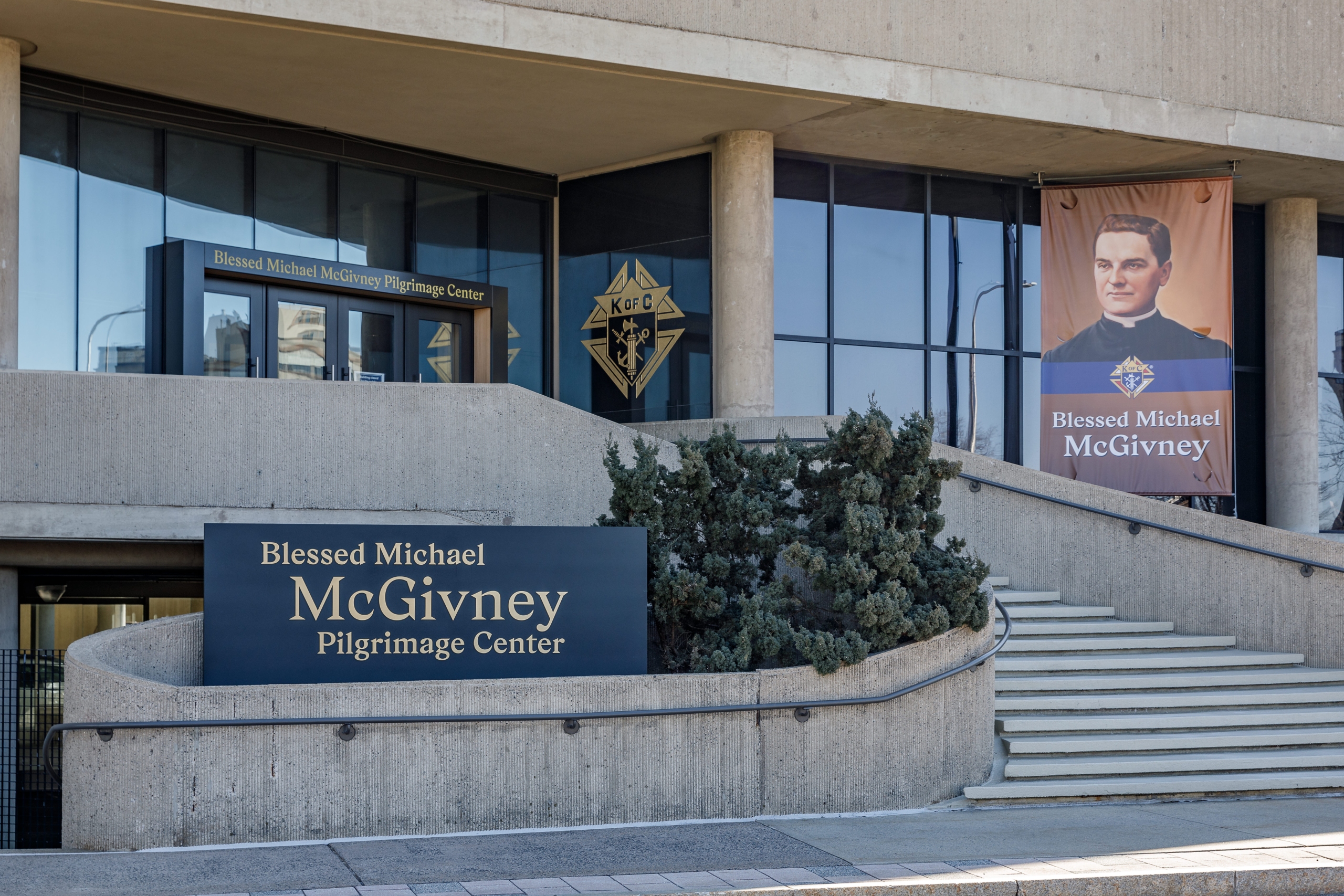
Nearby stands the Blessed Michael McGivney Pilgrimage Center, which presents the history of the Knights of Columbus through exhibitions, archival documents, and interpretive displays that situate the movement within the broader experience of immigration and urban life in the United States. The center occupies the building that formerly housed the Knights of Columbus Museum. Following McGivney’s beatification in 2020, the museum was rebranded as the Blessed Michael McGivney Pilgrimage Center while preserving its collections and expanding its focus on McGivney’s life and legacy.
Together, St. Mary’s Church and the pilgrimage center form the most concentrated pilgrimage destination associated with McGivney. For many visitors – particularly members of the Knights – New Haven represents the starting point of a broader journey: a place where a local response to social vulnerability gradually expanded into a global movement.
Thomaston and Terryville: Parish life in the final years
Another important location lies roughly thirty miles north of New Haven in Thomaston, Connecticut. During the final years of his life, McGivney served there as pastor of St. Thomas Church. He lived in the parish rectory and died there in 1890.
Like many diocesan priests both in the nineteenth century and today, McGivney’s pastoral responsibilities extended beyond a single congregation. In addition to St. Thomas in Thomaston, he also served Immaculate Conception Church in nearby Terryville, located about three and a half miles to the east. The two communities now form part of a unified parish structure together with a third church.
Visitors to Thomaston often describe the site as notable for its atmosphere of quiet reflection rather than monumental architecture. The church and surrounding landscape evoke the scale of late nineteenth-century parish life in New England. Streets, modest houses, and community institutions offer a glimpse into the social environment in which clergy and parishioners collaborated closely in everyday life.
Waterbury: Early formation
The nearby city of Waterbury, Connecticut, forms another important part of this geographical narrative. It was here that McGivney was born in 1852 and where his early experience within immigrant Catholic communities began.
During the nineteenth century Waterbury developed rapidly as an industrial center, drawing large numbers of immigrant workers who formed dense neighborhood communities anchored by parish churches and local associations. At one time the city gained a reputation as one of the most heavily Catholic urban centers in the United States, reflecting the demographic transformation produced by successive waves of immigration.
McGivney’s home parish was Immaculate Conception Church in Waterbury, where he celebrated his first Mass after his ordination. The church building later underwent reconstruction and relocation in 1926. Today it stands as the Basilica of the Immaculate Conception, an architectural landmark that reflects the growth and confidence of the community that developed there during the early twentieth century.
Although Waterbury does not always appear on formal pilgrimage itineraries, the city provides important historical context. It represents the social environment that shaped McGivney’s early outlook: immigrant neighborhoods, strong parish institutions, and communities seeking stability within an expanding industrial economy.
Baltimore: Seminary formation
Another location connected with McGivney’s life lies further south in Baltimore, Maryland. During the 1870s he studied at St. Mary’s Seminary and University, one of the oldest Catholic seminaries in the United States.
The institution played a significant role in preparing clergy for ministry in the rapidly expanding urban dioceses of the nineteenth century. McGivney’s time there formed part of the intellectual and pastoral preparation that preceded his later work in Connecticut.
In recent years the seminary has acknowledged this historical connection through the dedication of a propaedeutic house of formation bearing McGivney’s name on the downtown campus where he once studied. Although Baltimore appears less frequently in pilgrimage itineraries linked to the Knights of Columbus, the site represents an important stage in the trajectory that eventually led to the founding of the organization.
A National Pilgrimage Network
Beyond Connecticut and Maryland, McGivney’s legacy extends across a broader landscape of pilgrimage in the United States. As the Knights of Columbus expanded during the twentieth century, its members established connections with numerous religious and civic institutions throughout the country.
Large gatherings of the organization frequently occur at national landmarks such as the Basilica of the National Shrine of the Immaculate Conception in Washington, D.C., where the Knights have supported chapels and cultural initiatives. Historic cathedrals, including St. Patrick’s Cathedral in New York City, also host events associated with the organization’s continuing activities.
These sites broaden the narrative beyond McGivney’s personal biography. They demonstrate how an initiative that began within a single parish environment gradually developed into a network linking communities across the continent. The pilgrimage landscape connected with McGivney therefore includes not only specific shrines but also institutional spaces where historical memory, charitable activity, and civic engagement intersect.
Pilgrimage as a shared journey
Pilgrimage routes often illuminate the relationships between place, memory, and community. In the case of Michael J. McGivney, the geography associated with his life traces a distinctly American story: immigrant neighborhoods forming around parish churches, voluntary associations addressing economic vulnerability, and communities creating institutions capable of enduring across generations.
For contemporary visitors, these destinations offer insight into how collective initiatives emerge from specific historical circumstances. The Knights of Columbus developed from local networks of cooperation designed to assist families facing hardship. Over time, that model of solidarity expanded into a global organization operating in numerous countries.
Travel between the sites associated with McGivney also reveals the physical dimension of historical memory. From the parish basement in New Haven where the Knights first organized, to the parish communities of Thomaston and Terryville, the industrial city of Waterbury where his life began, and the seminary classrooms of Baltimore where his formation continued, the route connects landscapes shaped by migration, labor, and community formation.
Within the broader history of the United States, this trajectory reflects the role voluntary associations have played in shaping civil society. Organizations founded within immigrant communities often provided both social support and pathways into public participation.
The pilgrimage landscape linked to McGivney therefore highlights more than a single biography. It illustrates how local initiatives—developed in response to immediate human needs—can evolve into enduring institutions. The road connecting these sites reflects that historical movement: from neighborhood parish to national network, from local association to global presence.
AI Transparency Notice
PilgriMaps uses artificial intelligence tools to assist in the research, drafting and translation of editorial content. All AI-assisted content is reviewed, edited and verified by our editorial team before publication. We contrast information against primary sources, specialist literature and on-the-ground knowledge to ensure accuracy, cultural sensitivity and editorial integrity.
AI is one tool among many in our workflow. The judgement, curation and responsibility for everything published on this platform remain entirely human.
Viator Media S.L. — in compliance with the EU Artificial Intelligence Act (Regulation EU 2024/1689).
This post is also available in: