Henri Poincaré, one of the greatest mathematicians of the nineteenth century, had been struggling for weeks with a problem that refused to yield. Then he stopped. He set off on a coach trip, his mind elsewhere, and at the moment he placed his foot on the step the solution arrived whole, effortlessly, as though it had always been there. He recounted the episode to explain something every creative mind knows and that contemporary work culture stubbornly suppresses: sometimes a problem is only solved by stopping trying to solve it.
It sounds like an excuse for the lazy. It is, in fact, one of the best-documented phenomena in cognitive psychology, and it even has a name: incubation. Understanding its precise rules is worth more than a thousand productivity techniques, because it overturns the assumption that when facing a knot, the answer is always to grit one’s teeth and push harder.
The four stages of an idea
The first person to put it in order was an Englishman, Graham Wallas, who in 1926 described the birth of an idea in four stages. First, preparation: the intense study of the problem. Then incubation: setting it aside while the conscious mind occupies itself with something else. Then illumination: the moment when the solution surfaces, the aha that seems to come from nowhere. Finally, verification: checking that the intuition holds.
Wallas had observed that the inventors and scientists of his time moved through almost the same sequence, and that the third stage — the flash — arrived systematically after the second: the pause. For nearly a century it remained a suggestive theory in search of evidence. The evidence eventually came
The proof that the pause works — under certain conditions
In 2009, two researchers — Ut Na Sio and Thomas Ormerod — sifted through decades of experiments on the subject in a meta-analysis published in Psychological Bulletin. Their conclusion: the incubation effect is real. Stepping away from a problem for a period of time increases the likelihood of solving it compared to continuing to stare at it. But the valuable finding lies in the conditions, because incubation is not a magic wand and works only if two rules are respected.
The first has a quality of poetic justice: the longer you worked on the problem before letting go, the stronger the benefit of the pause. One cannot incubate something one has not first wrestled with. Poincaré’s coach trip worked because it came after weeks of siege. Stepping away without first having engaged is not incubation — it is simply not having started.
The second rule concerns what happens during the pause. The meta-analysis shows that filling the incubation period with a cognitively demanding task — another challenging problem — weakens the effect. For the mind to work in the background on the abandoned knot, the surface needs to be occupied by something light. And this is precisely why walking is the near-perfect incubation activity: it keeps the body engaged and the mind free — occupied just enough not to return to gripping the problem, but not so much as to steal the resources needed to dissolve it underground.
Walking generates ideas — but of a specific kind
Here a second study enters, one that has become well known. At Stanford, Marily Oppezzo and Daniel Schwartz measured the creativity of a hundred and seventy-six people while sitting and while walking. The result: walking increased the production of creative ideas by an average of sixty percent compared to sitting, and the effect continued for some time even after participants sat back down (Oppezzo and Schwartz, Journal of Experimental Psychology, 2014).
But a nuance that many enthusiastic citers overlook makes the finding even more interesting. Walking boosted divergent thinking — the capacity to generate many ideas, alternatives, unexpected associations. It did not improve convergent thinking — the kind needed to find the single correct answer to a closed puzzle. “We’re not saying walking turns you into Michelangelo,” Oppezzo clarified. “But it can help in the early stages of creativity.” The path, in other words, is a machine for opening possibilities, not for closing them.
Bringing the two studies together yields a surprisingly practical map of the problem-solving mind. The siege phase — wrestling with the problem — is necessary and is best done sitting, concentrated, all the way to the impasse. Then comes the pause, and the best pause is light movement that frees the mind: walking. During that movement, divergent ideas arise — new roads. And when one sits back down, the convergent solution is often already there, because the underground work happened while consciousness was watching the landscape.
Pilgrimage as extended incubation
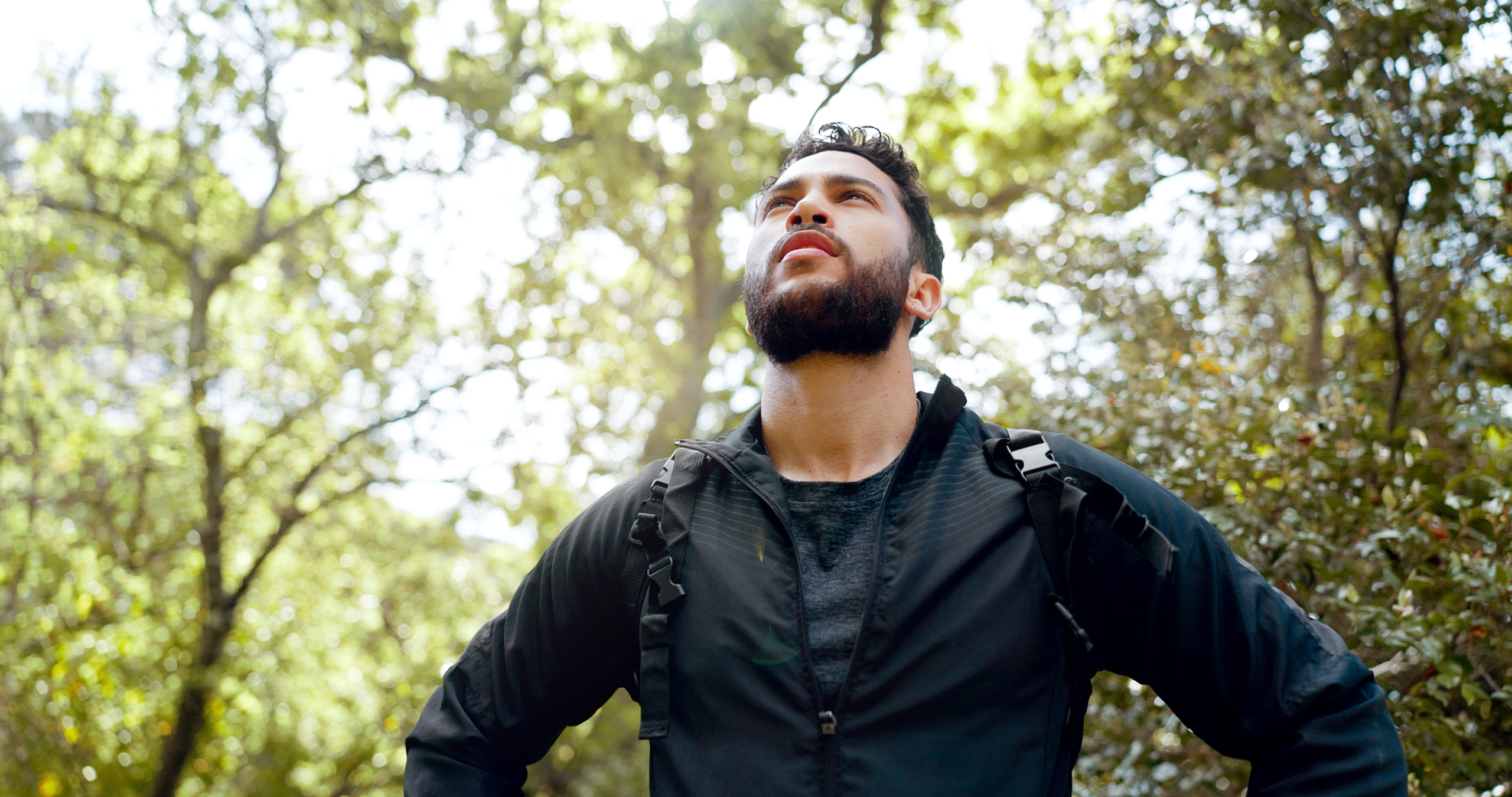
All of this casts a different light on an experience that many pilgrims have without being able to name it. People often set out with an unresolved question — a knot in their life, a decision that refused to untangle at home, sitting down. Along the Camino they do not confront it directly: they let it steep while the feet do their work and the eyes fill with fields. And then, on some unremarkable afternoon around the twentieth kilometer, the answer surfaces without drama — like Poincaré’s solution on the coach step. Not because the path contains wisdom, but because it recreates, for weeks, the exact conditions science describes: a problem one has first worn oneself out on, a mind occupied in a light way, a body walking and making divergent thought bloom.
A necessary warning against the mythology of “just switching off,” however. Incubation does not reward escape — it rewards the pause after effort. Those who set out on the Camino hoping the road will decide for them, without having first confronted the problem, will find only tired legs. The wisdom of the path is not an alternative to thought. It is thought’s second act.
One question remains, and I leave it to anyone who sits pinned to a desk convinced that answers are only won by staying still and searching. If the best ideas arrive when the body moves and the mind stops gripping — how much of our unused genius is simply waiting for us to stand up and go for a walk?
The emotions of pilgrimage: A map for understanding ourselves
Sources: U. N. Sio and T. C. Ormerod, “Does Incubation Enhance Problem Solving? A Meta-Analytic Review,” Psychological Bulletin 135(1), 2009; M. Oppezzo and D. L. Schwartz, “Give Your Ideas Some Legs: The Positive Effect of Walking on Creative Thinking,” Journal of Experimental Psychology: Learning, Memory, and Cognition 40(4), 2014; H. Poincaré, autobiographical account of the discovery of Fuchsian functions (1908).
AI Transparency Notice
PilgriMaps uses artificial intelligence tools to assist in the research, drafting and translation of editorial content. All AI-assisted content is reviewed, edited and verified by our editorial team before publication. We contrast information against primary sources, specialist literature and on-the-ground knowledge to ensure accuracy, cultural sensitivity and editorial integrity.
AI is one tool among many in our workflow. The judgement, curation and responsibility for everything published on this platform remain entirely human.
Viator Media S.L. — in compliance with the EU Artificial Intelligence Act (Regulation EU 2024/1689).
This post is also available in: