A week on the trail can feel longer — in the best sense — than three months of ordinary life. This isn’t an illusion. It’s one of the most real things a person can experience.
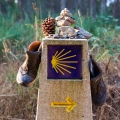
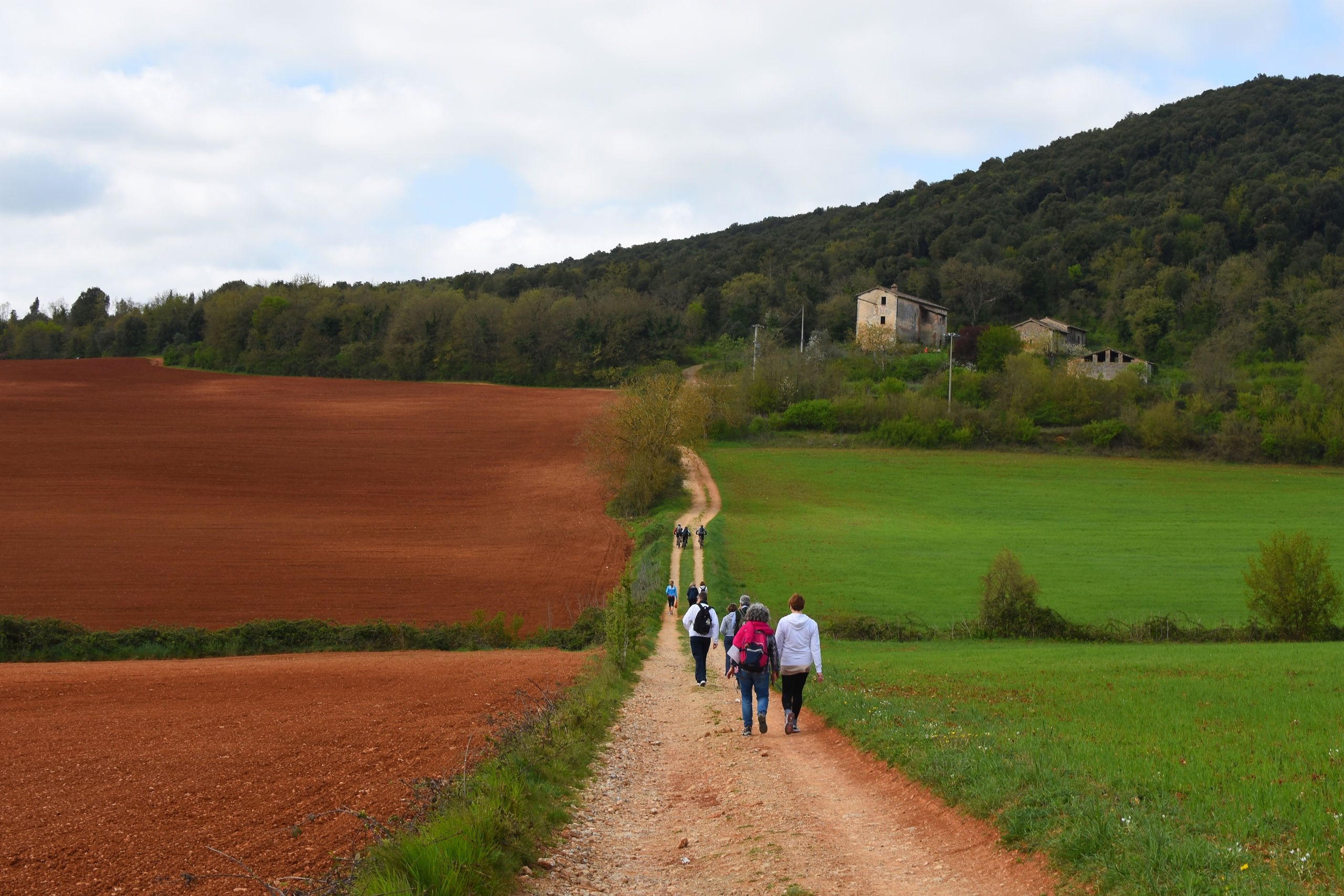
The first day on the Camino de Santiago: you set out from Saint-Jean-Pied-de-Port at six in the morning, pack on your back, the village still asleep except for the pilgrims drifting silently toward the path that climbs into the Pyrenees. The stage runs to Roncesvalles — twenty-five kilometers, some 1,400 meters of ascent — one of the hardest of the whole route, and many pilgrims take it on the very first day, legs still shaped by the desk and the pack weighing three times what they’d imagined on the gym’s stationary bike. Some stop halfway, overwhelmed. Some cry without quite knowing why. Some laugh, for the same reason. Almost everyone reaches Roncesvalles — the medieval village with its massive abbey and a hostel that smells of old stone and wet shoes — and says the same thing: I’ve never lived through a day so long.
Not in the bad sense. In the sense that the day held more life than usual.
How can a week of walking feel longer than three months of ordinary life, when ordinary life is objectively more frantic, more crowded with stimulus, more “intense” in the shallow sense of the word? The answer lies in how the brain measures time. Not with a fixed biological clock, but — in subjective terms — by counting how many distinct experiences, how much novelty, how many firsts a span has held. A week full of landscapes never seen, pains never felt in quite that way, people never met, decisions never made: memory encodes it as far longer than a week at the office doing things done a thousand times, with the same people, in the same places, at the same tempo.
The paradox of modern life is exactly this. We’re surrounded by an enormous volume of stimulus — screens, notifications, information, content — most of it low in novelty. We see a great deal, but a great deal of the same kind of thing. The brain doesn’t count the quantity of stimulus; it counts variety. And in genuine variety — experiences that demand a new response, that can’t be handled by reflexes already learned — ordinary life is often poorer than it looks.
On the trail the opposite happens. Every hour holds something new: the way light shifts across the stone of Romanesque churches as the hour turns, the slow discovery of your own ideal pace, the precise identity of the muscles that protest on day three and how the protest changes by day seven. The brain counts, records, files. And when evening comes and you ask how long ago the morning was, the body’s answer is: a very long time. A whole life.
There’s a second effect, equally documented: the way a long walk changes the relation to future time. In ordinary life much of our attention is thrown forward — what has to be done tomorrow, the plan for next week, the worry about a problem a month off. The projection is often necessary, but it has a cost: it drains presence from the moment at hand. On a long walk, especially after the first week, that projection slackens almost on its own. Not because the pilgrim becomes a sage living in the eternal present, but because the future, on the trail, is structurally simple: you have to reach the next albergue. Everything else — work, unsolved problems, decisions to make — is physically far away, in another place, another life. And that physical distance produces a mental distance that in the first days feels almost guilty, as if feeling good were a form of irresponsibility. Then, slowly, it just begins to feel healthy.
Pilgrims who have walked a month or more describe the final weeks, almost unanimously, as the most intense in presence: the body has adapted, the mind has stopped resisting, and what remains is an attention to the present that ordinary life takes years of meditative practice to approach. You walk. You look. You feel the sun warming your back through the pack, the hunger that arrives on schedule like clockwork, the plain and absolute pleasure of taking off your shoes at the end of a long stage. These aren’t philosophical pleasures. They’re bodily, immediate, impossible to fake.
Mircea Eliade, comparing the world’s religious traditions, found in all the great human rituals a dimension he called sacred time — qualitatively distinct from the profane time of ordinary life. He meant nothing supernatural by it. He meant that in certain ritual settings time stops being felt as a resource to manage and produce, and becomes instead something to inhabit. The medieval pilgrim on the road to Santiago wasn’t “on holiday” from his life; he was in a different time, with different rules and a different quality of attention. The distinction Eliade studied in traditional cultures is exactly what modern pilgrims describe when they come home and struggle to explain why seven days felt like a month.
The days on the trail stretch because they really are longer. Not in hours — those stay twenty-four — but in what they hold.
References
Wittmann, M. (2016). Felt Time: The Psychology of How We Perceive Time. MIT Press.
Eliade, M. (1957). Das Heilige und das Profane. Rowohlt. (Eng. tr.: The Sacred and the Profane, Harcourt, 1959.)
AI Transparency Notice
PilgriMaps uses artificial intelligence tools to assist in the research, drafting and translation of editorial content. All AI-assisted content is reviewed, edited and verified by our editorial team before publication. We contrast information against primary sources, specialist literature and on-the-ground knowledge to ensure accuracy, cultural sensitivity and editorial integrity.
AI is one tool among many in our workflow. The judgement, curation and responsibility for everything published on this platform remain entirely human.
Viator Media S.L. — in compliance with the EU Artificial Intelligence Act (Regulation EU 2024/1689).
This post is also available in: