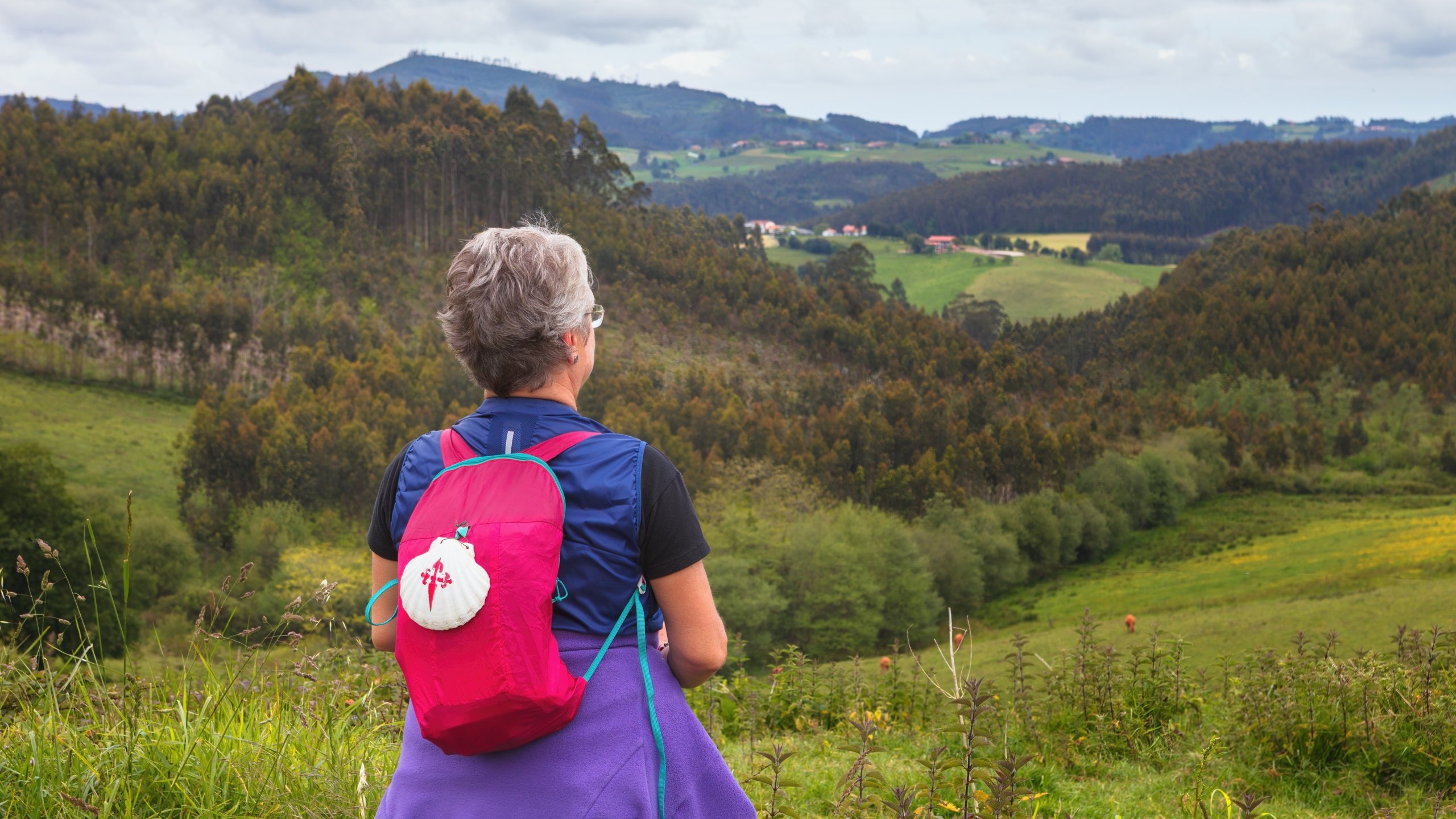
Some questions linger like restless shadows. Should I have traveled more in my twenties? Is it too late to begin again at fifty? Does it make sense to lace up hiking boots when my knees already complain on the stairs? Anyone who has considered walking the Camino de Santiago, visiting pilgrimage routes in the Holy Land, or following any historic sacred path has likely faced the same question: when is the best moment in life to do it?
The short answer is both frustrating and liberating: there is no perfect moment. The reasons behind that answer reveal much about why people travel on pilgrimage routes in the first place.
The myth of the “ideal moment”
Modern culture is deeply invested in the idea of perfection. We search for the perfect coffee, the perfect partner, the perfect job. The same logic often shapes decisions about travel or personal change: when this project is finished… when the children grow up… when retirement begins.
Yet the “ideal moment” rarely arrives because life seldom settles into perfect order. Pilgrimage studies consistently show that people begin these journeys during periods of transition: after a professional shift, during personal uncertainty, following loss, or at the start of a new chapter.
In other words, the most meaningful moment to walk often appears precisely when life feels unsettled. The journey becomes part of the process of restoring balance.
This observation leads to a striking paradox: the best time to leave is often the moment one least expects.
Crisis as illumination
Many pilgrims begin their journey in response to disruption—divorce, unemployment, illness, grief, or a quieter but persistent question: Is this all there is? Rather than an escape, pilgrimage often functions as a structured response to these turning points.
Anthropologists Victor and Edith Turner described this experience using the concept of liminality in the 1970s. Liminality refers to a threshold state: a period when a person is no longer defined by a previous identity but has not yet formed the next.
Pilgrimage routes frequently produce this liminal environment. Hierarchies soften. A corporate executive and a university student may share the same hostel. A skeptic and a committed believer walk under the same rain.
Removed from familiar routines, travelers encounter a temporary social landscape where roles shift and reflection becomes possible. Many describe this period as unusually open, both socially and internally.
The walking brain: Insights from neuroscience
Beyond cultural and psychological perspectives, research increasingly explores the neurological effects of long-distance walking.
A study from New Mexico Highlands University identified a surprising mechanism: the rhythmic impact of the foot striking the ground generates pressure waves that travel through the arteries and increase cerebral blood flow. Walking, in this sense, stimulates the brain as well as the body.
When that physical rhythm extends across weeks—combined with time outdoors, reduced digital distraction, and repeated reflection—the cognitive effects become more visible.
The Ultreya Study, focused on the Camino de Santiago, reported measurable reductions in psychological distress among participants, alongside increases in subjective well-being. In several cases, these improvements exceeded those associated with conventional vacations.
Walking, conversation, landscape, and time appear to interact in ways that encourage mental clarity and emotional recalibration.
Pilgrimage in your twenties: Openness and discovery
For younger travelers, pilgrimage often coincides with a formative stage of life. Physical endurance is usually high, schedules may be flexible, and curiosity about the wider world is strong.
At this stage, long-distance walking can function as a contemporary rite of passage. The route becomes a space for asking large questions about direction, vocation, and identity.
Research into pilgrim motivations shows that individuals searching for existential clarity often report meaningful internal shifts during these journeys, regardless of whether their initial motivations were cultural, spiritual, or simply exploratory.
Youth does not guarantee answers, but it often provides a readiness to encounter them.
Walking at forty or fifty: Reframing the narrative
Midlife transitions frequently receive negative cultural attention, yet many psychologists view them as opportunities for reassessment.
Moments when people pause and evaluate their lives—asking whether current choices reflect their deeper values—can lead to significant personal reorganization. Pilgrimage routes offer a setting for what psychologists describe as cognitive restructuring, the process of reassessing priorities, relationships, and goals.
Pilgrims in midlife frequently report heightened self-awareness and emotional growth during extended walks. Time away from professional obligations and daily pressures allows space for reflection that many individuals rarely grant themselves.
Movement, landscape, and solitude combine to create a setting where long-standing questions can surface and be examined from new angles.
Pilgrimage in later life: Perspective and memory
Another persistent assumption suggests that pilgrimage is primarily suited to younger travelers. Research challenges that view.
A study conducted by the University of Maryland found that older adults between ages seventy-one and eighty-five who engaged in regular walking for twelve weeks showed stronger neural connectivity and improved narrative memory.
The findings indicated more synchronized brain activity and suggested that sustained physical activity supports the brain’s ability to adapt and reorganize.
In the context of pilgrimage routes, these neurological benefits intersect with another advantage: perspective. Older pilgrims often walk more slowly, yet their experiences and conversations carry decades of personal history.
Shared routes bring together travelers from many stages of life, creating a distinctive intergenerational exchange that few other forms of travel produce.
So when should you go?
Research and experience converge on a simple conclusion: the best moment often arrives when a person senses the impulse to begin—however uncertain that impulse may feel.
Pilgrims on the Camino de Santiago consistently report mixed motivations. Some begin for cultural curiosity, others for personal reflection, and others for spiritual exploration. These motivations frequently evolve during the journey itself.
One recurring pattern observed in pilgrimage research involves a shift from self-focused goals toward broader perspectives centered on connection, generosity, and shared humanity.
Walking long distances does not necessarily introduce entirely new ideas. Instead, it often allows travelers to recover perspectives that daily routines have obscured.
Perhaps the more useful question is not when to walk, but why not.
Every stage of life offers a different version of the journey. Youth invites exploration. Midlife encourages recalibration. Later years allow integration and reflection.
Pilgrimage routes – from Santiago to Rome to Jerusalem – provide landscapes where these phases unfold through movement and encounter.
The destination matters, yet the more lasting transformation often lies in who the traveler becomes along the way. The only real requirement is the first step.
AI Transparency Notice
PilgriMaps uses artificial intelligence tools to assist in the research, drafting and translation of editorial content. All AI-assisted content is reviewed, edited and verified by our editorial team before publication. We contrast information against primary sources, specialist literature and on-the-ground knowledge to ensure accuracy, cultural sensitivity and editorial integrity.
AI is one tool among many in our workflow. The judgement, curation and responsibility for everything published on this platform remain entirely human.
Viator Media S.L. — in compliance with the EU Artificial Intelligence Act (Regulation EU 2024/1689).
This post is also available in: