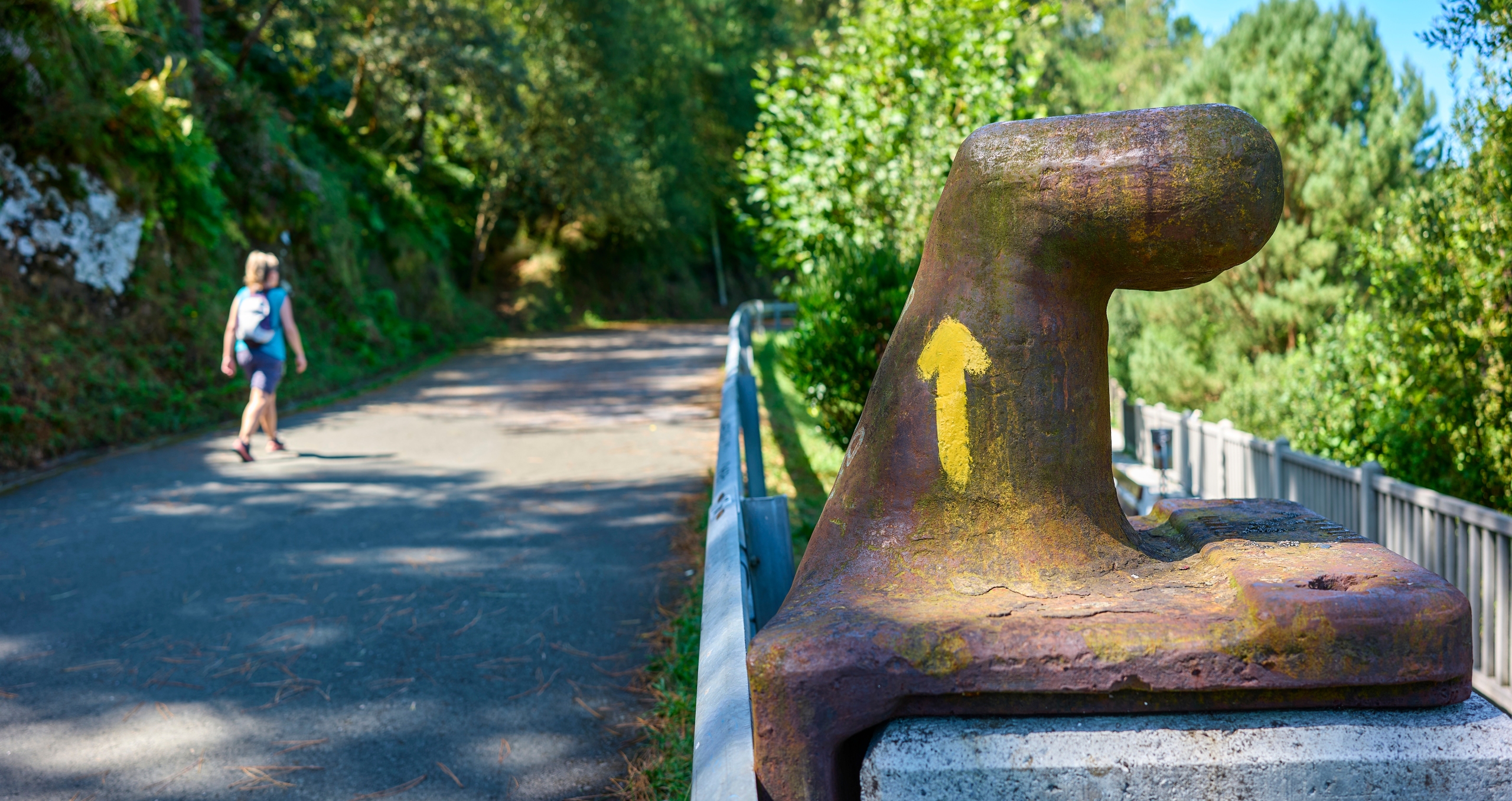
Zen monks, Peripatetic philosophers, and pilgrims across centuries understood it well: thinking while walking changes the way we think. Neuroscience is now explaining why.
Aristotle taught while walking under the colonnades of the Lyceum in Athens. The Buddha reached awakening after years of travel across India. Zen monks practice kinhin, walking meditation, between sessions of zazen. Romantic poets composed lines while crossing the English hills – William Wordsworth is estimated to have walked some 180,000 miles in his lifetime.
This is not coincidence. The rhythmic movement of walking does something to the brain that few other activities can replicate. It opens doors that sedentary thought often leaves closed. Neuroscience is now beginning to explain why.
The walking brain
The neuroscientist Shane O’Mara, of Trinity College Dublin, has devoted much of his work to studying what happens in the brain when we walk. In In Praise of Walking: The New Science of How We Walk and Why It’s Good for Us, he argues that the human mind works at roughly three miles per hour – the natural pace of walking. If that is so, then much of modern life moves faster than thought itself. Cars, trains, and planes carry us at speeds the brain cannot process in the same embodied way.
Walking activates the hippocampal formation, the brain structure involved in memory and spatial navigation. It also does more. Muscles under exertion release myokines, molecules that can cross the blood-brain barrier and support neuroplasticity. Put simply, while we walk, muscles signal to the brain to grow, adapt, and regenerate. It is a form of medicine produced by the body itself and triggered by movement.
A 2022 study published in Molecular Psychiatry found that even a single hour of walking in nature significantly reduced activity in the amygdala, the part of the brain associated with stress responses. Weeks of formal meditation are not required for measurable change. Walking itself can begin the process.
The Peripatetics: thinking in motion
Aristotle’s school in Athens was known as the Lyceum, but his followers became known as the Peripatetics – those who walk. The term comes from the peripatos, the covered walkway where the philosopher taught while moving with his students. This was not an incidental preference. Greek thought had already intuited what neuroscience now supports: the mind often moves more freely when the body is in motion.
In Wanderlust: A History of Walking, Rebecca Solnit traces this tradition across centuries, from Socrates in the streets of Athens to Rousseau in the Swiss countryside, from Wordsworth in the Lake District to Nietzsche, who wrote that only thoughts reached while walking have value. The claim may sound exaggerated, but it reflects a recurring experience: some ideas arrive more clearly in movement than in stillness.
This is not merely literary myth. It is a long record of embodied thinking.
Kinhin and walking meditation in Eastern traditions
In many Eastern contemplative traditions, walking is not a break from meditation. It is meditation. In Zen Buddhism, kinhin consists of slow, deliberate steps synchronized with breath: one step with the exhalation, a pause with the inhalation. Attention is directed fully toward movement– the lifting of the foot, contact with the ground, the transfer of weight from one leg to the other. Thoughts are neither pursued nor resisted. The mind is anchored in the rhythm of the body.
Thich Nhat Hanh, the Vietnamese Zen teacher who made this practice widely accessible beyond monastic settings, described walking meditation in simple terms: each step becomes a way of returning to the present. No monastery is required. A hallway, a garden, or an ordinary street can become a path of awareness. The key variable is not where one walks, but how.
In Tibetan Buddhism, the kora – the circumambulation of a sacred site – combines pilgrimage with walking meditation. Pilgrims circle Mount Kailash over several days, repeating mantras with each step. In Japan, monks on Mount Hiei practice kaihōgyō, a thousand-day discipline that includes extended nighttime circuits of prayerful walking through the mountains.
Pilgrimage as extended meditation
If ten minutes of meditative walking can produce measurable effects on the mind, what happens when walking continues for days, weeks, or months? The Ultreya Project, conducted by the Autonomous University of Barcelona on the Camino de Santiago, documented significant changes among pilgrims: reduced stress, increased mindfulness, and greater coherence with personal values. These effects persisted three months after the pilgrimage had ended, suggesting that they were not simply passing impressions.
Pilgrims often describe experiences that resist ordinary categories: unusual mental clarity, sudden insights that seem to resolve problems left untouched for years, or a sense that the difficulties of daily life become more proportionate while walking. This need not be framed as mystery. It may be understood as the brain functioning under conditions closer to those in which it evolved: in movement, outdoors, and at a distance from the artificial interruptions of contemporary life.
How to turn any walk into a pilgrimage
The Camino de Santiago is not required in order to practice meditation in motion. Intention is enough. Before leaving, choose a question—not a problem to solve, but an open question to carry. What do I want, really? What do I need now? What am I avoiding? Leave the phone behind, or at least place it in airplane mode. Walk without a rigid destination, following what draws your attention. Do not force answers. Let them emerge.
The practice can begin with twenty minutes a day: a circuit around the block at dawn, a walk through the park at lunch, a commute made on foot rather than by car. Over time, these intervals can take on the form of ritual – regular encounters with oneself that become difficult to abandon.
Solvitur ambulando: it is solved by walking
The Latin expression solvitur ambulando – “it is solved by walking” – has often been attributed to Augustine, though its exact historical origin is debated. Regardless of authorship, the phrase captures an enduring insight. Long before the language of neuroplasticity, myokines, or hippocampal activation existed, people understood through experience that walking changes thought. Walking is not separate from thinking. The two are deeply linked.
In a world structured around screens, chairs, and measures of productivity tied to time spent seated, standing up and walking becomes a quiet form of resistance. It is also a recovery of something older than any productivity system: a human capacity for reflection through movement.
Søren Kierkegaard once wrote that he arrived at his best thoughts while walking, and that no thought is so heavy it cannot be left behind through a walk. The line remains persuasive because it names an experience many people still recognize. Even now, it does.
Step into a healthier life: The physical power of pilgrimage
AI Transparency Notice
PilgriMaps uses artificial intelligence tools to assist in the research, drafting and translation of editorial content. All AI-assisted content is reviewed, edited and verified by our editorial team before publication. We contrast information against primary sources, specialist literature and on-the-ground knowledge to ensure accuracy, cultural sensitivity and editorial integrity.
AI is one tool among many in our workflow. The judgement, curation and responsibility for everything published on this platform remain entirely human.
Viator Media S.L. — in compliance with the EU Artificial Intelligence Act (Regulation EU 2024/1689).
This post is also available in: