This article is for informational purposes only. It does not replace medical advice.
In the summer of 2008, a group of Spanish researchers followed hundreds of pilgrims along the Camino Francés to understand a phenomenon that every hostel on the route knows well but rarely names out loud.
The results, published in the journal Gaceta Sanitaria, documented a significant incidence of acute gastroenteritis among those walking the route that summer, with risk factors linked to water, hygiene in the facilities and the close communal living typical of the albergues. It is an important detail: it means that traveller’s diarrhoea is a structural feature of any long-distance camino, as much as blisters or back pain.
Why it happens, especially on the road
The most common causes, according to the 2026 edition of the CDC Yellow Book, are linked to food and water contaminated by bacteria — principally Escherichia coli — followed by viruses and, more rarely, parasites. In a camino context the risk multiplies: public fountains whose maintenance is unknown, food shared in hostels, hands touching handrails, trekking poles and common taps for hours before sitting down to eat. Physical fatigue also lowers the body’s defences, making it more susceptible to pathogens.
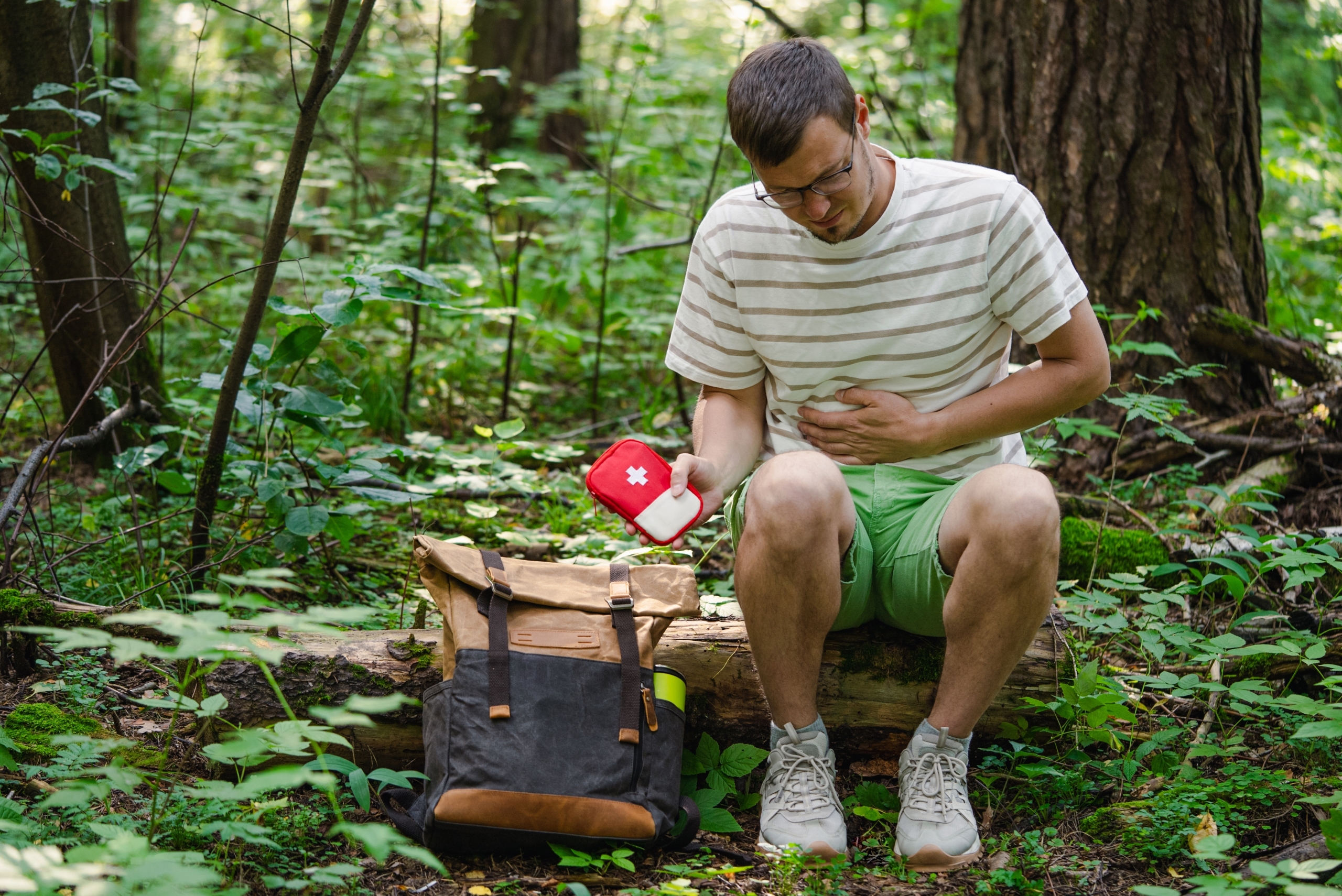
Typical symptoms include frequent loose stools, abdominal cramps, nausea, sometimes mild fever and marked tiredness. In most cases the episode resolves on its own within three to five days, but the real danger for walkers is not the illness itself: it is the dehydration that follows, aggravated by heat and daily physical effort.
What to do, step by step
The first action — the one that genuinely makes a difference — is targeted rehydration. Water alone is not enough, because essential mineral salts are also lost with each episode. The internationally recommended solution is oral rehydration therapy: a mixture of water, sugars and salts that replicates the formula developed by the WHO and UNICEF, capable of dramatically reducing dehydration complications.
At a pharmacy along the route, ready-to-use sachets are readily available; in their absence, a homemade solution of water, a pinch of salt and a spoonful of sugar can offer temporary relief — always to be supplemented as soon as possible with proper pharmaceutical products.
Some practical guidance for those on a trail far from a clinic:
- Stop — do not push on through the stage. Walking with an unsettled stomach in the sun rapidly worsens dehydration.
- Drink frequently, in small amounts, ideally with oral rehydration solution or water with a pinch of salt and sugar.
- Choose simple, easily digestible foods when appetite returns: rice, toast, bananas, boiled potatoes. Avoid dairy, fatty foods and coffee until symptoms improve.
- Avoid alcohol, which worsens dehydration and further irritates the gut.
- Wash your hands frequently, especially before meals. It is the simplest and most effective way to break the chain of transmission in a hostel shared by dozens of people.
When caution becomes urgency
Not every episode resolves on its own. According to international clinical guidelines, it is time to seek medical assistance when blood or mucus appears in the stool, when there is persistent high fever, severe abdominal pain, or when symptoms do not improve after several days.
Along the principal pilgrimage routes, from the Camino Francés to the Via Francigena, most of the towns passed through have pharmacies and basic clinics capable of handling these cases within a few hours. Stopping for a day is not a defeat — it is the body’s intelligence at work.
What to eat on pilgrimage: A practical food guide for long-distance walkers
At the table on the road: Small habits that reduce the risk
Much of the prevention happens at the table, not in the pharmacy. The menú del peregrino — widely available along the Camino de Santiago and often served in generous quantities at a fixed price — involves a variable that is rarely considered: dishes prepared for dozens of people, kept warm for hours, in kitchens handling a volume of covers far beyond their usual capacity.
That is not a reason to forgo this convivial tradition, which remains one of the most authentic experiences of the camino, but a few simple habits reduce the risk without giving up the pleasure: favour dishes served still hot over cold preparations left on display for long periods; choose fruit you can peel yourself rather than pre-cut portions; and pay attention to fountain water not certified as drinking water, often marked with a simple sign along the route.
Hand hygiene — obvious and yet often neglected — remains, according to international medical sources, one of the most effective measures against the transmission of intestinal pathogens in close-quarters environments such as albergues, where dozens of people share kitchens, bathrooms and handrails for weeks. Carrying a small hand sanitiser gel, to use before meals when soap and water are not immediately available, is a minimal habit that meaningfully reduces exposure.
A problem as old as the road itself
The medieval hospitals that arose along the pilgrimage routes, from Flanders to Compostela, also managed the intestinal epidemics that spread among exhausted travellers forced to drink from uncertain sources and sleep crammed into communal dormitories. The distinction between hospital, hostel and quarantine shelter was often blurred precisely because intestinal contagion travelled with the pilgrims as surely as the relics they were going to venerate.
Today the logistics have changed, running water and hygiene controls have dramatically reduced the risks — but the underlying principle remains identical: those who walk in groups, share fountains and dormitories, also accept sharing microbes. Knowing this in advance, and knowing how to respond, turns an unpleasant surprise into a manageable interlude rather than the end of the camino.
Sources cited in this article:
- Giménez Duran et al., “Incidencia y factores de riesgo de gastroenteritis en los peregrinos del Camino de Santiago”, Gaceta Sanitaria, 2010
- CDC Yellow Book 2026, “Travelers’ Diarrhea”
- Harvard Health Publishing, “Traveler’s Diarrhea”
- Healthline, “Oral Rehydration Solution”
- Leung, Leung, Wong, Hon, “Travelers’ Diarrhea: A Clinical Review”, PMC, 2019
AI Transparency Notice
PilgriMaps uses artificial intelligence tools to assist in the research, drafting and translation of editorial content. All AI-assisted content is reviewed, edited and verified by our editorial team before publication. We contrast information against primary sources, specialist literature and on-the-ground knowledge to ensure accuracy, cultural sensitivity and editorial integrity.
AI is one tool among many in our workflow. The judgement, curation and responsibility for everything published on this platform remain entirely human.
Viator Media S.L. — in compliance with the EU Artificial Intelligence Act (Regulation EU 2024/1689).
This post is also available in: