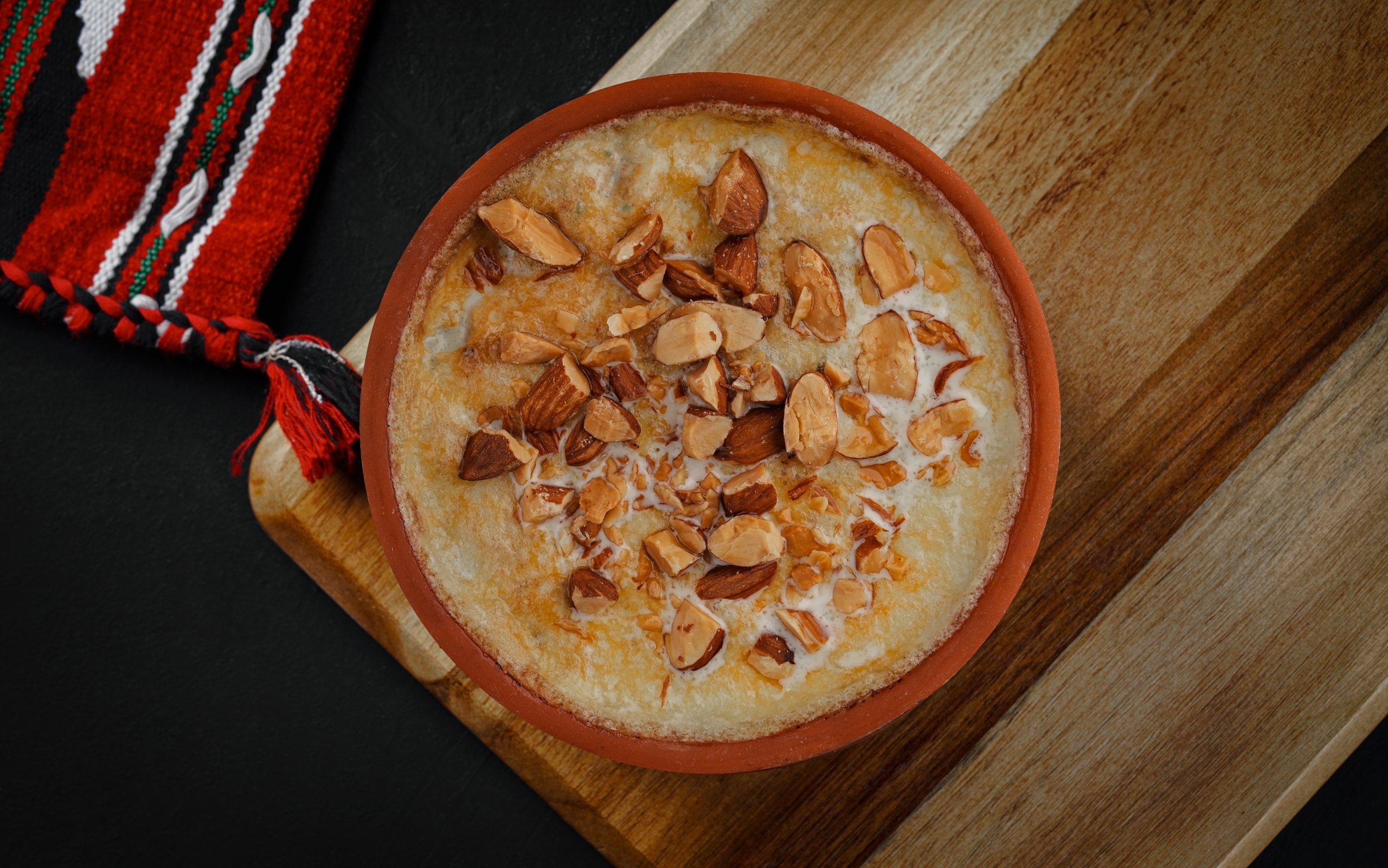
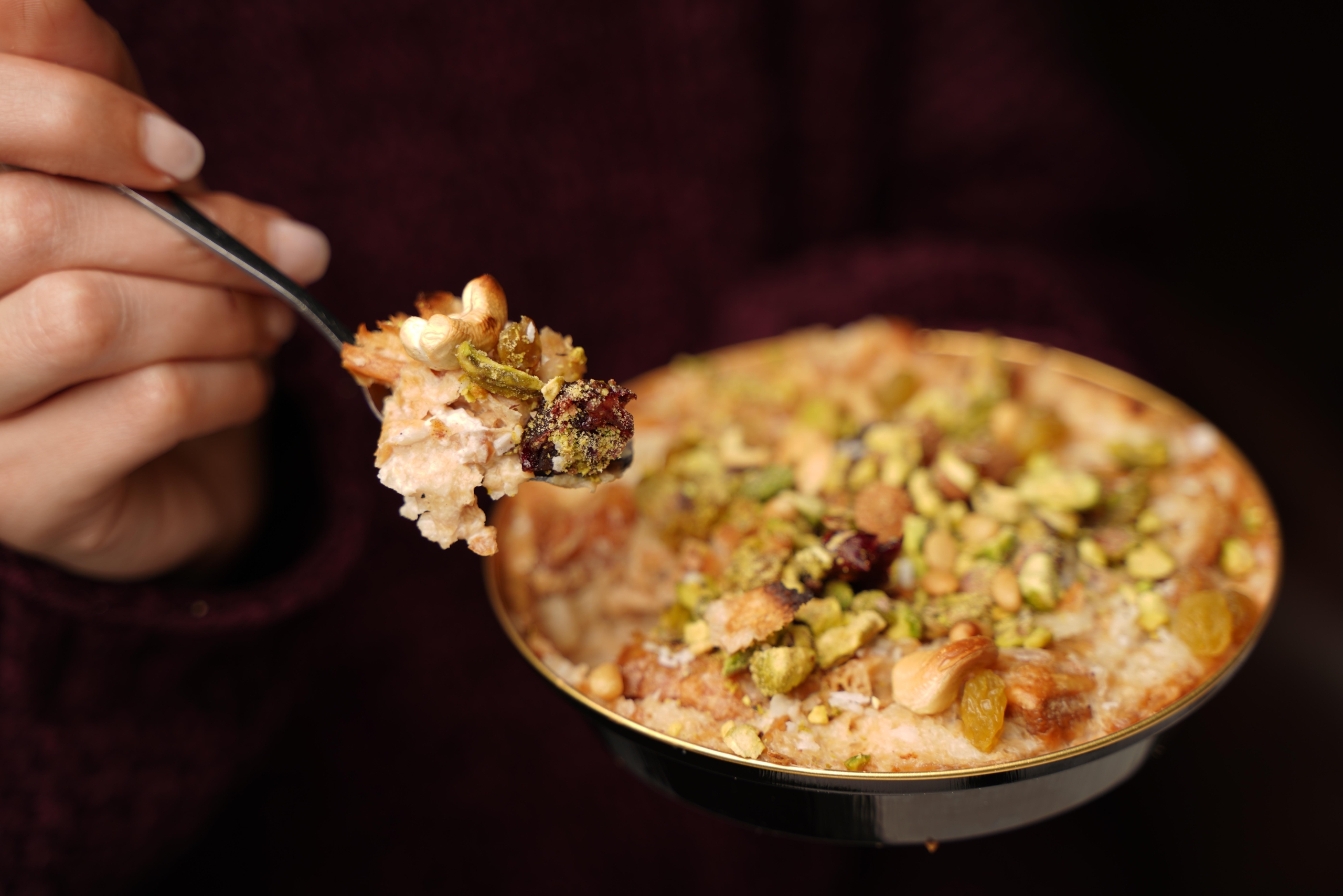
It arrives at the end of iftar, when the table has already done its work and nobody is hungry any more. A shallow dish straight from the oven, the top blistered and gold, pistachios and raisins caught in the crust. Beneath it, pastry that has dissolved into hot cream.
This is Umm Ali, and it is probably the most beloved dessert in Egypt. You will meet it at weddings, at Ramadan tables, in hotel buffets in Cairo and in cafés along the Nile. Egyptians who grew up abroad make it when they are homesick.
The name means “Mother of Ali.” And if you ask who Ali’s mother was, you are handed one of the bloodiest origin stories attached to any dish in the world — a story that, when you follow it properly, turns out to be about somebody else entirely.
The Woman Who Hid a King’s Death
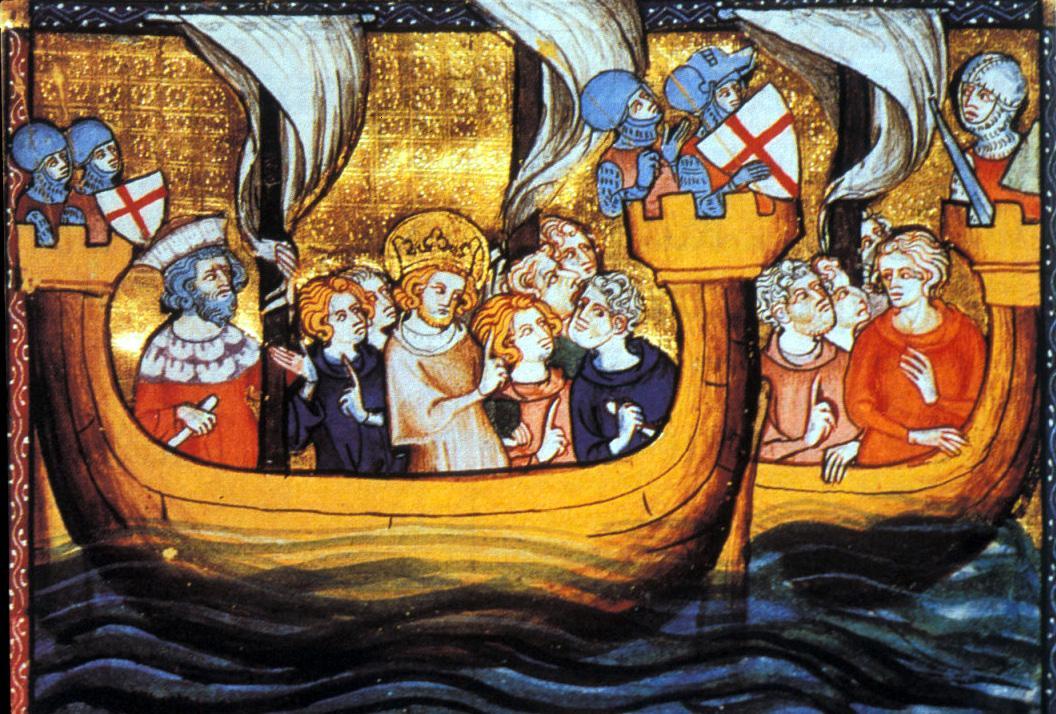
To get there, we have to start in 1249, with a corpse and a crusade. Louis IX of France had invaded Egypt. The Ayyubid sultan, as-Salih Ayyub, was dying as the Frankish army advanced, and when he died the country faced the prospect of a leaderless war.
His widow was a woman of Turkic origin named Shajar al-Durr — “Tree of Pearls”. She had come to Egypt with him, borne him a son, and she understood exactly what the news of his death would do to an army in the field.
So she concealed it. She continued to have food prepared for the sultan and brought to his tent, maintaining the appearance of a living king while the campaign was fought around her. She backed the defence of al-Mansurah, and she agreed to the plan proposed by a young commander named Baibars — the same Baibars who would later become one of the great sultans of the Mamluk era.
Egypt won. Louis IX was captured. In May 1250, Shajar al-Durr became ruler of Egypt — one of the very few women to hold sovereign power in the medieval Islamic world. Coins were struck in her name. She held the throne for eighty days.
Then the resistance closed in. The Abbasid Caliph in Baghdad refused to recognise a sultana, and the Syrian emirs refused her homage. To preserve the position, she married a Mamluk commander, Izz al-Din Aybak, and abdicated in his favour — keeping, she calculated, the real power behind him. She had calculated correctly for seven years.
The Bath, the Clogs, the Wall
Aybak ruled for seven years before Shajar al-Durr, feeling betrayed by the man she had made sultan, had him murdered. The accounts place it in his bath. Aybak had another wife, from before the marriage to Shajar al-Durr. She was the mother of his son Ali, and she is known to history only as Umm Ali — Ali’s mother.
Her revenge, as tradition has it, was immediate and specific. In some versions of the legend, Umm Ali herself was the killer, beating Shajar al-Durr to death with clogs — the wooden pattens worn in the bathhouse, handed to servants to do the work. Shajar al-Durr died on 28 April 1257. Her body, the chronicles say, was thrown from the walls of the Citadel.
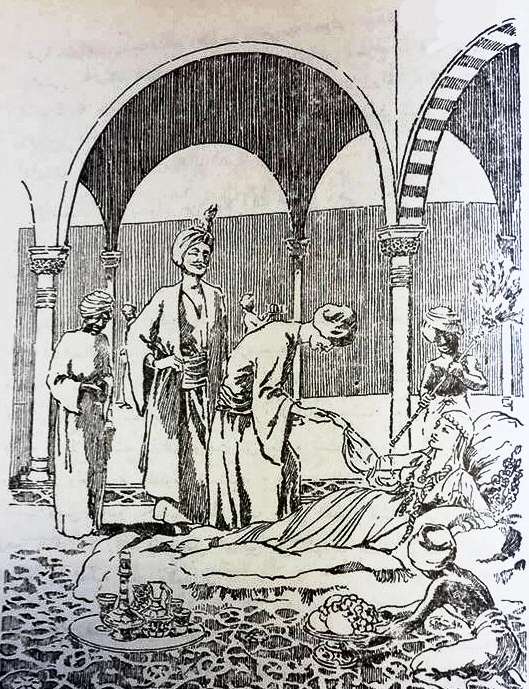
Her son Ali took the throne. And then — according to the story every Egyptian knows — Umm Ali ordered a dessert made in celebration, and had it distributed to the people of Cairo. Pastry, milk, nuts, whatever the kitchens held. It carried her name, and it has carried it ever since.
So goes the legend. It is magnificent. It is also, as far as anyone can demonstrate, untrue.
What the Evidence Says
The Egyptian food archaeologist Mennat-Allah El Dorry — an archaeobotanist and Egyptologist at the American University in Cairo, and the person Egyptian cuisine’s historical claims tend to end up in front of — has been direct about this.
The murder is real. The dessert connection is not. As she explained to the food writer Nermine Hany, there is no historical evidence behind the back story: Umm Ali did indeed murder Shajar al-Durr, but nothing indicates she invented a dessert to mark it, and the dish is absent from the historical cookbooks that appear in the years after.
That absence carries weight. The thirteenth century is not a dark age for Arabic culinary writing — it is one of its richest periods, with substantial recipe collections surviving from Egypt, Syria and al-Andalus. A celebratory dish distributed publicly by a sultan’s mother would be the kind of thing those books record. They do not.
El Dorry has made parallel arguments about other Egyptian dishes. Koshary’s earliest documented reference is in Richard Burton’s account of his 1850s pilgrimage to Mecca and Medina, where he describes people in Suez eating rice, lentils and onions — not pharaonic antiquity, but the nineteenth century, with pasta added later still, after the monarchy fell, as a cost-saving measure.
Egyptian food, in other words, is frequently much younger than Egyptians believe, and far more interesting for it.
The Thing Itself
Strip away the legend and what remains is a genuinely elegant piece of cookery. The base is pastry — traditionally ruqaq, the paper-thin Egyptian flatbread, though puff pastry or croissants are now common. It is torn and toasted until dry and brittle. Over it go nuts, usually pistachios, almonds and hazelnuts, with raisins and shredded coconut.
Then hot sweetened milk, often with cream, poured over everything and allowed to soak in. The whole thing goes into a very hot oven until the top blisters and browns.
The result sits somewhere between bread pudding and baklava, and its particular pleasure is the contrast: a crisp, almost burnt crust over something that has gone entirely soft underneath.
Versions exist across the Levant and the Gulf, but Egypt is where it belongs, and where it is eaten most.
Why the Story Survives
Here is what I find genuinely striking, and it is the reason this dish is worth more than a recipe.
The woman commemorated in the name is the one who committed the murder. The woman who was murdered — who concealed a king’s death to win a war, who struck coins in her own name, who ruled Egypt when the Caliph of Baghdad said a woman could not — has no dish, and is remembered chiefly as the victim in somebody else’s dessert story.
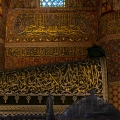
Shajar al-Durr did leave something behind. She built her own mausoleum in Cairo, in the southern cemeteries, and it still stands. It is a modest, extraordinary building, far less visited than it should be, and for travellers following the Islamic Cairo itineraries it sits within reach of the great Fatimid and Mamluk monuments.
So there is a small correction available to anyone travelling in Egypt. You will be served Umm Ali, almost certainly, and you should eat it. But you might also go and find the tomb of the woman the dessert does not commemorate.
Order the sweet named for the murderer. Then go and stand at the grave of the sultana.
AI Transparency Notice
PilgriMaps uses artificial intelligence tools to assist in the research, drafting and translation of editorial content. All AI-assisted content is reviewed, edited and verified by our editorial team before publication. We contrast information against primary sources, specialist literature and on-the-ground knowledge to ensure accuracy, cultural sensitivity and editorial integrity.
AI is one tool among many in our workflow. The judgement, curation and responsibility for everything published on this platform remain entirely human.
Viator Media S.L. — in compliance with the EU Artificial Intelligence Act (Regulation EU 2024/1689).
This post is also available in: