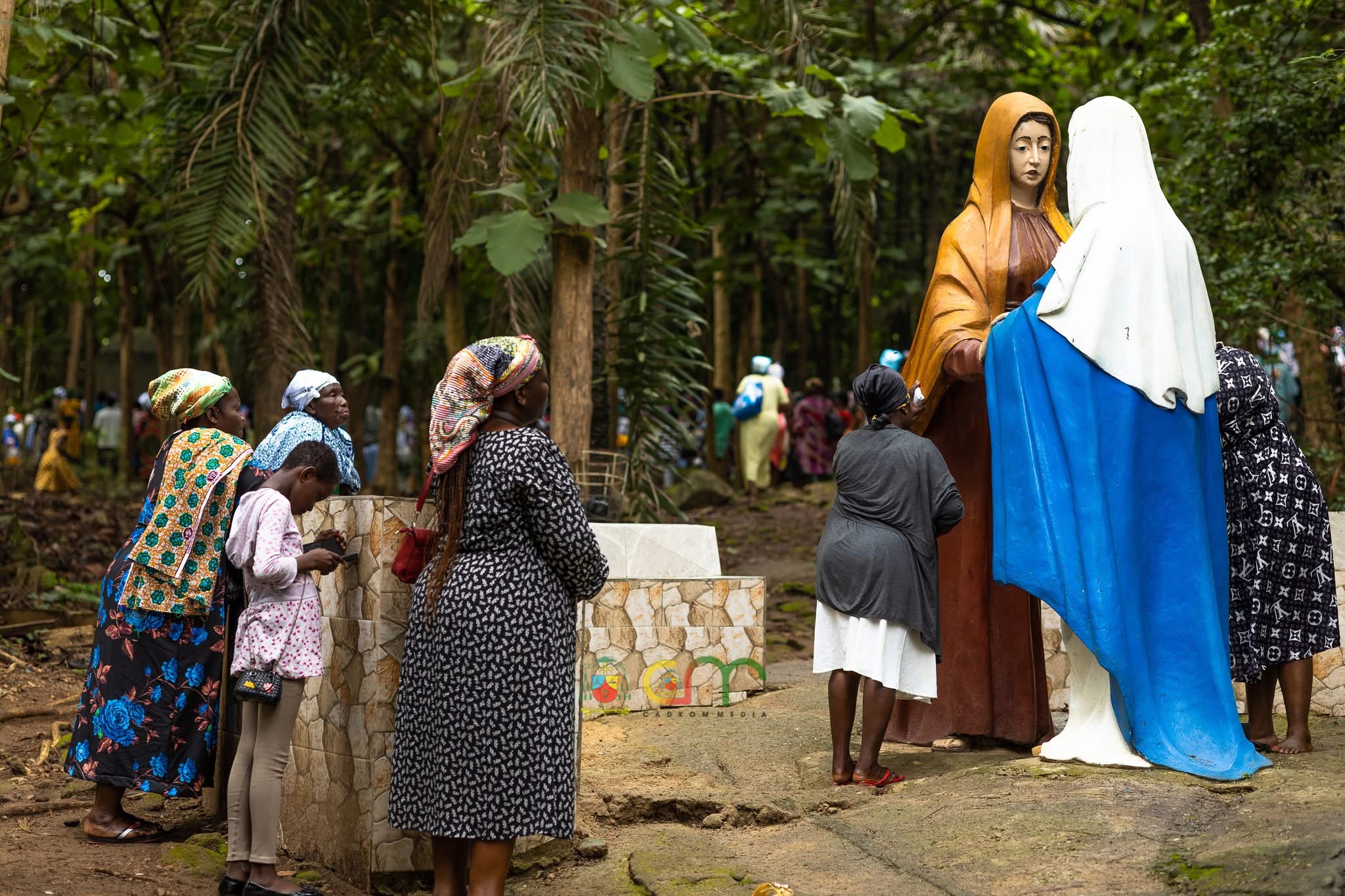
Fifteen kilometres northeast of Kumasi, where the road begins to climb and the city starts to thin into smallholdings and granite outcrops, a hill rises above the Ghanese village of Buoho. Steps cut from local stone lead upward through native gardens to a rock-hewn chamber. Inside, a statue of Our Lady of Lourdes stands in the darkness of the hillside. Outside, on a clear day, the skyline of Kumasi is visible in the distance.
This is the St. Mary’s Sanctuary Buoho Grotto — the most important Catholic pilgrimage site in the Ashanti Region of Ghana, and one of the most remarkable stories of faith, Asante history and Marian devotion anywhere in West Africa.
A priest, a pilgrimage and a vision
The story of Buoho begins with a man: Very Rev. Fr. Daniel Tawiah Yesereh, the first Asante to be ordained a Catholic priest. He had grown up in the Ashanti heartland during the years of British colonial administration, been formed in the Catholic missionary tradition, and spent his priestly life in the region that was his own people’s homeland.

In 1948, Fr. Tawiah Yesereh led a pilgrimage to a grotto at Egyam, near Takoradi, on Ghana’s Western Region coast. What he saw there — a simple rock shrine, the gathering of the faithful, the silence of a place set apart — gave him an idea. The Ashanti Region had no such sanctuary. Kumasi, Ghana’s second city and the seat of Asante royal power, had no Marian grotto. He would build one.
The choice of site mattered. Buoho’s hilly landscape, its granite outcrops and the natural rock formations of the hillside provided exactly what Fr. Tawiah was looking for: a place where a grotto could be carved into the land itself rather than imposed upon it.
The Asantehene’s gift
What happened next is the detail that sets Buoho apart from almost every other shrine in West Africa.
The land for the sanctuary was donated in 1949 by Asantehene Otumfuo Sir Nana Agyeman Prempeh II. The Asantehene — the supreme ruler of the Asante people, custodian of the Golden Stool, one of the most powerful traditional figures in all of sub-Saharan Africa — gave the ground on which a Catholic shrine would be built.
To understand what this means, a word of context is necessary. The Asante kingdom was one of the great pre-colonial empires of West Africa, built on gold, kola and the military genius of its founders in the late 17th century. Its capital Kumasi was a city of palaces, markets and ritual spaces long before the British arrived. The Asantehene was and remains not merely a political but a sacred figure: the living link between the Asante people and their ancestors, the embodiment of a spiritual authority that predates Christianity on the Gold Coast by centuries.
When Otumfuo Prempeh II donated the Buoho hillside to a Catholic priest who wanted to build a Marian sanctuary, he was doing something that could not be reduced to mere patronage. He was acknowledging that this new faith, now deeply rooted in his people, deserved a sacred geography of its own — and that he, the guardian of the oldest Asante sacred geography, would provide it.
The survey of the donated land was later overseen by his successor, Asantehene Otumfuo Opoku Ware II. The connection between the Asante throne and the Buoho sanctuary thus passed from one Asantehene to the next, cementing it as something more than a missionary project.
Eight months on a hillside
Construction began in early 1949. Fr. Tawiah Yesereh acted as the architect, overseeing the building process that involved local labourers and priests using basic tools and locally available materials to create a simple rock-hewn grotto, Stations of the Cross and an altar on a hillside location near Buoho. Funding came from donations by Catholics and non-Catholics in the Gold Coast, as well as overseas contributors.
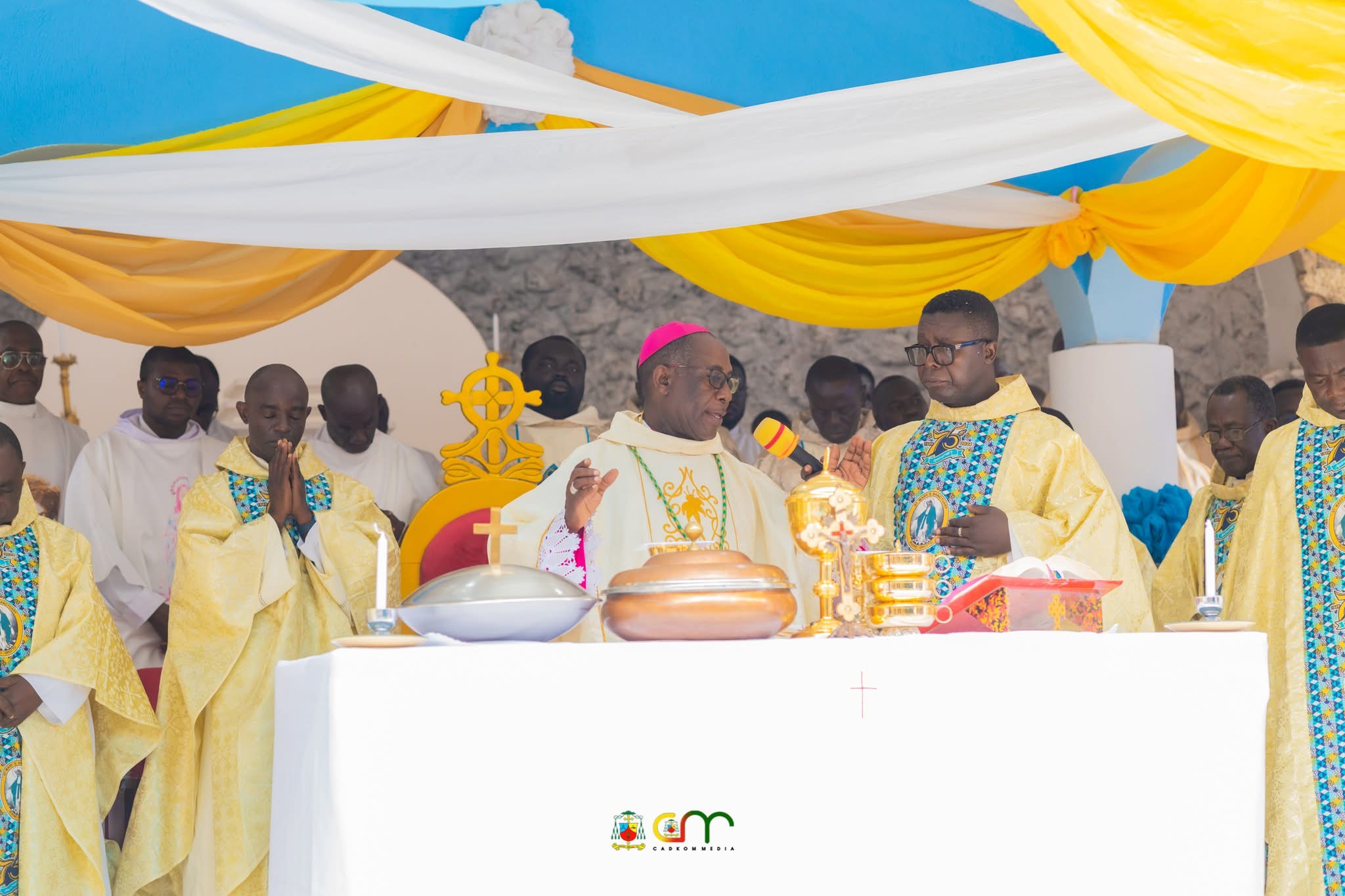
The work was finished in eight months. The sanctuary was formally dedicated on 12 November 1949 in a ceremony led by Vicar Apostolic Hubert Paulissen, attended by approximately 20,000 people. For a rural site with no paved road, reached on foot or by whatever transport the faithful could arrange, that number tells its own story. The Asante had been waiting for this.
In 1950, the site received a papal blessing during a visit by legate Most Rev. David Mathew, who attended a Eucharistic Congress with international clergy.
A difficult middle passage
The early years were not without shadow. Following the dedication, Fr. Tawiah Yesereh fell out with church authorities, leading to his suspension after 1950 and a period of decline in activity at the grotto, maintained only by loyal supporters and visiting priests. An attempt to reinstate him in 1962 failed.
It is one of those ecclesiastical ironies that the man who conceived, funded and built the sanctuary found himself separated from it during the years that should have been his greatest work. The faithful who kept coming to Buoho during those years — and they did keep coming — were sustaining his vision without him.
In 1970, under Bishop Peter Kwasi Sarpong of Kumasi, Fr. Tawiah’s suspension was lifted and he was reappointed director, reviving the site through renewed facilities including updated Stations of the Cross and attracting diverse visitors, including Protestants and Muslims. That last detail is worth holding: a Catholic Marian grotto in the Asante heartland drawing pilgrims across denominational lines, in the same spirit of religious coexistence that has long characterised Ghanaian spiritual life.
The pilgrimage today
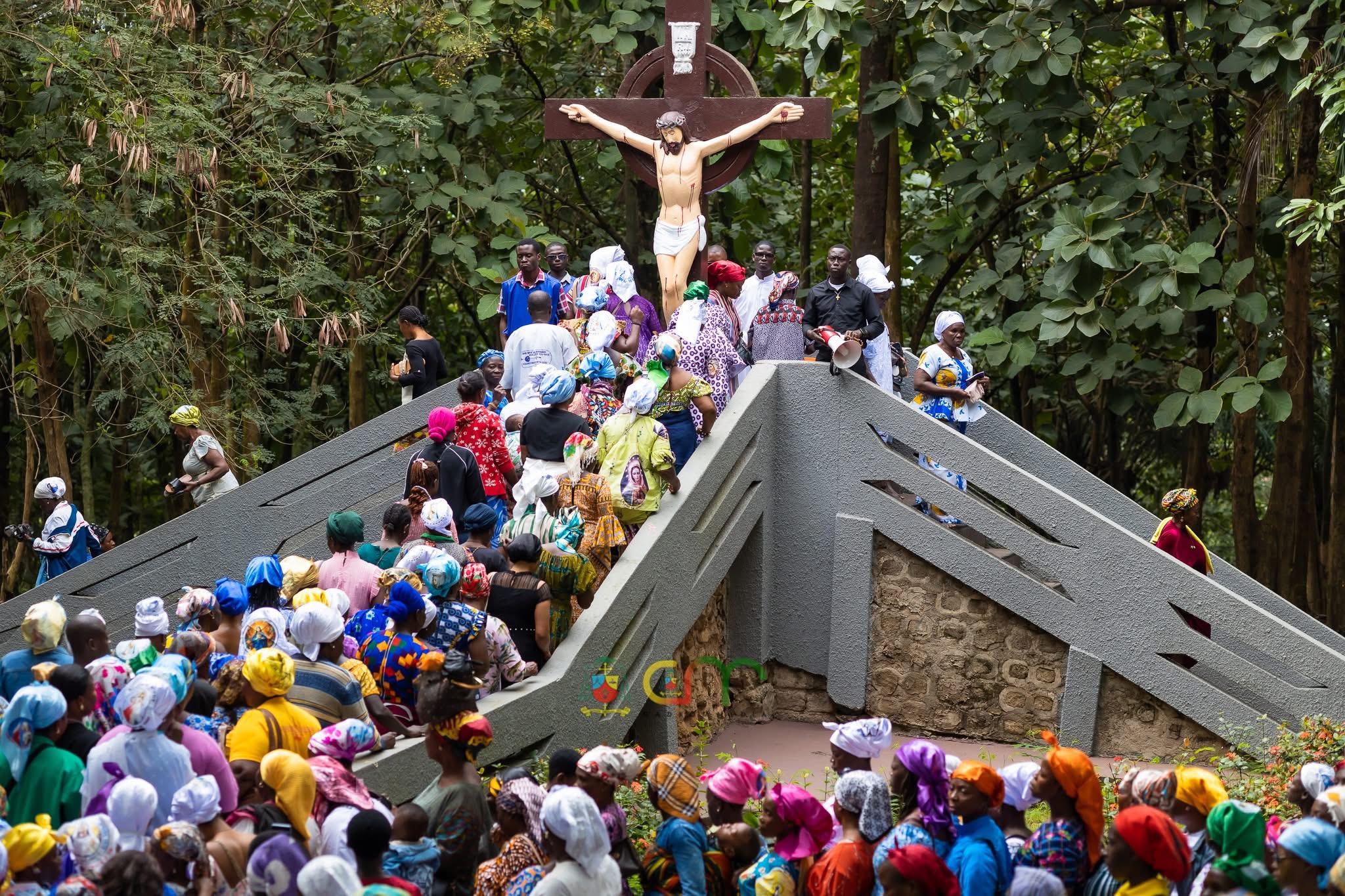
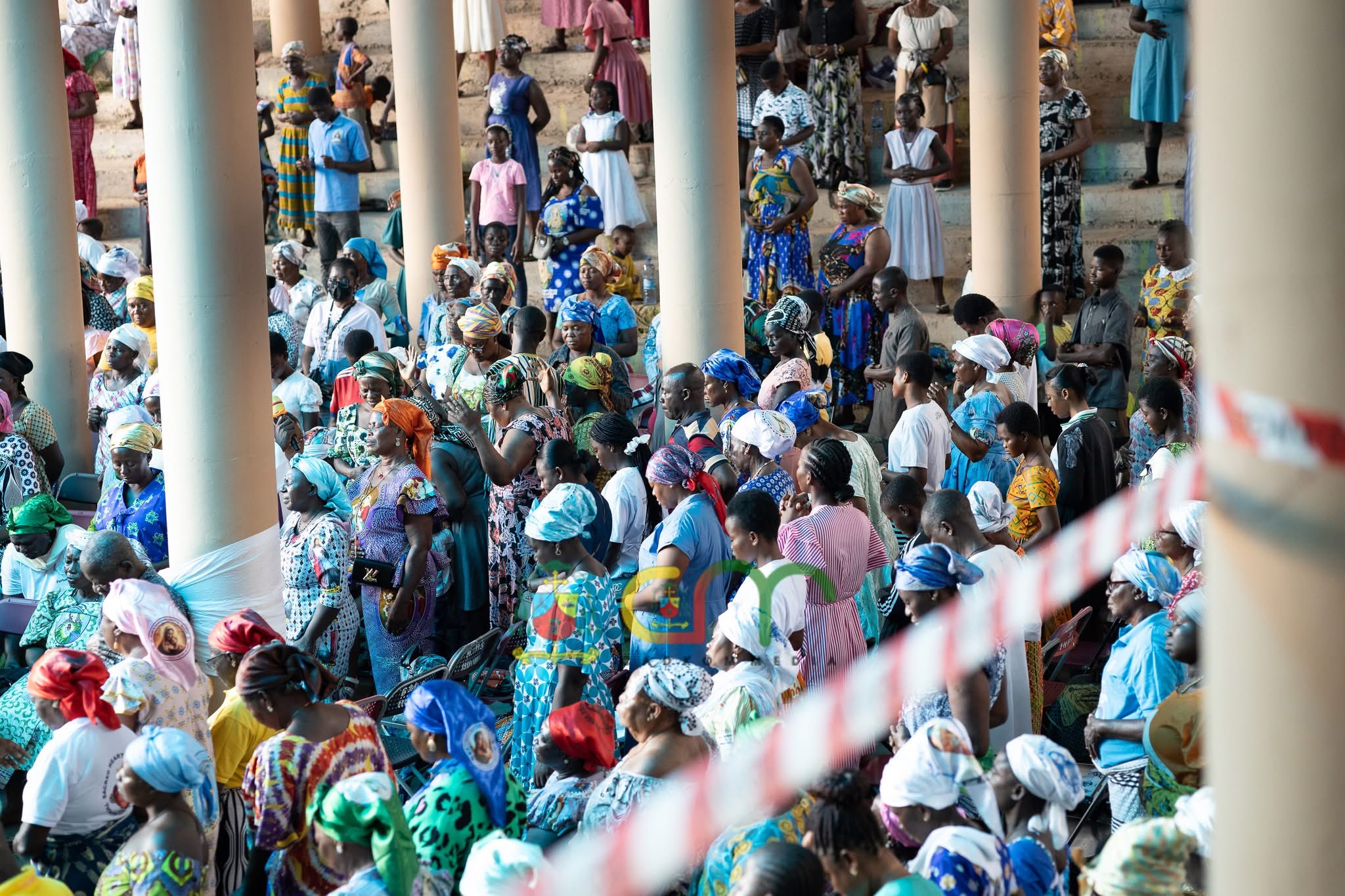
The Feast of the Assumption of the Blessed Virgin Mary on 15 August serves as the highlight of the annual calendar, featuring all-night vigils and Eucharistic celebrations that attract large numbers of pilgrims for communal prayer and devotion to Our Lady. The feast has particular resonance in Ghana, where Marian devotion runs deep across both Catholic and broader Christian communities, and where the rhythm of the liturgical year is felt in the body as much as in the prayer book.
Throughout the year, the sanctuary receives individuals and parish groups, retreat parties, religious communities, seminarians and sisters. The site serves as a venue for spiritual exercises including priestly and lay retreats and gatherings of societies and associations. The Rosary remains at the heart of devotional life, as it was from the beginning — Fr. Tawiah’s own lifelong devotion to the Rosary was the spiritual engine that drove the whole project.
The physical ascent to the grotto has always been part of the experience. The steps, the gradient, the effort of climbing to the rock chamber — these are not incidental features but integral to what the sanctuary asks of its pilgrims. You arrive at the shrine having done something with your body, not merely your mind.
Asante soil, universal devotion
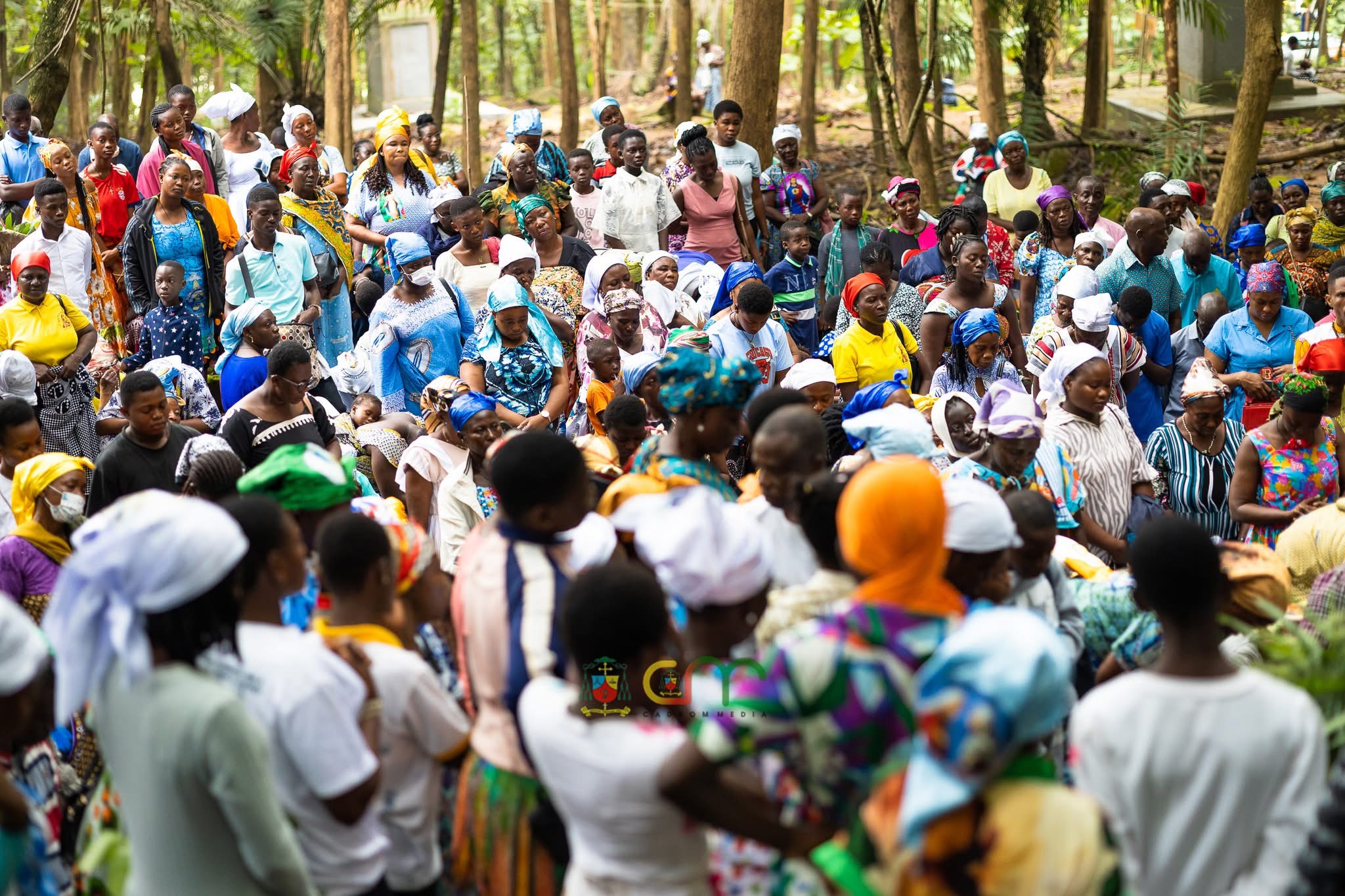
What makes Buoho remarkable as a pilgrimage site is precisely the layering of worlds it represents. The Asante landscape — granite hills, native vegetation, the ochre of laterite soil — provides the physical setting. The traditional authority of the Asantehene provided the ground. A priest of Asante blood provided the vision. And the form taken is that of Lourdes, a cave in the French Pyrenees where a miller’s daughter saw a vision in 1858 and where pilgrims have been coming ever since.
These are not contradictions. They are the characteristic texture of West African Catholicism: a faith that arrived through missionaries, was received and remade by the people who received it, and is now expressed through forms that could not exist anywhere else in quite this way.
The Asantehene who donated the hillside at Buoho understood something about sacred geography that the Church’s own history confirms: that holy places belong to the land as much as to the tradition. The shrine that rose from that donated earth belongs to both.
The Buoho Grotto is located in Buoho village, Afigya-Kwabre South District, approximately 15 kilometres northeast of Kumasi. It falls under the Catholic Diocese of Konongo-Mampong. Visitors are welcome throughout the year; the principal pilgrimage gathering takes place around the Feast of the Assumption on 15 August.
AI Transparency Notice
PilgriMaps uses artificial intelligence tools to assist in the research, drafting and translation of editorial content. All AI-assisted content is reviewed, edited and verified by our editorial team before publication. We contrast information against primary sources, specialist literature and on-the-ground knowledge to ensure accuracy, cultural sensitivity and editorial integrity.
AI is one tool among many in our workflow. The judgement, curation and responsibility for everything published on this platform remain entirely human.
Viator Media S.L. — in compliance with the EU Artificial Intelligence Act (Regulation EU 2024/1689).
This post is also available in: