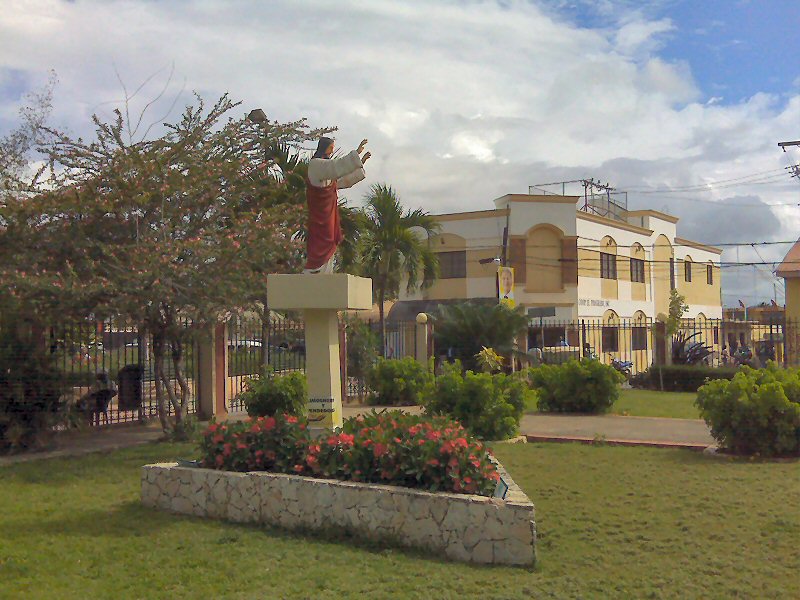
In the eastern interior of the Dominican Republic, the town of Bayaguana is associated with one of the most enduring devotional traditions in the Caribbean: the veneration of the Santo Cristo de los Milagros. Centered on the Santuario del Santo Cristo de los Milagros, this tradition has drawn periodic gatherings for centuries.
The site is often described as a pilgrimage destination, particularly during annual festivities held on January 1 and May 3. A closer historical reading, however, situates Bayaguana within a broader framework of colonial resettlement, circulation of images, and regional patterns of movement, rather than as a fixed pilgrimage center in the classical sense.
Origins in forced resettlement
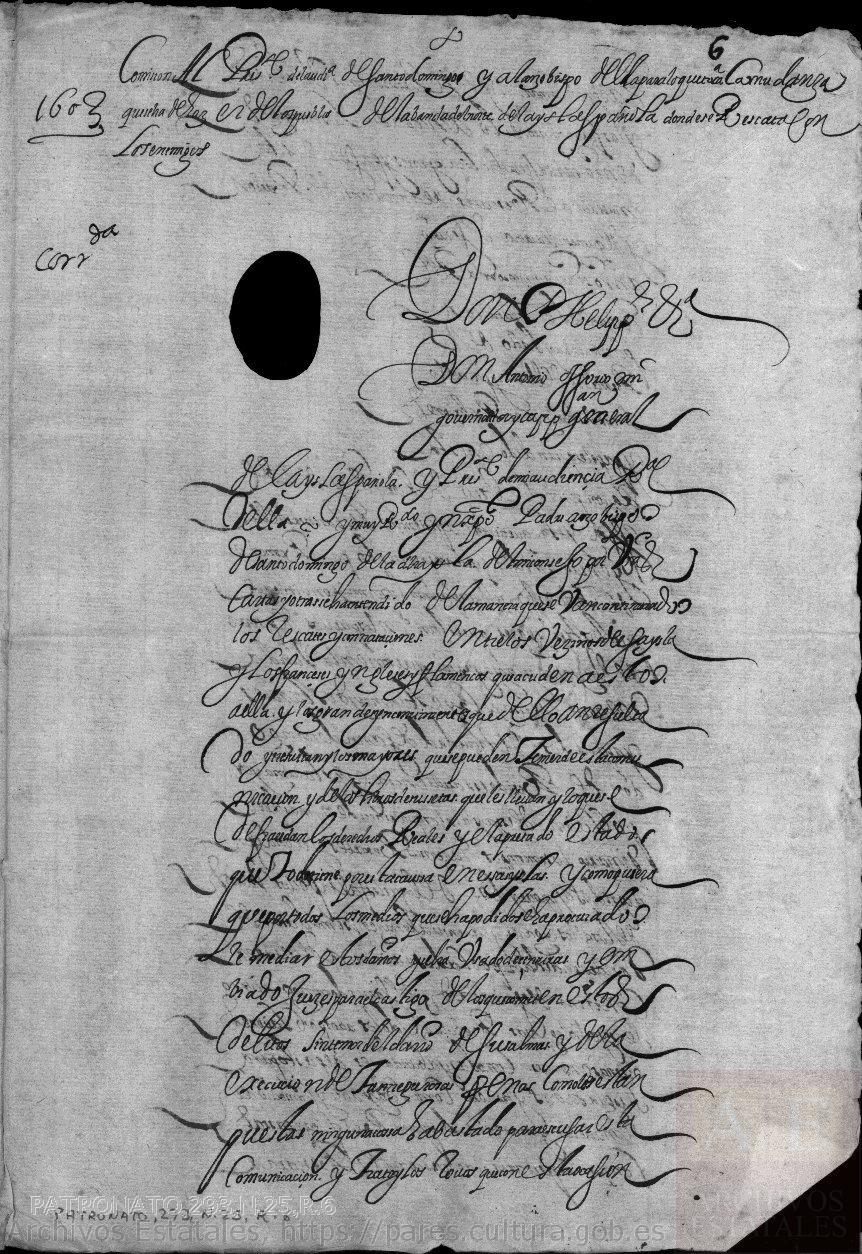
Bayaguana’s history is inseparable from early 17th-century colonial policies. In 1605–1606, the Spanish Crown ordered the depopulation of northern and western settlements in Hispaniola – an episode known as the Devastaciones de Osorio. Under the administration of Antonio de Osorio, inhabitants of towns such as Puerto Plata and Monte Cristi were forcibly relocated to the island’s interior.
Bayaguana emerged as one of the new settlements created through this process. The population that arrived brought with it not only material goods but also devotional objects, including images that would acquire local significance over time. Among these was a representation of Christ that later became associated with miraculous interventions, forming the nucleus of the Bayaguana cult.
The image and its attributions
The Santo Cristo de los Milagros is a carved image whose origins are linked, in local tradition, to the displaced communities resettled after the devastations. Written documentation from the 17th century is limited, but later accounts describe the image as already venerated within a few generations of Bayaguana’s foundation.
Narratives of miraculous events—particularly those involving protection from natural hazards or recovery from illness—began to circulate regionally. These accounts were transmitted orally before appearing in written form, contributing to the gradual consolidation of the sanctuary’s reputation. As with many early modern devotional images, the accumulation of attributed events played a central role in shaping its status.
Movement and periodic gathering
The development of Bayaguana as a devotional site is closely tied to patterns of movement across eastern Hispaniola. Rural populations, often dispersed across cattle ranches and agricultural zones, traveled intermittently to the town, especially during calendrical feasts associated with the Cross and the New Year.
These gatherings combined liturgical observance with social exchange. Markets, family networks, and regional ties converged around the sanctuary during specific moments rather than sustaining continuous flows of visitors. The journeys themselves were typically short- to միջrange, reflecting the geography of the colony and the absence of long-distance pilgrimage infrastructure.
In this context, Bayaguana functioned as a regional aggregation site. Travel to the sanctuary was meaningful and often intentional, but it remained embedded in everyday economic and social rhythms rather than constituting a specialized or institutionally regulated form of pilgrimage.
Architecture and institutional development
The built environment of the Santuario del Santo Cristo de los Milagros reflects layers of reconstruction and adaptation. Early structures were likely modest, constructed with local materials and expanded over time as the town stabilized. Later renovations introduced more durable forms, aligning the sanctuary with broader architectural developments in the colony.
Clerical oversight increased gradually, particularly as ecclesiastical authorities sought to regulate devotional practices and integrate them into parish structures. This process did not eliminate local expressions; rather, it formalized certain aspects while allowing others to persist. The sanctuary thus embodies a negotiation between institutional frameworks and community-driven practices.
Pilgrimage or devotional circuit?
The classification of Bayaguana as a pilgrimage destination depends on analytical perspective. By the 18th and 19th centuries, the site clearly attracted visitors from beyond its immediate surroundings, and its feast days structured recurring journeys. However, these movements lack several features typical of major pilgrimage centers: there is limited evidence of long-distance routes, standardized itineraries, or extensive infrastructure designed to support large-scale influxes.
Instead, Bayaguana can be understood within a devotional circuit—a network of sites visited intermittently by populations whose mobility was shaped by labor, kinship, and seasonal rhythms. The sanctuary’s significance lies in its ability to concentrate these movements at particular times, creating moments of shared presence.
Continuity and transformation
In the modern Dominican Republic, Bayaguana remains an active site of devotion, with annual celebrations continuing to attract participants from across the country. Contemporary transportation has expanded its reach, enabling longer-distance travel and larger gatherings. These changes have brought the site closer, in some respects, to what is now commonly described as pilgrimage.
Yet its historical formation remains distinct. The sanctuary did not emerge from a singular founding event or a centralized directive. It developed gradually, shaped by displacement, adaptation, and the circulation of narratives attached to a specific image.
In short, Bayaguana illustrates how devotional landscapes in the Caribbean were constructed through movement rather than permanence. The Santo Cristo de los Milagros became a focal point not because of institutional designation alone, but through repeated acts of visitation, storytelling, and communal recognition.
While the sanctuary today may be described as a pilgrimage destination, its origins lie in patterns of regional gathering that blur the boundaries between daily life and ritual travel. As such, Bayaguana offers a valuable case for rethinking pilgrimage in colonial contexts—highlighting processes of convergence, memory, and spatial meaning that developed outside the frameworks of major, formally organized routes.
AI Transparency Notice
PilgriMaps uses artificial intelligence tools to assist in the research, drafting and translation of editorial content. All AI-assisted content is reviewed, edited and verified by our editorial team before publication. We contrast information against primary sources, specialist literature and on-the-ground knowledge to ensure accuracy, cultural sensitivity and editorial integrity.
AI is one tool among many in our workflow. The judgement, curation and responsibility for everything published on this platform remain entirely human.
Viator Media S.L. — in compliance with the EU Artificial Intelligence Act (Regulation EU 2024/1689).
This post is also available in: