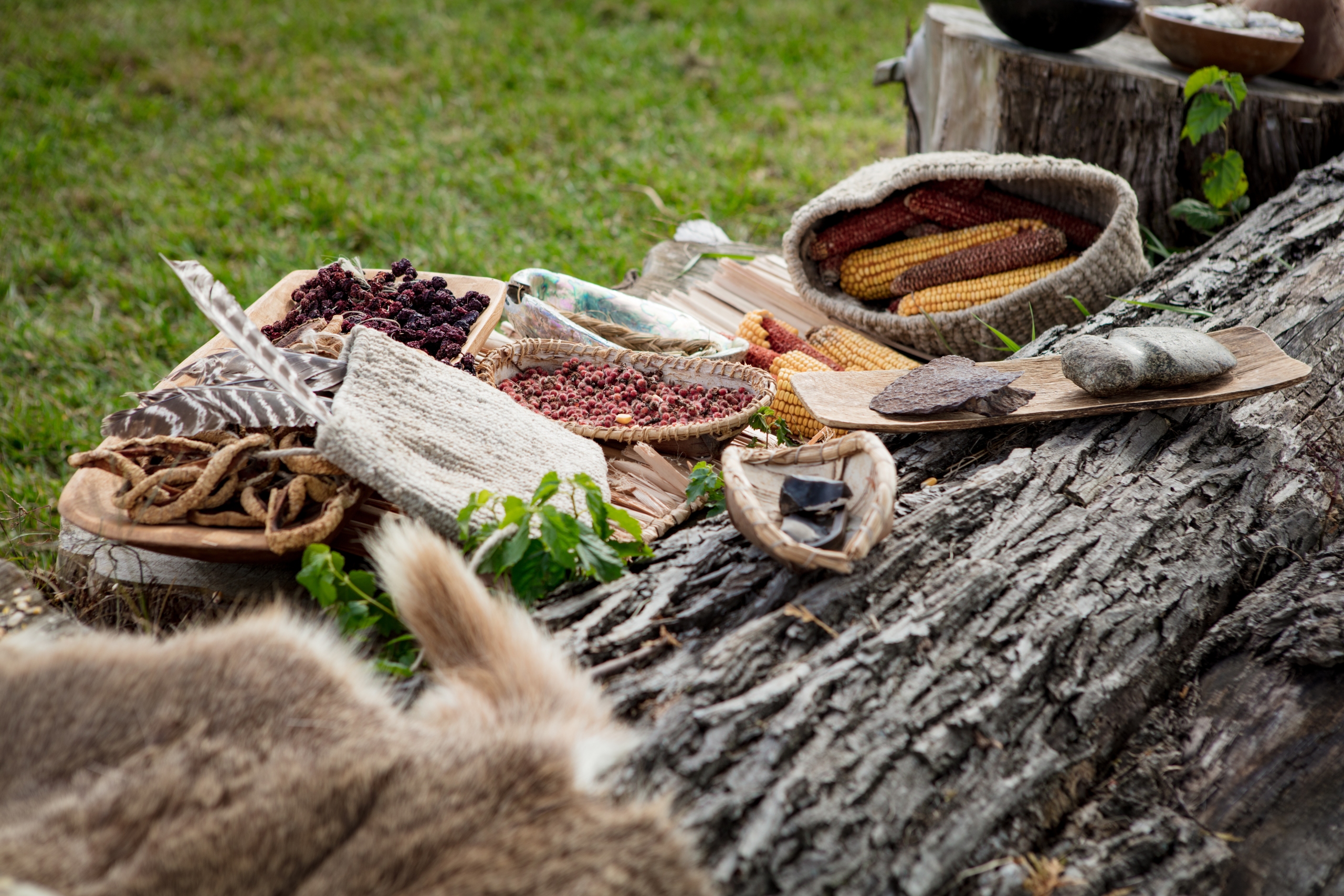
The assumption that Native American cuisine has not been taken seriously at the fine-dining level is, it turns out, no longer accurate — and the correction matters, because what is happening in a handful of American kitchens right now is one of the most intellectually serious food movements on the planet.
Before the turkey. Before the cornbread stuffing and the canned cranberry sauce and the particular mythology of a shared harvest between Pilgrims and Wampanoag that the historical record does not entirely support. Before any of that — before the Mayflower, before Columbus, before the Reconquista sent European adventurers westward looking for a different route to spices they could no longer afford — there was a cuisine of extraordinary complexity, regional diversity, and culinary intelligence that fed this continent for thousands of years and has been, until very recently, almost completely invisible in the American food conversation.
That invisibility is ending. And the people ending it are Native American chefs working with a clarity of purpose that makes most contemporary food movements look tentative by comparison.
The correction
The premise that no American chef has seriously engaged with Native American gastronomy is, as of the early 2020s, no longer accurate — and the correction is worth making carefully, because the story is more interesting than the absence would have been.

Sean Sherman, an Oglala Lakota Sioux chef who has operated under the name “The Sioux Chef” since 2014, opened Owamni in Minneapolis in 2021 with a culinary philosophy built on the complete removal of colonial ingredients. The menu at Owamni, co-created with Dana Thompson, excludes wheat flour, cane sugar, dairy, beef, pork, and chicken — all items introduced to the region after European contact — replacing them with the indigenous foods of what Sherman calls Turtle Island: corn, squash, wild rice, game, and foraged plants. Owamni was named the James Beard Award’s Best New Restaurant of 2022.
Sherry Pocknett, a Mashpee Wampanoag chef, became the first Indigenous woman to win a James Beard Award for Best Chef in the Northeast in 2023. Crystal Wahpepah, a member of the Kickapoo Tribe of Oklahoma, became the first Native American chef featured on the Food Network’s Chopped and runs Wahpepah’s Kitchen in Oakland, where the menu features wild native mushroom and pumpkin seed mole, blueberry-infused bison meatballs, and red chili rabbit tacos.
Owamni itself is now relocating to a larger space inside the Guthrie Theater under the name Indígena by Owamni, opening in June 2026, with an expanded menu furthering the mission of showcasing Indigenous foods through contemporary, decolonized cuisine.
The movement is real, it is serious, and it has arrived with James Beard Awards and Time 100 lists to prove it.
What the food actually is
The Thanksgiving tradition has done something quietly damaging to the perception of Native American food: it has frozen it in a single harvest image — corn, squash, turkey, beans — and attached it to a narrative of generosity toward European arrivals that obscures both the sophistication of what was being shared and everything that followed the sharing.
Native American cuisine is not one thing. It is hundreds of things, distributed across a continent of radically different ecosystems, developed by peoples whose relationships with their particular landscapes — the Great Plains, the Pacific Northwest, the Great Lakes, the desert Southwest, the Northeast woodlands, the Mississippi Delta — produced culinary traditions as distinct from each other as French cooking is from Japanese.
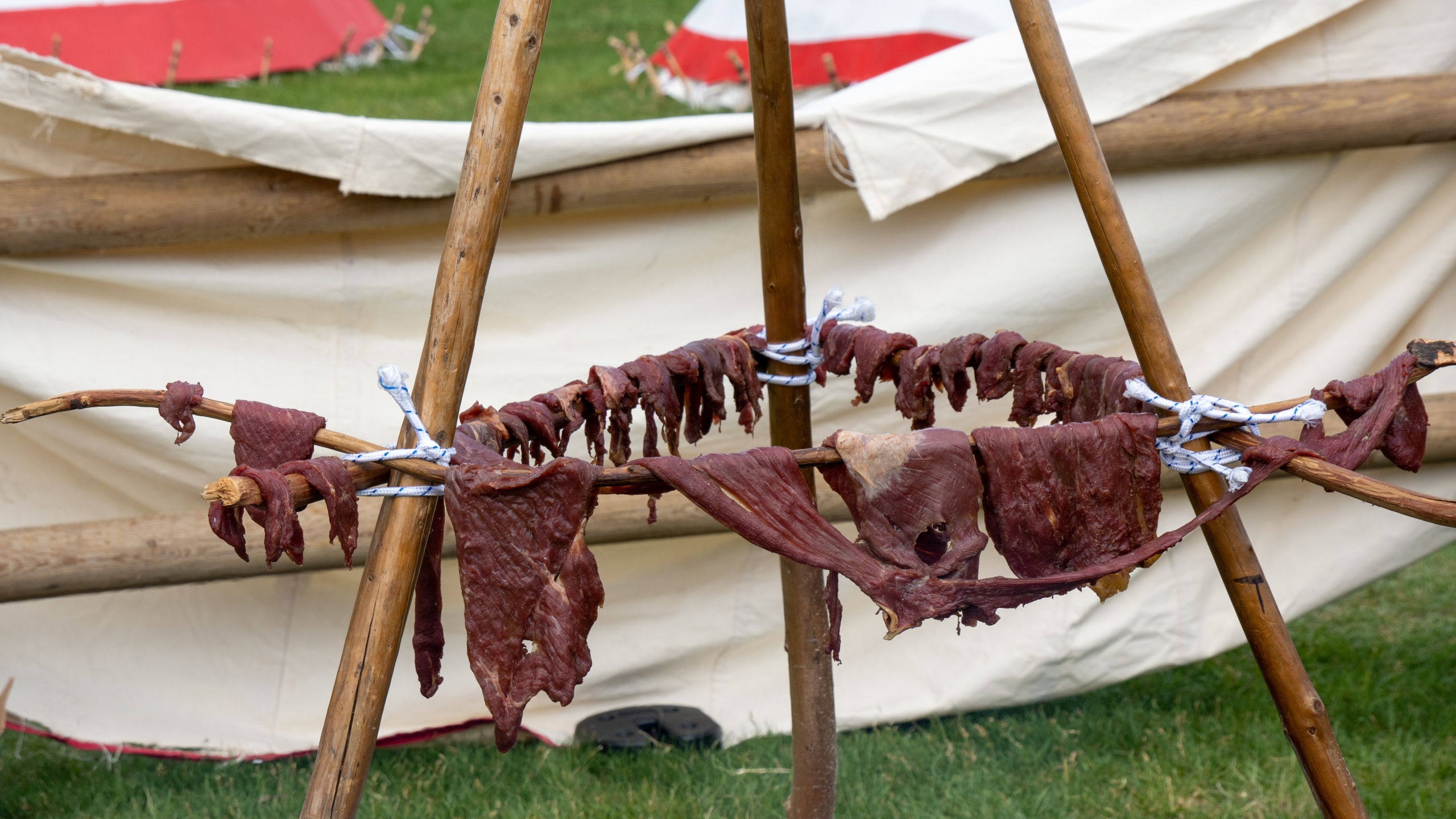
The Great Plains traditions are built around bison — not the generic “buffalo” of steakhouse menus but bison used in ways that reflect an intimate, centuries-long knowledge of the animal: the tongue, the liver, the marrow, the rendered fat used for pemmican, the slow smoking of ribs over wood that gives the meat a depth no feedlot beef can replicate. At Owamni, slow-smoked bison short rib is finished with bitter aronia berries — a combination that sounds contemporary but draws on a deep understanding of how the sharp, tannin-rich berry cuts through the richness of the meat in a way that a European wine reduction would approximate but never quite match.
The Great Lakes and Upper Midwest traditions center on wild rice — manoomin in Ojibwe — which is not, emphatically, the paddy-grown “wild rice” sold in most American supermarkets. Genuine hand-harvested lake rice has a nuttiness, a slight chew, and a depth of flavor that the cultivated version only approximates. It is the grain that anchors the Ojibwe food system in the same way that wheat anchors the European one, and it is beginning to appear in fine-dining contexts with the seriousness it deserves.
The Pacific Northwest traditions are organized around salmon — not as a protein but as a civilizational organizing principle. The timing of the salmon runs structured the year, the cedar-plank smoking techniques developed over generations produced flavors of extraordinary subtlety, and the relationship between the fish, the river, and the forest that feeds the river constitutes one of the most sophisticated understandings of ecosystem interdependence that any food culture has ever articulated.
The desert Southwest is the home of the Three Sisters — corn, beans, squash — grown together in a companion planting system of considerable agricultural intelligence: the corn provides the pole for the beans to climb, the beans fix nitrogen in the soil, the squash covers the ground and retains moisture. At Owamni, a three sisters soup brings together nixtamalized Pima corn, tepary beans, and delicata squash — three ingredients with pre-Columbian histories on this continent, cooked in a way that is both ancient in its logic and contemporary in its execution.
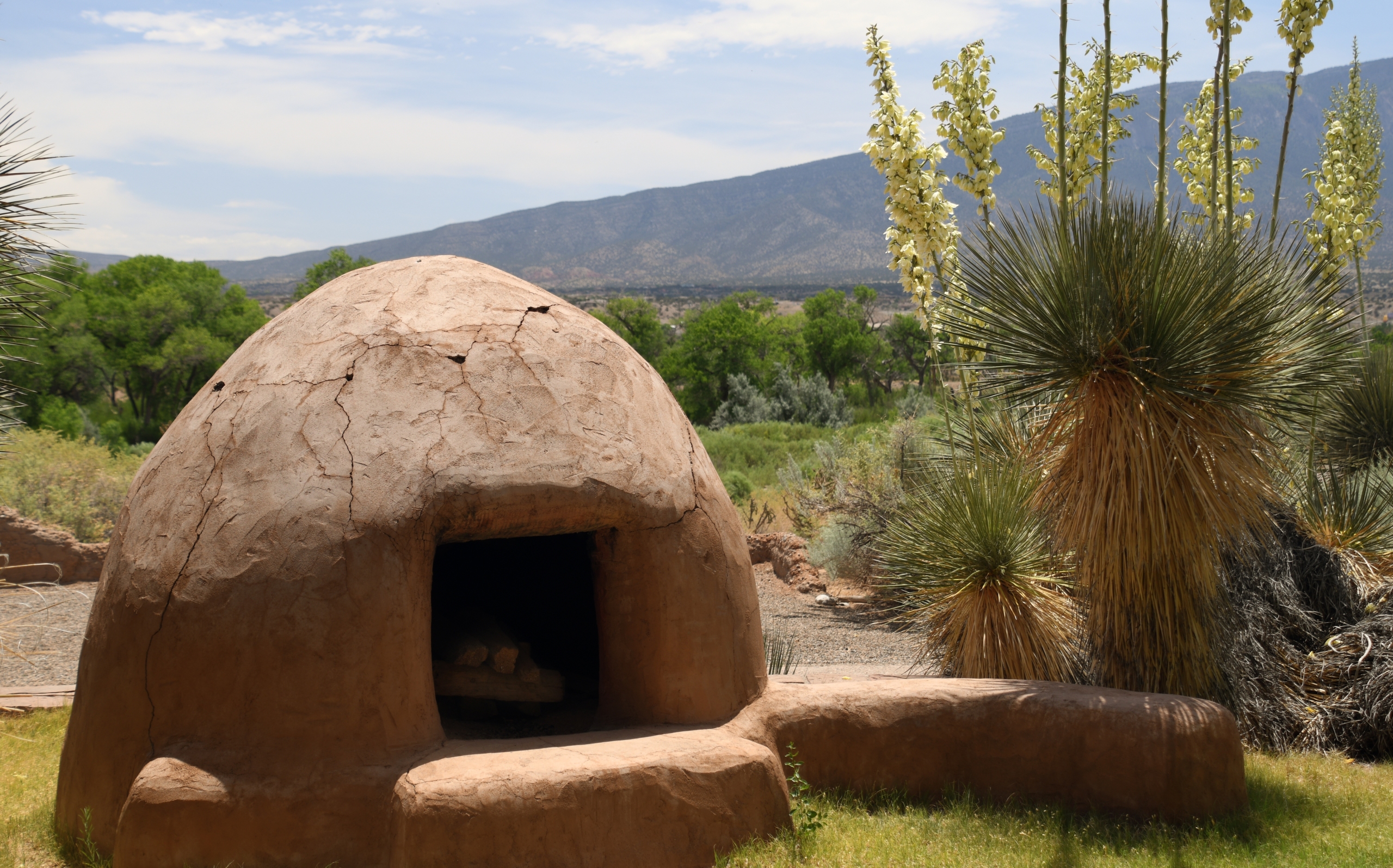
Nixtamalization itself — the process of treating dried corn with an alkali solution, typically wood ash or limestone, that releases the grain’s niacin and transforms its flavor and texture — is one of the great culinary discoveries in human history, developed in Mesoamerica approximately 3,500 years ago and still misunderstood by most of the Western world, which for centuries used un-nixtamalized corn and suffered pellagra as a consequence.
The pilgrimage lunch
For the pilgrim — secular or religious, walking a trail or simply choosing what to eat with deliberate attention — the Native American table offers something that almost no other American food tradition can: a direct, unmediated connection between the ingredients on the plate and the specific landscape underfoot.
This is what the pilgrimage food tradition has always sought, across cultures. The fenkata of Malta connects the diner to the island’s agricultural history and social struggle. The ćevapi of Bosnia carries Ottoman memory in its seasoning. The wine of the Ribera del Duero tastes of the specific geology of the Duero valley. The food worth eating on a pilgrimage is food that knows where it comes from.
By that standard, a meal built around indigenous North American ingredients is perhaps the most pilgrimage-appropriate food the continent can offer. Wild rice harvested from a specific Minnesota lake by a specific Ojibwe family, bison grazed on prairie restored to something like its pre-industrial condition, tepary beans that have been grown in the Sonoran Desert for thousands of years and have adapted to that particular aridity in ways that make them drought-resistant and nutritionally dense — these ingredients carry place in a way that imported beef and commodity wheat simply cannot.
Sherman has noted that there is “immense plant diversity out there that Western diets completely ignore,” and the observation lands differently when you consider that the plants being ignored are the ones that evolved on this specific continent, in these specific soils, under these specific weather patterns, for millennia before anyone thought to replace them with European imports.
A lunch built on these principles might move through: a cedar-smoked salmon on a bed of hand-harvested wild rice, finished with a reduction of chokecherry; a bison tartare seasoned with sumac and dried juniper berries, served with a wojape — a traditional Lakota sauce made from wild plums or chokecherries — that reframes the tartare tradition entirely; a roasted kabocha squash with maple and dried sage and toasted sunflower seeds; and a tea made from rosehip, fireweed, and dandelroot that is, in terms of flavor complexity, the equal of any herbal infusion in the European tradition.
No wheat. No dairy. No cane sugar. No beef or pork. Nothing that arrived after 1492. And yet a meal of extraordinary abundance, flavor, and nutritional intelligence.
What this means for pilgrimage
The emergence of serious Native American cuisine at the fine-dining level is, among other things, an act of historical recovery. Sherman’s philosophy of decolonization is not, as he has put it, “pretending colonization didn’t happen” — it is understanding what was lost, what survives, and what can be rebuilt.
That is also, in essence, what pilgrimage does. It is an act of recovery — of attention, of relationship with landscape, of practices that faster and more efficient modes of travel have made seem unnecessary. The pilgrim who walks a trail through land that was, before any European arrived, someone else’s home and someone else’s food system, and who stops to eat food that belongs to that land, is doing something that goes beyond gastronomy. They are acknowledging a history, a presence, and a cuisine that the dominant American food culture has spent centuries ignoring.
As Sherman has written, there is a huge, expanding set of operations making Indigenous food visible across the country — from Owamni’s James Beard-winning kitchen in Minneapolis to Wahpepah’s Kitchen in Oakland to Cafe Ohlone at UC Berkeley to the new Javelina in Portland to the Frybread Lounge in Scottsdale — and the common thread is not nostalgia but sovereignty: the claim that these foods, these ingredients, these culinary traditions belong to living peoples whose right to cook and eat their own food was not extinguished by the processes that suppressed everything else.
The pilgrimage lunch on Native American ground is not a theme dinner. It is an encounter with the oldest food system on this continent — one that is, after a long silence, beginning to speak again.
Further reading: Sean Sherman, Turtle Island: Foods and Traditions of the Indigenous Peoples of North America (2025); Sean Sherman and Beth Dooley, The Sioux Chef’s Indigenous Kitchen (2017, James Beard Award for Best American Cookbook); North American Traditional Indigenous Food Systems, natifs.org; Owamni/Indígena by Owamni, Minneapolis.
AI Transparency Notice
PilgriMaps uses artificial intelligence tools to assist in the research, drafting and translation of editorial content. All AI-assisted content is reviewed, edited and verified by our editorial team before publication. We contrast information against primary sources, specialist literature and on-the-ground knowledge to ensure accuracy, cultural sensitivity and editorial integrity.
AI is one tool among many in our workflow. The judgement, curation and responsibility for everything published on this platform remain entirely human.
Viator Media S.L. — in compliance with the EU Artificial Intelligence Act (Regulation EU 2024/1689).
This post is also available in: