The sweet smoke of oak wood mingles with the sharp smell of natural cider poured from a height, falling into the glass with a rhythmic gurgle. It is a late summer evening in Donostia-San Sebastián, the city of steel and salt resting on the Bay of Biscay. The fine rain — the txirimiri, as they call it here — lays a luminous veil over the stones of the Parte Vieja.
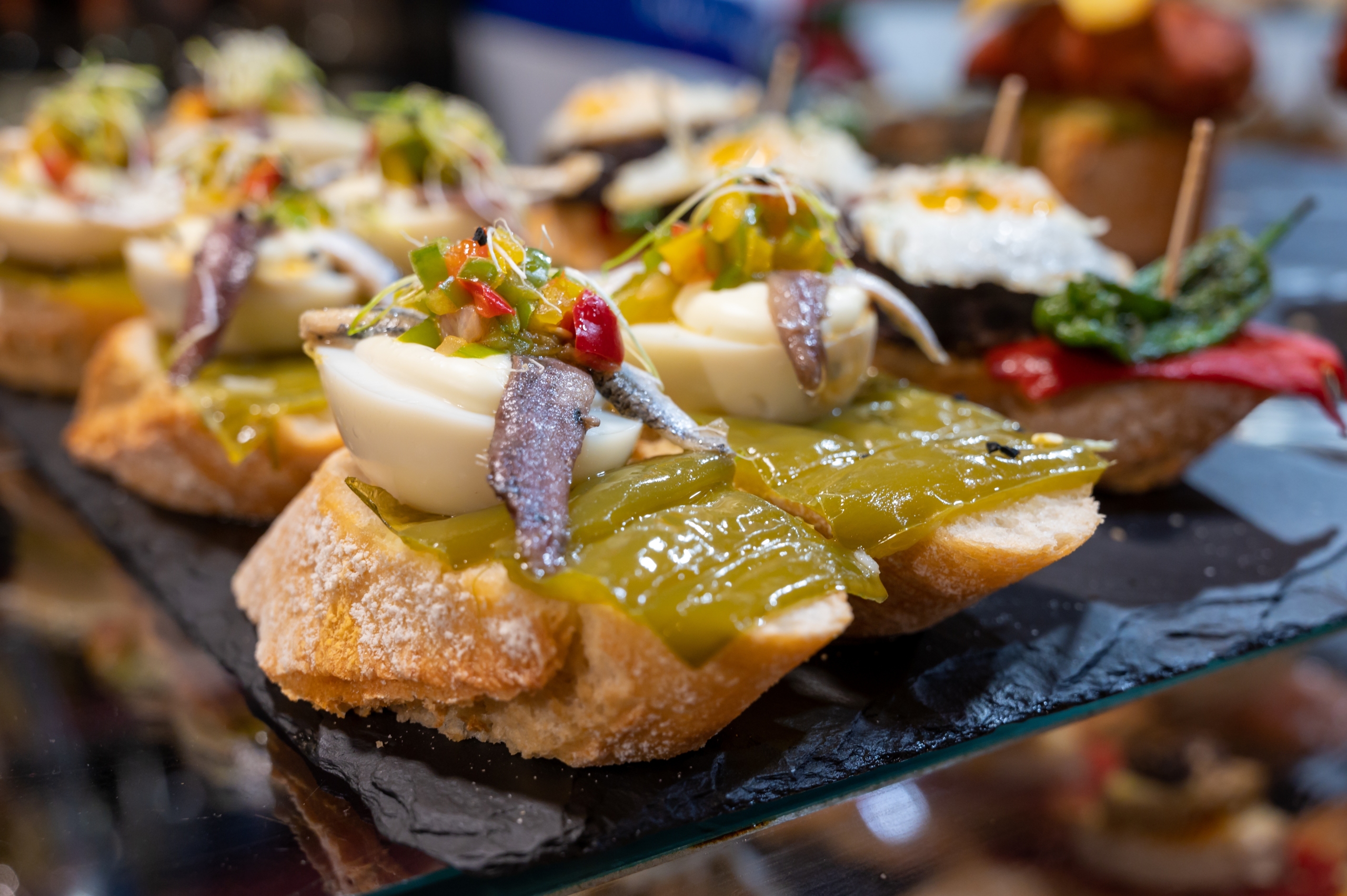
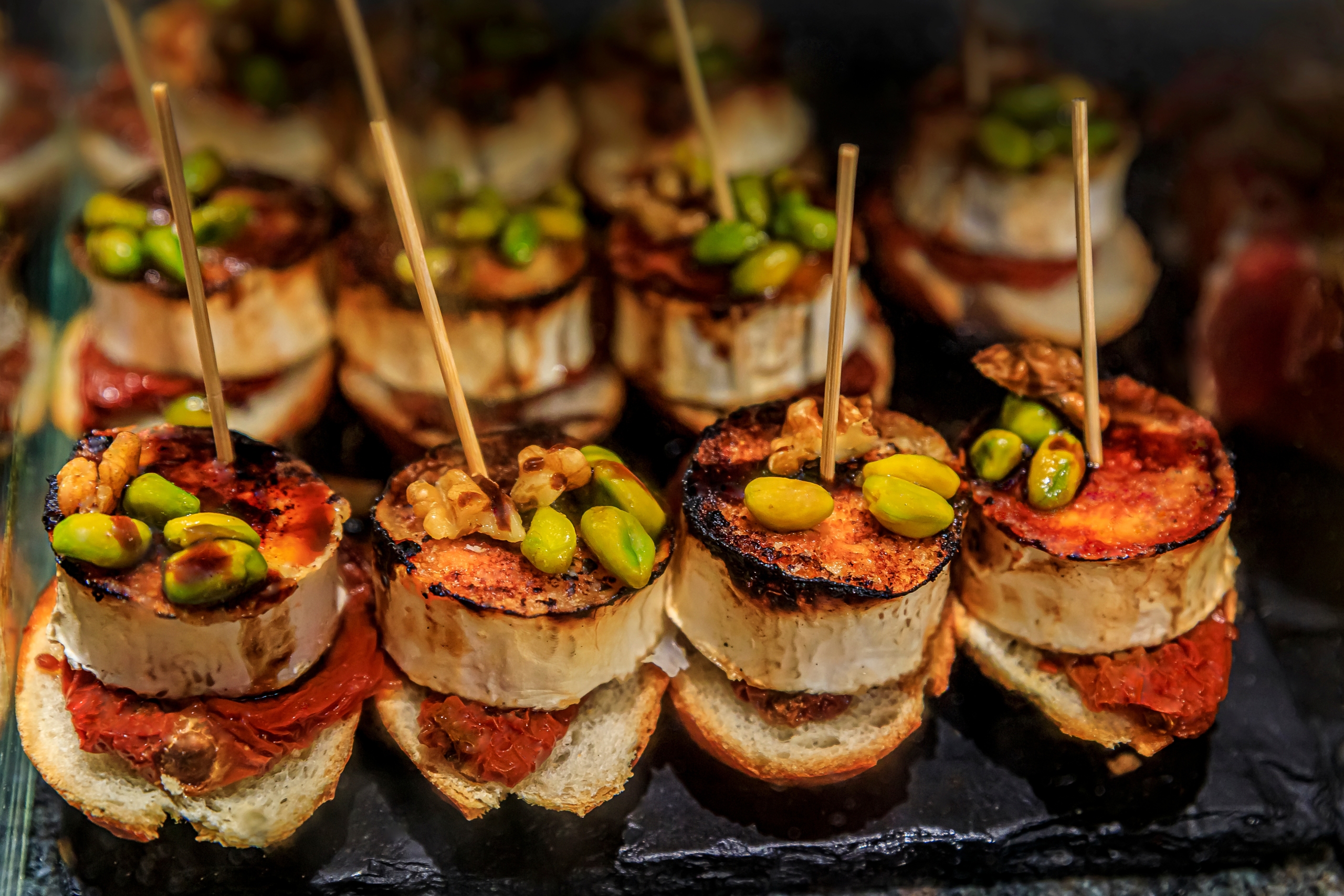
Inside the tabernas, however, the atmosphere is warm, almost feverish. On the solid wooden counters a spectacle unfolds that defies any ordinary gastronomic description. There are tapas, aperitivo snacks — and then there are the real masterpieces of flavour engineering, bound to the deep identity of a region: the pintxos.
To understand the pintxo, you must first grasp that in the Basque Country food is a movement, a profane pilgrimage, never a solitary act. The locals call it txikiteo (or poteo): the art of wandering from bar to bar with your cuadrilla, the group of friends with whom you often share your entire social life. You stand at the counter, shoulder to shoulder with strangers, raising your voice above the noise. At each stop you order a txikito — a small glass of red wine — or a txakoli, the acidic, lightly sparkling white of the coast, accompanied by a single bite. A sip, a mouthful, then on to the next bar.
The name itself, pintxo, echoes the Spanish verb pinchar — “to skewer” — after the wooden stick that originally held the ingredients together on a slice of bread.
But what is the true origin of this collective tradition?
Popular accounts identify a symbolic moment in the 1940s. According to the most widely accepted version, it was a regular customer at Bar Casa Vallés, Joaquín Aramburu, who skewered three simple ingredients he found on the counter onto a cocktail stick: a green olive, a salted anchovy fillet and a pickled chilli, the guindilla. Thus was born the Gilda, named in honour of the celebrated and scandalous film with Rita Hayworth released around 1946: green, salty and a little spicy. It was a masterpiece of balance — the acidity of the vinegar, the savouriness of the sea and the richness of the olive preparing the palate for the next glass.
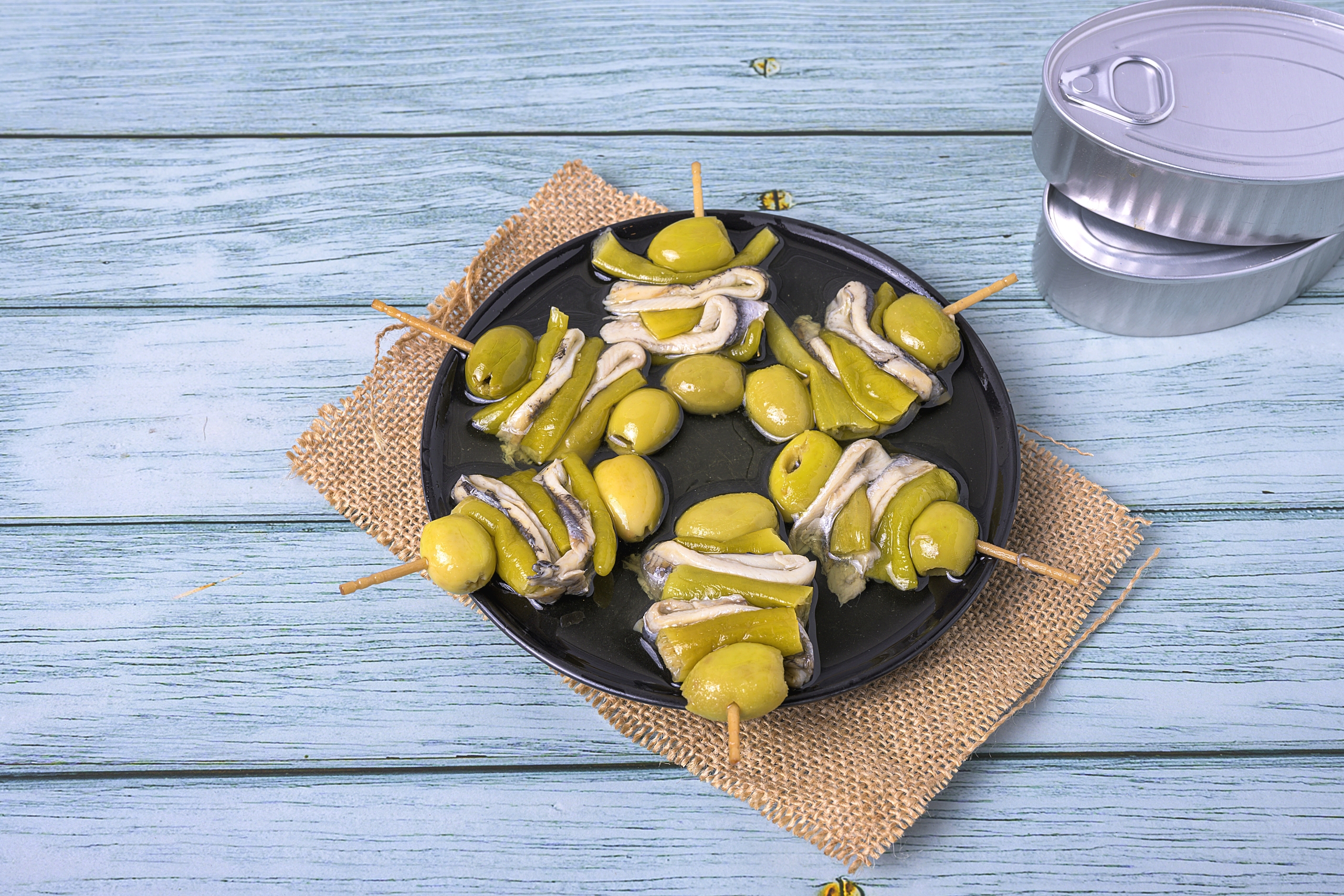
The Gilda became an icon, but the history of counter-top bites had begun earlier. As far back as the late 1920s, historic bars such as La Espiga — opened in 1928 and still run by the same family today — were offering banderillas: small combinations of food skewered and laid on bread. The Gilda was not the absolute beginning, but the spark that transformed an informal custom into the gastronomic identity of a city.
As the decades passed, the pintxo scene layered different languages that today coexist within a few metres of each other in the narrow lanes of San Sebastián.
On one side is the classical tradition of the triumphal counter: fragrant slices of bread topped with seafood Russian salad, four-finger-thick potato tortilla, salt cod or Iberian ham. In some traditional bars the custom of paying “on your word” survives: the customer simply tells the barman what they have consumed at the moment of settling the bill, an informal but deep-rooted pact of trust. In other historic settings, the paper napkins once left to fall to the floor were considered visible proof of a bar’s popularity — a custom that, for civic and hygiene reasons, is gradually disappearing in favour of baskets and clean counters.
On the other side, the great transformation arrived from 1976 onwards. That year, led by charismatic figures such as Juan Mari Arzak and Pedro Subijana, the Nueva Cocina Vasca was born. The impact of this avant-garde movement inevitably reached the bars too, giving rise to “haute cuisine in miniature.”
Pintxos became hot, prepared expressly to order from the kitchen. The skewer often disappeared, replaced by small ceramic bowls or tasting spoons. Noble ingredients — seared foie gras, eggs slow-cooked with mushroom cream, pork cheeks braised in red wine — began to be served in the format of a single, perfect mouthful.
Whether the simplest bite or the most conceptual preparation, the philosophy of the pintxo rests on the absolute quality of the raw materials of a rugged territory squeezed between the ocean and the Pyrenees. Expertly desalted salt cod, Cantabrian anchovies and mushrooms gathered in the inland forests are the pillars of this larder.
To understand why the pintxo became a unique phenomenon, one must also look at the social organisation of the Basque people. A central role has been played by the Sociedades Gastronómicas, or Txokos: private clubs that emerged between the late 19th and early 20th centuries where members gathered to cook, sing and socialise. Historically, many of these associations were predominantly male spaces and long maintained restrictions on women’s access — a rigidity that has softened only in recent times.
The culture of the pintxo can be read as the public and democratic projection of that same convivial spirit. In the bar, sociability leaves the closed spaces and spills into the street. Social background and profession are beside the point: at the counter you share a narrow space, you call your order to the barman above the crowd’s noise, and you comment on the news of the day.
As night falls and the sea breeze begins to rise up the mouth of the Urumea, the chalk-written boards show the day’s dishes crossed off one by one and the trays empty out. Travellers make their last stops before taking leave of the evening, declaring their final txikito to the barman before stepping back out into the damp night.
In this ritual of sharing and trust lies the true meaning of the pintxo. A combination of extraordinary ingredients on a slice of bread, a cultural pact, an explosion of pride for one’s territory and a precise way of understanding existence: the certainty that life, after all, is to be savoured one small, memorable mouthful at a time.
AI Transparency Notice
PilgriMaps uses artificial intelligence tools to assist in the research, drafting and translation of editorial content. All AI-assisted content is reviewed, edited and verified by our editorial team before publication. We contrast information against primary sources, specialist literature and on-the-ground knowledge to ensure accuracy, cultural sensitivity and editorial integrity.
AI is one tool among many in our workflow. The judgement, curation and responsibility for everything published on this platform remain entirely human.
Viator Media S.L. — in compliance with the EU Artificial Intelligence Act (Regulation EU 2024/1689).
This post is also available in: