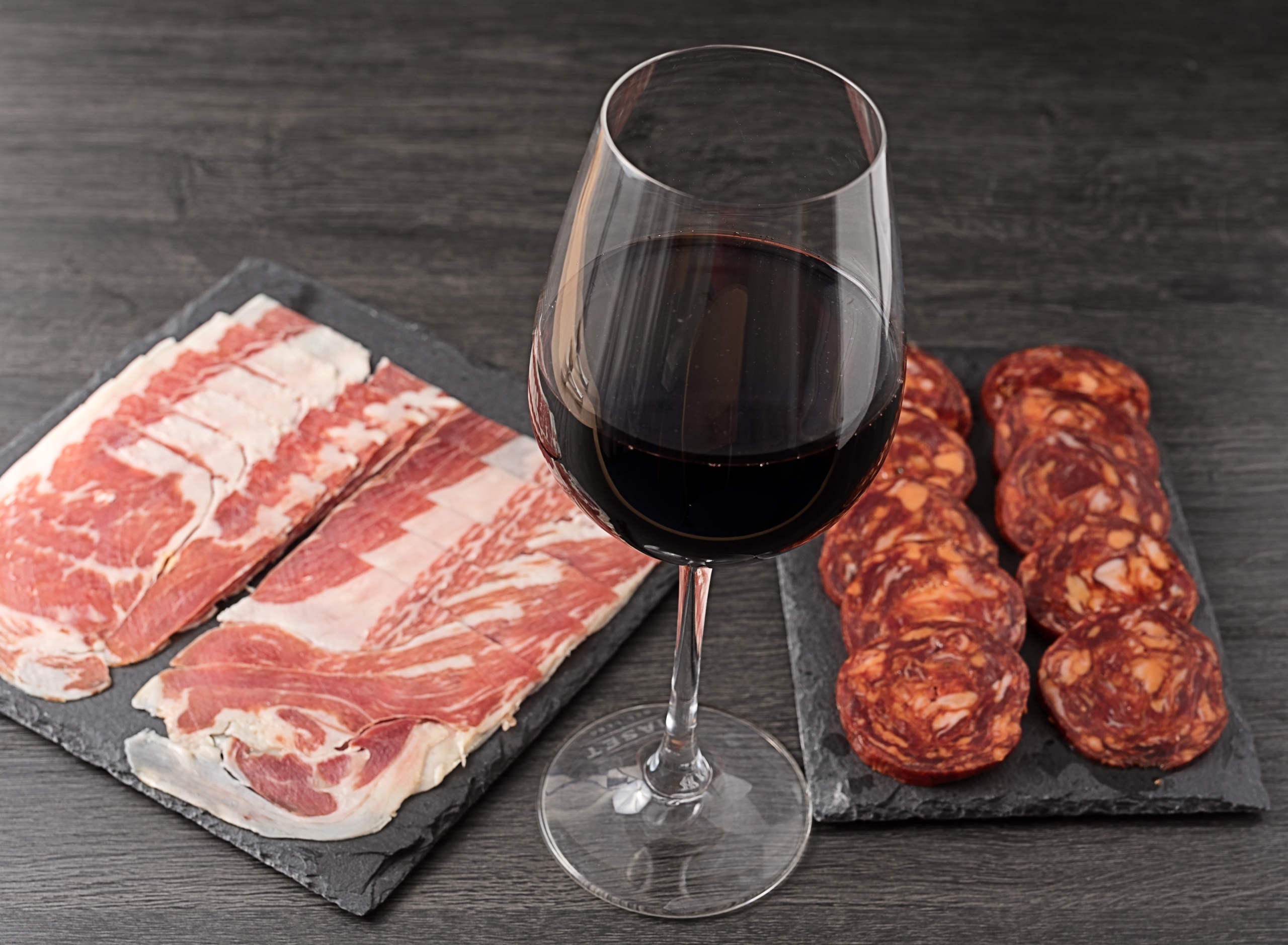
The Ribera del Duero cannot be understood through its vineyards alone. Its history is also written in the roads that follow the course of the river, linking villages and crossing ancient frontiers. Among them, two itineraries of different character stand out: the Camino de la Lana, connected to trade and Jacobean pilgrimage, and the Camino de Santo Domingo, which gathers the Castilian places associated with the childhood and formation of Domingo de Guzmán.
The Camino de la Lana connected the lands of the southeastern peninsula with Burgos and the Camino Francés. Along it moved wool, cloth, tools, and agricultural produce — but also pilgrims, muleteers, and travelers in need of food, lodging, and protection. The Camino de Santo Domingo, by contrast, traces a biographical landscape: Caleruega, Gumiel de Izán, Santa María de la Vid, and El Burgo de Osma allow one to reconstruct the family, agricultural, and religious world in which the future founder of the Order of Preachers grew up.
Both roads show that the Ribera was never an isolated territory. People, news, techniques, and goods traveled its paths. Wine accompanied that circulation: it was offered in houses and inns, sold in markets, and transported to other regions. The routes did not create the Ribera’s wine culture, but they integrated it into a broader economic and human network.
That relationship between wine, territory, and movement finds a particularly visible expression in San Esteban de Gormaz. The town rises beside the Duero at one of the points through which the Camino de la Lana runs. At the top of the hill stand the remains of the castle that once watched over the river crossing; along the same slope, hundreds of cellars dug into the earth open their doors for the keeping of wine.
Above lies the memory of war and power. Below, that of daily labor. Between these two architectures one reads one of the great historical transformations of the region: the passage from a military frontier to an agricultural territory whose identity would come to be bound to the vine.
A history older than the denomination
The Denominación de Origen Ribera del Duero was officially recognized in 1982, but the presence of wine in the valley is far older. Finds made at Pintia — a settlement associated with the Vaccean culture — indicate that it was consumed several centuries before our era. The appearance of wine residues in funerary vessels shows that the drink did not serve only a nutritional function: it could also express prestige and participate in ceremony.
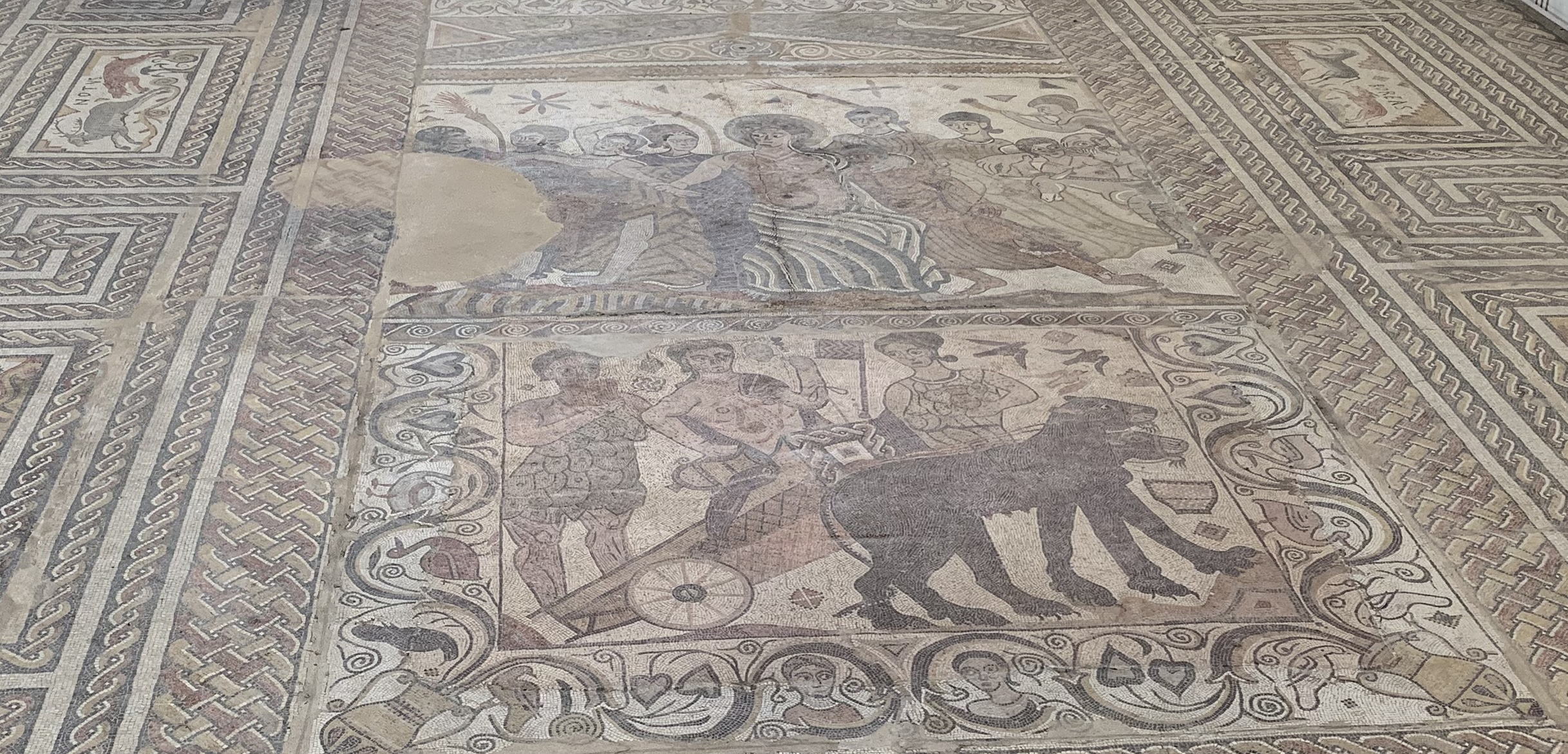
The Roman period left further evidence. The mosaic of Baños de Valdearados, dedicated to Bacchus, testifies to the cultural importance of wine in the Mediterranean world. It does not prove that the region produced anything comparable to contemporary wine, nor that an unbroken continuity exists between antiquity and the modern bodega. Varieties, techniques, and tastes changed many times over. What it does confirm is that wine was integrated into the economy and the imagination of the valley.
The Duero was decisive in that evolution. Its course facilitated settlement, agriculture, and communication between territories. Around the river grew markets, villages, and stopping places. The Ribera did not emerge as a precise administrative unit but as a human landscape built over centuries around water, crops, and roads.
From frontier to agricultural region
During the central centuries of the Middle Ages, the Duero valley was the scene of conflict, repopulation, and territorial reorganization. Castles, towers, and watchtowers still recall the era when the river marked an unstable frontier.
San Esteban de Gormaz occupied a strategic position. Its fortress controlled one of the Duero crossings and protected a town disputed for decades. The settlement was known as one of the “gates of Castile” — a name that captures its military and political importance.
The spread of viticulture was tied to the stabilization of the territory. Planting a vineyard meant trusting that the land could be worked for years. Vines demanded continuous care and offered no immediate returns. Their cultivation was difficult in a space subject to abandonment or destruction.
As the frontier gave way to a more stable network of towns and villages, communities organized their fields and diversified production. Cereals, livestock, market gardens, and vineyards coexisted within local economies. Wine offered concrete advantages: it could be preserved, transported, and used as food, rent, or a product of exchange.
Vineyards thus helped to fix population in place. The territory ceased to be merely a space to be defended and became a land to be cultivated, administered, and handed down. The expansion of the vineyard was, in that sense, a sign of continuity and confidence in the future.
The wine of everyday life
For centuries, Ribera wine was not a luxury reserved for privileged groups. It formed part of the daily life of the villages. Many families cultivated small plots, often scattered, and participated together in the harvest.
The lagar was where grapes were pressed and must obtained. The bodega, generally dug into a hillside, provided darkness, moisture, and stable temperature. Between these two spaces a practical knowledge developed, transmitted from generation to generation: when to harvest, how to press the grapes, how to preserve the wine and prevent it from spoiling.
Wine accompanied meals and celebrations, but could also be given as rent or payment. It was offered to guests and travelers, used in the liturgy, and formed part of communal labor. The harvest was not only an economic activity: it organized the calendar, brought families together, and reinforced the bonds of neighborhood.
The places connected to Domingo de Guzmán offer a window into that world. Born around 1170 in Caleruega, he grew up in a landscape of fields, vineyards, and small settlements. A local tradition holds that his mother, Juana de Aza, distributed among those in need part of the wine stored by the family, and that the barrel afterward appeared full once again.
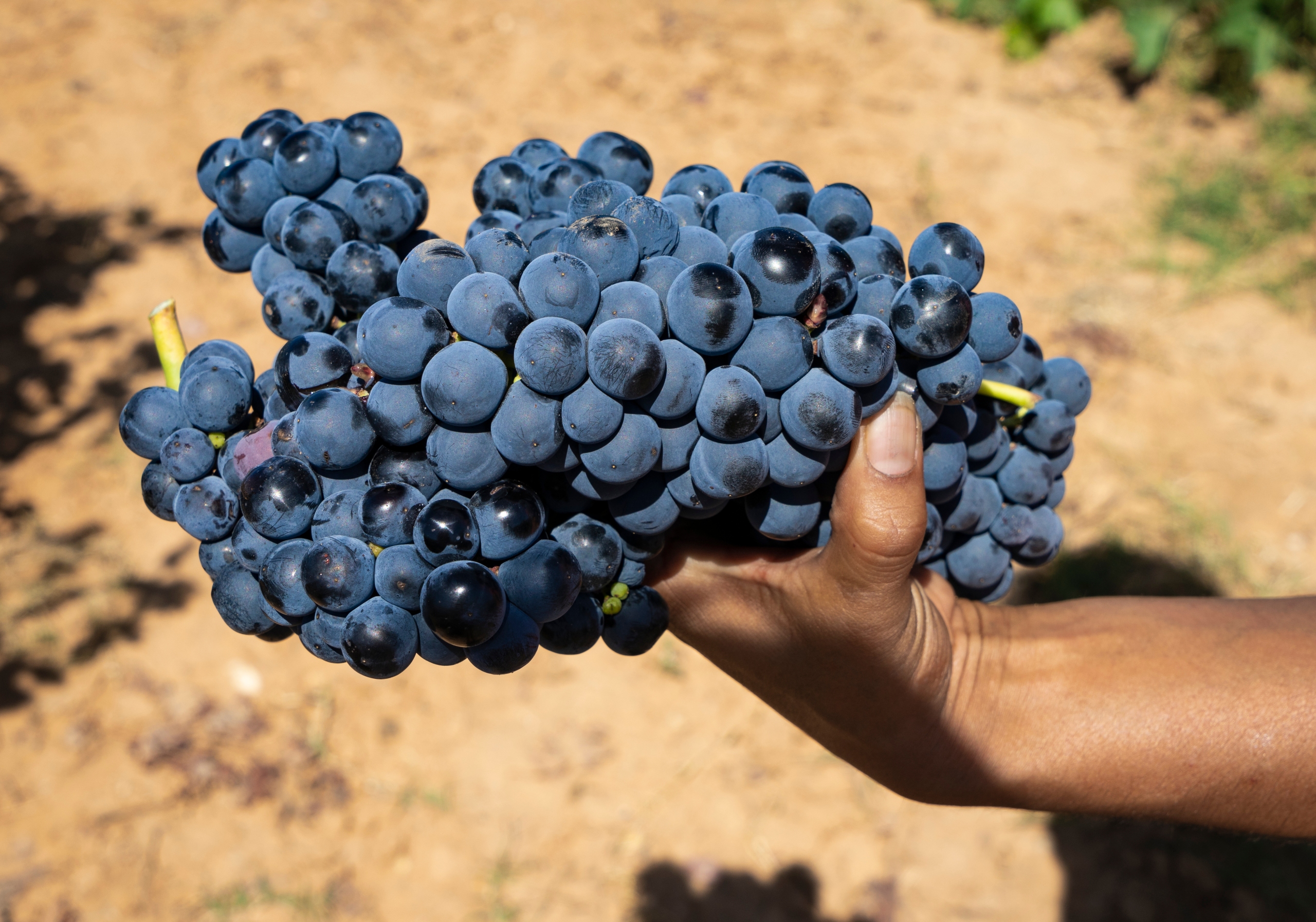
The account belongs to the realm of legend, but it is significant because it places wine within the domestic economy and within hospitality. It does not appear as a symbol of refinement, but as a useful good that could be shared in times of need.
San Esteban de Gormaz: a memory excavated
San Esteban de Gormaz gathers as few localities can the different layers of the Ribera’s history. Below the castle hill extends a quarter formed by nearly three hundred underground cellars, along with lagares and auxiliary structures.
The entrances cut into the hillside lead to corridors and galleries where temperature remains relatively constant. Before mechanical refrigeration, this architecture exploited the properties of the terrain to preserve wine throughout the year.
Each door could be linked to a family, an inheritance, or a plot of land. Successive divisions of property explain the complexity of the ensemble. But the cellars were not only private spaces. The barrios also functioned as places of gathering, especially during the harvest and when the moment came to taste the new wine.
The arrangement of the hill carries considerable symbolic force. On the surface stands the fortress — the representation of political and military power. Beneath it are preserved the galleries dug by the town’s inhabitants. The history of kings and wars occupies the summit; that of family labor and sociability is kept underground.
The nearby ensemble of El Plantío, in Atauta, demonstrates that this architecture does not belong exclusively to the Middle Ages. Its cellars and lagares grew above all during the nineteenth century, favored in part by French demand following the phylloxera crisis. What today appears as an immutable landscape also responded to international markets, agricultural crises, and new commercial opportunities.
Many wines under a single name
The most widely recognized image of Ribera del Duero is associated with reds made from tempranillo — known locally as tinto fino or tinta del país. Within the denomination, however, different styles coexist.
Young reds seek to highlight the fruit and may have little or no contact with wood. Those designated roble spend some months in barrel. The categories Crianza, Reserva, and Gran Reserva indicate progressively longer aging between wood and bottle. These categories describe the production process, but do not in themselves establish an absolute hierarchy of quality.
In recent years, many producers have begun to emphasize the individual plot, altitude, vine age, or village of origin. This tendency reflects a greater attention to the internal differences of a territory that for decades was presented as though it produced a uniform style
The denomination also covers rosados and claretes — historically tied to family and festive consumption. Since 2019 it has also recognized whites made principally from albillo mayor, a variety that for centuries grew mixed among the red vine stocks.
The Ribera today is more diverse than its international image suggests. Alongside concentrated reds of long aging there exist fresh wines, recovered claretes, whites with aging potential, and productions that seek to express the character of a specific plot.
The bodegas that gave the Ribera its reach
Several bodegas played a decisive role in consolidating the contemporary prestige of the region. Vega Sicilia, founded in the nineteenth century in Valbuena de Duero, demonstrated long before the creation of the denomination that the territory could produce age-worthy wines with international recognition.
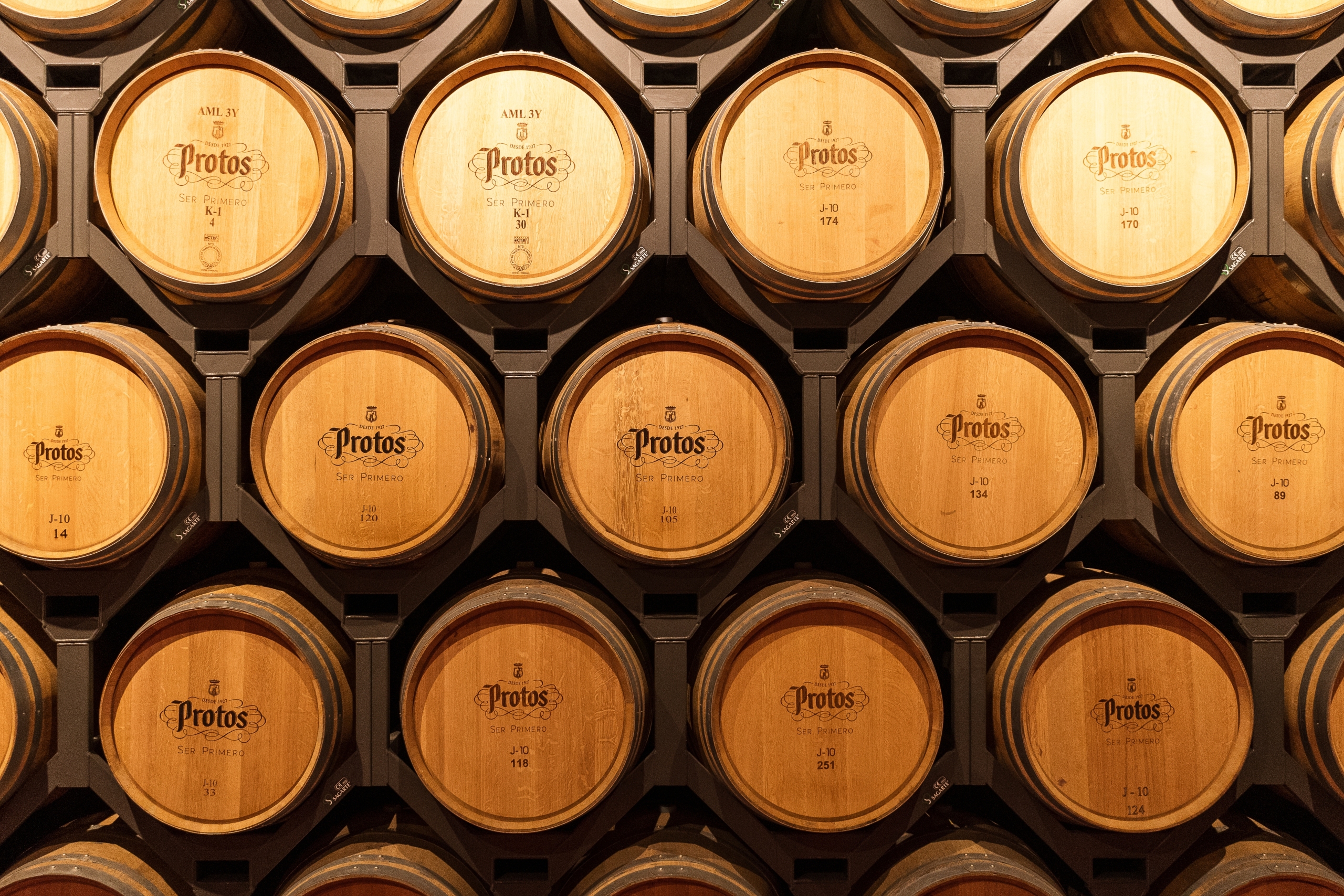
Protos was born in Peñafiel in 1927 through the initiative of a group of growers. Its trajectory represents the collective effort to improve production and bring the wines of the region to wider attention. Decades later, Tinto Pesquera helped awaken external interest in the years before the official recognition of 1982.
Emilio Moro symbolizes the transformation of many families who moved from growing and selling grapes to bottling under their own name. To these projects were added Pago de Carraovejas, Arzuaga, Matarromera, Dominio de Pingus, Dominio de Atauta, Valduero, and Hermanos Pérez Pascuas, among others.
The prominence of these names should not obscure the collective foundation of the sector. Behind every bottle are growers, cooperatives, harvest teams, and families who kept their plots through periods when making wine offered barely any economic return.
The Denominación de Origen gave that tradition a common structure. It established norms, protected the name of the region, promoted quality controls, and facilitated international promotion. It did not create the Ribera — it gathered under a recognizable identity a history dispersed among villages, vineyards, and cellars.
An identity in motion
The success of the wine has transformed the economy and image of the Ribera, but it also raises challenges. Depopulation threatens the continuity of some vineyards; many traditional bodegas need restoration; and corporate consolidation risks reducing the diversity that characterizes the territory.
To preserve this culture does not mean to freeze it. The Ribera has always changed: it adapted to the consolidation of the frontier, to medieval markets, to phylloxera, to rural exodus, and to technical modernization. Its heritage does not consist in reproducing the methods of the past unchanged, but in keeping alive the relationship between the vines, the landscape, and the communities.
In San Esteban de Gormaz, the cellar doors continue to open beneath the ruins of the castle. Between one and the other unfolds the history of a territory defended, cultivated, and traversed by merchants and pilgrims.
Every bottle of Ribera del Duero contains grapes, time, and labor. But it also holds the memory of those who transformed a frontier into a habitable land, and a daily cultivation into a shared identity. That is why wine is not simply one of the Ribera’s products: it is one of the ways the region preserves its past, interprets its landscape, and presents itself to the world.
AI Transparency Notice
PilgriMaps uses artificial intelligence tools to assist in the research, drafting and translation of editorial content. All AI-assisted content is reviewed, edited and verified by our editorial team before publication. We contrast information against primary sources, specialist literature and on-the-ground knowledge to ensure accuracy, cultural sensitivity and editorial integrity.
AI is one tool among many in our workflow. The judgement, curation and responsibility for everything published on this platform remain entirely human.
Viator Media S.L. — in compliance with the EU Artificial Intelligence Act (Regulation EU 2024/1689).
This post is also available in: