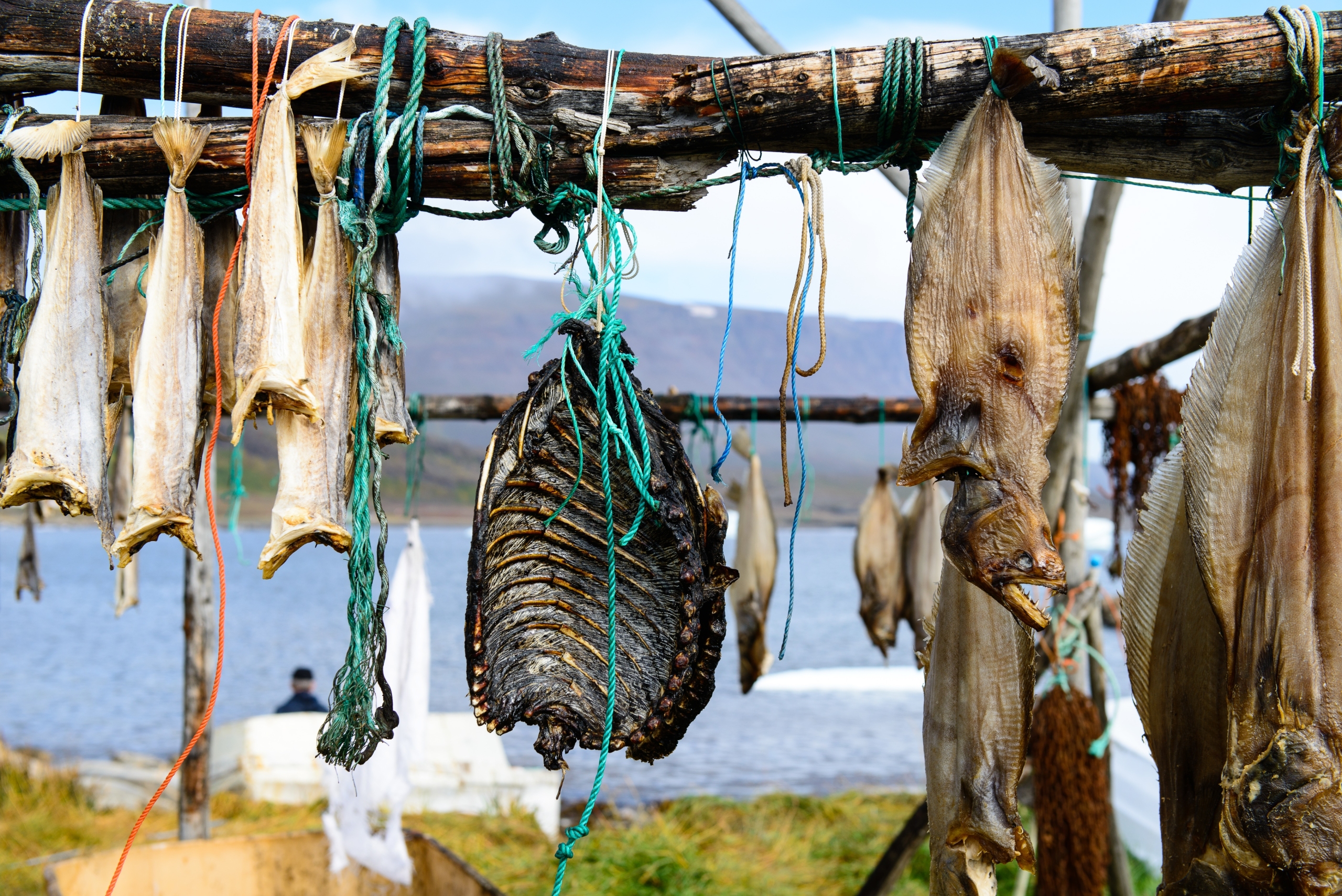
Imagine arriving in Nuuk, the northernmost capital in the world, home to roughly 20,000 residents and winter temperatures that recalibrate any notion of cold. In this Arctic environment—where Norse settlers once attempted to farm and later withdrew—local food traditions developed not as curiosities, but as practical responses to scarcity. Greenlandic cuisine reflects centuries of adaptation, transforming preservation techniques into a distinct culinary culture shaped by climate, geography, and collective knowledge.
Kiviaq: Hundreds of birds preserved in a seal
Among the most discussed preparations is kiviaq, a fermented dish traditionally associated with Inughuit communities of northwest Greenland. Documented in ethnographic research and popular media in the early 21st century, kiviaq involves placing several hundred small seabirds (Alle alle)—whole, unplucked—inside a cleaned seal skin. The opening is sealed with fat, and the bundle is weighted under stones to ferment for several months, often through the Arctic winter.
The process is collective. In communities such as Siorapaluk, one of the northernmost permanently inhabited settlements on Earth, preparation historically involved all generations. Fermentation occurs anaerobically, softening flesh and bones alike. When consumed, the birds are eaten raw; the bones are chewable, and the flavor is often compared locally to very mature blue cheese.
Kiviaq also illustrates the risks inherent in traditional preservation. Historical accounts suggest that Knud Rasmussen may have suffered food poisoning linked to fermented foods late in life. In 2013, a documented fatality occurred when kiviaq was prepared using larger seabirds, highlighting the precision embedded in inherited food knowledge.
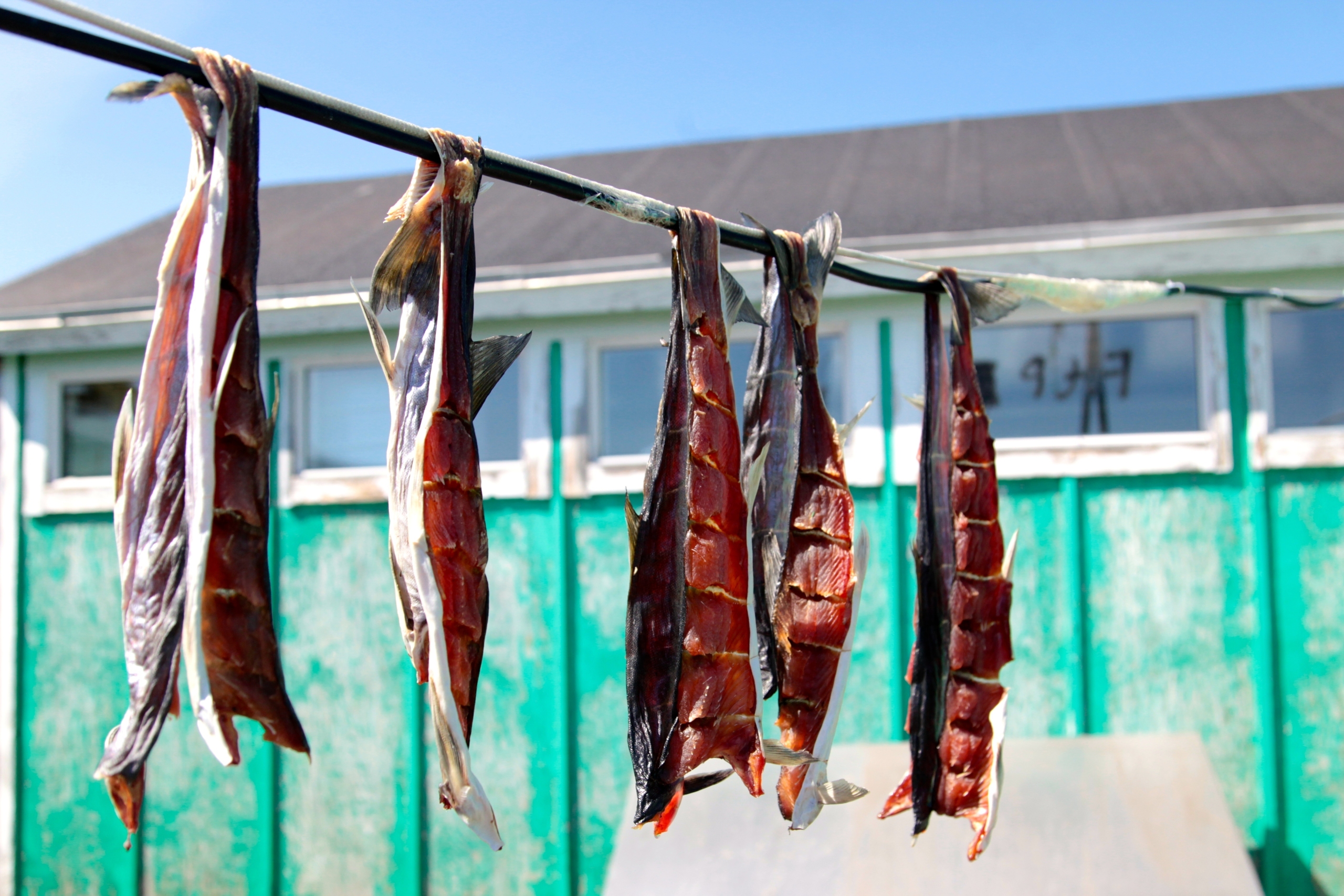
Mattak: Raw skin and fat from arctic cetaceans
Another emblematic food is mattak: strips of skin and underlying fat from narwhal or bowhead whale. Served raw or lightly salted, mattak has a firm, elastic texture. Its nutritional significance is well documented. Studies published in the Journal of Food Composition and Analysis and the International Journal of Circumpolar Health confirm that raw mattak contains vitamin C in amounts sufficient to reduce the risk of scurvy—an insight long applied by Arctic explorers and Indigenous hunters.
In contemporary settings, mattak may appear alongside imported condiments, including soy sauce or British brown sauce, reflecting the fluid boundaries between continuity and adaptation in Greenlandic food culture.
Suaasat: A national soup
If kiviaq represents the outer edge of Arctic preservation, suaasat occupies a more familiar role. Often described as Greenland’s national soup, it combines seal, whale, or reindeer meat with potatoes, onions, and grains such as barley or rice. Ingredients vary by region and season.
A notable traditional method involves boiling meat in seawater, then pouring the contents over a flat stone. As liquid evaporates, the food is eaten directly from the rock surface—an approach that minimizes material use and reflects a pragmatic relationship with the environment.
Lumpfish: An unassuming Arctic staple
The lumpfish (Cyclopterus lumpus) is visually distinctive, with a rounded body and a ventral suction disc that allows it to adhere to rocks. In Greenlandic cuisine, it is usually smoked or poached. Its primary culinary value, however, lies in its roe. Lumpfish eggs are harvested locally and processed into a mild, briny caviar that appears both in domestic cooking and international markets.
Respect, myth, and resource use
In Inuit oral traditions, a sea figure often translated as the “Mother of the Sea” regulates access to marine animals. When humans act without restraint, animals retreat; balance is restored only through acts of humility and care. While mythological in form, the narrative reinforces an ethic of restraint and total use of hunted animals.
Historically, meat was consumed fresh or preserved; fat provided fuel and food; skins became clothing or kayak coverings; sinews were used as thread. This integrated system aligns closely with what is now termed circular resource use.
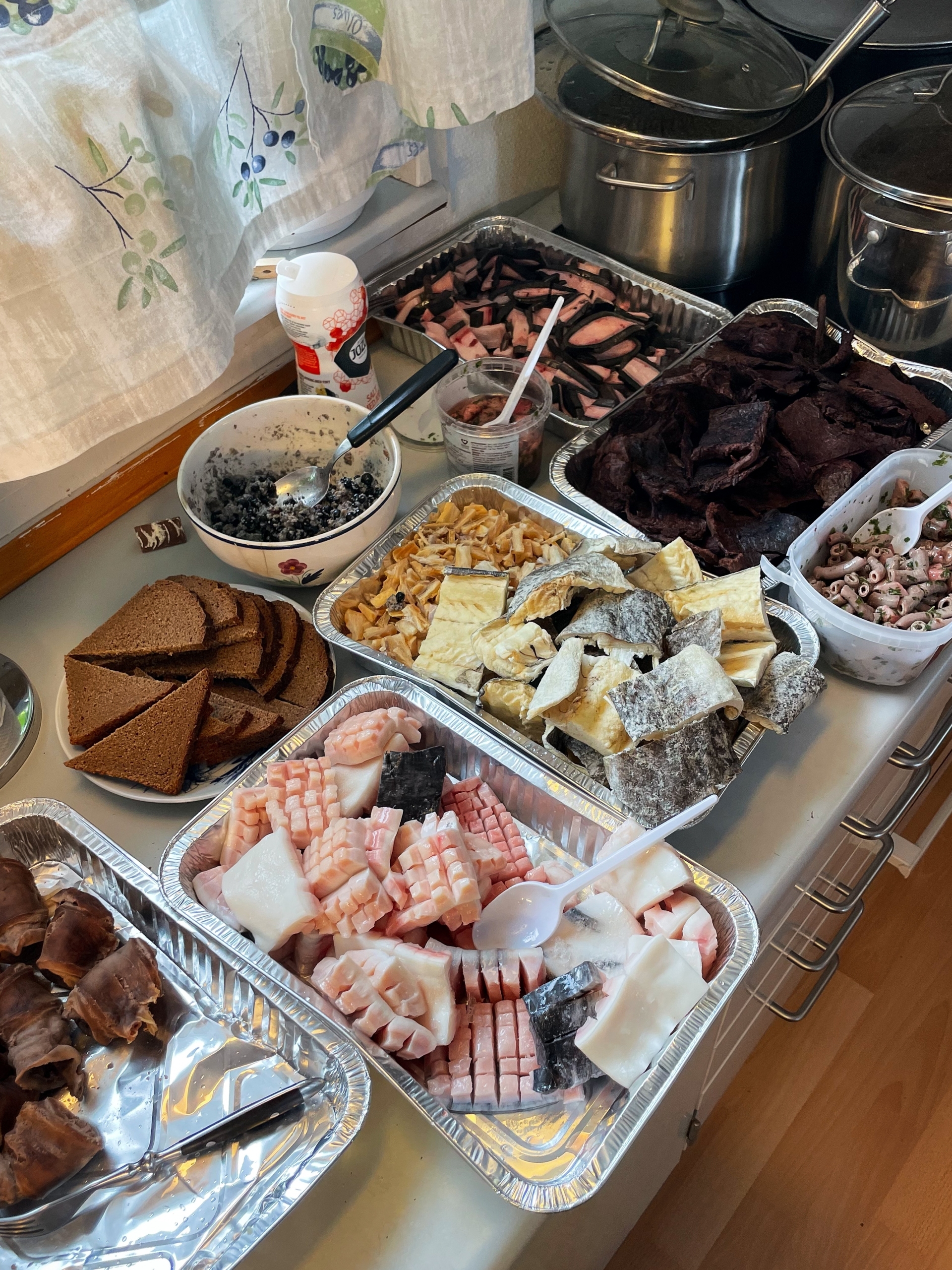
Contemporary Arctic cuisine
In recent decades, chefs across the circumpolar north have articulated what is often called the New Arctic Kitchen. The approach emphasizes local sourcing, seasonal limits, and Indigenous knowledge while engaging with contemporary culinary techniques. In Greenland, this has encouraged renewed attention to traditional ingredients without treating them as static or folkloric.
Kaffemik: Food as social infrastructure
Food in Greenland also structures social life. The kaffemik is an open-house gathering held for birthdays, weddings, or communal milestones. Guests arrive and depart freely, sharing coffee, tea, and cakes. A central feature is kalaallit kaagiat, a layered cake with raisins and cardamom, topped with cream and berries.
Stronger refreshments may include “Greenlandic coffee,” combining espresso, liqueur, cream, and citrus spirit—a contemporary addition that reflects both climate and conviviality.
A cuisine shaped by constraint and adaptation
Greenlandic food traditions developed under extreme environmental constraints: short growing seasons, limited plant foods, and reliance on marine and terrestrial animals. Within these limits, communities refined preservation methods, nutritional strategies, and social practices that remain relevant today.
The opening of Nuuk’s expanded international airport in 2024 signals increased interest from travelers, including those curious about Arctic food cultures. Climate change is also reshaping possibilities, extending growing seasons and enabling small-scale cultivation in southern Greenland.
Yet the central challenge persists: maintaining inherited knowledge while adapting to new conditions. Greenlandic cuisine offers a case study in how food systems respond to place—through continuity, adjustment, and an enduring attention to balance.
AI Transparency Notice
PilgriMaps uses artificial intelligence tools to assist in the research, drafting and translation of editorial content. All AI-assisted content is reviewed, edited and verified by our editorial team before publication. We contrast information against primary sources, specialist literature and on-the-ground knowledge to ensure accuracy, cultural sensitivity and editorial integrity.
AI is one tool among many in our workflow. The judgement, curation and responsibility for everything published on this platform remain entirely human.
Viator Media S.L. — in compliance with the EU Artificial Intelligence Act (Regulation EU 2024/1689).
This post is also available in: