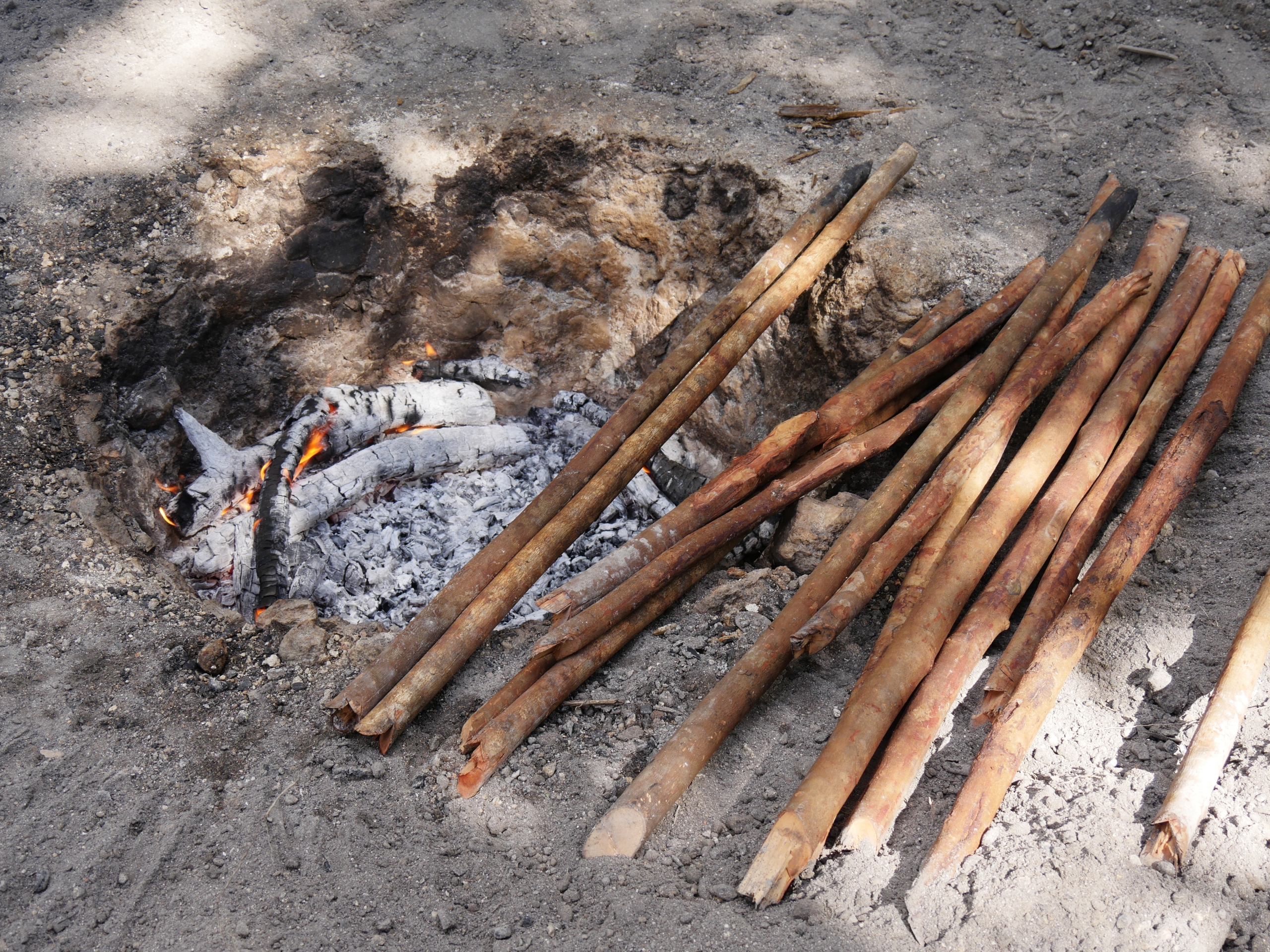
In southern Mexico, the arrival of certain festivities is announced not by bells or banners, but by scent. When the air begins to smell of sweet smoke and damp soil, many know that a communal task is about to begin. In the courtyards of rural homes, the ground is opened. Hardwood is lit, stones are heated, stews are wrapped in banana leaves, and everything disappears beneath layers of soil. Hours later, the food reemerges: warm, aromatic, and lightly smoked. The result is not merely a meal; it is memory shaped by practice. The earth oven known as the píib in Yucatec Maya remains central to the cultural landscape of the peninsula.
Earth as Kitchen
Constructing a píib begins with a simple act: digging. The pit may be square, rectangular, or circular, depending on local custom. Stones are arranged at its base—dense stones able to retain heat without cracking, never the porous limestone common in Yucatán. Hardwood follows, often species such as catzín or chukum, valued for durability and the subtle flavor they impart.
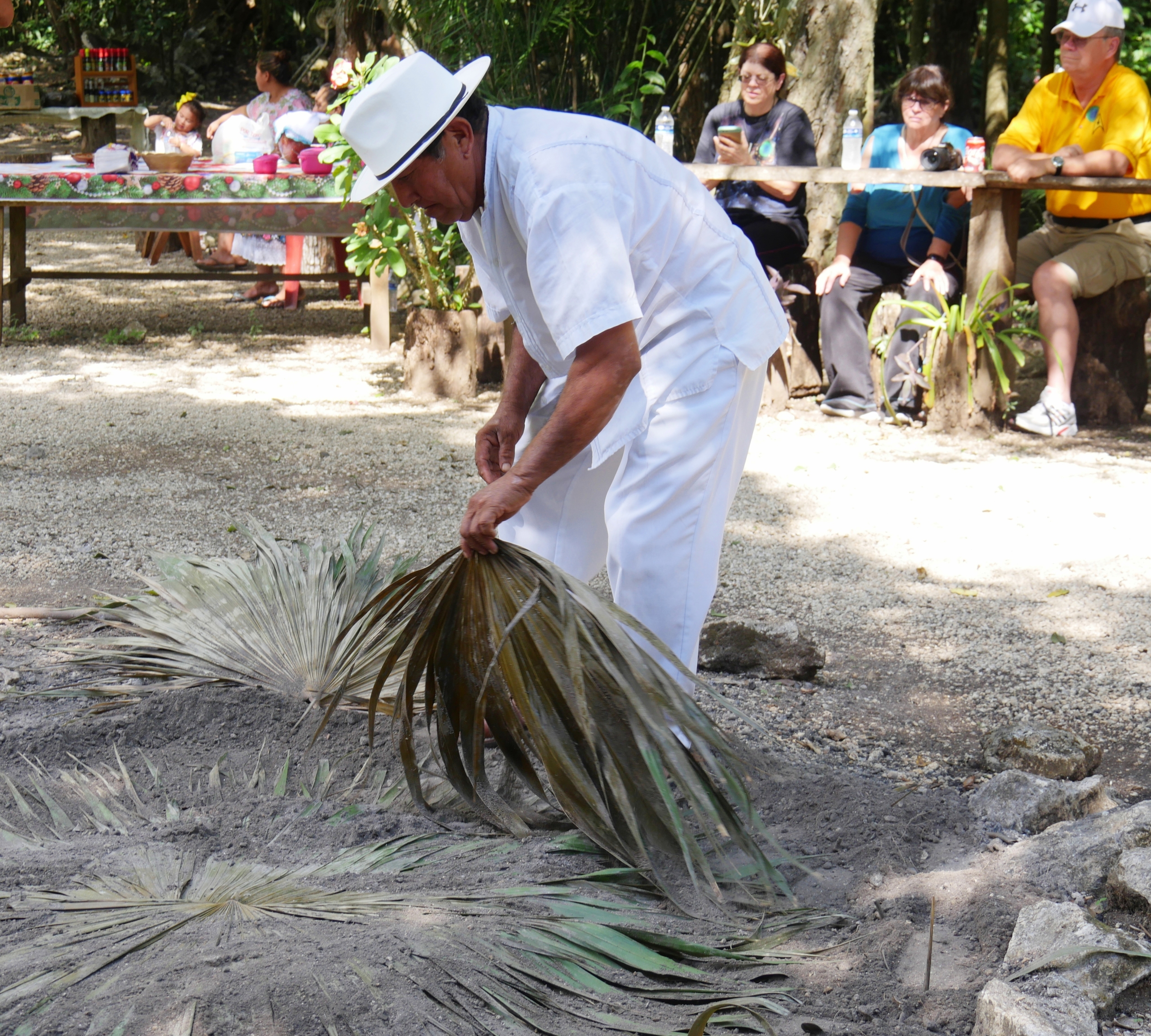
When the stones glow and the wood has reduced to steady embers, the food is placed inside: marinated meats, stews, or large tamales. Everything is wrapped in banana leaves and arranged with precision. More leaves and earth seal the pit, which is left undisturbed for hours—sometimes two, sometimes fifteen. The technique yields a distinct profile: smoky, moist, and imbued with earthy vegetal notes. Yet beyond flavor, the process reflects a longstanding relationship between people, environment, and inherited knowledge.
Archaeological memory and living language
No surviving Maya codex includes illustrations of an earth oven, but archaeological evidence suggests its use long predates the arrival of Europeans. Excavations at ancient settlements show accumulations of heat-altered stones, slow-cooked remains, and bones without signs of butchery—patterns consistent with pit cooking. Some researchers propose that early forms of the píib may even have functioned as a method for preserving meat during extended hunting seasons.
By the 16th century, the first bilingual dictionaries compiled by friars already recorded pib as both noun and verb, describing earth ovens and, by extension, warm subterranean spaces such as sweat baths. The linguistic root survives in modern terms like pibil, referring to foods cooked underground. The well-known cochinita pibil thus means simply “oven-buried pork.”
Ritual frameworks below the surface
The píib is not only a culinary technique; it also carries symbolic depth. In Maya conceptions of landscape, the earth is a generative space, associated with origins, renewal, and return. Cooking within it follows a narrative of transformation: raw ingredients are buried, entrusted to enclosed heat, and later recovered in a new state. The act resonates with broader cycles—seed to sprout, night to day, season to season.
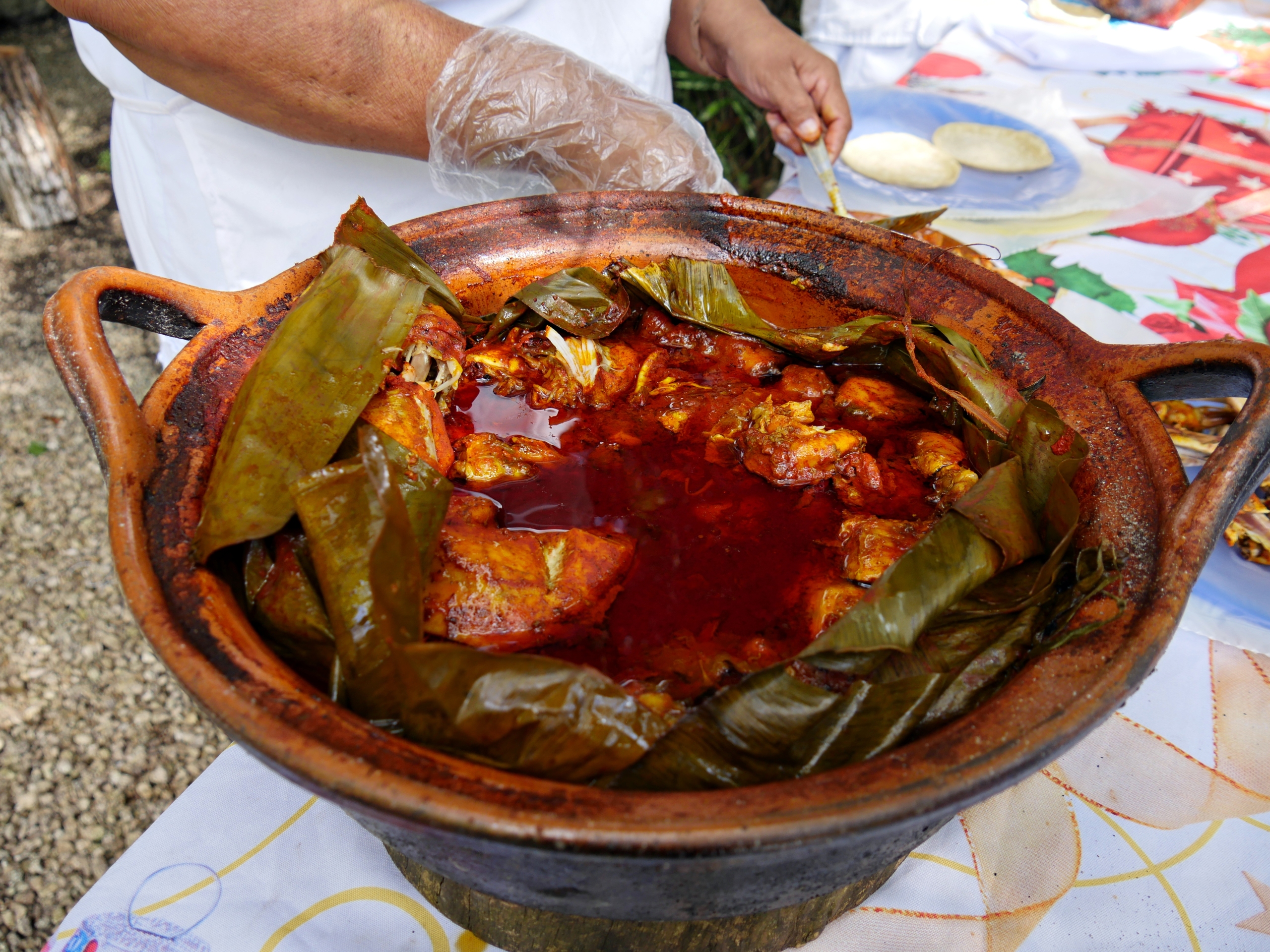
In some communities, offerings precede the lighting of the oven, or specific rituals accompany its preparation. One example, jeets’ lu’um (“feeding the earth”), involves baking special breads in a communal pit at set intervals, acknowledging interdependence between people and the surrounding environment.
Households may also maintain beliefs about who can handle the oven. Some families consider that certain individuals have “cold hands” that disrupt cooking, and designate specialists—men or women trained through practice—to manage the fire, timing, and sealing of the pit.
Community, knowledge, and coordination
Igniting a píib mobilizes a community. Stones must be gathered, ingredients prepared, leaves collected, and the oven filled and sealed. The shared labor makes the process a social event, strengthening ties and allowing knowledge to pass from one generation to the next. Large batches of food often emerge, enough to feed everyone participating.
During Hanal Pixán—the Maya observance associated with remembering the dead—families prepare mukbil pollo, an enormous tamal cooked underground and dedicated to those being honored. Its name translates to “buried chicken” and it becomes the central offering on seasonal altars. The phrase “It already smells of píib” signals that the commemorative period has begun, as markets fill with leaves, spices, beans, and other ingredients tied to the season.
After the festivities, the oven is cleaned, a small cross of sacred leaves is placed inside, and water is sprinkled over the pit before it is sealed. The act closes a cycle, marking the end of the commemorative period and acknowledging the landscape that made the meal possible.
Research and reappraisal
Scholars have increasingly studied the píib to understand its endurance and cultural significance. Ethnographic research documents its presence in contemporary Maya villages and explores its possible origins in pre-agricultural contexts. Some anthropologists view the oven as a cultural emblem—an element that resists homogenization and anchors local identity. Culinary researchers have surveyed its regional variations, recording techniques, materials, and oral histories, creating a living map of ritual gastronomy.
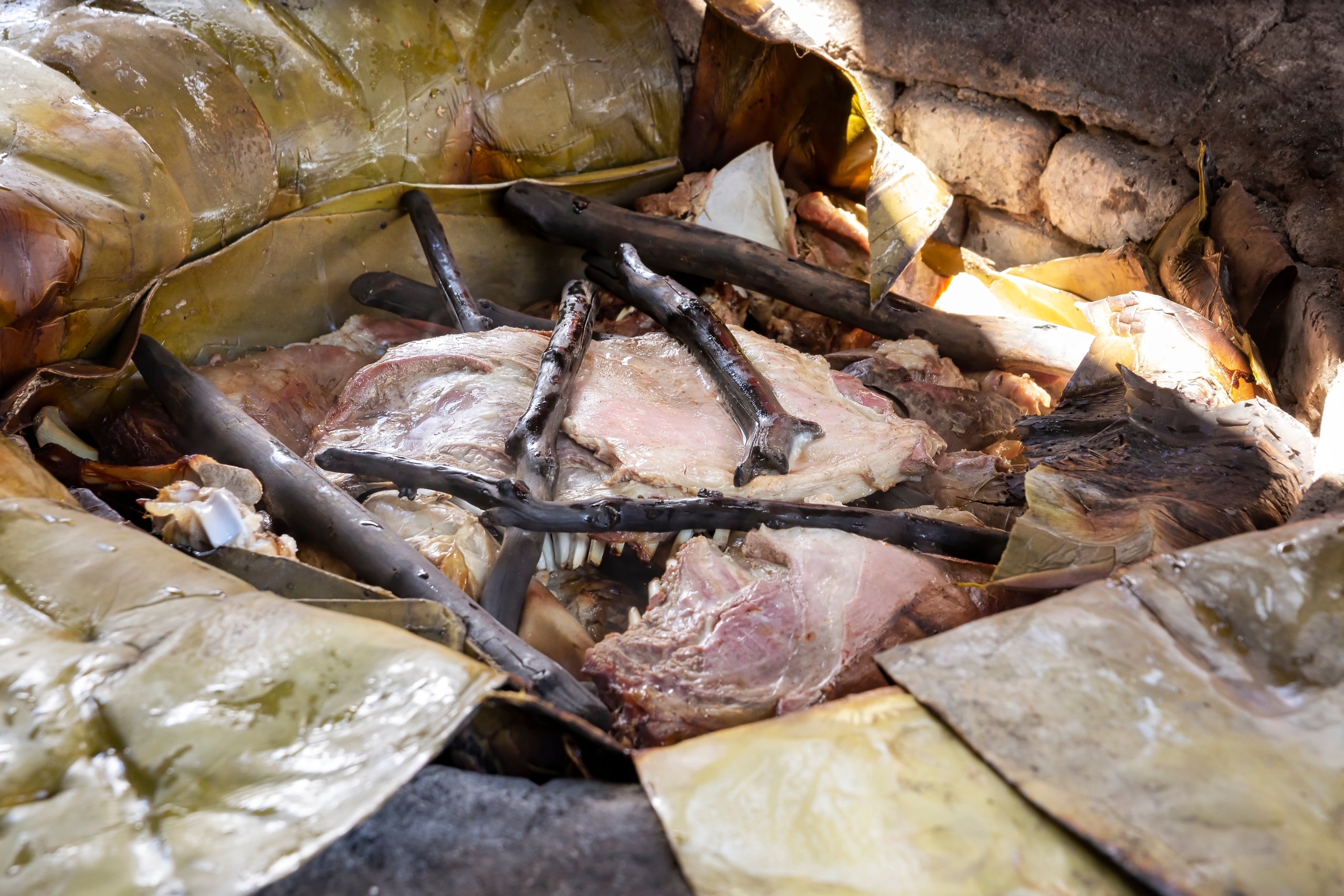
Beyond traditional settings, the píib has also reached urban kitchens and high-end culinary projects. Museums and cultural centers in the Yucatán Peninsula have built demonstration ovens to show visitors the unsealing of a steaming cochinita. Some chefs have developed thermal simulators or compact urban pits to replicate the deep, enveloping heat of an earth oven, blending ancestral techniques with contemporary innovation.
A living tradition
Today, píib ovens are still prepared each week in towns and households across southeastern Mexico. They continue to gather families, structure seasonal observances, and transmit knowledge through practice. They also inspire new forms of culinary and cultural exploration.
Each time a pit is dug, a tamal buried, or a plume of scented steam rises from heated earth, a set of connections becomes tangible: between land and kitchen, between past and present, between memory and practice. Opening the ground to cook becomes, in this sense, a window into the depth and resilience of Maya cultural life.
AI Transparency Notice
PilgriMaps uses artificial intelligence tools to assist in the research, drafting and translation of editorial content. All AI-assisted content is reviewed, edited and verified by our editorial team before publication. We contrast information against primary sources, specialist literature and on-the-ground knowledge to ensure accuracy, cultural sensitivity and editorial integrity.
AI is one tool among many in our workflow. The judgement, curation and responsibility for everything published on this platform remain entirely human.
Viator Media S.L. — in compliance with the EU Artificial Intelligence Act (Regulation EU 2024/1689).
This post is also available in: