An interview with Rev. Dr Sinclair Bugeja
The 27th and 28th chapters of the Acts of the Apostles describe a Mediterranean crossing gone catastrophically wrong. A prisoner in transit from Caesarea to Rome, the Apostle Paul survives a fortnight of storms, a shipwreck on an unknown shore, a snakebite, and three months of enforced sojourn on an island whose inhabitants respond to the stranded travellers with what Luke calls philanthropia — extraordinary kindness. The island is Malta.
That brief passage has had consequences that no one aboard the grain ship could have anticipated. It established Malta as a Pauline site, embedded the archipelago within the itineraries of Christian pilgrimage, and gave a small island in the central Mediterranean a narrative of origins that has shaped its religious identity for nearly two millennia. It also gave pilgrims something that the great centres of Pauline mission — Corinth, Ephesus, Rome — cannot quite offer: an encounter with Paul not as apostle, letter-writer or missionary strategist, but as a shipwrecked man, dependent on the kindness of strangers.
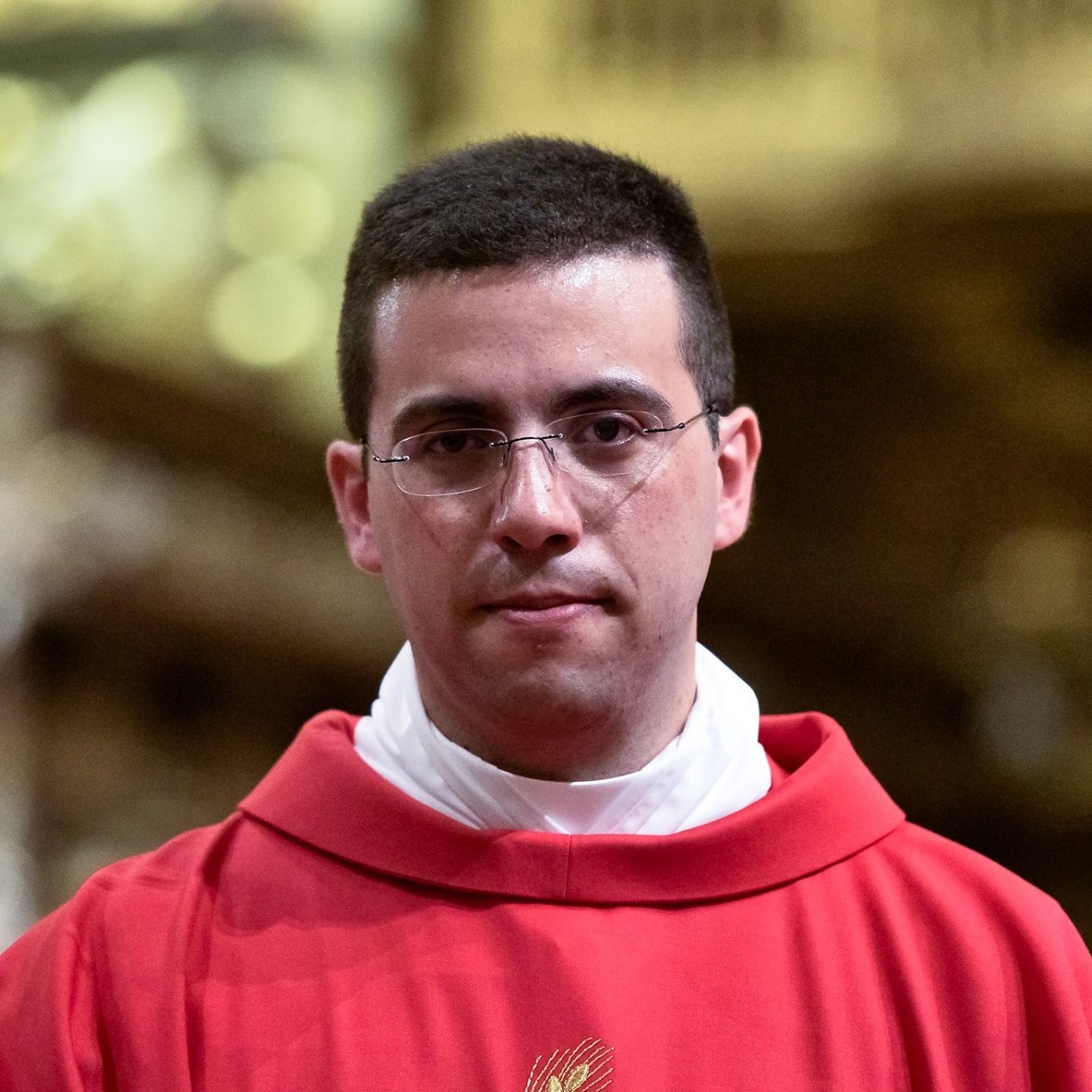
Rev. Dr Sinclair Bugeja is among the scholars who have thought most carefully about how that scriptural moment translates into living pilgrimage. We spoke with him about the Pauline sites of Malta, the tensions between archaeology and devotion, and what distinguishes the Maltese experience for those tracing Paul’s routes across the Mediterranean.
- The narrative of Acts 27–28 has shaped Malta in ways that go well beyond religious devotion. How do you understand its role in Maltese identity?
The Lukan account does more than situate Paul geographically; it constructs Malta as a locus of providential encounter, marked by philanthropia — the “extraordinary kindness” of its inhabitants. This scriptural framing has profoundly shaped Malta’s historical development as a Pauline destination.
From the early medieval period onward, the shipwreck narrative became embedded in local historiography, liturgy, and civic identity. The Knights of the Order of St John significantly intensified Pauline devotion in Malta. They sponsored the construction of churches on sites traditionally associated with Paul’s sojourn, promoted the circulation of Pauline devotional literature, and formalised the commemoration of the Apostle’s shipwreck through the institution of a national feast on 10 February. In modernity, the narrative has been mobilised within heritage discourse and tourism economies, positioning Malta not merely as a site on Paul’s itinerary but as a paradigmatic moment of divine intervention and intercultural hospitality. The shipwreck thus operates as a narrative hinge through which Malta articulates its Christian origins, its Mediterranean identity, and its contemporary role within global pilgrimage circuits.
- Which sites have emerged as the principal focal points, and how have their roles evolved?
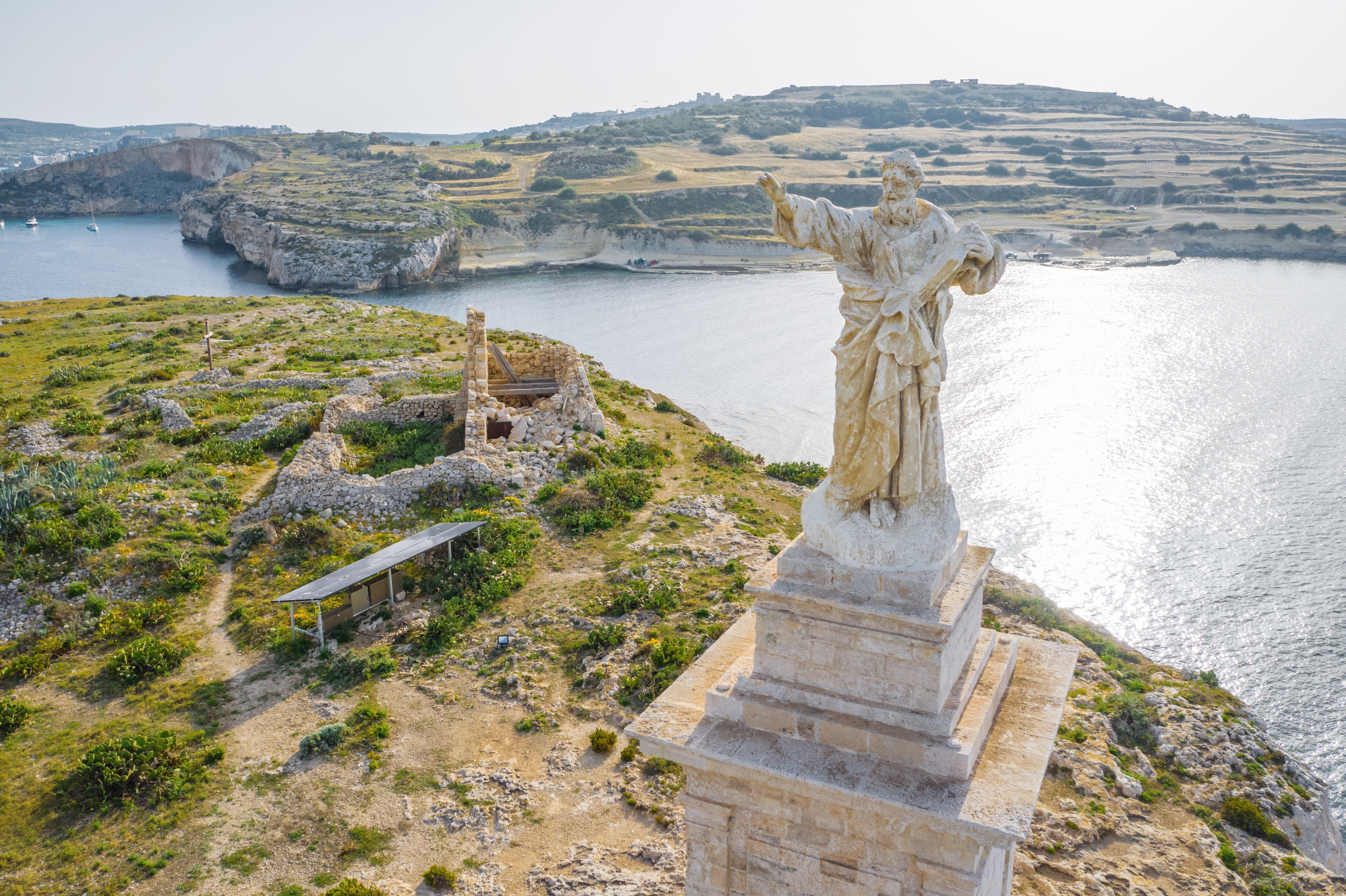
Two main sites have emerged as principal loci of Pauline memory: St Paul’s Bay, traditionally associated with the shipwreck, and St Paul’s Grotto in Rabat, linked to Paul’s ministry during his three-month stay.
St Paul’s Bay has historically served as a topographical anchor for the biblical narrative, but in recent decades it has been reframed through coastal heritage trails, maritime archaeology, and interpretive tourism. Its role has shifted from a primarily devotional landscape to a hybrid space where biblical memory, environmental heritage, and experiential tourism intersect.
New forms of pilgrimage have emerged, shaped by global mobility, ecumenical interest in Paul, and the rise of religious tourism.
St Paul’s Grotto, by contrast, has retained a more explicitly devotional character. Since at least the medieval period it has been venerated as the site of Paul’s preaching and healing ministry. Today it functions simultaneously as a local shrine, a national symbol of Christian origins, and an international pilgrimage destination integrated into broader Pauline itineraries linking Jerusalem, Damascus, Ephesus, and Rome. The evolution of these sites reflects a broader trend: the movement from localised cultic devotion to transnational heritage pilgrimage.
- How do contemporary pilgrimage practices engage with the older traditions? Are there tensions between continuity and adaptation?
Contemporary pilgrimage to Pauline sites in Malta exhibits a dynamic interplay between inherited devotional forms and newer modes of religious mobility. Traditional practices — processions, votive offerings, the 10th of February feast — remain central to Maltese Catholic life and continue to structure local engagement with Pauline memory.
At the same time, new forms of pilgrimage have emerged, shaped by global mobility, ecumenical interest in Paul, and the rise of religious tourism. These include thematic Pauline routes, youth-oriented walking pilgrimages, and hybrid experiences that combine biblical study, cultural heritage, and contemplative practice. Continuity is evident in the persistent emphasis on Paul as the island’s apostolic founder; adaptation is visible in the use of digital guides, multilingual interpretation, and the reframing of the shipwreck narrative in relation to contemporary Mediterranean themes such as migration, maritime risk, and intercultural encounter.
- Recent maritime archaeology and topographical research have complicated some of the traditional site identifications. How do heritage custodians and ecclesial authorities navigate that?
Recent scholarship, particularly in maritime archaeology, Roman-era topography, and the study of ancient navigation, has prompted more nuanced discussions about the historical plausibility of traditional site identifications. Investigations into ancient anchorages, coastal geomorphology, and Roman settlement patterns have enriched the contextualisation of Acts 27–28 without necessarily displacing longstanding devotional claims.
For pilgrims tracing Pauline routes, Malta offers an encounter with the apostle not as a missionary strategist or letter-writer, but as a vulnerable traveller
Visitor interpretation today reflects a careful balancing act. Museums, heritage sites, and guided tours increasingly incorporate critical scholarship, presenting Acts as both a theological narrative and a historically situated travel account. Yet custodians of shrines and ecclesial authorities tend to preserve traditional identifications, ensuring continuity of devotional meaning. The result is a layered hermeneutic in which historical-critical insights coexist with inherited sacred geographies, allowing visitors to engage with both the academic and the devotional dimensions of Pauline memory.
- Within the wider network of Mediterranean Pauline pilgrimage — Corinth, Ephesus, Rome, Antioch — what does Malta specifically offer?
Within the wider constellation of Mediterranean Pauline sites, Malta occupies a distinctive position. This is particularly evident in the island’s incorporation into wider European pilgrimage networks. Through platforms such as XirCammini and PilgriMaps, the island’s Pauline sites are positioned within transnational routes that standardise wayfinding, promote historically grounded itineraries, and situate Malta as an interconnected node within contemporary European sacred-mobility landscapes.
Unlike major centres of Pauline mission, Malta represents a liminal, crisis-inflected moment in Paul’s journey: a place of shipwreck, rescue, hospitality, and unexpected ministry. This gives the Maltese experience a unique spiritual and narrative texture. For pilgrims tracing Pauline routes, Malta offers an encounter with the apostle not as a missionary strategist or letter-writer, but as a vulnerable traveller whose fate is shaped by divine providence and human kindness. The compact geography of the islands allows for an unusually integrated experience in which pilgrimage sites are encountered in close proximity. This interweaving of biblical text, lived devotion, and tangible landscape distinguishes Malta within the broader Mediterranean pilgrimage network and contributes to its enduring appeal for scholars, pilgrims, and spiritually motivated travellers.
Rev. Dr Sinclair Bugeja is a scholar of Pauline heritage and Mediterranean pilgrimage based in Malta. The Camino Maltés, which begins at St Paul’s Grotto in Rabat, connects Malta to the Camino de Santiago network through Sicily, Sardinia and Spain. Read our full guide to the Camino Maltés on PilgriMaps.
This content comes to you in collaboration with VisitMalta
AI Transparency Notice
PilgriMaps uses artificial intelligence tools to assist in the research, drafting and translation of editorial content. All AI-assisted content is reviewed, edited and verified by our editorial team before publication. We contrast information against primary sources, specialist literature and on-the-ground knowledge to ensure accuracy, cultural sensitivity and editorial integrity.
AI is one tool among many in our workflow. The judgement, curation and responsibility for everything published on this platform remain entirely human.
Viator Media S.L. — in compliance with the EU Artificial Intelligence Act (Regulation EU 2024/1689).
This post is also available in: