


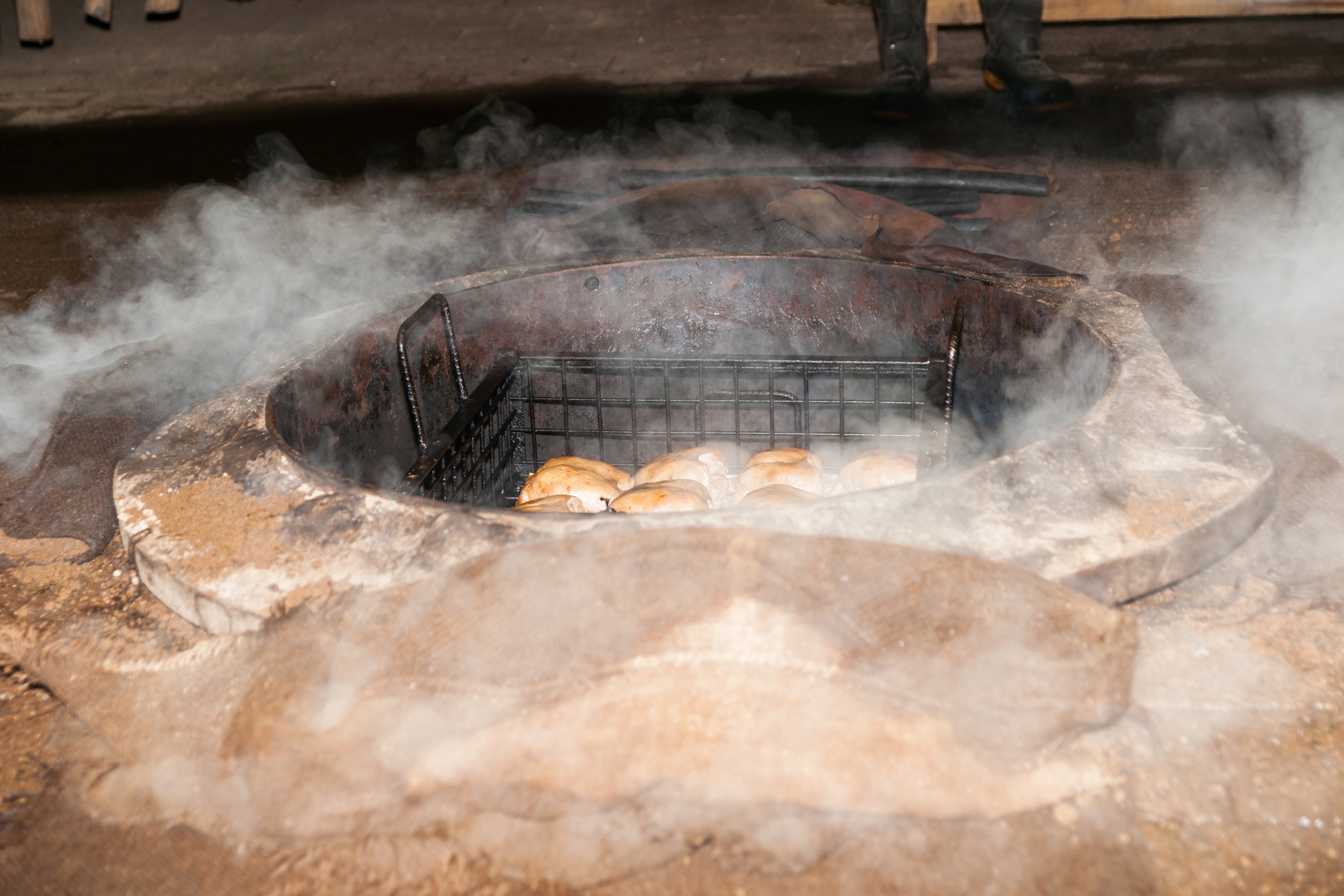
After several hours of waiting, a group of people gathered around a small mound begins carefully removing the layers covering it. First comes the damp earth, followed by the cloth and leaves used to protect the food. Finally, a thick cloud of steam rises into the sky, as though the earth itself were breathing, revealing a meal that has been cooking slowly beneath the surface.
This is one of Aotearoa’s most distinctive culinary traditions. Aotearoa is the Māori name for New Zealand, and the tradition is called hāngī.
There are no conventional ovens or sophisticated cooking equipment. The heat comes from stones previously heated over a fire, while the earth retains the warmth and moisture needed to turn meat, root vegetables, and other ingredients into a feast.
Behind this remarkable cooking method lie centuries of history, knowledge passed down through generations, and an understanding of food as an expression of the bonds that connect people.
An oven built from earth, fire, and patience
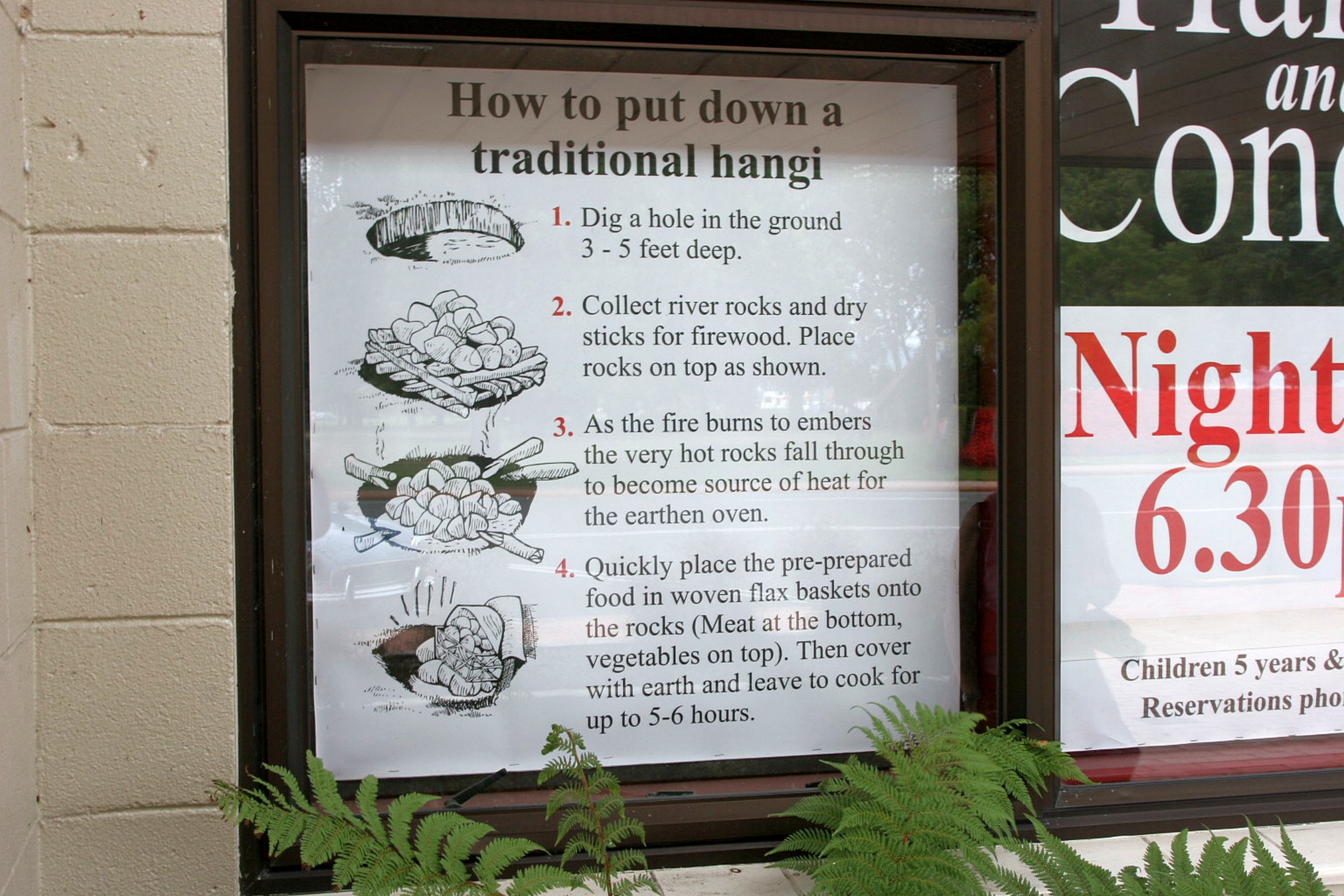
The word hāngī refers both to a cooking technique and to the food prepared using it. The principle seems simple enough: harness the heat stored in stones to cook food in a pit covered with earth.
The process begins by digging a pit, its depth and dimensions determined by the amount of food being prepared. A fire is then lit to heat carefully selected stones. Not just any rock will do: some can fracture violently when exposed to high temperatures. Knowing which stones to use is part of the traditional knowledge associated with this practice.
Once the stones have absorbed enough heat, the layers that will hold the food are prepared. Historically, these included leaves, plant fibers, and containers woven from harakeke, a New Zealand plant similar to flax. Today, metal baskets and damp sacks are also commonly used.
Meat is generally placed closer to the hottest stones, while vegetables and more delicate ingredients occupy the upper layers, although the arrangement varies between communities.
Finally, everything is covered with damp materials and earth, carefully sealed to prevent steam from escaping. The oven remains closed for several hours as the food cooks slowly.
The result is neither quite a roast nor a stew. The combination of heat and steam gives the ingredients a tender texture and a distinctive flavor. But perhaps the most interesting thing about hāngī is that preparing it requires something modern cooking increasingly tries to minimize: time spent together.
A tradition that crossed the ocean
The history of hāngī began long before New Zealand appeared on European maps. The Polynesian ancestors of the Māori arrived in Aotearoa toward the end of the 13th century. They came from Pacific societies already familiar with earth-oven cooking techniques, which were widespread across the islands of Oceania.
Settling in their new homeland meant adapting those practices to a different natural environment. The climate was colder, the vegetation was different, and the available animals and food resources had changed.
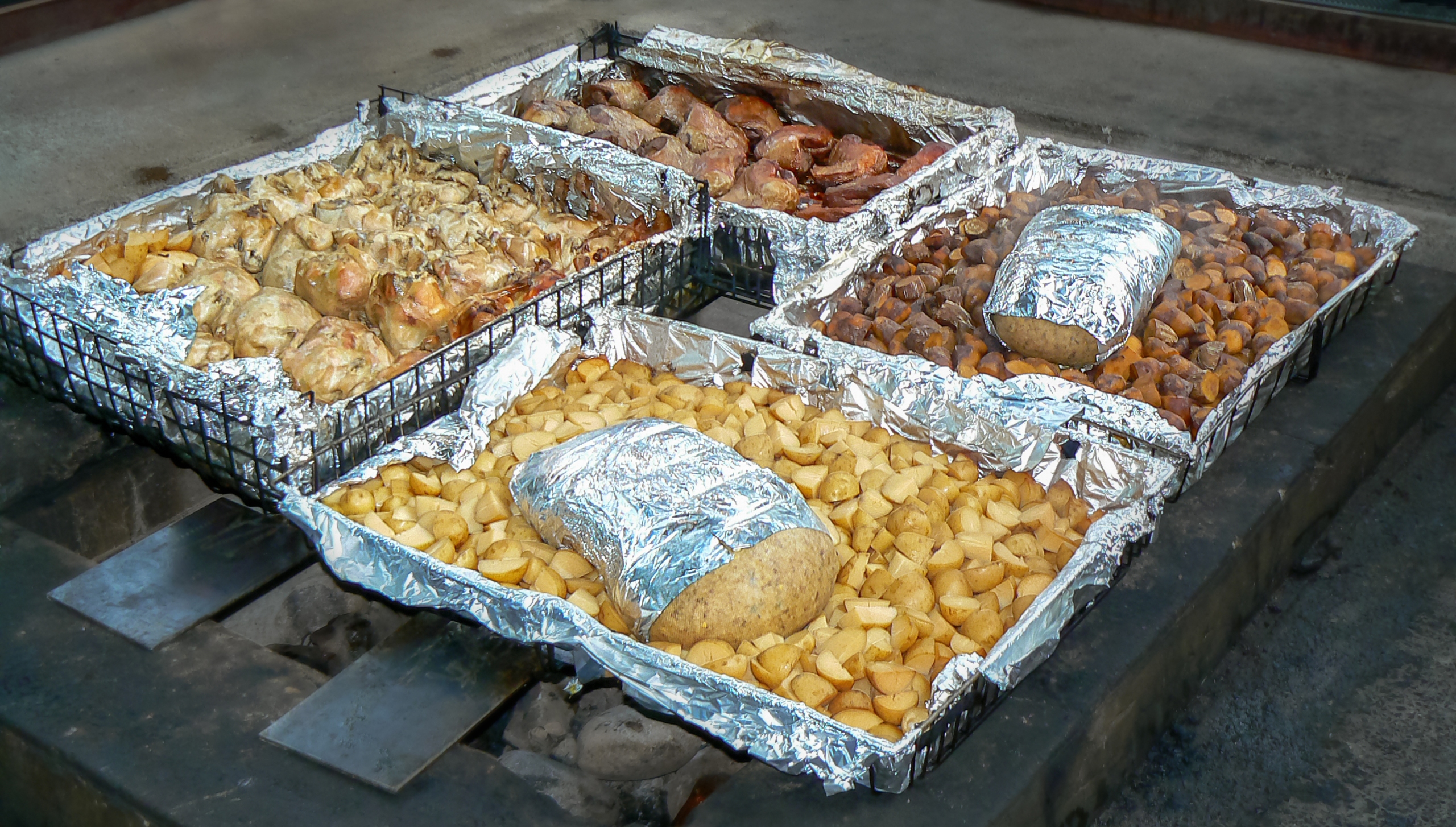
Among the most important cultivated foods was kūmara, a variety of sweet potato introduced from Polynesia that became central to Māori food culture. Fish, shellfish, birds, and a wide range of foods gathered from forests and rivers complemented the diet.
The ovens themselves varied according to need. Some were large enough to cook sizable animals, while others were designed for fish, root vegetables, and smaller meals.
The arrival of Europeans from the late 18th century onward gradually transformed Māori food traditions. Potatoes, pork, lamb, chicken, and various vegetables became part of the local diet.
Rather than disappearing, hāngī incorporated these new ingredients. A meal prepared today might include pork, potatoes, carrots, and cabbage, all cooked using a technique with Polynesian roots, even though many of the ingredients arrived much later.
Cooking for others: hospitality as a way of life
In many societies, sharing food means far more than satisfying hunger. It is a way of welcoming others, expressing gratitude, celebrating, and strengthening relationships. In Māori culture, these dimensions carry particular significance.
One of the central concepts is manaakitanga, which encompasses hospitality, generosity, and the responsibility to care for those who arrive. Offering food is an expression of respect and consideration for others.
Another important concept is whanaungatanga, which refers to kinship, belonging, and the connections between individuals and communities. A hāngī can bring both principles together in a shared experience.
Preparing food for a large gathering requires collective effort. Someone must gather firewood and select the stones; others prepare the meat, clean the vegetables, arrange the baskets, or tend the fire. Experienced members of the community pass on their knowledge, while younger people learn by watching and taking part.
At Arowhenua Marae, in New Zealand’s South Island, an account published by the Māori organization Ngāi Tahu documented how preparing a hāngī also became an opportunity to remember ancestors and teach younger generations.
Traditional feasts, known as hākari, could accompany weddings, birth ceremonies, funerals, harvests, and other community events. The abundance of food demonstrated hospitality and responsibility, while also reflecting the social standing of the hosts.
Although hāngī and hākari mean different things—the former is a cooking method, the latter a feast—they could be part of the same celebration. Cooking thus becomes more than a household task. It becomes a way of building community.
When steam connects Earth and Sky
The relationship between food and Māori culture also has a symbolic dimension, although this should not be understood as an essential feature of every traditional meal.
Within the Māori worldview are concepts such as tapu, associated with particular states of sacredness or restriction, and noa, which refers to states free from those restrictions. Food can play a role in practices that restore certain relationships between these states.
Not every hāngī, however, has a ceremonial purpose. Many are prepared for birthdays, family gatherings, or ordinary social occasions.
One particularly striking example of its potential ritual significance can be found in Matariki, the Māori New Year celebration associated with the appearance of a cluster of stars in the sky.
During certain hautapu ceremonies, foods are prepared to symbolically represent different parts of the natural world: crops from the land, birds, rivers, and the sea. As part of the ritual, which may include remembrance of the dead and expressions of gratitude, steam from the food is released as an offering.
The image is especially evocative: what comes from the earth and water, transformed by heat, rises toward the sky.
This does not mean that all Māori communities interpret the practice in exactly the same way. Rather, it illustrates how a cooking technique can take on different meanings depending on the occasion and the traditions of each community.
From ancient earth ovens to 21st-century kitchens
In contemporary New Zealand, hāngī remains a living tradition, although its methods have undergone considerable change.
Alongside traditional pits dug into the ground, there are now metal ovens, portable cooking chambers, and gas-heated systems. These adaptations make it possible to prepare large quantities of food in urban settings where lighting an open fire or digging a pit may be impractical.
One particularly interesting example can be found in Whakarewarewa, near Rotorua, an area renowned for its geothermal activity. There, members of the Tūhourangi Ngāti Wāhiao community use natural steam and hot water from the earth to cook certain foods. The technology may be different, but the connection between food, place, and local knowledge remains.
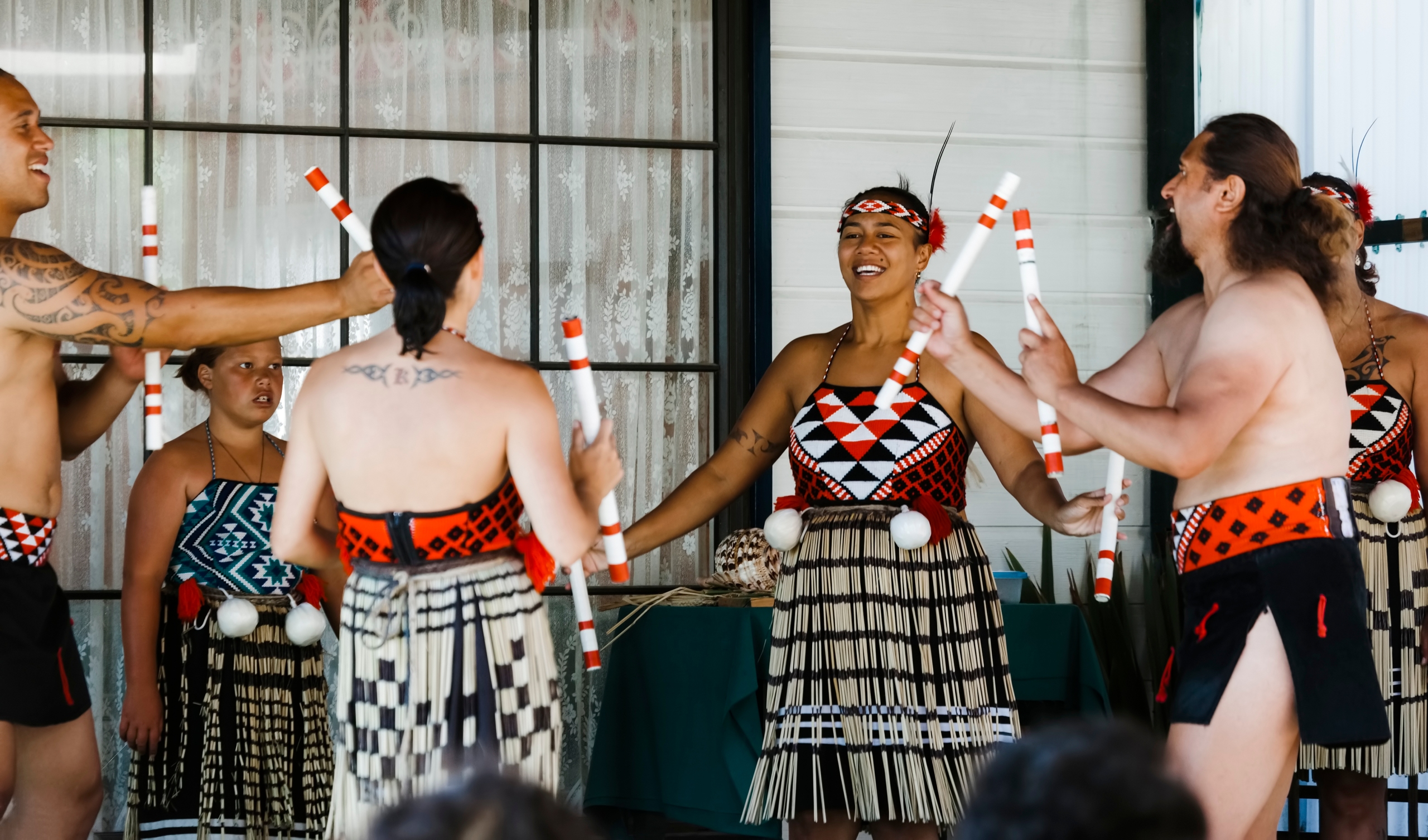
Hāngī has also become one of the best-known experiences in Māori cultural tourism. Many visitors encounter the tradition alongside historical storytelling, community gatherings, and cultural performances.
Its popularity raises a delicate question: how can a tradition be shared with the wider world without reducing it to a culinary spectacle?
The challenge goes beyond preserving a cooking technique. It also involves safeguarding knowledge of materials, ingredients, the land, and customs, while ensuring that Māori communities themselves remain central to passing that knowledge on.
The real secret is not underground
When a hāngī is finally opened, everyone’s attention turns to the food emerging through the steam. It is the most eagerly awaited moment, the one most likely to appear in photographs and linger in visitors’ memories.
Yet much of what makes this tradition special has already happened long before that moment. It lies in the people who prepared the ground, those who knew how to choose the right stones, the conversations around the fire, and the young people who learned by watching their elders.
Over the centuries, hāngī has welcomed new ingredients, adopted different materials, and found ways to adapt to changing circumstances. Through it all, it has continued to bring people together around a shared meal.
And perhaps that is its most universal lesson: traditions live not only in the objects or techniques we inherit, but in the human relationships we sustain through them. Because the real secret of hāngī is not buried beneath the earth. It is found among the people gathered around it.
AI Transparency Notice
PilgriMaps uses artificial intelligence tools to assist in the research, drafting and translation of editorial content. All AI-assisted content is reviewed, edited and verified by our editorial team before publication. We contrast information against primary sources, specialist literature and on-the-ground knowledge to ensure accuracy, cultural sensitivity and editorial integrity.
AI is one tool among many in our workflow. The judgement, curation and responsibility for everything published on this platform remain entirely human.
Viator Media S.L. — in compliance with the EU Artificial Intelligence Act (Regulation EU 2024/1689).
This post is also available in:


