This article is for informational purposes only. It does not replace mountain safety training or medical advice. Severe hypothermia is an emergency: call for help as soon as possible.
In 1153, the very year of his death, Peter II, Viscount of Béarn, founded a new hospital for pilgrims at the pass of Roncesvalles, continuing a tradition already established by his family along that Pyrenean crossing. That pass, at thirteen hundred metres, between Saint-Jean-Pied-de-Port and Navarre, was and still is one of the most exposed stretches of the entire Camino de Santiago, capable of shifting from an almost Mediterranean sun to a freezing wind within a matter of hours. The hospitals built along that ridge in the Middle Ages existed precisely because the mountain, then as now, allows no margin of error to those who underestimate it.
Those who walk today carry GPS, real-time weather forecasts and technical jackets that medieval pilgrims could not have imagined. And yet the physiological mechanism of hypothermia has not changed in the slightest, and every year it continues to catch experienced walkers and beginners alike off guard.
How to recognise hypothermia before it becomes serious
Hypothermia occurs when the body loses heat more rapidly than it can produce it, causing the core temperature to drop below 35°C. Polar cold is not required: according to the Centers for Disease Control and Prevention, it can develop even above freezing if a person is wet and exposed to wind for prolonged periods. The warning signs, according to the same sources and the National Weather Service, are progressive:
- Intense and persistent shivering — and pay attention: when shivering stops altogether, it is not a good sign; it indicates a worsening of the condition.
- Confusion, difficulty speaking clearly, loss of clarity in decision-making.
- Clumsiness of movement, difficulty maintaining balance.
- Sudden fatigue and a desire to stop or even sleep — an impulse that is paradoxically dangerous in these conditions.
What to do on the spot, without waiting for help
If you are caught by a snowstorm or a sudden drop in temperature during a stage, some concrete actions — indicated by the National Weather Service and various emergency services — can make the difference before help arrives:
- Seek immediate shelter from the wind. Even a low wall, a cluster of trees or a hollow in the ground dramatically reduces heat loss.
- If your clothes are wet, change into dry ones as soon as possible. Moisture on the skin accelerates heat loss far more than cold air alone.
- Prioritise warming the trunk and head, not the extremities. Warming hands and feet first can push cold blood toward the heart and worsen the situation.
- If you are with others, shared body heat — huddled together in a single sleeping bag or under a thermal blanket — is more effective than any isolated attempt.
- If the affected person is still conscious, offer warm, sweet drinks — never alcohol. Alcohol gives a false sensation of warmth while actually accelerating heat dispersal.
In cases of severe hypothermia, with loss of consciousness or weak pulse, call for help immediately. At that point professional assistance is needed, not just common sense.
Frostbite: A parallel risk not to underestimate
Alongside hypothermia, extreme cold brings the risk of frostbite, which typically affects the fingers, nose and ears. Signs include skin turning white or waxy, loss of sensation, tingling followed by numbness.
The golden rule here runs counter to instinct: never rub the affected area, because ice crystals in the tissue can cause further damage through friction. The area should be warmed gradually — ideally with lukewarm water, never boiling — and must absolutely not be allowed to refreeze once it has been warmed.
Prevention remains the best strategy
None of the guidance above replaces prevention, which for those on the road means above all finding out before you set out. Checking the weather forecast for the specific stretch — not just the general region — is essential on passes like Roncesvalles or on high-altitude sections of the Via Francigena through the Alps.
Dressing in layers, always carrying a waterproof layer and a spare thermal layer even in apparently mild seasons, and letting someone know your daily itinerary are practices that mountain safety manuals have recommended for decades and that remain, simply, the most effective.
The minimum kit that changes the outcome of a day
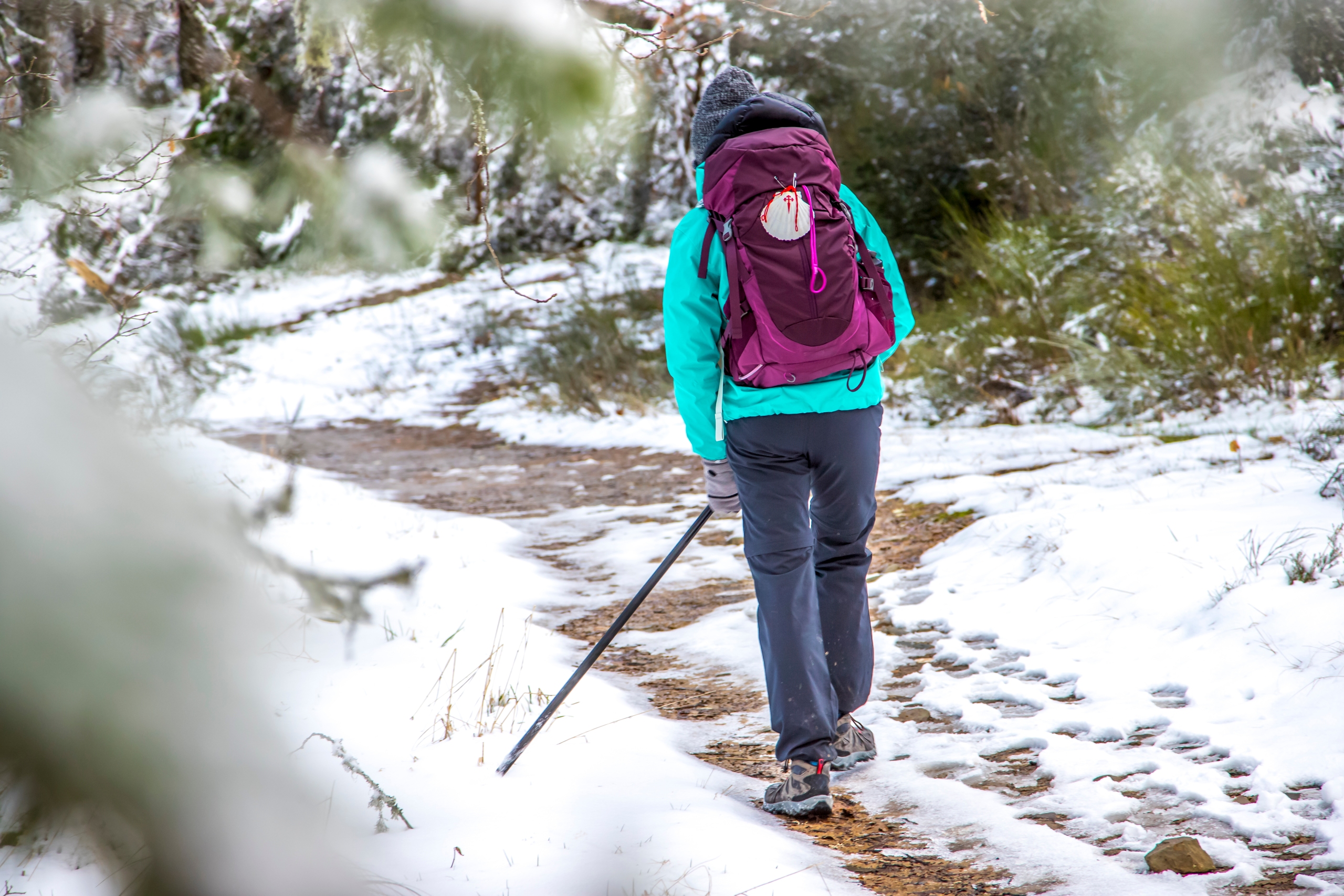
Those tackling high-altitude stretches on routes such as the Pyrenean pass between Saint-Jean-Pied-de-Port and Roncesvalles, or the Alpine passes of the Via Francigena, should consider certain items not as optional but as minimum equipment — even in apparently mild seasons. A sudden weather change is always possible: a windproof and waterproof jacket stowed separately and easily accessible without unpacking the entire rucksack; gloves and a hat that covers the ears; an emergency thermal blanket, featherlight and compact, capable of making the difference during a prolonged wait for rescue.
In conditions of reduced visibility from snow or dense fog, navigation becomes more difficult than expected even on well-marked paths. Maintain visual contact with other members of the group, avoid separating even for short stretches, and rely on a navigation app downloaded offline before setting out. These are precautions that require a few minutes of preparation and that, in poor visibility, become decisive.
A lesson the mountain has been repeating for centuries
There is an almost moving continuity between the medieval hospices built on Alpine and Pyrenean passes and the modern emergency shelters marked on trekking apps: both arise from the same awareness — that the mountain does not forgive unpreparedness, regardless of how sacred the purpose of the journey may be.
Those who walk those ridges today inherit not only a route but also the practical wisdom of those who first crossed them — often paying with their lives for mistakes that today, with a minimum of attention, are entirely avoidable.
AI Transparency Notice
PilgriMaps uses artificial intelligence tools to assist in the research, drafting and translation of editorial content. All AI-assisted content is reviewed, edited and verified by our editorial team before publication. We contrast information against primary sources, specialist literature and on-the-ground knowledge to ensure accuracy, cultural sensitivity and editorial integrity.
AI is one tool among many in our workflow. The judgement, curation and responsibility for everything published on this platform remain entirely human.
Viator Media S.L. — in compliance with the EU Artificial Intelligence Act (Regulation EU 2024/1689).
This post is also available in: