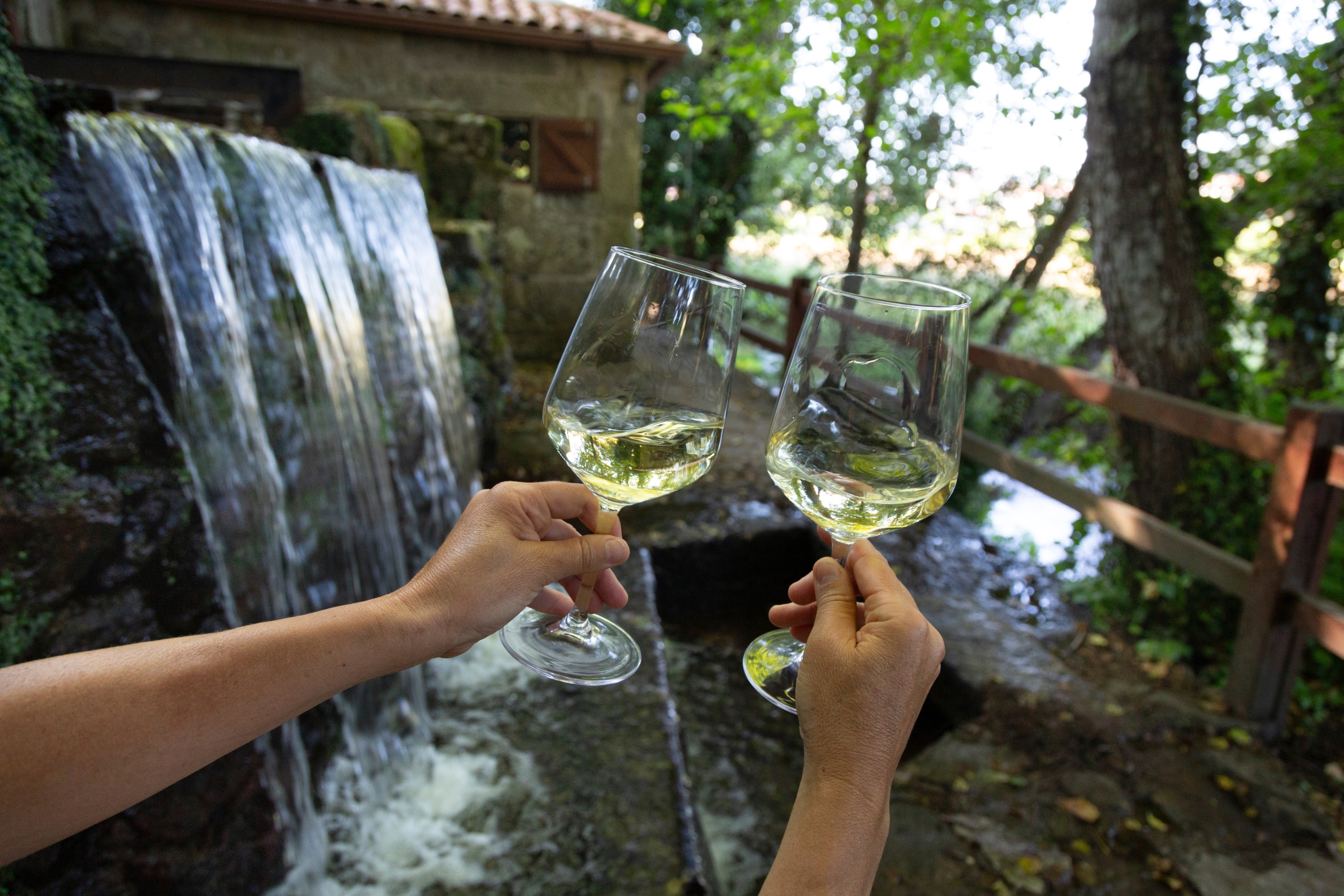
A monk makes his way through the damp hills of O Salnés. Under his habit he carries a vine cutting wrapped in cloth, sheltered from the wind and the rain. He has come from France – perhaps from Burgundy, perhaps from the Rhine valley – and he is bound for the monastery of Santa María de Armenteira. There he will plant an unknown vine that, over the centuries, will become one of the great symbols of Galicia.
The scene has everything it needs to lodge in the memory: a medieval journey, a monastery, a valuable plant, and the Camino de Santiago as the channel of communication between the peoples of Europe. It has one drawback: there is no evidence that any of it happened.
Before following the trail of the legend, a clarification is in order. Albariño is a grape variety, not the name of a denomination of origin. Its principal production territory is the Rías Baixas Denomination of Origin, where it accounts for more than 96% of the harvested fruit, but it is also authorised in Ribeiro, Valdeorras, Ribeira Sacra and Monterrei, along with other geographical indications.
South of the Miño, the same variety is called alvarinho and has one of its historic centres in Monção e Melgaço, within the Vinho Verde Denomination of Origin. These details can be consulted in the 2024 Rías Baixas product specification and in the Ministry of Agriculture’s official list of authorised varieties.
The identification of albariño with Rías Baixas is so strong that the two names are frequently confused. Not every wine made from this grape comes from Rías Baixas, however. And the regulated term “Rías Baixas Albariño” is reserved for wines of the denomination made from 100% of this variety. The name of the grape and the name of the denomination therefore belong to different categories.
A story built out of true facts
Returning to our opening image, it has to be said that the legend of the monks is persuasive because almost every one of its elements is historically plausible.
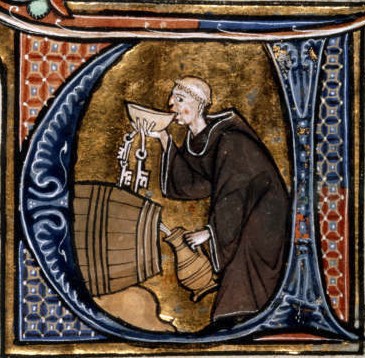
During the Middle Ages, religious orders administered extensive rural properties. Monasteries drew up agrarian contracts, promoted new plantings, received rents in wine and organised centres of production. The Cistercians expanded across Galicia during the 12th century, and the monastery of Santa María de Armenteira was tied to that monastic tradition. The monastery also stands in Val do Salnés, one of the most important historic territories of albariño.
It is likewise true that the Camino de Santiago allowed people, goods, knowledge and customs to circulate. Clergy, merchants, artisans and pilgrims travelled routes that connected Galicia with other European regions. In that world of roads, hospitals and monasteries, the transport of plants and agricultural techniques was perfectly possible.
The problem arises when those facts are combined to produce a conclusion the sources do not support: that French religious specifically brought the albariño variety to Armenteira and planted the first Galician vines there. The denomination’s own institutional account presents this as a traditional theory rather than a demonstrated fact, on its page devoted to the history of Rías Baixas.
Monks of Cluny, or of Cîteaux?
The instability of the story offers a first reason for scepticism. Some versions speak of Cistercian monks from Burgundy. Others attribute the journey to religious from Cluny. There are also accounts that locate the grape’s origin on the Rhine, link it to Riesling, or push its arrival back to the era of the Suebi and the Visigoths.
These versions are not compatible with one another, for a very simple reason: Cluny and Cîteaux shared the Benedictine tradition, but they were distinct institutions. The abbey of Cluny had given rise in the 10th century to a powerful monastic network. The Cistercians emerged at the end of the 11th as a different reform, articulated around houses such as Cîteaux and Clairvaux. Armenteira was historically connected to the Cistercians, not to the Cluniac congregation.
In the legend, however, “French monk,” “medieval monk,” “Cluniac,” “Cistercian” and “pilgrim” end up becoming interchangeable figures. That imprecision is characteristic of a narrative reworked over time, not of a tradition backed by stable documents.
Armenteira, the perfect setting
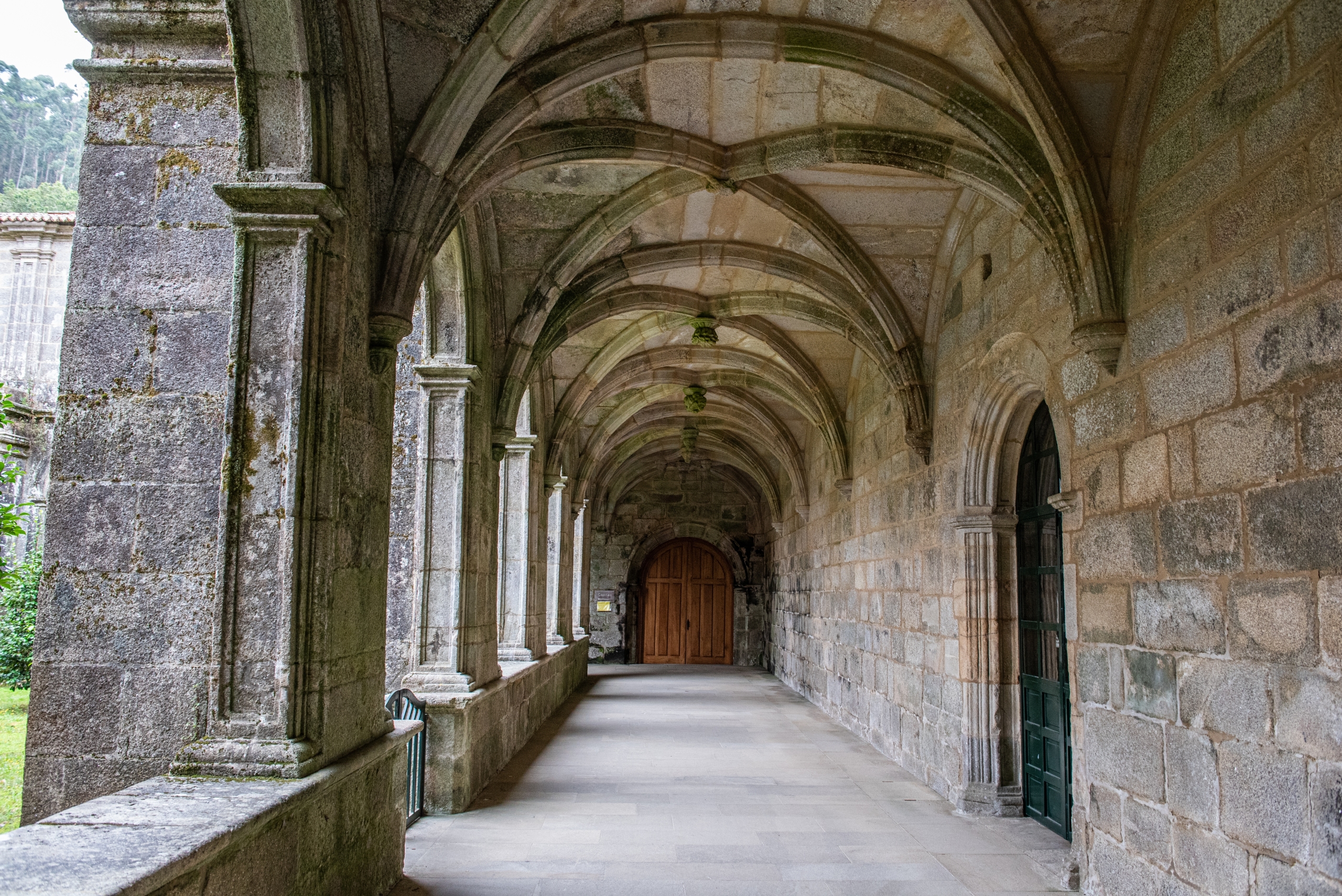
The choice of Armenteira is no accident. The monastery stands in Meis, within Val do Salnés, in a damp and fertile landscape that today is inseparable from vineyards. It preserves a medieval church and lies on the itinerary known as the Spiritual Variant of the Portuguese Way.
Armenteira also already possessed a legend of its own: that of Abbot Ero, who went out into the woods, became lost in the song of a bird, and returned to the monastery when centuries had passed. The history and heritage of the site are set out on the monastery’s official page.
Armenteira administered agricultural properties and had a structured rural economy. But the fact that a monastic community owned land, received wine or cultivated vines does not tell us which specific varieties grew on that land. Still less does it prove that one of those vines had been carried from France.
The silence of the documents
To date no deed of donation, foro contract, inventory, cartulary, rent book or medieval chronicle from Armenteira has been found that mentions the arrival of a French vine called albariño.
The earliest modern description usually cited comes from Antonio Casares, who included the variety in his Observaciones sobre el cultivo de la vid en Galicia, published in 1843. This reference appears in the ampelographic and molecular study published by researchers at the CSIC.
The documentary silence should be interpreted with care. It does not prove that albariño did not exist before the 19th century. Medieval documents frequently spoke of vines, plots, harvests or rents without specifying the names of the grape varieties. Variety names, moreover, could differ from one district to another and change over time.
Álvaro Cunqueiro and the spread of the legend
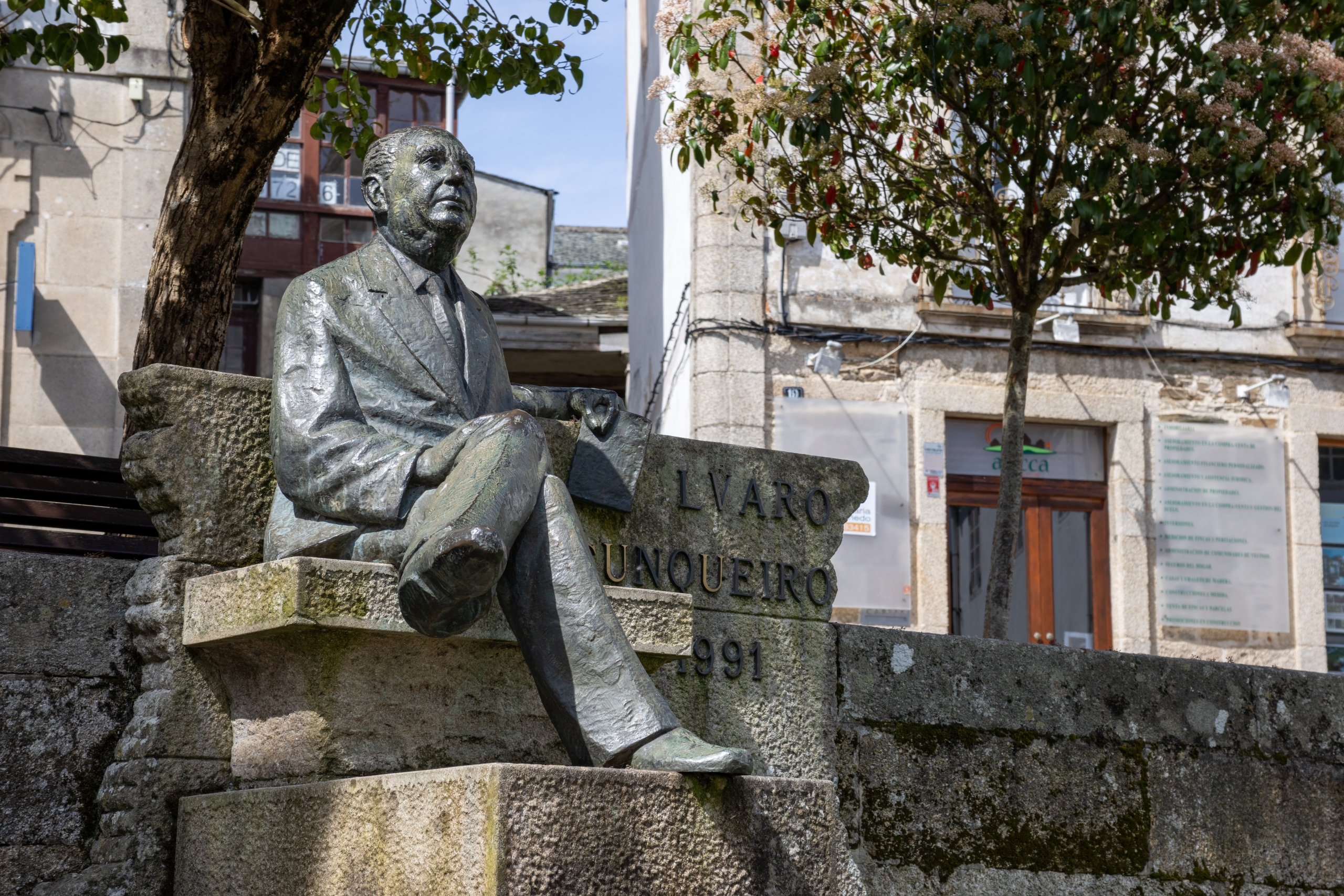
The association between albariño and French monks appears to have become widely popular during the 20th century. The name of the Galician writer and gastronome Álvaro Cunqueiro appears frequently in that diffusion.
Various articles credit him with an important role in propagating the idea that a noble Central European vine had reached Galicia in the hands of Cistercian monks. This is the account given, for example, in an article on the legends of albariño published in El Tiempo and in a general-interest study by Xavier Castro on Álvaro Cunqueiro and the albariño legend.
The attribution is plausible: Cunqueiro wrote with extraordinary imagination about cooking, wine, Galician traditions and the cultural connections between Galicia and Europe. Even so, it is worth not going beyond the available evidence. No original text has been identified in which the writer sets out the full story of the monks, the vine cutting and Armenteira, nor any precise date that would allow him to be named as the creator of the account.
For that reason it would not be rigorous to claim that Cunqueiro invented the legend. The more prudent formulation is that he helped to spread or lend prestige to a Central European genealogy of albariño that may already have been in circulation. His role would have been that of a great transmitter and embellisher of the story, not necessarily its author.
From Burgundy and the Rhine to genetics
For decades, attempts were made to connect albariño with varieties from France or Central Europe. It was confused with Savagnin Blanc, brought close to Riesling, and even linked to Burgundian grapes.
Molecular and ampelographic research has weakened those theories. The study published in 2007 in the Spanish Journal of Agricultural Research demonstrated that albariño, Savagnin Blanc and Caíño Blanco are distinct cultivars. Nor has any kinship been found that would sustain the supposed Burgundian or Rhenish importation.
On the contrary, albariño appears integrated into the body of traditional varieties of the northwest of the Iberian peninsula and related to the Caíño group. Its continuity on the other side of the Miño, where it is known as alvarinho, reinforces the picture of a grape deeply bound to Galician and Portuguese territory.
Something similar applies to the supposed etymology “white of the Rhine.” That reading connects albo with white and turns the ending -riño into an allusion to the German Rhine. It is ingenious, but unnecessary: the term is better explained within the Galician vocabulary relating to the colour white and to the Latin albus.
The resemblance between certain albariños and some Rieslings—acidity, floral perfume, capacity for ageing—may have encouraged the association. But two wines can resemble one another in the glass without belonging to the same family.
The seeds that lead back to Rome
The most significant argument against a late medieval introduction comes from archaeobotany. In 2020, researchers from the Misión Biológica de Galicia-CSIC and the Universidade de Santiago de Compostela compared seeds from present-day Galician varieties with pips recovered at Roman and medieval sites. The samples came from O Areal, in Vigo; Reza Vella, in Ourense; and Ponte do Burgo, in Pontevedra.
Some of the ancient seeds showed a notable morphological proximity to those of modern albariño. The study, published in the Australian Journal of Grape and Wine Research, proposed that a similar variety could have been cultivated in Galicia since Roman times. It can be consulted through its academic DOI.
The conditional matters. The researchers analysed the shape and proportions of the pips, but did not sequence ancient DNA. The morphometric resemblance supports a strong hypothesis, though it does not prove that those vines were genetically identical to the present-day cultivar.
It cannot be said that the Romans drank exactly the albariño we find in a bottle today. It can be said that there are indications of vines close to this variety in Galicia long before the arrival of the Cistercians.
What the monks could in fact have done
Dismantling the French introduction does not require erasing the monasteries from the history of Galician wine. Their role was real and probably decisive. Religious communities controlled land, drove plantings, organised farms, established long-term contracts and maintained a stable demand for wine for food, hospitality and religious use. The Museo do Viño de Galicia explains the importance of monastic institutions in the medieval expansion of viticulture.
They could also have favoured the propagation of the vines that gave the best results. The vine is traditionally multiplied by cuttings, layering or grafting when the aim is to preserve the characteristics of a plant. Over generations, peasants, landowners and monastic communities could select the vines best adapted to the Atlantic climate and extend them across their properties.
The hypothesis that best reconciles history and science is therefore less cinematic than the legend. The monks would not have carried a foreign grape to Galicia. They may have found a variety already rooted there and helped to select it, multiply it and make it part of an organised viticultural landscape.
The true role of the Camino
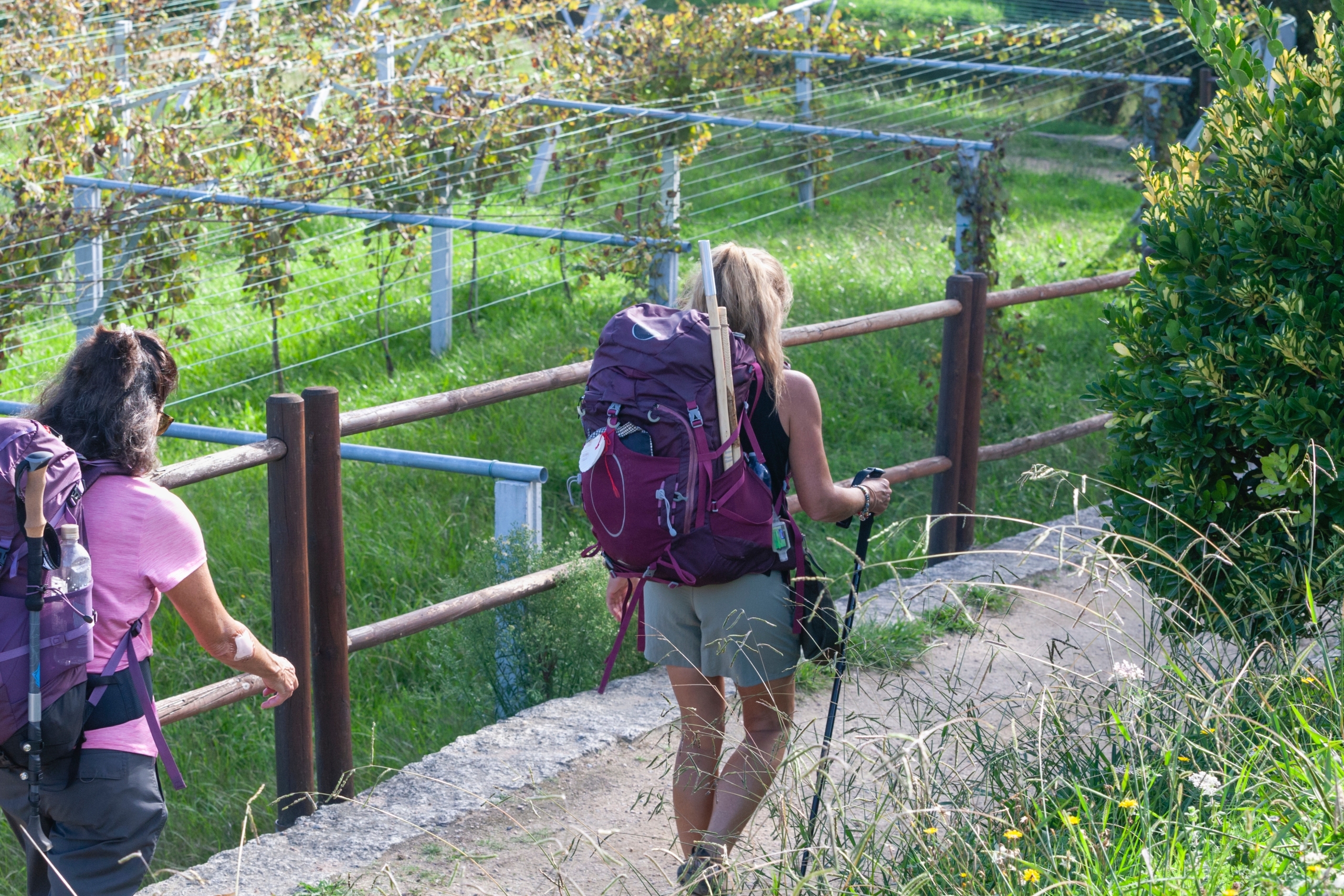
The relationship between albariño and the Camino de Santiago does exist. The Jacobean routes acted as corridors of human and commercial circulation. Along them travelled wine, food, news, knowledge and forms of hospitality. In the Ribeiro, the route towards Compostela was used for centuries to transport wine, and references to this go back to the 12th century.
The physical connection remains visible. The Portuguese Way crosses the territories of O Rosal, Condado do Tea and Soutomaior, as the Rías Baixas DO explains in its itinerary “Camino to Santiago with views over the vineyards.” The Winter Way crosses Valdeorras and part of the Ribeira Sacra, according to the route’s official description, although there albariño shares the stage with varieties such as godello and mencía.
The Camino explains the circulation of wine far better than the birth of the grape. It helped connect territories, expand markets and link vineyards, monasteries, fairs and places of welcome. It also helped stories to travel.
A truth more interesting than the legend
Perhaps no monk ever crossed the hills of O Salnés with a French vine cutting hidden under his habit. Perhaps albariño did not arrive from Burgundy, nor come down the Rhine before taking the road to Compostela.
The available evidence points towards a longer history, one more deeply tied to the land. A similar vine may have grown in Galicia since Roman times. Peasants preserved it. Monasteries may have selected and extended it. The roads facilitated the circulation of wine and of knowledge. Much later, writers, popularisers and producers gave shape to a legend capable of gathering three great symbols into a single image: albariño, the monasteries and the Camino de Santiago.
The true journey of albariño perhaps did not begin in France, but in the anonymous vineyards of the Atlantic. From there it passed to medieval farms, to the tables of travellers, and to the markets connected by the Camino. It was not the passage of a foreign vine hidden in a monk’s baggage, but the slow progress of a local variety towards becoming the emblem of an entire landscape.
AI Transparency Notice
PilgriMaps uses artificial intelligence tools to assist in the research, drafting and translation of editorial content. All AI-assisted content is reviewed, edited and verified by our editorial team before publication. We contrast information against primary sources, specialist literature and on-the-ground knowledge to ensure accuracy, cultural sensitivity and editorial integrity.
AI is one tool among many in our workflow. The judgement, curation and responsibility for everything published on this platform remain entirely human.
Viator Media S.L. — in compliance with the EU Artificial Intelligence Act (Regulation EU 2024/1689).
This post is also available in: