The house, suddenly, is too big. The phone stays silent, or rings with the wrong name on it. On the bathroom shelf there is still a toothbrush nobody will use again; in the wardrobe, a shirt that holds a scent. The evenings are long and the nights longer still. The mind rewinds the tape, looking for the exact point where everything cracked, rewriting dialogues that are no use to anyone now.
Then one day something happens. A photograph seen by chance, a friend’s story, a headline read in passing. And an idea takes shape that strikes other people as odd: buy a pair of boots, fill a rucksack with the essentials, and set off on foot.
You meet a great many of these people on the caminos. Women and men of every age carrying on their shoulders, along with the sleeping bag, the end of a relationship. They leave in order to forget someone. They come back, almost always, having found themselves.
The first days: the heart weighs more than the rucksack
At the start, the camino heals nothing. Quite the opposite. The first stages are full of her, of him. Every couple laughing at the next table is a wound. Every sunset is a sunset you would have wanted to share. Every step seems to take you further away and to carry you back at the same time.
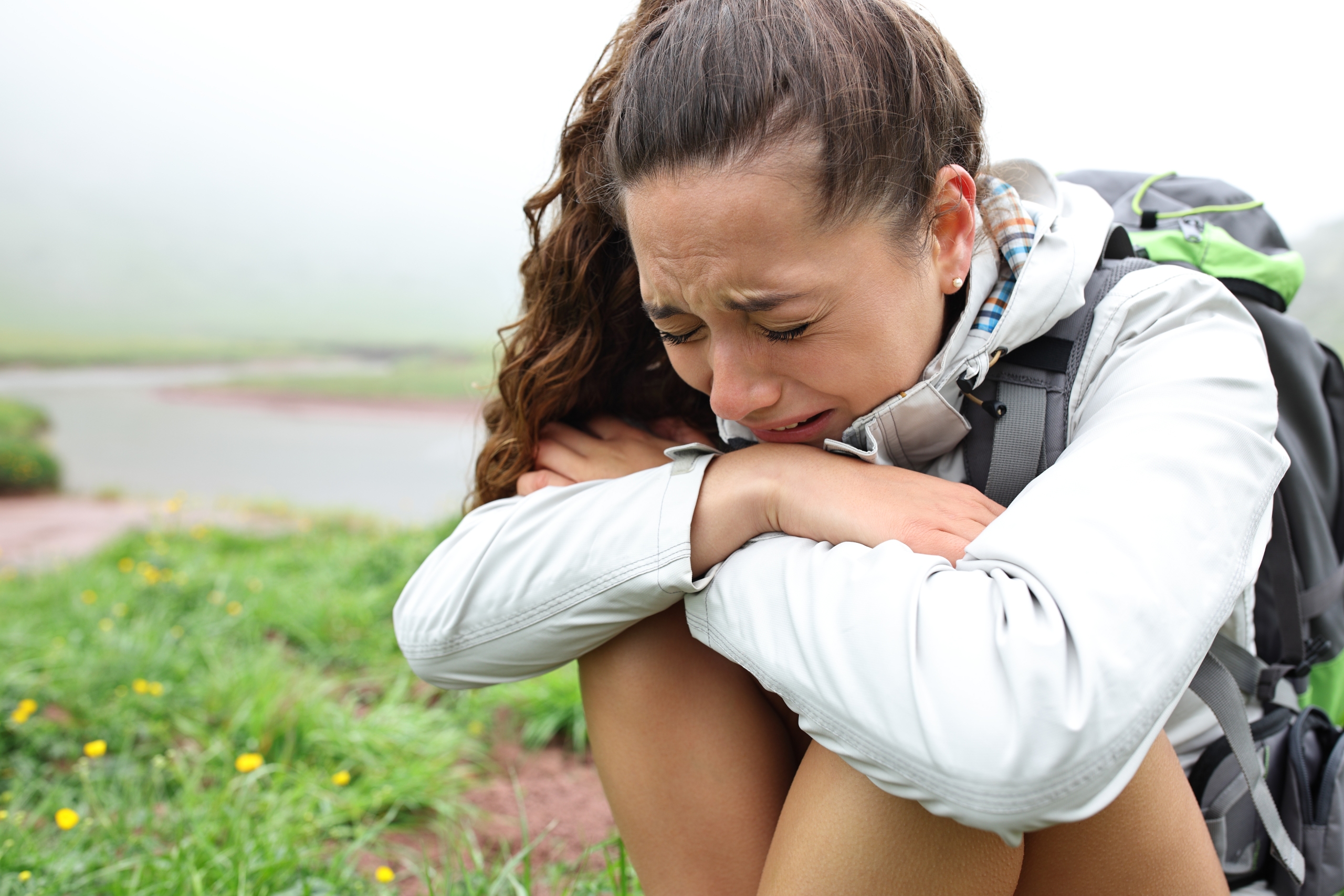
You cry while walking, and that is fine. Along the road nobody looks at you strangely: the tears dry in the wind, the sweat blurs them, and the road goes on. There is an enormous freedom in being allowed to be sad in the open air, without having to explain anything to anyone, without having to pretend you are fine.
And meanwhile the body works. The feet burn, the shoulders complain, the legs ask for rest. The pain of the heart and the pain of the muscles mix together, and almost without noticing you begin to pay more attention to the blister on your heel than to the message that is not coming. The body, with its concrete exhaustion, brings you back into the present.
The silence that puts things in order
Then, one morning, it happens. You are walking between two rows of poplars, mist rising slowly from the fields, a dog barking somewhere in the distance. And you realise that for an hour you have not thought about that person. A whole hour. It is a small and shattering discovery, and you find yourself smiling alone in the middle of the road.
The path demands attention. Where to put your feet on the wet stones, which yellow arrow to follow at the fork, where to fill the water bottle before the stretch with no villages. The mind, which at home went round and round like a broken record, finally finds handholds in the here and now. The tape jams, then slows, then falls silent.
In that silence, thoughts fall back into order. The things that hurt remain, but they change shape. You begin to see the finished relationship with different eyes: what you gave, what you received, what you stopped yourself from asking for. Without anger. With a kind of tenderness, even toward the person you used to be.
The strength you did not know you had
Every day the camino puts a climb in front of you. And every day, one way or another, you reach the top. Out of breath, perhaps cursing the moment you decided to set out, but you get there. And from up there the landscape opens like a gift.
After a separation you feel fragile, wrong, often incapable. The camino dismantles that conviction one kilometre at a time. The legs that trembled on the first day now carry you twenty-five kilometres. Your back has grown strong. You have learned to find your way, to ask for a bed in a language you do not speak, to treat your own wounds.
This strength is born in the muscles and then rises, slowly, as far as the heart. You discover you are capable. You discover you are whole. And you understand that the person you lost did not take the best part of you with them: that part was yours, and it is still there, under the dust of the journey.
The strangers who take care of you
On the camino nobody knows your story, and precisely because of that you can tell it. One evening, over a bowl of soup in a mountain albergue, you confess it to a German woman you met three hours ago. She listens, nods, and then tells you hers. You discover that nearly everyone around that table is walking with a goodbye on their back.
Shared, pain changes weight. You realise you are in good company, part of a long line of broken hearts who have been seeking relief on these roads for centuries. The hospitalera who puts a plaster on your foot and calls you cariño. The Italian lad who waits for you at the top of the climb. The old farmer who offers you a peach from his orchard and wishes you buen camino as though it were a blessing.
They are tiny gestures, and yet they stitch you back together. They remind you that the world is full of kindness, and that love has a thousand forms other than the one you have just lost.
Learning to love yourself
Halfway along the camino, almost always, the question changes. You stop asking yourself why the other person left and begin asking who you want to be now. It is the most precious turn of the whole journey.
The camino teaches you to treat yourself gently. To listen to your feet when they ask for a stop. To stop without feeling guilty. To allow yourself a glass of wine at sunset, an endlessly long shower, a whole afternoon sitting on a bench watching the swallows. To speak to yourself with the same kindness you would offer a friend in tears.
Day after day, the story you tell yourself is rewritten. The person you loved becomes an important chapter, to be kept with gratitude, and the protagonist becomes once again the one who walks. You.
Going home with a new love
The last day has a particular flavour. The destination is close, the bells are ringing in the distance, and the rucksack feels lighter. Then you understand that it really is: there is less weight inside it than when you set out. The memory remains, but it has changed place. It lives in a corner of the mind and leaves the centre of the heart free.
You go home with new habits. A walk when the sadness knocks. A path through green country when thoughts tangle. A kind word for yourself on the bad days. The courage to ask for help and to accept it.
And you carry with you the finest discovery of the whole journey: you can lose someone and find yourself. The first love to begin again from is the one for the person who, step after step, tear after tear, had the courage to make it this far.
AI Transparency Notice
PilgriMaps uses artificial intelligence tools to assist in the research, drafting and translation of editorial content. All AI-assisted content is reviewed, edited and verified by our editorial team before publication. We contrast information against primary sources, specialist literature and on-the-ground knowledge to ensure accuracy, cultural sensitivity and editorial integrity.
AI is one tool among many in our workflow. The judgement, curation and responsibility for everything published on this platform remain entirely human.
Viator Media S.L. — in compliance with the EU Artificial Intelligence Act (Regulation EU 2024/1689).