Every year, on the 15th of August, Malta stops. Shops close, the harbours quiet, and from one end of the archipelago to the other, fireworks split the evening sky. L-Assunta — the Assumption of Our Lady — is not simply a religious feast in Malta. It is the axis around which the Maltese summer turns, a public holiday, a communal memory, and the single most celebrated day in the Catholic calendar of the islands.
Eight parishes celebrate the feast simultaneously, from Mqabba, Qrendi, Għaxaq, Gudja, Attard, Mosta and Birkirkara on the main island, to Victoria in Gozo. Further villages, including Dingli and Żebbuġ in Gozo, continue the celebrations on the following Sunday. The feast has loomed large in Maltese history and is celebrated with great devotion and fanfare, sometimes for the full week leading up to August 15th.
Seven Villages, One Feast
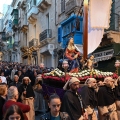
Mosta’s festa for the Assumption is one of the most anticipated of the year. The Mosta Dome — officially the Rotunda of St Marija Assunta, the third-largest unsupported dome in Europe — is the backdrop for an extraordinary spectacle. The dome’s exterior is illuminated, fireworks are launched from the surrounding fields, and the procession draws huge crowds through streets that wrap around the massive church.
Mqabba is traditionally renowned for firework displays synchronised with music, drawing locals and tourists from across the island. Gudja holds the record for the oldest titular statue of the Assumption, sculpted in solid wood in 1807 by Maltese sculptor Vincenzo Dimech.
In Għaxaq, the feast carries a second layer of memory. A powerful siren — a World War II relic — is sounded from the St Mary’s Club in memory of the arrival of the SS Ohio, the tanker that quite literally saved the island at the height of the Siege of Malta. For the Maltese, Santa Marija is inseparable from that August in 1942 when the convoy got through. Faith and survival have spoken with the same voice here for centuries.
Malta in World War II: The Siege, the Faith, and the Fire that did not break
A Marian Archipelago
The 15th of August is the loudest expression of a devotion that runs far deeper and older than any single festa. Malta’s Marian heritage stretches back to the island’s earliest Christian centuries, and its shrines form one of the most concentrated networks of Marian pilgrimage in the Mediterranean.
The oldest is the Sanctuary of Our Lady of Mellieħa, carved into a cave in the north of the island. Legend holds that Saints Paul and Luke were the first pilgrims to the cave. The 12th–13th century Byzantine fresco of the Virgin as Hodegetria — “She Who Shows the Way” — probably replaced an even older image attributed to St Luke, and Christian practice at the site may date back to the 5th century. The sanctuary served as a place of refuge during the Hafsid siege of 1425 and continues to draw pilgrims today. Visit Malta has full details on the Mellieħa sanctuary and its surroundings.
On Gozo, the National Shrine of Ta’ Pinu is Malta’s most important pilgrimage destination. The Pilgrim’s Way, inaugurated in 2015, offers a meditative path leading to the basilica. Along its final kilometre, five niches house frescoes by Sergio Favotto depicting Mary’s protective love in her various roles: Help of Christians, Comfort of Sinners, Strength of the Sick, Queen of the Family, and Queen of Peace. The rooms beside the altar are filled with ex-votos, physical testimony to answered prayers left by generations of Gozitan and Maltese faithful.
A third shrine of significance stands in Lija: the Sanctuary of Our Lady of Miracles, dating back to at least the 13th century, whose reputation was cemented by a miraculous event in 1743.
Walking the Marian Routes
For pilgrims who want to connect these places on foot, Malta now offers structured routes to do so. The Melita Mariana pilgrimage offers a 100-kilometre journey through the heart of Malta and Gozo, uncovering centuries of religious and cultural tradition woven around the veneration of the Virgin Mary.
XirCammini — Malta’s principal pilgrimage walking association and the body behind the Camino Maltés — organises the Mariae Melitensis, a two-day Marian pilgrimage across the archipelago. The route, spanning over 60 kilometres, showcases the Marian devotions that have been part of Malta’s religious landscape for centuries. It is one of the most distinctive walking pilgrimages in the Mediterranean, combining ancient shrines, medieval chapels and the stark beauty of the Maltese limestone. Full details on XirCammini’s Marian pilgrimage programmes are available on their site.
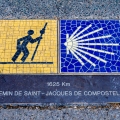
The Camino Maltés itself, which begins at St Paul’s Grotto in Rabat and connects Malta to Santiago de Compostela through Sicily, Sardinia and Spain, passes through several of these Marian sites along its Maltese section. Read our full guide to the Camino Maltés on PilgriMaps.
Brass Bands, Baroque and Fireworks
The festa as a cultural form deserves its own attention. Traditions go back to the late 1700s and are a beloved custom among both locals and visitors, involving street parades, marching bands, and fireworks that light the entire village sky. Each parish has its own band club — sometimes two competing clubs, one for each side of the village — and the rivalry between them, entirely friendly and entirely serious, produces some of the most spectacular street decoration and pyrotechnics in Europe.
The streets are hung with damask and lights. The parish church, often a baroque building of extraordinary scale disproportionate to the surrounding village, is illuminated from outside and packed within. The titular statue of Our Lady is carried through the streets in solemn procession. And then the fireworks begin.
For a visitor arriving in Malta in mid-August, the question is less whether to attend a Santa Marija festa than which one — and whether, in the days either side, there is time to walk out to Mellieħa, cross to Gozo for Ta’ Pinu, and understand something of the devotion that has been building here for two thousand years.
Plan your visit with Visit Malta’s official festa and events calendar.
AI Transparency Notice
PilgriMaps uses artificial intelligence tools to assist in the research, drafting and translation of editorial content. All AI-assisted content is reviewed, edited and verified by our editorial team before publication. We contrast information against primary sources, specialist literature and on-the-ground knowledge to ensure accuracy, cultural sensitivity and editorial integrity.
AI is one tool among many in our workflow. The judgement, curation and responsibility for everything published on this platform remain entirely human.
Viator Media S.L. — in compliance with the EU Artificial Intelligence Act (Regulation EU 2024/1689).
This post is also available in: