A trail, a destination to reach, someone to share the journey with. The Camino de Santiago offers a practical perspective on healthy aging: preserving the ability to move, make choices, and stay engaged with the world.
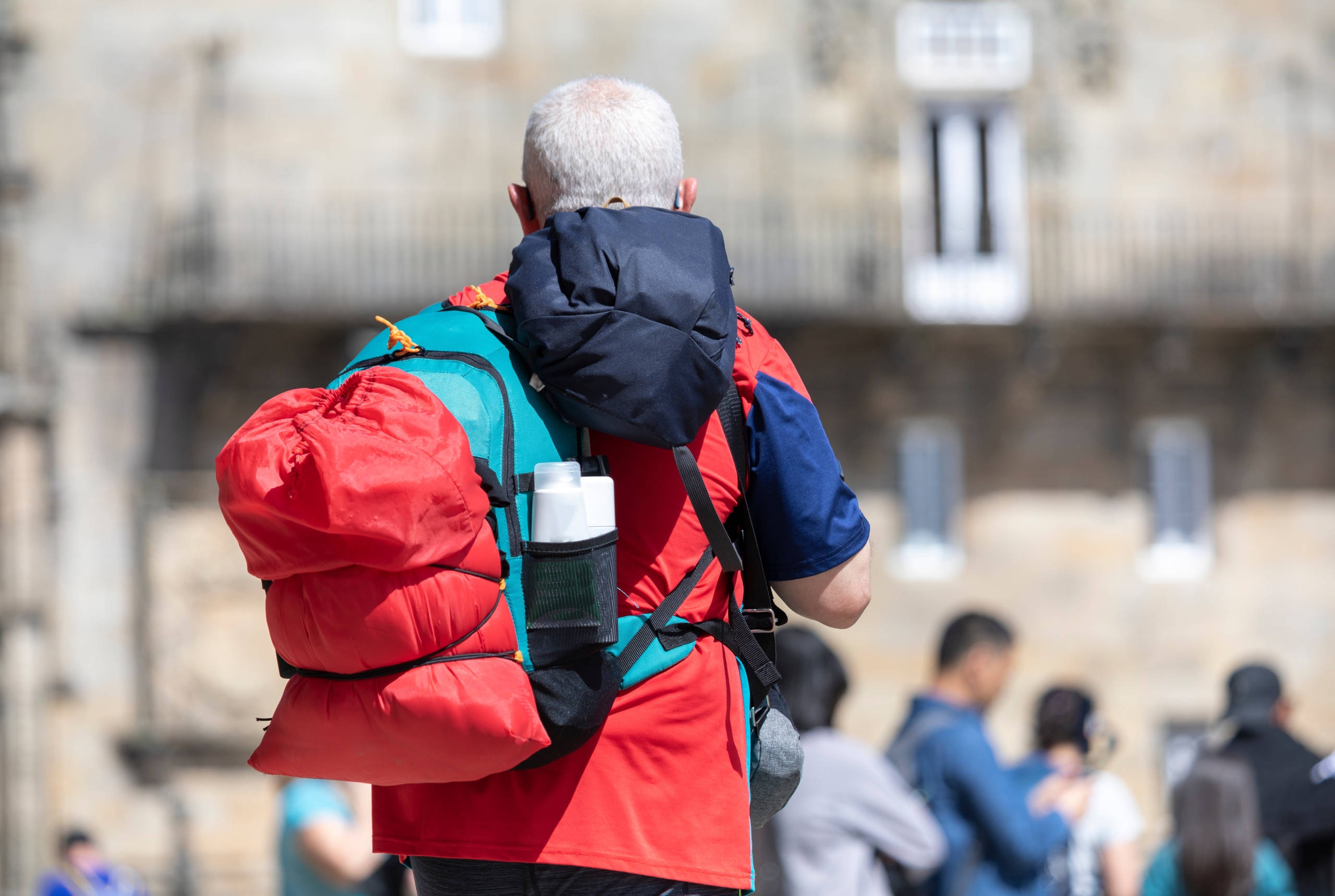
Before setting out, you check a few simple things: your shoelaces, the water in your bottle, the weight of your backpack. Then you look for the yellow arrow and start walking. The day takes shape through your footsteps, the distance to the next village, and the promise of a shady spot where you can rest.
On a pilgrimage trail, your relationship with your body becomes more immediate. A climb asks you to slow down; a descent calls for caution; after a few miles, you know whether your backpack is too heavy. Your attention moves constantly between the landscape around you and what your body is capable of doing.
This experience offers a useful way to think about longevity. The word often comes wrapped in sophisticated promises, protocols, and measurements, yet in everyday life it means something far more familiar: leaving home without fear, visiting someone you love, boarding a train, or still feeling the desire to travel.
The Camino de Santiago brings the value of these possibilities into focus. For those who approach it with adequate preparation and an itinerary suited to their abilities, it can become an opportunity to preserve and strengthen them.
The Distances That Matter in Everyday Life
We often recognize the importance of independence through ordinary actions we barely notice: getting out of a chair, crossing a square, carrying a bag of groceries. When these things become difficult, the world within our reach can begin to shrink.
As we age, muscle strength, balance, and endurance may decline. Regular physical activity helps maintain the abilities we need for daily life. The World Health Organization recommends that older adults combine aerobic activity, muscle-strengthening exercises, and balance training, adapting movement to their individual abilities and health conditions.
Pilgrimage gives that movement a destination. You walk to reach a village, a church, or the place where you will spend the night. Distance takes on meaning, and physical effort becomes part of the day’s experience.
For some, the plan might be a week walking through the villages of Galicia. For others, it could mean a few miles along an accessible section, with frequent breaks and a backpack transported by a luggage service. Choosing the right route is already part of the experience: it requires understanding your abilities and planning accordingly.
Beyond the Step Count
At the end of the day, your watch may display a precise number. Eight thousand steps, ten thousand, perhaps more. It’s easy to turn that figure into a score, as though there were a threshold separating a productive day from a wasted one.
Research suggests a more nuanced picture. A study published in JAMA Network Open in 2023 examined 3,101 American adults, comparing the steps they recorded over one week with mortality during the following ten years. Even participants who reached at least 8,000 steps on just one or two days during the observed week had lower mortality than those who never reached that threshold.
This is an association, not proof that walking 8,000 steps extends your life. And a single week of tracking cannot capture all of someone’s habits. Still, the findings help put the idea of a perfect daily number into perspective: movement has value even when we cannot meet the same goal every day.
On the Camino, after all, not every step is equal. Elevation changes, trail surfaces, heat, and the weight on your shoulders all matter. The right distance depends on these factors as well as your physical condition, rather than simply a number on a screen.
Walking to recover time: pilgrimage as a practice of resistance after sixty
Confidence Begins Before the Journey
A pilgrimage often begins close to home. With a walk that’s a little longer than usual, a familiar route repeated until it feels comfortable, or a new pair of walking shoes tested before you trust them for an entire day.
Preparation helps you understand how your body responds. You learn when you need a break, what pace you can sustain, and what is better left out of your backpack. Progress may be small, but it serves a clear purpose: making the journey feel less like an abstract idea and more like something you can actually accomplish.
This is where walking can also become an exercise in confidence. For someone who has gradually reduced their activities through hesitation or habit, a realistic goal offers a reason to begin again. Confidence grows from experiencing your abilities firsthand while learning to recognize their limits.
The terrain, however, demands attention. An uneven downhill trail can challenge even someone accustomed to walking regularly in the city. Walking should therefore be complemented by strength and balance exercises. For older adults, WHO guidelines recommend activities that strengthen major muscle groups at least two days a week, along with multicomponent physical activities emphasizing balance and strength at least three days a week.
Around the Table, the Journey Continues
After a day’s walk, backpacks are set aside. At a guesthouse or around a shared table, a question about the route can start a conversation. People compare distances, exchange advice, and recognize someone they passed earlier that morning.
Pilgrimage creates opportunities for connection through shared experience. A stretch of trail walked together, a rest stop, or a helpful suggestion can bring people of different ages and backgrounds into contact. Some encounters end at the next stop; others find ways to continue.
This social dimension also deserves attention when discussing aging. A meta-analysis by Julianne Holt-Lunstad and colleagues, published in PLOS Medicine in 2010, brought together 148 studies involving more than 308,000 participants. It found an association between stronger social relationships and a greater likelihood of survival.
The study examined social relationships broadly and did not measure the effects of pilgrimage. Nevertheless, it provides useful context: conversations about health and longevity should also make room for human connection and social participation. Walking a pilgrimage route can be one way to cultivate both.
Learning to Choose Your Own Stage
Sometimes the wisest decision is to shorten the day’s walk. Stop in a village earlier than planned, lighten your load, or give yourself time to rest. On a multi-day journey, the ability to adjust your plans matters just as much as the determination to follow them.
Before setting out, walkers should gradually increase their distances during training, test their shoes and backpacks, and allow enough time for recovery. Anyone with cardiovascular disease, joint problems, or other conditions that may affect physical exertion should consult a healthcare professional to assess the journey and consider any necessary adjustments.
This kind of preparation makes a sustainable experience possible. The journey retains its value even when the distance changes or extra support is needed.
The Camino That Stays With You
Back home, the backpack goes into the closet. Everyday distances return to their familiar scale: the grocery store, the park, a friend’s house. This is where the experience may leave its most useful mark, if the pleasure of movement finds a place in ordinary life.
The research discussed here does not establish that pilgrimage itself has a specific effect on life expectancy. Its value lies in the opportunity to bring together physical activity, human connection, and a meaningful destination in an experience that some people may find both appealing and achievable.
Aging well also takes shape through caring for the abilities that allow us to remain connected to the world. A walk, an invitation accepted, a journey planned with care.
Perhaps the question worth bringing home is this: Where would I still like to be able to go?
The answer may be a very good reason to start walking again.
AI Transparency Notice
PilgriMaps uses artificial intelligence tools to assist in the research, drafting and translation of editorial content. All AI-assisted content is reviewed, edited and verified by our editorial team before publication. We contrast information against primary sources, specialist literature and on-the-ground knowledge to ensure accuracy, cultural sensitivity and editorial integrity.
AI is one tool among many in our workflow. The judgement, curation and responsibility for everything published on this platform remain entirely human.
Viator Media S.L. — in compliance with the EU Artificial Intelligence Act (Regulation EU 2024/1689).
This post is also available in: