


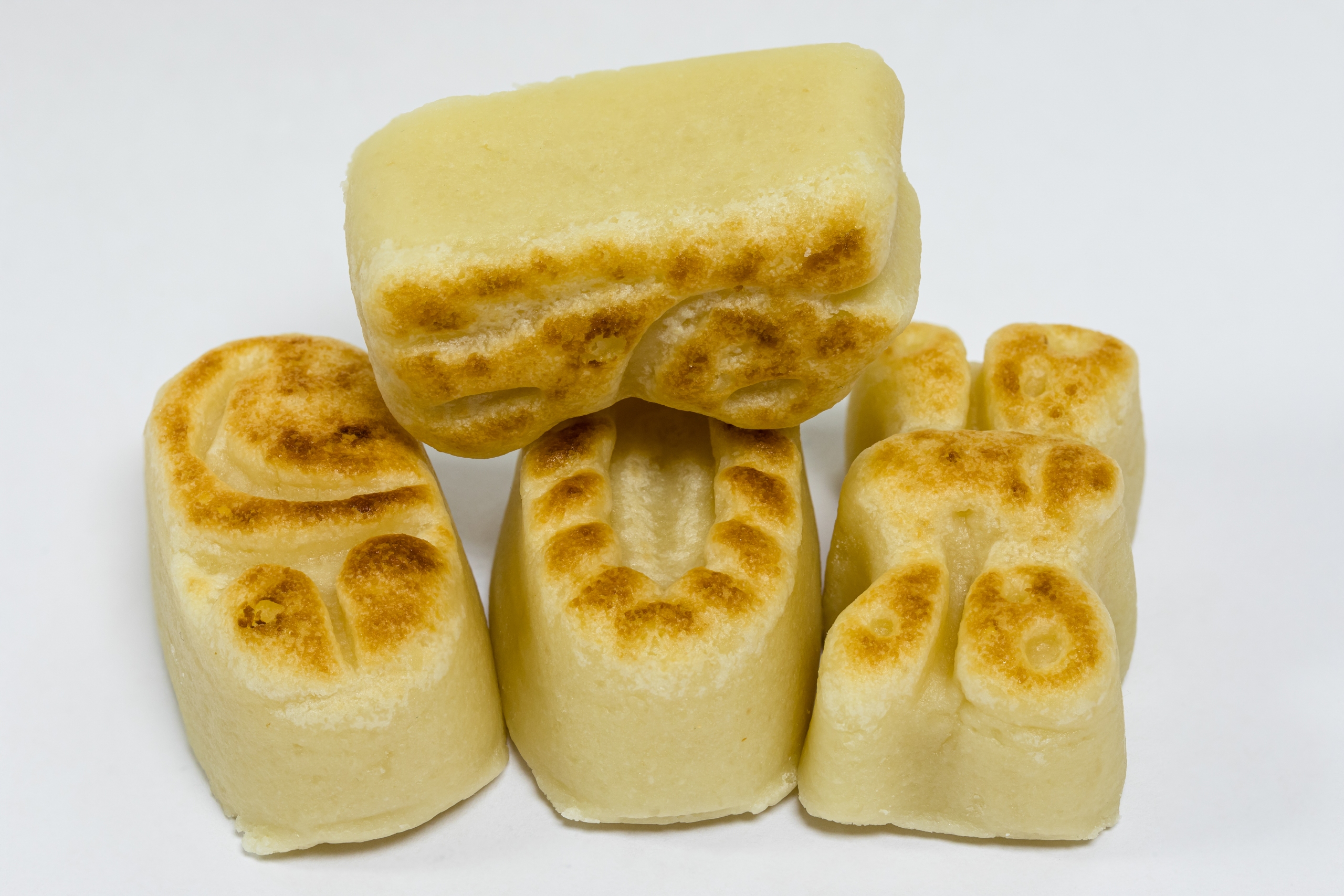
With barely two ingredients — almonds and sugar — Toledo has created one of the most emblematic sweets in the Spanish tradition. Its history, wrapped in medieval legends and conventual memories, reveals how a simple recipe can become a symbol of a city and of its collective memory.
To walk the narrow streets of Toledo is to discover a city where history seems to look out from every corner. Among churches, convents, old palaces and cobbled alleys, the windows of the confectioners offer another of its treasures: small golden figures, carefully decorated eels, and sweets whose delicate texture conceals the intense flavour of the almond.
This is marzipan, a gastronomic speciality that has come to identify Toledo as thoroughly as its monuments or its swords. But behind this apparently simple sweet lies a story far more complex than one might imagine. Who invented it? Why is it associated with convents? How did it become one of the characteristic flavours of Christmas?
The answers lead us into fascinating territory, where medieval legends coexist with historical documents, and ancient religious traditions with an industry that has known how to adapt across the centuries.
A legend born within convent walls
One of the best-known stories about the origin of Toledan marzipan features the nuns of the monastery of San Clemente. According to tradition, after the battle of Las Navas de Tolosa in 1212, a severe food shortage struck the city. Faced with a lack of wheat and other basic goods, the nuns are said to have turned to the almonds and sugar stored in the convent to prepare a nourishing paste with which to relieve the hunger.
The account has all the ingredients of a good medieval story: a city threatened by scarcity, an ingenious religious community, and a food born of necessity that would end up becoming a delicacy. The surviving documentation, however, invites us to view this narrative with caution.
The historian J. Carlos Vizuete Mendoza studied the account books of the monastery of San Clemente covering various moments in the fourteenth century and the beginning of the fifteenth. In them appear references to almonds, honey and sugared products, some connected with the Christmas celebrations. But he found no mention of marzipan, nor any evidence that those ingredients were combined to make the sweet we know today.
This does not mean that marzipan could not have existed then. It means, quite simply, that we have no documents capable of confirming that story.
When marzipan enters history
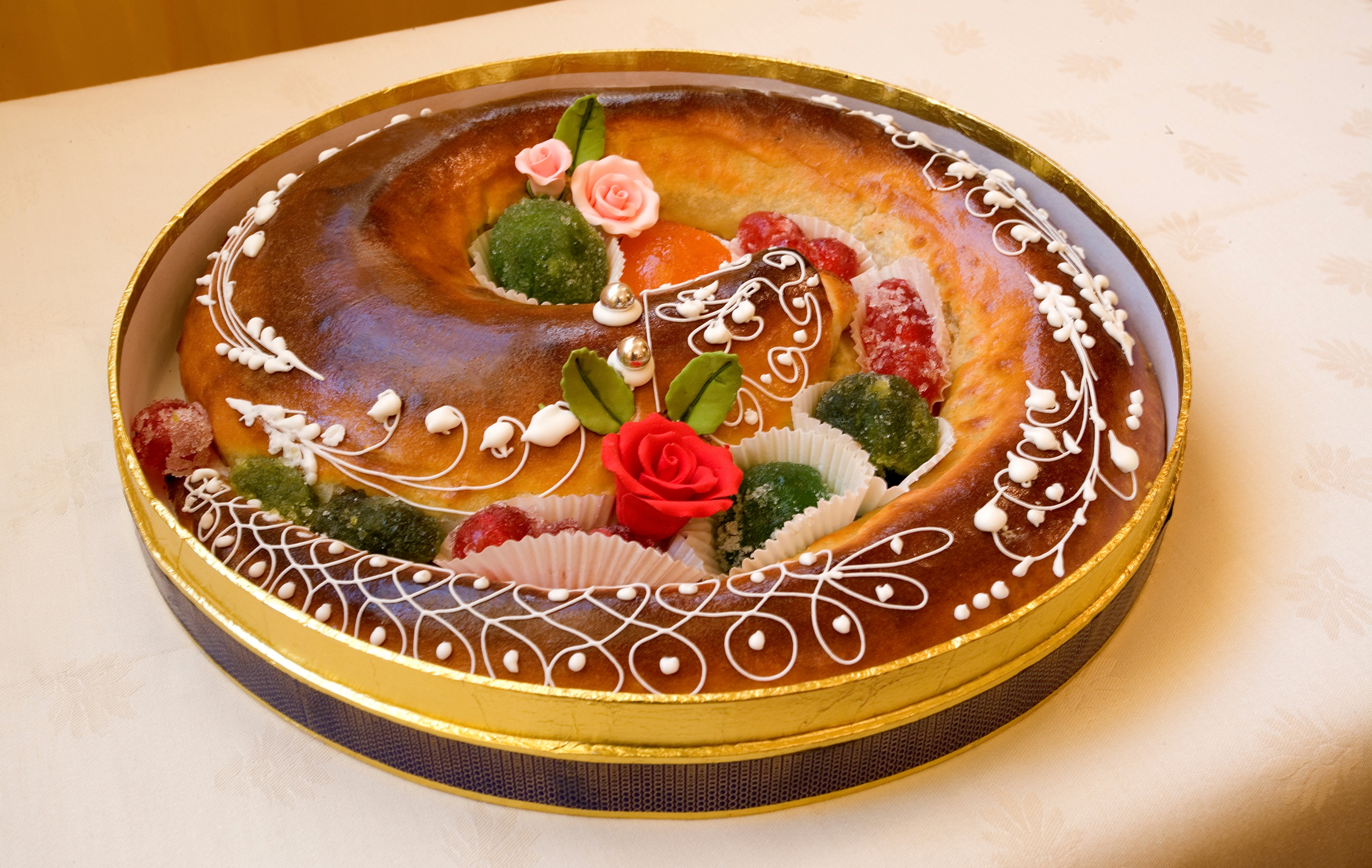
If the origins remain shrouded in uncertainty, the presence of marzipan in Toledo begins to come into focus at the start of the sixteenth century. The first known documentary evidence expressly linking marzipan with Toledo dates from 1512. That year, on the occasion of a royal visit to Madrid — reportedly by Ferdinand the Catholic and Germaine of Foix — Toledan sweets were requested, marzipans among them, which demonstrates the reputation this speciality had already attained.
The importance of this reference goes beyond the mere appearance of a word. It indicates that Toledan sweets already enjoyed sufficient prestige to be sought after outside the city, even in a context connected with the court.
So although we do not know when its production began, we do know that by the early sixteenth century marzipan formed part of Toledo’s gastronomic reputation.
Another significant testimony appears in 1525, when the Castilian edition of Ruperto de Nola’s Libro de cozina was printed in the city — one of the best-known culinary works of the period. Its title expressly mentions maçapanes, confirming the presence of this preparation in Renaissance gastronomic culture.
During the seventeenth century, the ordinances of the Toledan confectioners’ guild also dealt with marzipan. The sweet had ceased to be a simple domestic preparation and had become part of a specialised trade, subject to the practices and regulations proper to artisanal activity.
Rather than pointing to a precise moment of invention, these testimonies allow us to reconstruct something perhaps more interesting: the slow process by which a culinary preparation acquired a local identity and became a recognised speciality.
The secret of two ingredients
Few traditional sweets can boast of so simple a recipe. In its essential formulation, marzipan requires only almonds and sugar. That apparent simplicity, however, conceals a delicate balance. The almonds are peeled, ground and mixed with sugar until a fine, compact and malleable paste is obtained. Then, depending on the speciality, it may be modelled into small figures, filled, or lightly baked to brown the surface.
The quality of the almonds, their fat content, the fineness of the grind and the degree of moisture determine much of the final texture and flavour. A small change in the proportions or in the preparation can produce very different results.
The traditional formula, based on roughly equal quantities of almond and sugar, has preserved its identity across the centuries. In 2008, the European Union recognised Mazapán de Toledo as a Protected Geographical Indication (PGI). Among other conditions, this designation requires that almonds account for at least 50% of the product’s weight and that it be made within the province of Toledo.
This recognition protects both a set of specific characteristics and the historical reputation binding the product to its territory. The traditional little figures, the marzipan eels and the various filled specialities further show how a single paste can give rise to a surprising diversity of forms and presentations.
Convents, Christmas and collective memory
Although the documents do not allow us to attribute the invention of marzipan to the nuns of San Clemente with any certainty, the relationship between confectionery and convents is a much broader historical reality.
For centuries, female religious communities developed an important culinary culture. In their kitchens everyday food was prepared, but also sweets intended for celebrations and special occasions.
The religious calendar organised much of that activity. Christmas, Easter and the feasts of the saints introduced variations in diet and encouraged the preparation of products that were not always present on the daily table.
The account books of San Clemente show precisely that relationship between food and celebration, even if they do not document the medieval manufacture of marzipan.
In time, this sweet acquired a particularly close association with the Spanish Christmas. Its presence on family tables, alongside turrón and other specialities, eventually made it one of the flavours associated with the December festivities.
In Toledo, that tradition took on a distinctive urban dimension. During the nineteenth and twentieth centuries, the windows of the confectioners were artistically decorated on the eve of the feast of the Immaculate Conception, 8 December, turning the display of marzipan into a small civic event.
Even today, several Toledan religious communities continue to make and sell conventual sweets. The monasteries of San Clemente, Las Gaitanas and Santo Domingo el Antiguo form part of that gastronomic landscape in which confectionery also constitutes a form of cultural transmission.
Marzipan thus appears connected to religious life not only through the legends of its birth, but through its presence in customs, festive calendars and knowledge preserved across generations.
From the old workshops to a modern industry
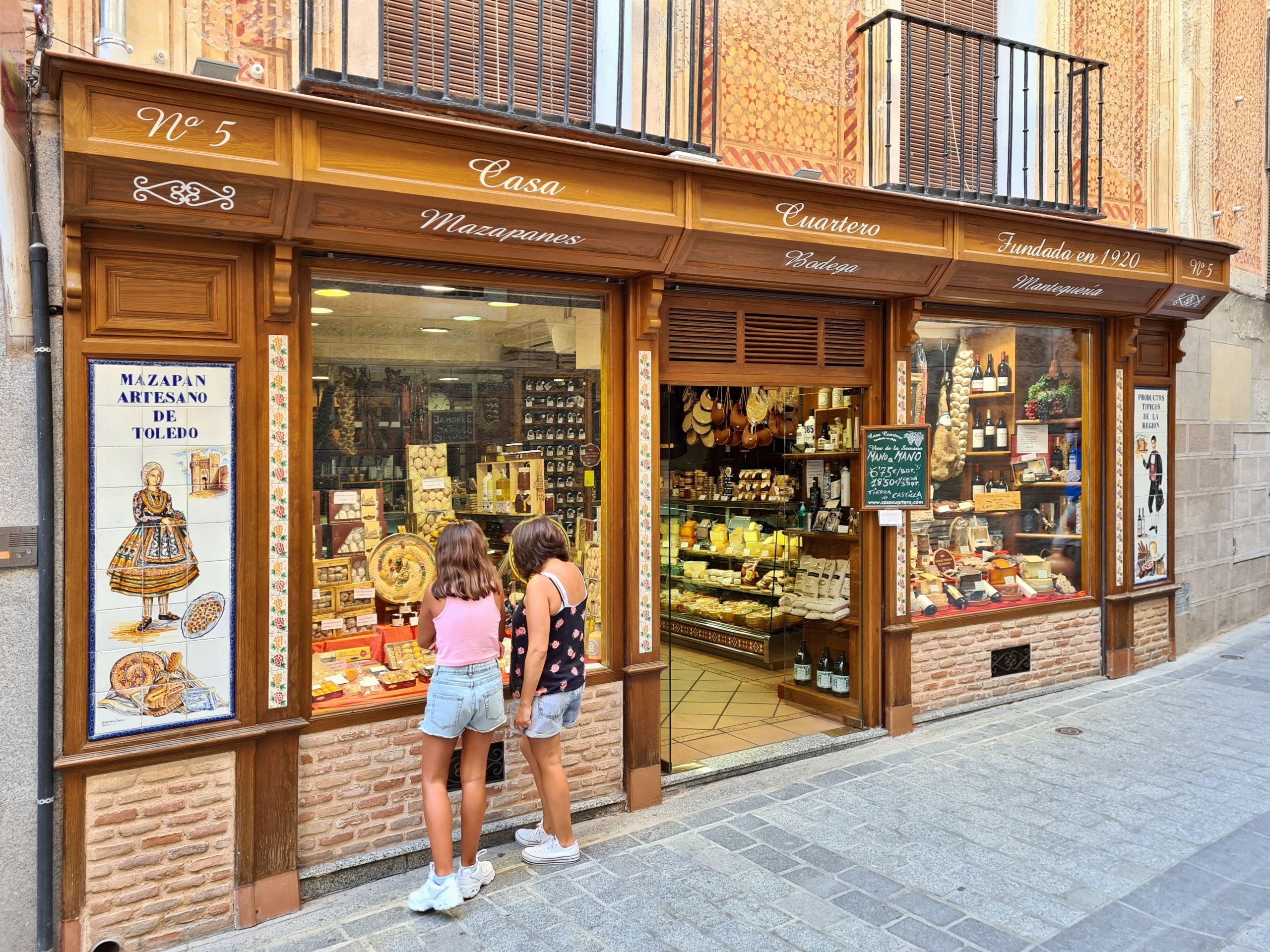
The history of Toledan marzipan can also be told through its confectioners. The commercial tradition of Casa Telesforo goes back to 1806, while Santo Tomé has been trading since 1856. Later came other family workshops that helped maintain and extend the reputation of this speciality.
In these establishments, the techniques of preparation have been passed down and refined from one generation to the next. Marzipan ceased to be solely a sweet for celebrations and became also a product that visitors could carry away as a souvenir of Toledo.
During the twentieth century, the activity reached industrial scale. In Sonseca, the family business begun in 1927 that would give rise to Delaviuda evolved into a major food group with an international presence. Today, large industrial plants, artisanal workshops and small conventual productions all coexist. Each represents a different way of keeping the tradition alive.
Some companies explore new formats, develop products for other times of the year, or open their workshops to visits and workshops. Others maintain a more direct relationship with artisanal production and sale in historic premises.
This diversity reveals that gastronomic heritage is not necessarily something fixed. It can also renew itself, adapt to new habits of consumption and find different ways of relating to its consumers.
A piece of Toledo to take home
There is another particularly curious aspect to the history of marzipan: its capacity to become a representation of the city itself. For generations, the boxes used to sell it were decorated with images of Toledo’s most recognisable monuments. The Cathedral, the Alcázar, the medieval gates and the bridges over the Tagus were reproduced on packaging that travelled far beyond the city walls.
The Municipal Archive preserves evidence of this tradition in its virtual exhibition Toledo en las cajas de mazapán, a collection that allows us to observe how commercial advertising ended up transforming itself into a form of urban memory.
Those boxes did not contain only sweets. They also contained an idealised image of Toledo, intended to accompany the traveller on the journey home. Marzipan thus became a souvenir capable of uniting gastronomy, architecture, history and the experience of travel.
Today some workshops offer visits and classes allowing visitors to learn about the production process and take part in it. The gastronomic experience is transformed in this way into an opportunity to come closer to the crafts and traditions of the city.
A tradition more important than its legend
Perhaps we will never know exactly who first made Toledan marzipan, or in which kitchen almonds were mixed with sugar to produce that paste which would go on to win over so many generations.
But the absence of a founding date takes nothing from its history. The documents show that Toledo already enjoyed a reputation for its marzipans more than five hundred years ago. Since then, the sweet has passed through political upheavals, economic transformations and new customs without losing its place in local identity.
Today it still appears on Christmas tables, in confectioners’ windows, in convent kitchens and in the suitcases of those who visit the city — as a way of preserving and passing on the memory of Toledo.
AI Transparency Notice
PilgriMaps uses artificial intelligence tools to assist in the research, drafting and translation of editorial content. All AI-assisted content is reviewed, edited and verified by our editorial team before publication. We contrast information against primary sources, specialist literature and on-the-ground knowledge to ensure accuracy, cultural sensitivity and editorial integrity.
AI is one tool among many in our workflow. The judgement, curation and responsibility for everything published on this platform remain entirely human.
Viator Media S.L. — in compliance with the EU Artificial Intelligence Act (Regulation EU 2024/1689).
This post is also available in:


