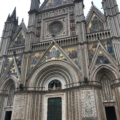
The Abbey of St. Dominic the Abbot, dedicated to the Virgin Mary, was founded in the first half of the 11th century on the ruins of the birthplace of Marcus Tullius Cicero by St. Dominic the Abbot, at the behest of the governor of Sora and Arpino, Pietro di Rainiero, and his wife Doda. Two dates have been proposed for its foundation: 1030 and 1011, the latter being more historically accepted. The abbey church was initially named after the Virgin Mary and obtained papal protection in 1205. Since its foundation, the life of the abbey was plagued by difficulties, including the imposition of a female community by the gastaldo Pietro, conflicts with local nobles and attacks such as the one perpetrated by Saracen troops in 1229.
The Abbey of St. Dominic Abbot is significant not only for its antiquity and historical connections, but also for its profound spiritual relevance. Since its founding, it has been a beacon of faith and devotion in the region, providing spiritual refuge and religious guidance throughout the centuries. Its dedication to the Virgin Mary and St. Dominic has inspired generations of monks and lay people. Its history reflects a record of endurance and renewal, with moments of flowering, such as the canonization of St. Dominic by Pope Paschal II in 1104, and periods of decline and restoration. The abbey has undergone several restorations and reconstructions, adapting and re-emerging from adversity while maintaining its role as a spiritual and cultural center. In 2011, on the occasion of its millennium, the church was elevated to the rank of minor basilica, reaffirming its importance in religious tradition and its enduring legacy in the Christian community.
- Address
Piazza S. Domenico, 76, Sora, Italy - Web
https://www.sandomenicoabate.it/sito/ - Visiting Hours
Every day from 9:00 am to 7:00 pm. - What to see
Bronze doors, crypt
AI Transparency Notice
PilgriMaps uses artificial intelligence tools to assist in the research, drafting and translation of editorial content. All AI-assisted content is reviewed, edited and verified by our editorial team before publication. We contrast information against primary sources, specialist literature and on-the-ground knowledge to ensure accuracy, cultural sensitivity and editorial integrity.
AI is one tool among many in our workflow. The judgement, curation and responsibility for everything published on this platform remain entirely human.
Viator Media S.L. — in compliance with the EU Artificial Intelligence Act (Regulation EU 2024/1689).
This post is also available in: