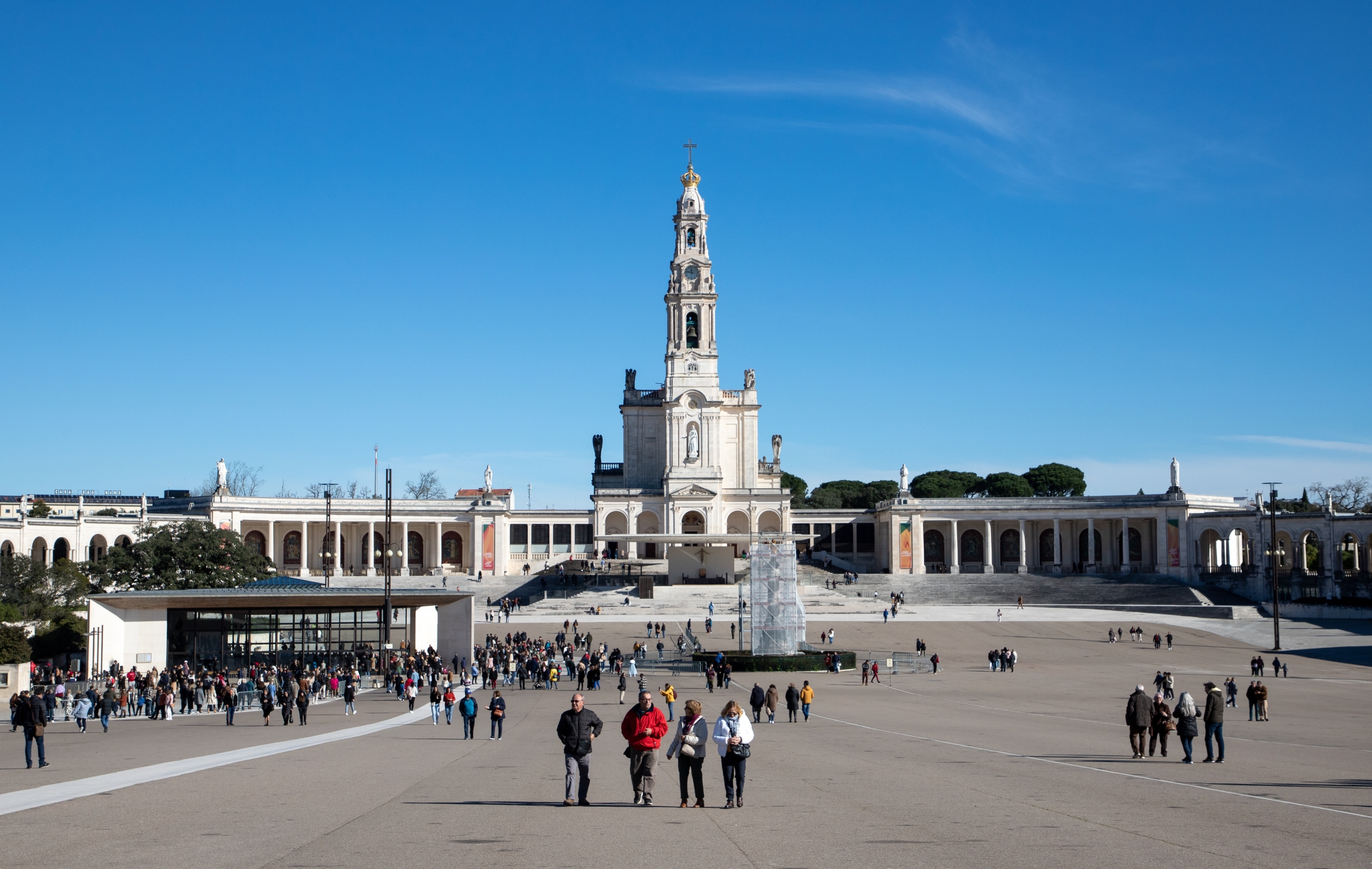
In Portugal, a country where history and spirituality are deeply intertwined, an upcoming event will explore how religious tourism is increasingly serving as a bridge for dialogue and peace among cultures. On March 6–7, 2025, Fátima – one of the world’s most-visited Marian pilgrimage sites – will host the 12th edition of the International Workshops on Religious Tourism (IWRT), bringing together experts from across the globe.
Organized by the Associação Empresarial Ourém-Fátima (ACISO) with support from Turismo de Portugal and the municipalities of Ourém and Guarda, the event will convene tourism professionals, scholars, and faith representatives from 44 countries. Discussions will focus on the role of religious tourism in fostering intercultural dialogue and mutual understanding. At a time marked by global tensions and social fragmentation, the ability of travel to facilitate meaningful encounters and reconciliation is more relevant than ever.
Religious Tourism as a space for interfaith dialogue
A highlight of the event will be the interfaith conference, Religious Tourism as a Path to Peace and Human Fraternity, scheduled for March 6 at the Paul VI Pastoral Center within the Sanctuary of Fátima. The discussion will address pressing questions: Can religious tourism become a tool for building bridges between different traditions? What role does pilgrimage play in diverse spiritual perspectives? How do sacred texts and religious practices interpret hospitality and the act of welcoming travelers?
The panel, moderated by Fabrizio Boscaglia – lecturer at Turismo de Portugal and a scholar of religious studies at Universidade Lusófona – will feature prominent figures from various faith backgrounds.
Participants include Carlos Cabecinhas, rector of the Fátima Sanctuary; Imam Abdullah Seedat from the Islamic Community of Palmela; Isaac Assor, former vice president of the Jewish Community of Lisbon; Paulo Borges, former president of the Portuguese Buddhist Union; Sandra Reis, president of the Evangelical Presbyterian Church of Portugal; and Shiv Kumar Singh, representing Portugal’s Hindu community.
Organizers emphasize that the goal is to create an open and universal space for discussion, where religious tourism is not only seen as an act of devotion but also as a means of fostering peace in an increasingly divided world.
Portugal: A Destination That Inspires and Welcomes
For the first time, Portugal will be the Official Host Destination of the IWRT, a designation previously given to countries such as Israel, Hungary, Brazil, Jordan, and Paraguay. With its rich religious and cultural heritage, Portugal is positioning itself as a key destination for spiritual travel.
Lídia Monteiro, from the Board of Turismo de Portugal, notes that religious tourism is becoming “a strategic asset for the country, strengthened by collaboration between public and private sectors and the development of authentic, engaging itineraries”. Meanwhile, Purificação Reis, president of ACISO, highlights Portugal’s longstanding tradition of hospitality, stating that “faith, heritage, and welcoming traditions come together to create a unique experience”.
A Journey That Connects, Beyond Differences
Religious tourism is more than a physical journey – it is an inner path, an experience that transcends geographic and cultural boundaries to foster genuine connections. As Benedictine monk Thomas Merton once wrote:
“If we travel toward God, we travel toward one another.”
At a time when divisions between cultures and faiths appear to be intensifying, the 12th IWRT in Fátima presents a unique opportunity to reflect on the transformative potential of travel. Beyond exploring the spiritual dimensions of tourism, the event invites participants to consider pilgrimage as a tool for reconciliation and human connection.
For more information and registration, visit www.iwrt.pt.
AI Transparency Notice
PilgriMaps uses artificial intelligence tools to assist in the research, drafting and translation of editorial content. All AI-assisted content is reviewed, edited and verified by our editorial team before publication. We contrast information against primary sources, specialist literature and on-the-ground knowledge to ensure accuracy, cultural sensitivity and editorial integrity.
AI is one tool among many in our workflow. The judgement, curation and responsibility for everything published on this platform remain entirely human.
Viator Media S.L. — in compliance with the EU Artificial Intelligence Act (Regulation EU 2024/1689).
This post is also available in: