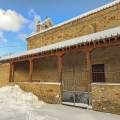
The Monastery of Santo Tomás de Ávila, founded in 1480 and built until 1493, is one of the jewels of Avila’s Gothic architecture and a symbol of the power of the Catholic Monarchs, who used it as a summer residence and burial place for their son, Prince John. Among its architectural elements are its façade, with a large segmental arch and a central rose window, and the main altarpiece by Pedro Berruguete. The convent was also the seat of the Inquisition and later a university, suffering several sackings and abandonment after the disentailment of Mendizábal in the 19th century.
This monumental complex has three cloisters: the Noviciado, in Tuscan and austere style; the Silencio, with Gothic arches and intricate decoration; and the de los Reyes, where the former royal palace is located. Today it houses the Museum of Oriental Art and the Museum of Natural Sciences, which preserve valuable collections. The monastery was declared a National Monument in 1931 and a World Heritage Site in 1985.
In the Chapel of the Holy Christ, the venerated image of the “Christ of Santa Teresa” stands out. This impressive sculpture, probably by Gil de Siloé, has a captivating expressiveness that deeply moved St. Teresa of Jesus, who came to this chapel in search of remembrance and spiritual advice. During the 500th anniversary of the Saint’s birth, the carving was restored, revealing an artistic quality that indicates the intervention of a master sculptor.
- Address
Pl. Granada, 1, Ávila - Web
https://monasteriosantotomas.com/ - Visiting Hours
Everyday from 10:30 to 21:00 - What to see
Christ of St Teresa, Museum of Oriental Art, Gothic cloisters
AI Transparency Notice
PilgriMaps uses artificial intelligence tools to assist in the research, drafting and translation of editorial content. All AI-assisted content is reviewed, edited and verified by our editorial team before publication. We contrast information against primary sources, specialist literature and on-the-ground knowledge to ensure accuracy, cultural sensitivity and editorial integrity.
AI is one tool among many in our workflow. The judgement, curation and responsibility for everything published on this platform remain entirely human.
Viator Media S.L. — in compliance with the EU Artificial Intelligence Act (Regulation EU 2024/1689).
This post is also available in: