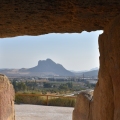
At the end of the 12th century, a pilgrim who arrived sick in Jerusalem could turn to the Hospital of Saint John and find something surprisingly close to a modern hospital: doctors, medicines, individual beds with their own linen, specific foods for patients and care through the night.
The scene compels a revision of a deeply rooted image of the Crusades and the military orders. Before the fortresses, the galleys and the armed knights, there was the hospital. And before the knight, there was the pilgrim.
The precise origins of what we know today as the Order of Malta still pose questions for archaeologists and historians. In the second half of the 11th century, a Latin community already existed in Jerusalem, close to the Holy Sepulchre, linked to a hospital intended to receive pilgrims, the poor and the sick. The Crusader conquest of the city in 1099 came after this hospital already existed.
In 1113, the bull Pie postulatio voluntatis of Pope Paschal II gave legal recognition to the Hospital of Jerusalem, confirmed its autonomy and bound its assets to the needs of pilgrims and the poor. No military mission yet appears in that document. The text of the bull and its historical context can be consulted in the Order’s public archives.
From the Hospitallers to the Order of Malta
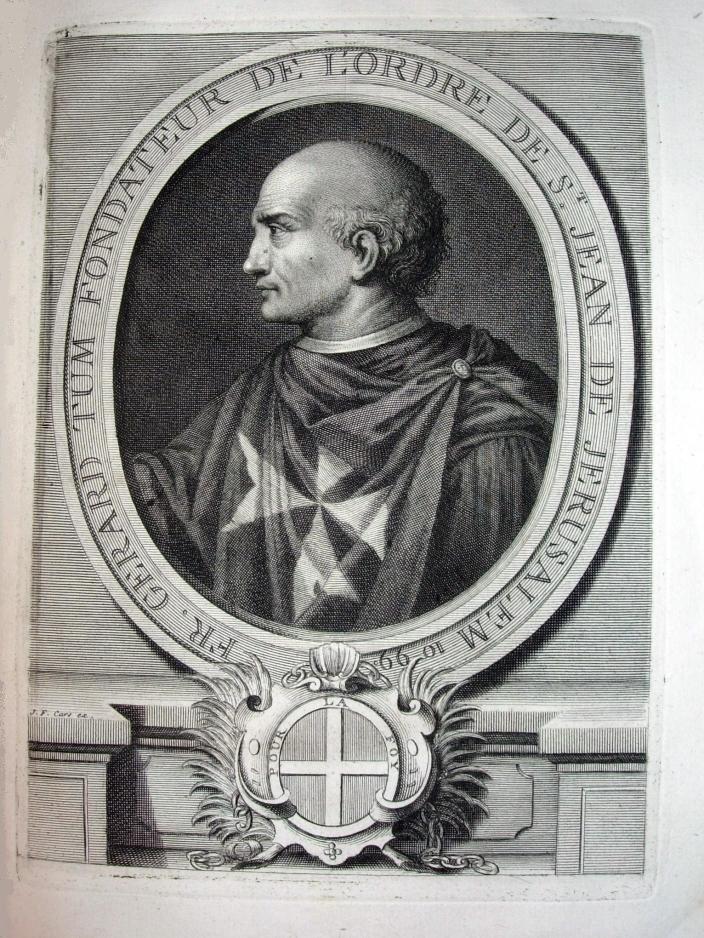
A question of names deserves clarification here. The Order of Malta was not born in Malta. The community that grew up around the Hospital of Saint John was known initially as the Order of Saint John, or the Hospitallers. Its members came to be called the Knight Hospitallers as, alongside their religious and charitable character, they gradually took on military functions.
Malta would come much later. The institution’s own geography traces its history: Jerusalem, Cyprus, Rhodes and Malta, until its final establishment in Rome in the 19th century. After settling in Rhodes in 1310, its members also became known as the Knights of Rhodes. In 1530, Charles V ceded Malta to them, and from that long period comes the name by which they are generally known today. Their official title — the Sovereign Military Hospitaller Order of Saint John of Jerusalem, of Rhodes and of Malta — preserves precisely the memory of that itinerary.
Understanding this helps to make sense of nine apparently contradictory centuries. First there was a hospital community; then it became also a military order; later it governed territories and maintained a fleet; and, after losing Malta, it returned to concentrating its energies on medical, social and humanitarian assistance. The forms changed, but the thread reappears again and again: caring for and protecting those who set out on a road and find themselves in a position of vulnerability.
When Protecting Also Meant Defending
To make a pilgrimage in the Middle Ages meant accepting considerable risks. Disease, hunger, accidents, difficulties in finding shelter and violence could all turn the journey into a dangerous experience.
During the 12th century the role of the Hospitallers therefore began to expand. To the care of the poor and the sick was gradually added the defence of establishments, territories, roads and travellers. Specialist historiography places their clear transformation into an order combining hospital and military functions around the middle of that century.
It might be summarised this way: first they protected the pilgrim on arrival; then they began also to protect the pilgrim along the way.
After the final loss of the Holy Land in 1291, that relationship with the roads did not disappear. Following a period in Cyprus, the Order settled in Rhodes. There, fortress, harbour, hospital and spaces for lodging travellers coexisted. Rhodes was not only a territory to be defended: it was also a staging post in the movements of pilgrims through the eastern Mediterranean.
Malta: When Hospitality Becomes a Healthcare System
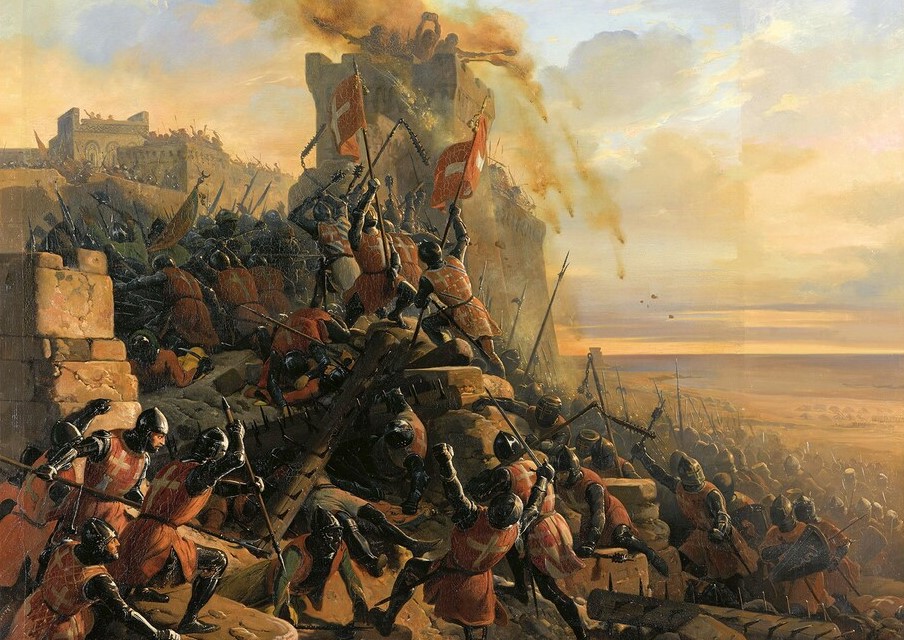
In Malta, from 1530 onwards, the political and military dimension reached its fullest expression. The Great Siege of 1565 and the fortifications of Valletta left an image so powerful — as a military force — that it frequently overshadows the other half of the story: the Hospitallers continued to build and administer medical institutions, among them the Sacra Infermeria of Valletta.
Everything changed again in 1798, when the Order lost Malta. After decades of uncertainty it established itself permanently in Rome in 1834. The territory, the fortresses and the military activity proper to a Mediterranean power all disappeared.
The Order of Malta returned its focus to medical and social assistance. And with that return came also, in new forms, a figure present from the beginning: the pilgrim.
The Camino de Santiago: Assistance Takes to the Road
Few pilgrimages allow a better understanding of this evolution than the Camino de Santiago. Here the journey matters as much as the destination. Over hundreds of kilometres, the pilgrim depends on roads, hospitals, hostels, communities and individuals who make the march possible.
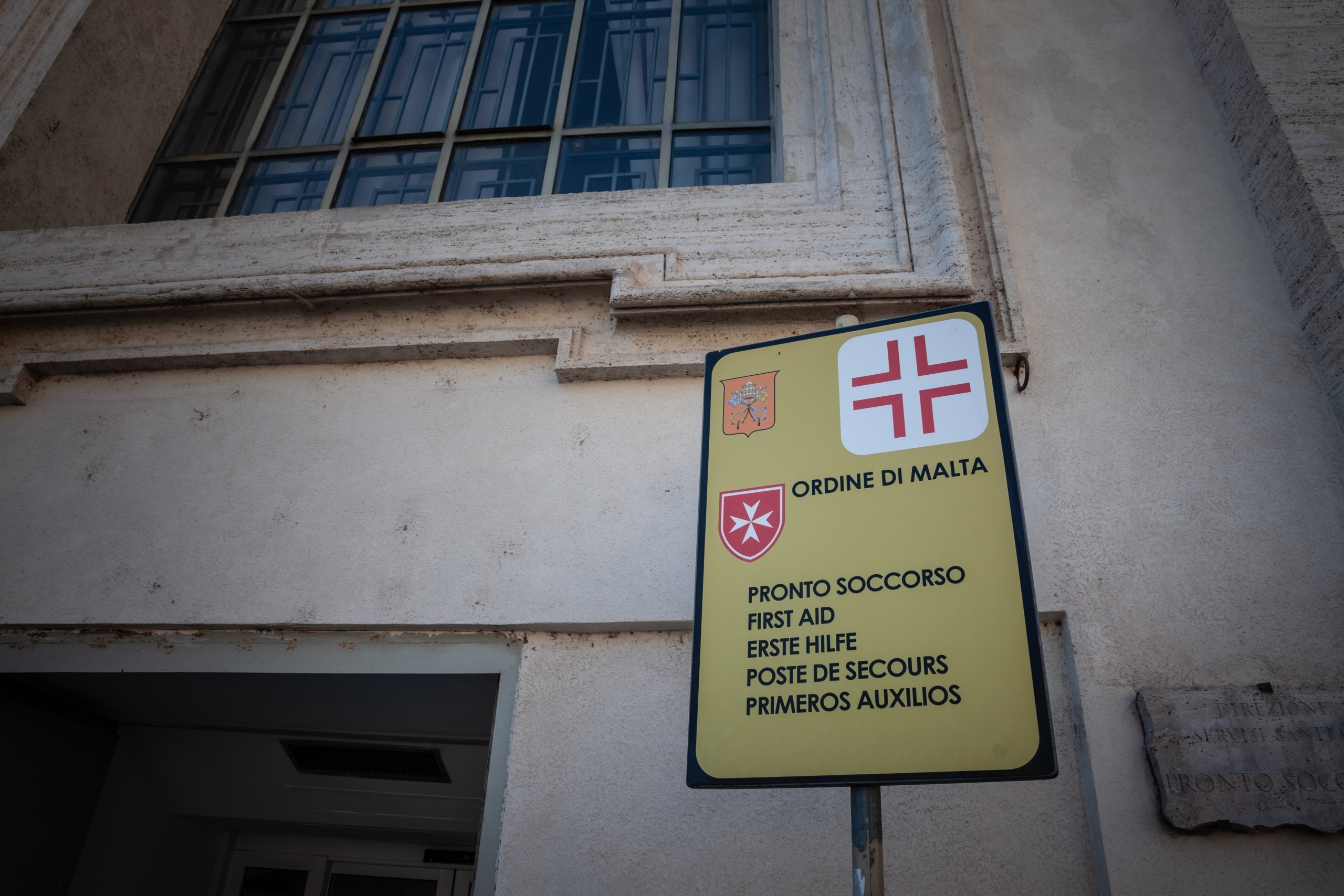
The Hospitallers had an important presence on the Iberian Peninsula during the Middle Ages, possibly from the 11th and 12th centuries onwards. The contemporary relationship with the Camino is far more concrete. According to the Order’s information on pilgrimages, its Spanish association maintains hostels in Cizur Menor, in Navarre, and Villalcázar de Sirga, in Palencia, both adapted to receive wheelchair users.
The institution also participates, through an agreement with the Archbishopric of Santiago de Compostela, in a pilgrim assistance post on the final stage of the Camino.
The comparison with Jerusalem is suggestive. There, nine centuries ago, the sick pilgrim came to the hospital. On the contemporary Camino the opposite movement also occurs: hospitality goes out to meet the walker.
Many Roads, One Hospitality
Santiago is not an exception. The Order’s activity today traces a kind of international map of pilgrimage-linked assistance.
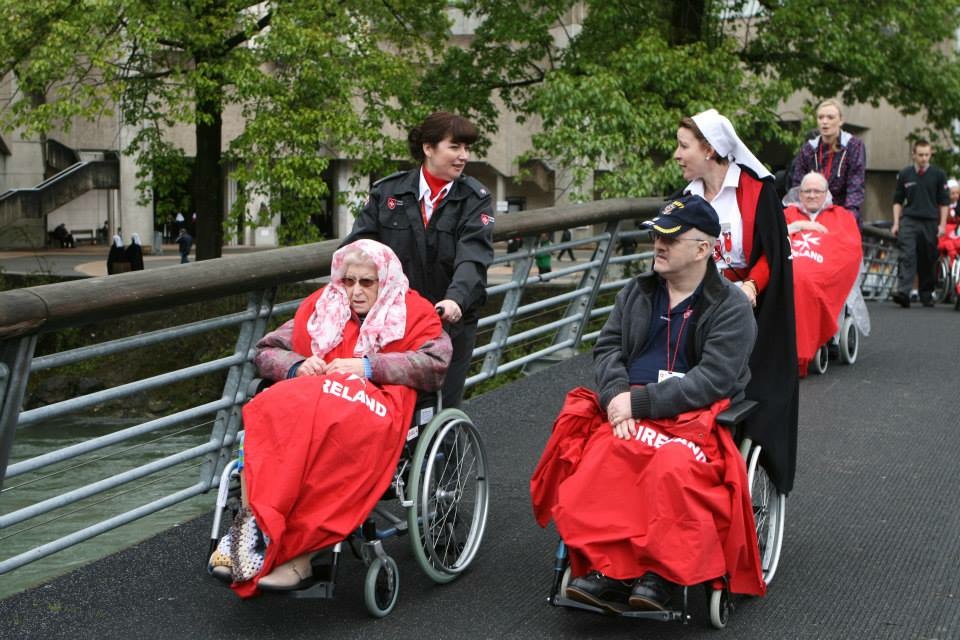
At Fátima, members and volunteers maintain first aid services at six points along an itinerary of some 130 kilometres. At Croagh Patrick in Ireland, the Order’s ambulance corps has been assisting pilgrims since 1943. At Walsingham in England, the sick have been accompanied for decades. And on the pilgrimage of the sick to Guadalupe in Mexico, adapted coaches, ambulances, medical services and specialist staff are deployed.
Lourdes represents probably the most complete contemporary expression of this model. The Order’s international pilgrimage began in 1958, but its distinctiveness does not lie simply in transporting the sick to a shrine. The entire journey is organised around their care.
The scale of the operation can be measured in figures. The 68th international pilgrimage, held from 1 to 5 May 2026, brought together some 7,500 people from 44 countries, among them around 1,300 sick and assisted persons, 450 doctors and healthcare professionals and 282 religious.
Doctors, nurses, carers, volunteers, adapted transport and logistics teams travel alongside those who need assistance. Jerusalem had a hospital that awaited the arrival of pilgrims. Lourdes seems to invert the image: the hospital sets out on the road.
From Armed Escort to Humanitarian Diplomacy
The final transformation leads, paradoxically, back to the Holy Land.
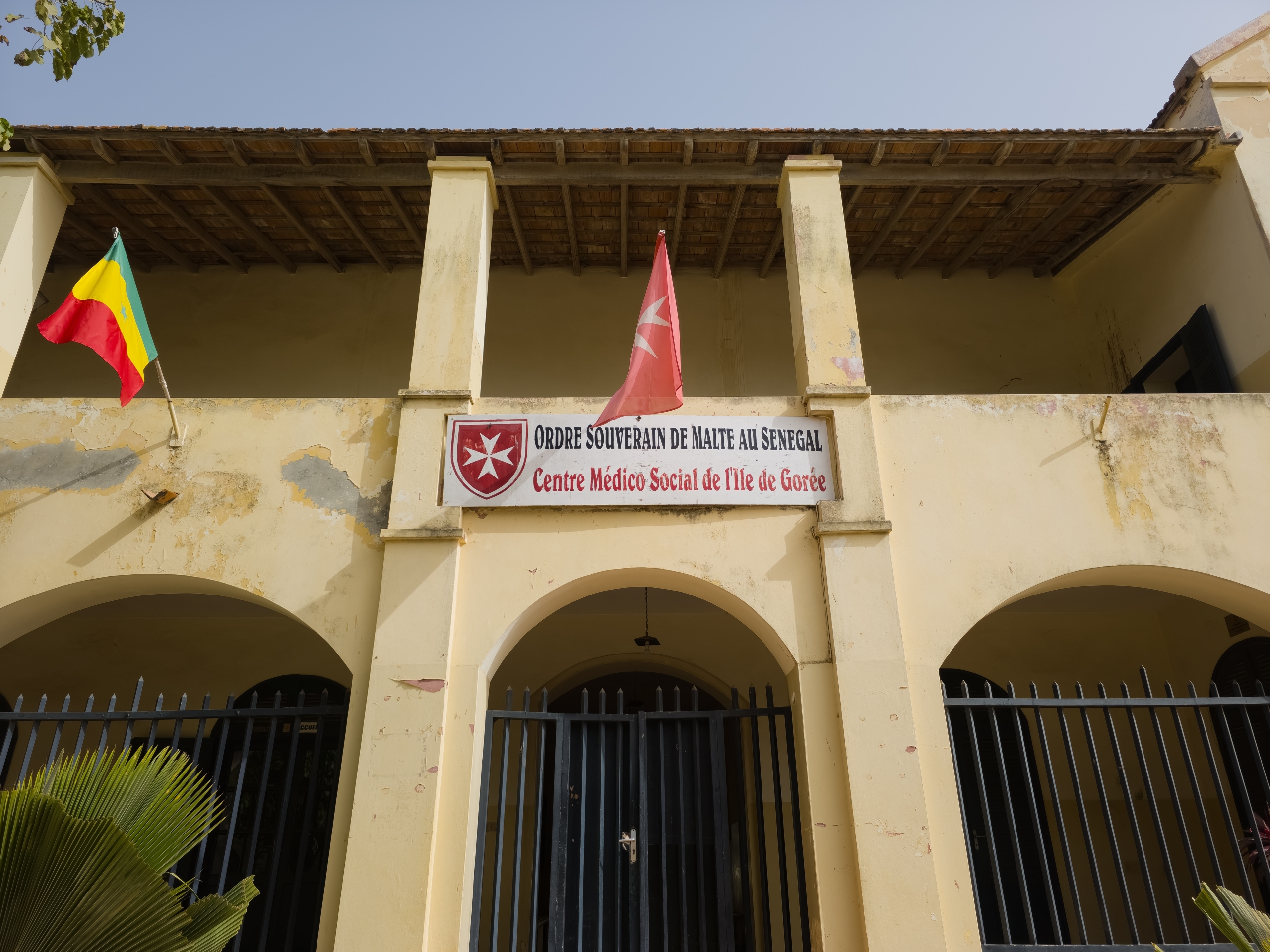
The Order today holds a singular international diplomatic position and presents that capacity as an instrument for facilitating its charitable activity. In January 2024, addressing its diplomatic representatives, Pope Francis used precisely the expression “humanitarian diplomacy” and described the Order’s embassies as channels for its religious and charitable action.
That same year, the Latin Patriarchate of Jerusalem and the Order launched a joint intervention to provide food and medical assistance in Gaza. In Bethlehem, the Holy Family Hospital has maintained important maternal, child and neonatal activity since 1990; more than 100,000 children have been born there since its reopening.
The forms have changed radically. The roads have changed too. Perhaps that is why the most interesting continuity of the Order of Malta is to be found not in its titles, its uniforms or the memory of its battles, but in an idea that connects the medieval hospital of Jerusalem with Santiago, Fátima, Croagh Patrick, Lourdes and the contemporary Holy Land: making the road possible for those who could scarcely travel it alone.
AI Transparency Notice
PilgriMaps uses artificial intelligence tools to assist in the research, drafting and translation of editorial content. All AI-assisted content is reviewed, edited and verified by our editorial team before publication. We contrast information against primary sources, specialist literature and on-the-ground knowledge to ensure accuracy, cultural sensitivity and editorial integrity.
AI is one tool among many in our workflow. The judgement, curation and responsibility for everything published on this platform remain entirely human.
Viator Media S.L. — in compliance with the EU Artificial Intelligence Act (Regulation EU 2024/1689).
This post is also available in: