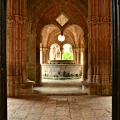
Laodicea, a prominent ancient city located in modern-day Turkey, held significant importance in early Christianity. Known today as Laodikeia, this city is one of the seven churches of Asia mentioned in the Book of Revelation. The apostle Paul referenced Laodicea in his Epistle to the Colossians, highlighting its early Christian community. Paul’s writings urged that his letter be read to the Laodicean Christians, indicating the close ties and shared concerns among the early Christian communities in the region. Additionally, the Book of Revelation addresses Laodicea as the seventh church, describing its spiritual lukewarmness and urging the church to become zealous and repentant (Revelation 3:14-22). The city’s prominent Jewish population also contributed to its early adoption of Christianity, making it a significant ecclesiastical center.
Laodicea’s wealth and prosperity, derived from its strategic location on a major trade route and its thriving black wool industry, played a crucial role in its development as a major Christian center. The city’s affluence is noted in the Bible, where it is described as wealthy but spiritually complacent. Its early Christian community included a bishopric, with several bishops known from historical records, such as Sagaris, a martyr around 166 AD, and Nunechius, who attended the Council of Nicaea in 325 AD. The Council of Laodicea, whose canons have influenced Christian liturgy and discipline, further underscores the city’s religious significance. Despite being destroyed and rebuilt multiple times due to earthquakes, Laodicea’s contributions to early Christianity and its mention in biblical texts underscore its historical and religious importance in the development of the Christian faith.
- Address
Goncalı, Laodikeia, 20180 Pamukkale/Denizli, Turkey - Web
None - Visiting Hours
Everyday from 8:00 to 18:00 - What to see
Ruins of Ancient Laodicea
AI Transparency Notice
PilgriMaps uses artificial intelligence tools to assist in the research, drafting and translation of editorial content. All AI-assisted content is reviewed, edited and verified by our editorial team before publication. We contrast information against primary sources, specialist literature and on-the-ground knowledge to ensure accuracy, cultural sensitivity and editorial integrity.
AI is one tool among many in our workflow. The judgement, curation and responsibility for everything published on this platform remain entirely human.
Viator Media S.L. — in compliance with the EU Artificial Intelligence Act (Regulation EU 2024/1689).
This post is also available in: