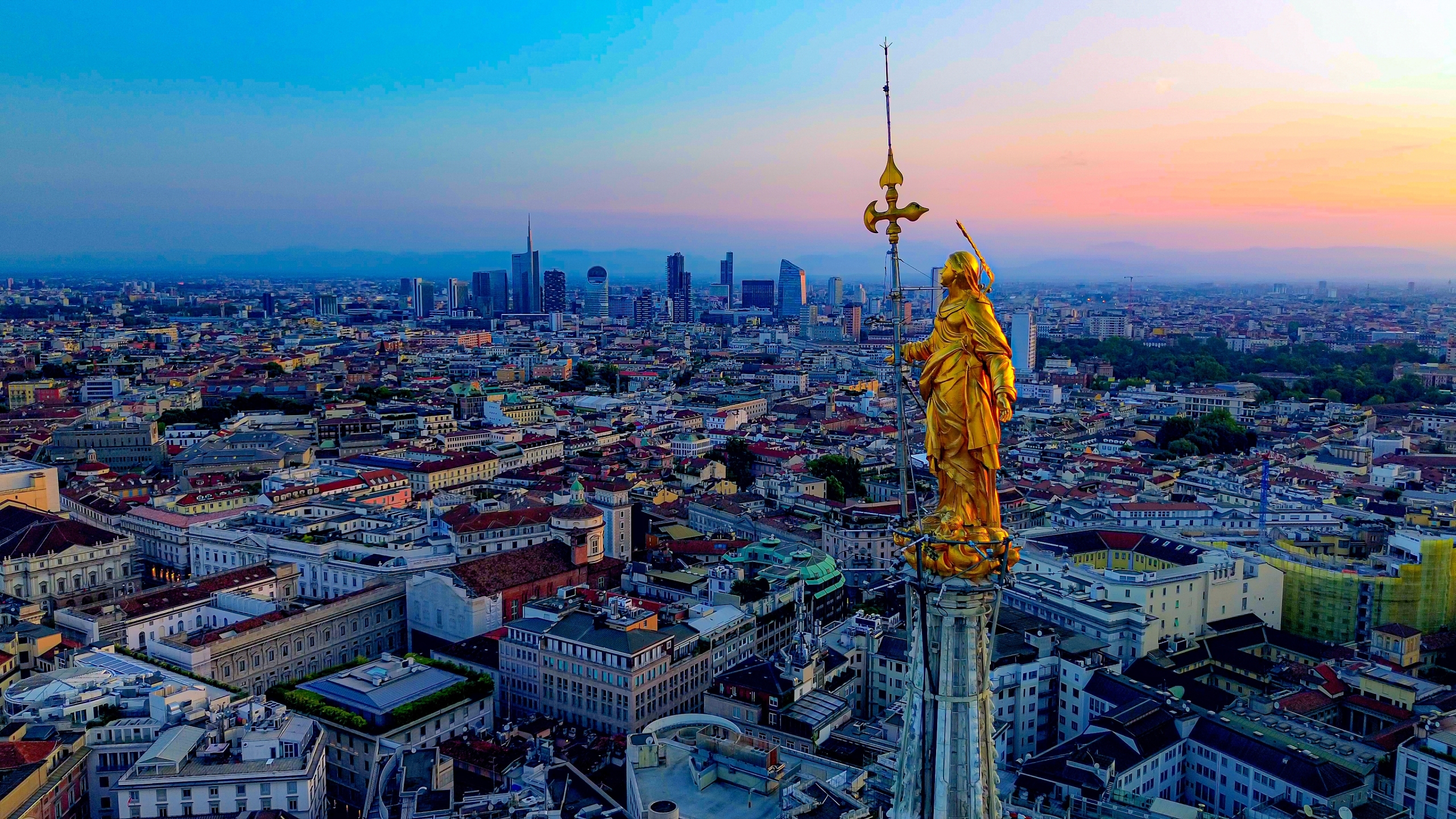
In Milan, institutions, operators and the world of religious hospitality came together to discuss faith tourism as a resource for the country. Silvia Costantini, founder of PilgriMaps and Viator Media, proposed a systemic vision for Italy’s dispersed heritage
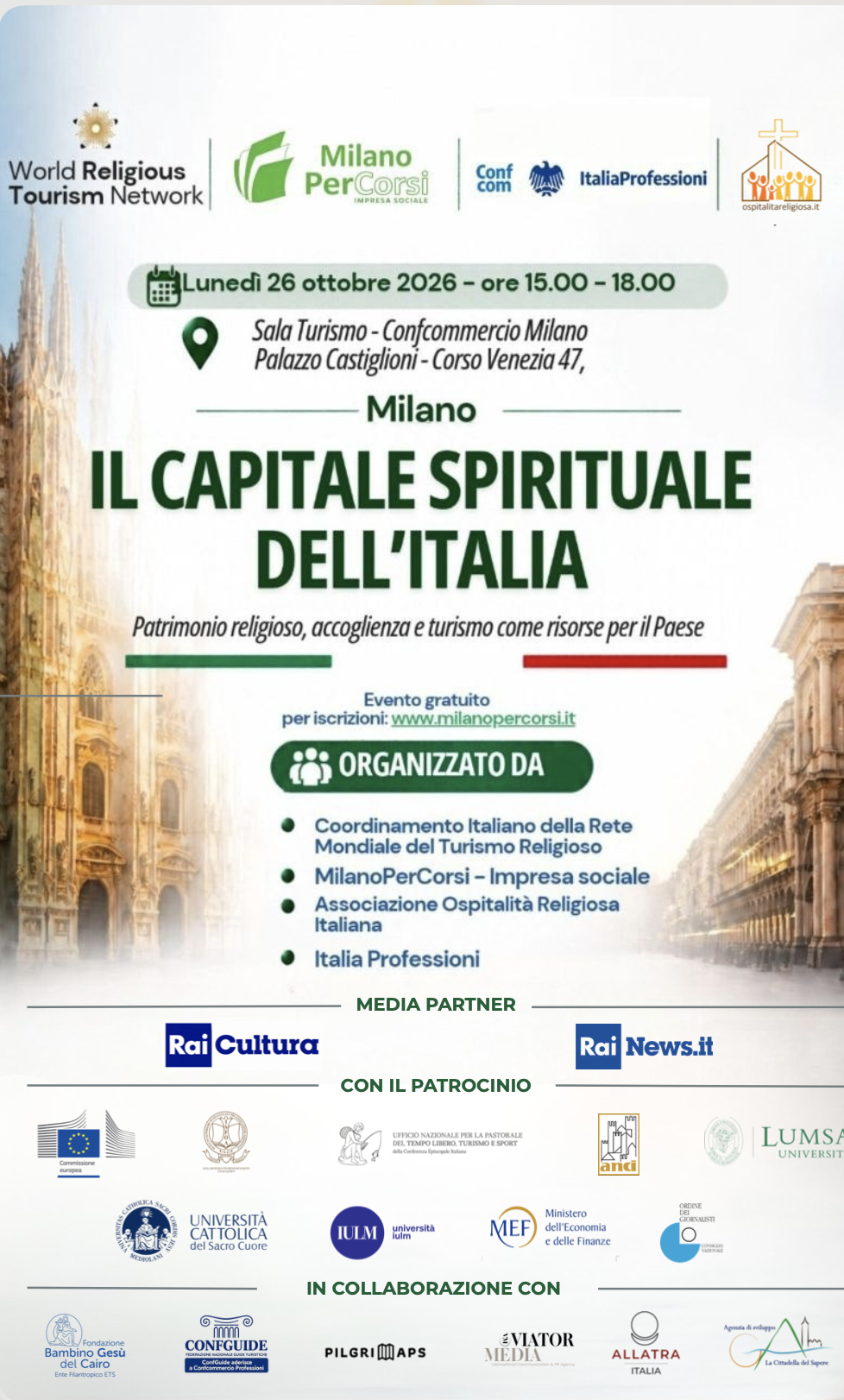
On Corso Venezia in Milan, the Liberty-style decorations of Palazzo Castiglioni welcome entrepreneurs and trade associations every day. On Monday 26 October, in the Tourism Hall of Confcommercio Milano, the discussion turned to abbeys, monasteries, sanctuaries and pilgrimage routes. The conference “Italy’s Spiritual Capital: Religious Heritage, Hospitality and Tourism as Resources for the Country,” promoted by the Italian Coordination of the World Religious Tourism Network together with MilanoPerCorsi Impresa Sociale, the Italian Religious Hospitality Association and Italia Professioni, brought together for an afternoon institutions, universities, religious guest houses, tour guides and media around one underlying question: what is Italy’s spiritual heritage worth, and how much of that value can actually be seen?
A Growing Global Demand
The figures describe a mature segment. Estimates from the World Religious Tourism Network point to more than 300 million pilgrims and travellers a year and an economic impact exceeding €18 billion. In Italy, the 2025 Jubilee brought over 5.5 million pilgrims to Rome in the first five months, with measurable effects beyond Lazio: Umbria recorded an 8% rise in visitors in the first quarter, and Assisi 218,000. On the walking routes the trend is the same: the European Association of the Vie Francigene issued fifty thousand credentials in 2024 and anticipated significant growth for the Jubilee year.
Within these figures lies a question of distribution. The flows concentrate on the major centres, while a substantial part of Italy’s religious heritage remains little known to travellers.
The Heritage That Asks to Be Seen
This was Silvia Costantini’s starting point. “Beyond the great centres, how much do we really know about the extraordinary network of abbeys, monasteries, sanctuaries, routes, traditions and communities that runs across the whole country?” she asked the room, bringing to the debate the perspective of strategic communication and the building of international projects.
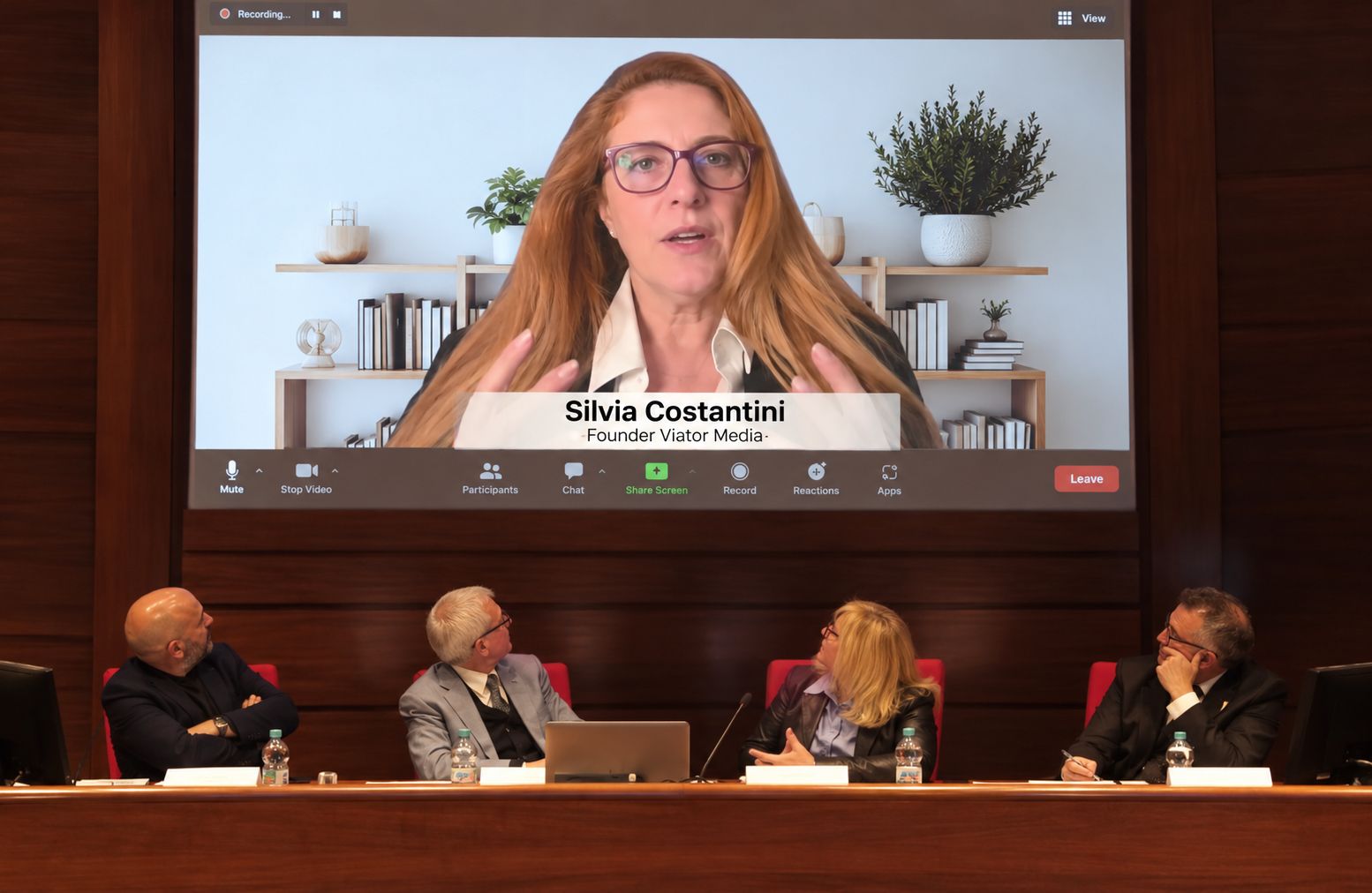
In her reading, Italy’s spiritual capital has two dimensions. One is material: places of worship, works of art, archives, historic itineraries. The other is intangible: memories, traditions, values, social relationships, practices of hospitality. Together they have shaped the landscape and the identity of communities, and they continue to be a cultural, social and economic resource. A sanctuary, she observed, belongs to a wider story: that of the communities that have kept it, the landscape surrounding it, the traditions born around it and the people who continue to reach it. The task of communication is to make these connections legible.
Two Levels, a Single Narrative Architecture
Costantini’s proposal works on two planes at once. The first is local: each territory tells its own identity and its own specificity, because authenticity remains the foundation of a place’s cultural value. The second is systemic: local identities enter into relationship and compose a recognisable representation of Italy’s spiritual capital as a whole.
In practice, an abbey can be told through the network of places and communities to which it belongs; an itinerary can connect territories that share a religious history; a lesser-known sanctuary can gain visibility through the system it forms part of. The tools identified are concrete: editorial networks, thematic itineraries, multilingual content, digital platforms shared between institutions, religious communities, territories and operators.
“Between the value a heritage possesses and the capacity to make it recognisable there is a strategic space,” she explained. “The overall reputation of Italy’s spiritual heritage adds value to individual destinations and, at the same time, the richness of local identities strengthens the country’s international positioning.”
Memory as the Organ of the Future
To close, Costantini chose the words Pope Francis addressed on 24 June 2024 to the members of the Circolo San Pietro: “Memory is the organ of the future, provided the roots remain alive and healthy.” In that address the Pope urged against turning one’s history into a museum, and called for the patrimony of values to be passed on to new generations.
Applied to religious tourism, the image points to a precise responsibility: to safeguard the places of faith by keeping them inhabited by their communities, to make them known, to connect them to one another. It is the direction in which this magazine also works, telling the story of pilgrimage routes and places of the spirit as parts of a single map. Italy’s spiritual capital is distributed across thousands of territories; the challenge of the coming years will be to make it appear, in the eyes of those who travel, for what it is: a network.
AI Transparency Notice
PilgriMaps uses artificial intelligence tools to assist in the research, drafting and translation of editorial content. All AI-assisted content is reviewed, edited and verified by our editorial team before publication. We contrast information against primary sources, specialist literature and on-the-ground knowledge to ensure accuracy, cultural sensitivity and editorial integrity.
AI is one tool among many in our workflow. The judgement, curation and responsibility for everything published on this platform remain entirely human.
Viator Media S.L. — in compliance with the EU Artificial Intelligence Act (Regulation EU 2024/1689).