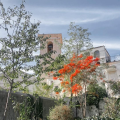
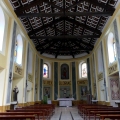
The church of San Juan Bautista de Cortes, with its majestic Gothic Renaissance bell tower, is a historical testimony of the region. Built in the 16th century, the church has witnessed important events over the centuries. In 1333, the marriage between Doña Juana, heir to the kingdom of Navarre, and Pedro IV the Ceremonious, heir to the kingdom of Aragon, was celebrated in its interior. In addition to its importance as a place of historical events, the church stands out for its Gothic-Renaissance structure and its impressive main altarpiece, which houses paintings depicting religious scenes.
The art and architecture of the church of San Juan Bautista reflect the rich history and culture of Cortes. From the carving of the Holy Christ commissioned from Juan de Biniés in the 17th century to the Flemish Virgin donated by Queen Doña Blanca of Navarra in 1433, each work of art within the church tells a unique story. In addition, the paintings and canvases that adorn its walls offer a fascinating insight into the religiosity and devotion of the community over the centuries. The church of San Juan Bautista de Cortes is, therefore, much more than a place of worship; it is a living monument to the history and faith of the region.
- Address
Pl. Iglesia 17, Cortes, Navarra - Web
None - Visiting Hours
Unknown - What to see
Historical church
AI Transparency Notice
PilgriMaps uses artificial intelligence tools to assist in the research, drafting and translation of editorial content. All AI-assisted content is reviewed, edited and verified by our editorial team before publication. We contrast information against primary sources, specialist literature and on-the-ground knowledge to ensure accuracy, cultural sensitivity and editorial integrity.
AI is one tool among many in our workflow. The judgement, curation and responsibility for everything published on this platform remain entirely human.
Viator Media S.L. — in compliance with the EU Artificial Intelligence Act (Regulation EU 2024/1689).
This post is also available in: