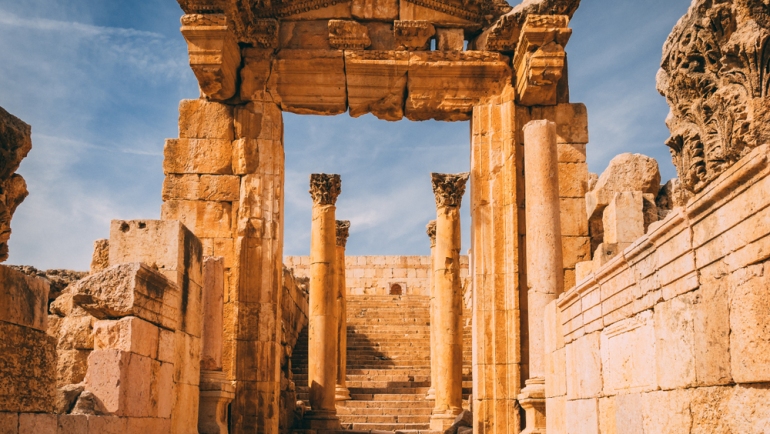
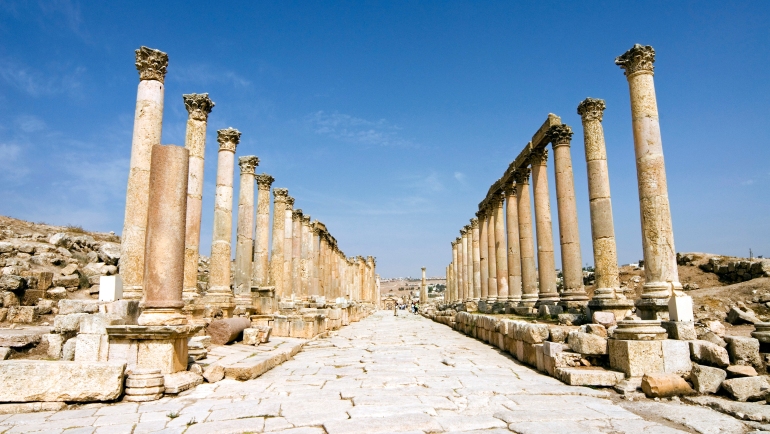
Jerash, ancient Gerasa of the Decapolis, reveals the Greco-Roman history of Jordan and its debated connection with Gospel narratives along the Jordan Trail
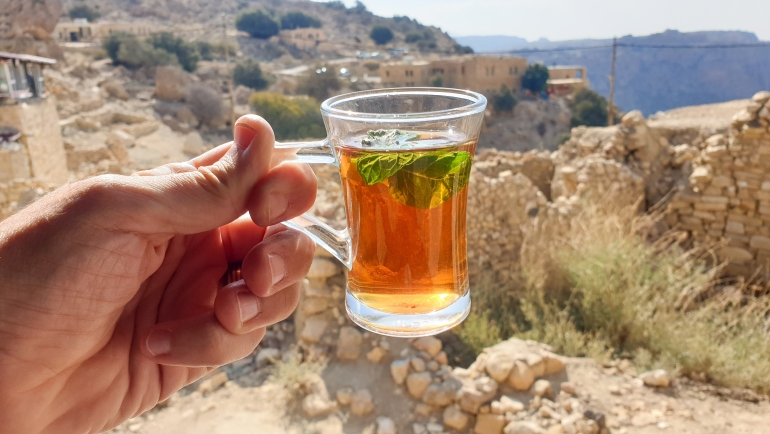
Delicious, refreshing and traditional mint tea in an arid and mountainous landscape of the Arabian desert of JordanTravelanza Media - Shutterstock
Discover the cultural meaning of tea in Jordan: Bedouin hospitality, ancient trade routes, and the ritual of sage tea that connects desert landscapes and shared encounters
Funerary portrait from Fayum (Egypt) traditionally attributed to EgeriaPublic Domain
Egeria, a 4th-century traveler from Hispania, crossed the Roman Empire to Jerusalem and Sinai, leaving the earliest surviving diary of Christian pilgrimage
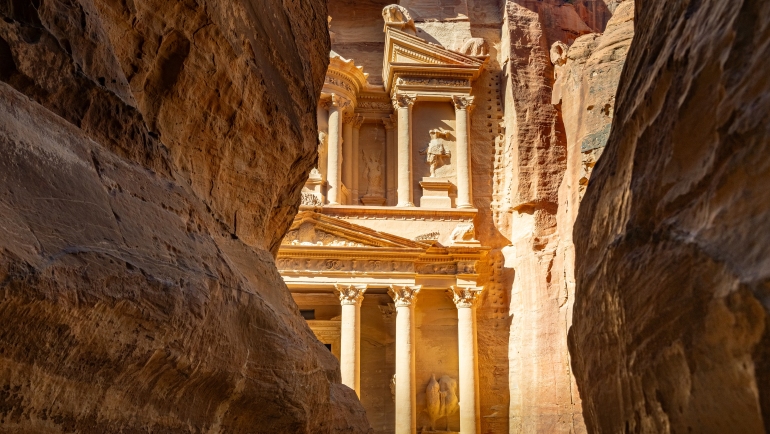
Treasury building in the ancient Nabatean city of Petra seen through the gorge (siq), JordanXseon - Shutterstock
How to visit Petra today: history, context and practical tips to explore the ancient Nabataean capital beyond the Treasury, with time, depth and historical perspective.
More than Jordan’s national dish, mansaf is a social language. This article explores its Bedouin origins, shared rituals, and role in community, identity, and cultural belonging
Could the Magi have come from Petra? This article explores the Nabataean hypothesis through biblical texts, archaeology, incense trade networks, and ancient routes of the Near East
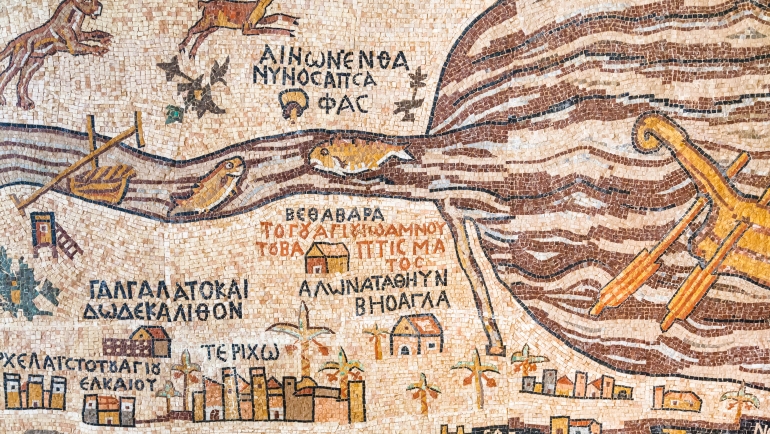
Dead Sea and Jordan River. Modern replica of historical Madaba map in Jordanvvoe - Shutterstock
Five early travelers who crossed the Jordan —from the Pilgrim of Bordeaux to Arculf— left the first records of Christian pilgrimage. Their journeys reveal how Jordan became the eastern heart…