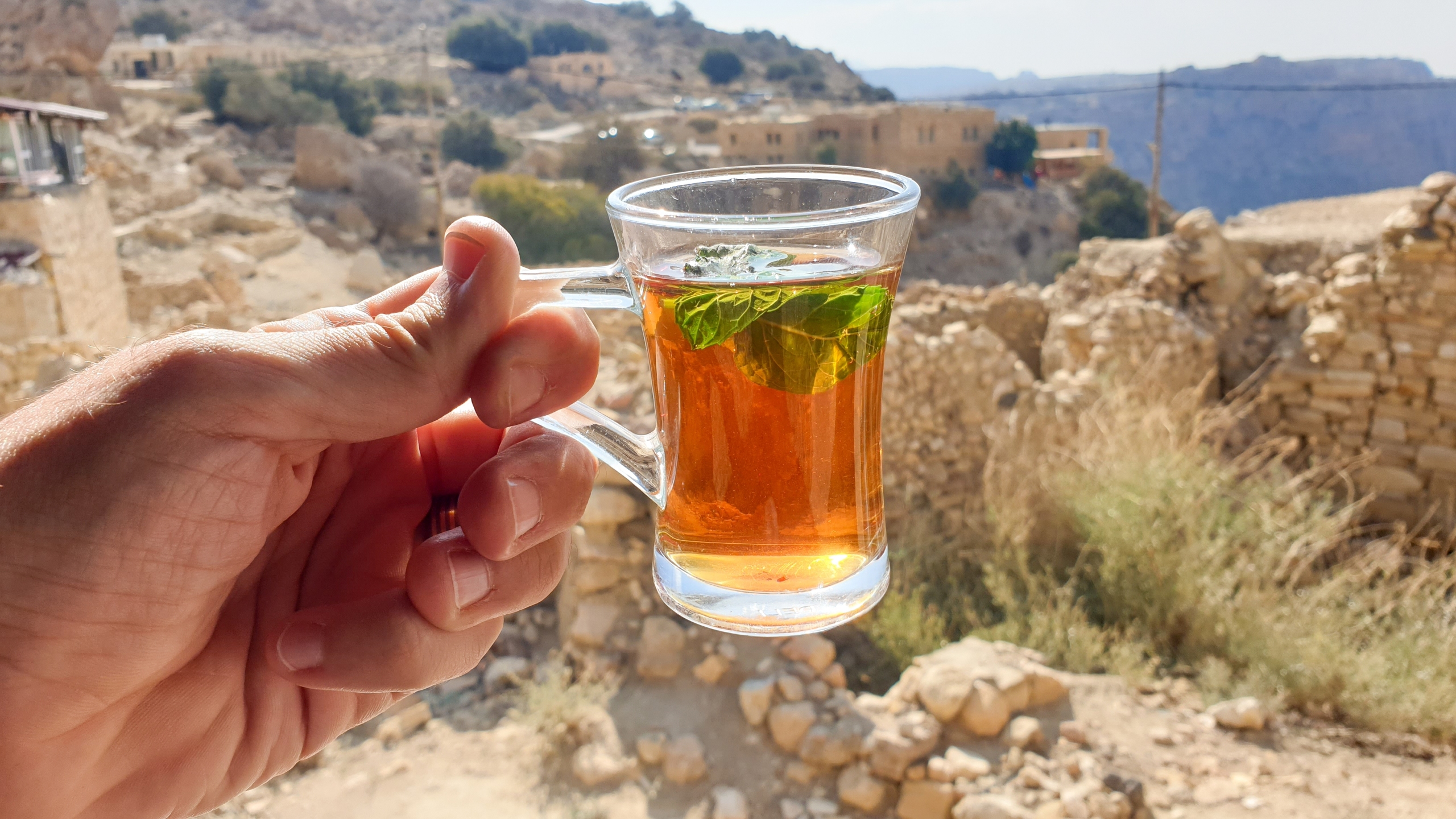
The sun begins to sink behind the reddish mountains of the desert, and silence slowly settles over the sand. Inside a small Bedouin tent, someone places a blackened kettle over the fire. Water starts to boil, the aroma of tea leaves mingles with the scent of sage, and soon small glass cups pass from hand to hand. No one is in a hurry. No one asks how long the visit will last. In Jordan, accepting a cup of tea means accepting something more than a drink: it means accepting hospitality.
In places such as Wadi Rum, the ritual of tea remains one of the simplest—and most meaningful—forms of human encounter. For the traveler, the moment may seem ordinary; within Jordanian culture, however, it forms part of a longstanding social tradition.
Tea in this Levantine country is not merely a warm drink that accompanies daily life. It functions as a cultural gesture, a sign of welcome, and a form of social connection rooted both in the global history of trade and in the traditions of the desert.
A beverage from the other side of the world
Curiously, tea does not grow in Jordan, nor in most Arab countries. The tea plant—Camellia sinensis—originates in East Asia, particularly in China and parts of Southeast Asia, where for centuries it served as a daily beverage, a medicinal preparation, and at times even a form of currency in certain trade systems.
How, then, did tea become so popular in the Middle East?
The answer lies in the commercial routes that connected Asia with the Mediterranean for centuries. Through networks often described collectively as the Spice Routes—a complex web of land and maritime paths—products such as tea circulated among empires, ports, and caravans.
The Ottoman Empire played a significant role in this diffusion. During the reign of Sultan Suleiman I in the 16th century, tea consumption gradually expanded across regions of the Levant and Anatolia. Over time, this Asian beverage was adopted by local cultures, which adapted it according to their own tastes and traditions.
Today the Arab world ranks among the largest consumers of tea globally. In countries such as Jordan, the drink has become deeply integrated into everyday life.
Tea and coffee: the language of hospitality
Understanding the significance of tea in Jordan requires first considering the central role of hospitality within desert cultures.
For centuries, Bedouin tribes lived in regions where water and resources were scarce. In such environments, hospitality functioned not merely as a social virtue but as a practical norm of survival. Offering food or drink to a traveler represented a deeply rooted moral obligation.
That tradition continues today. When a visitor arrives at a Jordanian home—whether in a small village or a large city—the host typically offers coffee or tea almost immediately. Declining the drink may be interpreted as discourteous, because accepting it acknowledges the gesture of welcome.
Arabic coffee carries its own ritual significance, especially among Bedouin communities. Traditionally three cups are served: the first demonstrates the quality of the drink, the second honors the principal guest or eldest person present, and the third symbolizes shared hospitality.
Tea fulfills a comparable role. It appears more frequently in everyday contexts than ceremonial coffee, yet it remains an important medium for conversation, rest, and social interaction.
In Jordan, a cup of tea often marks the beginning of a conversation that may last minutes—or hours.
How Jordanian tea is prepared
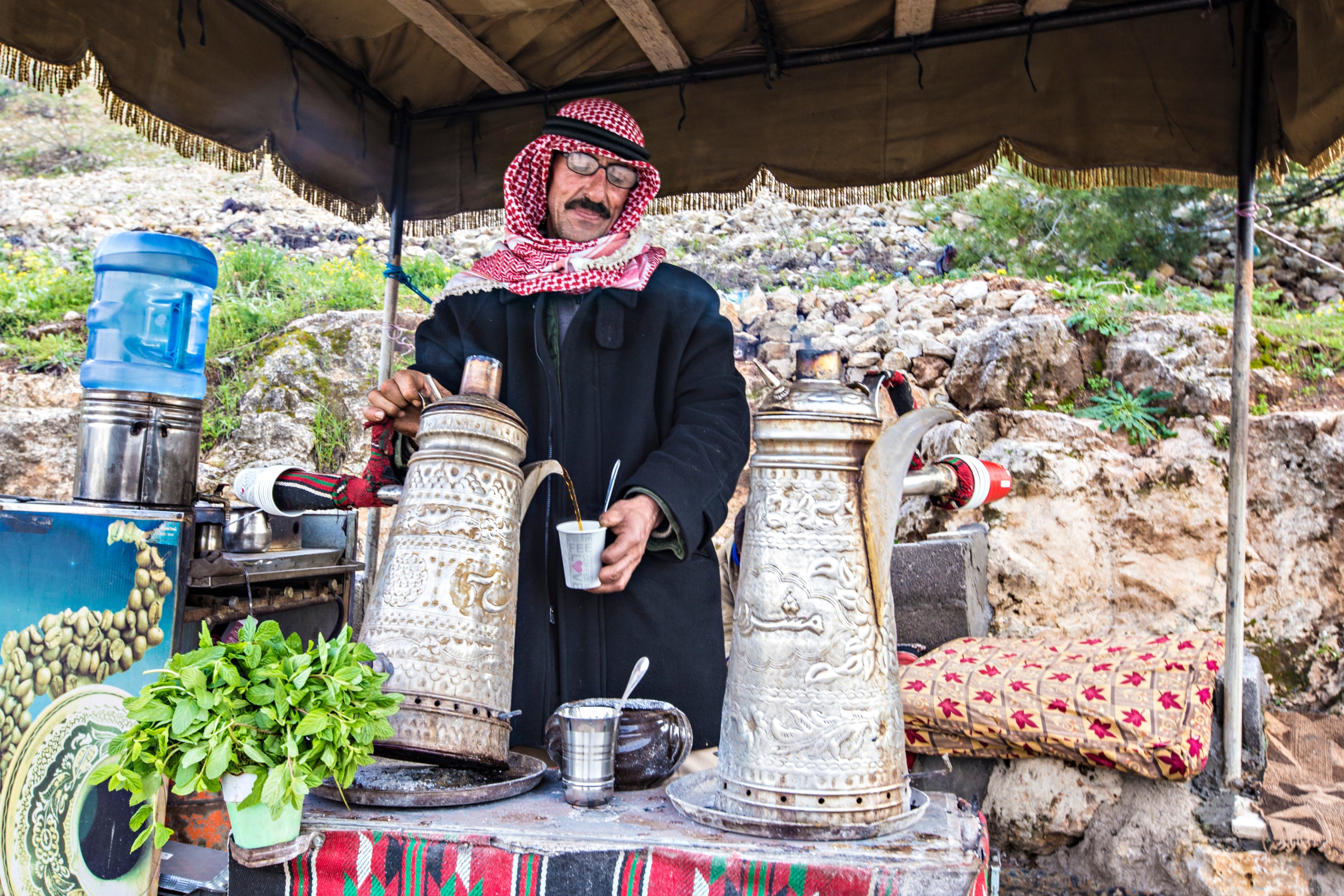
Jordanian tea follows a preparation that is simple yet culturally distinctive. In a kettle, water is boiled with sugar and black tea leaves. The mixture is left to simmer slowly until it develops a characteristic deep amber color. This process intensifies the flavor and produces a lightly sweet taste widely appreciated in the region.
Before serving, aromatic herbs are often added to bring freshness to the drink. The most common additions include fresh mint, desert thyme, and sage.
Tea is usually served in small glass cups, often placed in delicate metal holders. This apparently modest detail reflects the symbolic importance of the act of serving. Each cup is offered carefully, as a gesture of respect toward the person receiving it.
Meramiah: tea with sage
Among the many variations of Jordanian tea, one of the most distinctive is sage tea, locally known as meramiah.
Sage holds an important place in the culinary and medicinal traditions of the Mediterranean and the Levant. In tea it contributes an earthy, slightly bitter aroma that balances the sweetness of the drink.
Beyond its flavor, sage has long been associated with digestive and calming properties. For this reason, meramiah often appears after meals or during long evening conversations.
In the desert, preparing sage tea forms part of a scene that many travelers experience almost as a ritual. Visitors to places such as Wadi Rum frequently encounter this moment beside a small fire while the night sky gradually fills with stars.
For many travelers, the intense and aromatic taste of meramiah becomes closely associated with the memory of the desert itself.
From desert to city
Although these customs originate in Bedouin culture, the tea ritual is not limited to the desert. Today it also forms part of urban life.
In cities such as Amman, cafés and tea houses continue to sustain this tradition. On terraces, in markets, and in small family-run establishments, tea remains the drink that accompanies daily conversation.
Friends, merchants, students, and travelers gather to share a pause within the rhythm of the city. The setting differs from that of the desert, yet the gesture remains the same: offering a cup as a sign of welcome.
A drink that tells a story
At first glance, tea is simply a hot beverage prepared from water and dried leaves. In Jordan, however, each glass carries a broader story.
It recalls trade routes that once connected continents. It reflects the experience of nomadic communities that learned to live in demanding landscapes and transformed hospitality into a guiding social principle. And it continues today as a simple way for people to meet and share time.
For travelers, accepting a cup of tea in Jordan means participating—however briefly—in that story.
Sometimes a small glass cup, the aroma of sage, and the quiet of the desert are enough to reveal how certain traditions—such as sharing tea—create enduring connections between places, cultures, and travelers.
AI Transparency Notice
PilgriMaps uses artificial intelligence tools to assist in the research, drafting and translation of editorial content. All AI-assisted content is reviewed, edited and verified by our editorial team before publication. We contrast information against primary sources, specialist literature and on-the-ground knowledge to ensure accuracy, cultural sensitivity and editorial integrity.
AI is one tool among many in our workflow. The judgement, curation and responsibility for everything published on this platform remain entirely human.
Viator Media S.L. — in compliance with the EU Artificial Intelligence Act (Regulation EU 2024/1689).
This post is also available in: