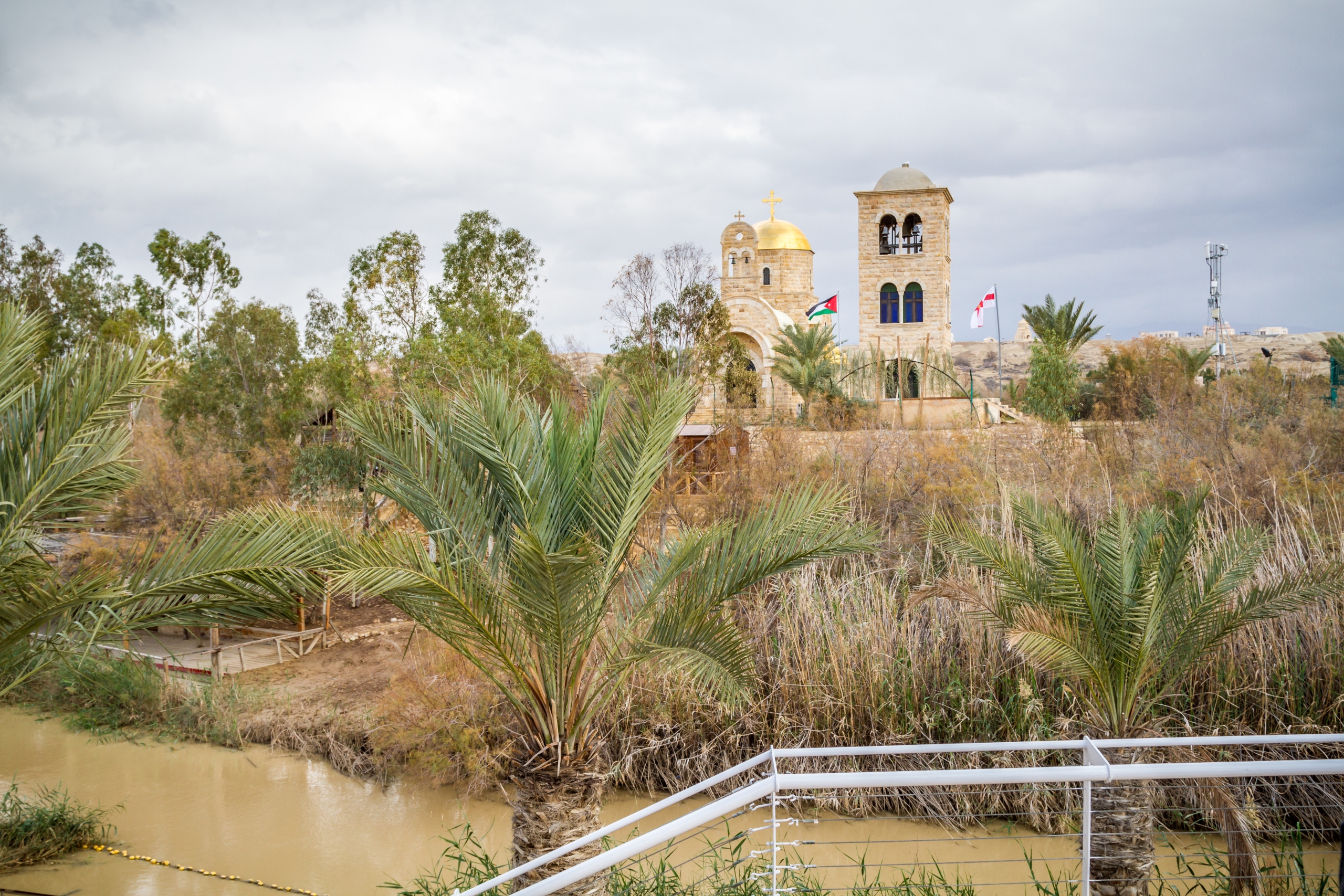
At dawn, the Jordan River lies still — a silver ribbon through the valley mist, while the hills of Madaba rise like golden islands. Beneath the surface of its calm waters flow seventeen centuries of stories. Long before maps and guidebooks, before basilicas marked the routes, there were travelers who crossed the Jordan with the same mixture of awe and hesitation that, according to tradition, Moses felt when gazing at the Promised Land from Mount Nebo.
Some wrote; others did not. Yet all left traces — faint but enduring — in the sands of the desert. From their journeys emerged a vision of Jordan as a spiritual geography: a mosaic of mountains, springs, baths, and valleys where history and landscape became inseparable.
The First Witness: The Pilgrim of Bordeaux (333 CE)
An unnamed traveler — perhaps a Roman official or retired soldier — left Bordeaux shortly after Emperor Constantine legalized Christianity. He reached Jerusalem in 333 CE and recorded his route in the Itinerarium Burdigalense. His tone was pragmatic: miles, roads, stations. Faith rendered as geography.
Yet within his concise notes lies a revelation:
“There is a church built by order of the Emperor at the place where the Lord was baptized.
This single line marks the earliest written reference to the Baptism Site on the eastern bank of the Jordan — today known as Al-Maghtas. He also mentions the memory of the prophet Elijah “beyond the river,” then part of the Roman province of Arabia. With him begins the story of pilgrims who crossed to the other side.
Egeria: The woman who watched dawn from Mount Nebo (381–384 CE)
Half a century later, a traveler from the Iberian Peninsula — Egeria, likely from Gallaecia — followed similar paths. Her Itinerarium Egeriae, letters addressed to her monastic community, recounts a journey from Sinai through the Jordan Valley.
Upon reaching Mount Nebo, she wrote:
“We came to the summit, where there is now a small but beautiful church. There we read the passage where the Lord showed the land to Moses.”
Identified today as Jabal Nībū, near Madaba, the site remains crowned by a Byzantine basilica overlooking the entire valley. Egeria continued beyond Jerusalem to Gilead and Wadi Musa — the valley where tradition places the water springing from the rock.
Her voice combines curiosity, tenderness, and wit. She sometimes mocks dubious relics but always respects local devotion. Through her narrative, Transjordan emerges as a living landscape of hermitages, monasteries, and hospitality — a humanized desert where geography becomes memory.
Theodosius: The monk who mapped the sacred (c. 520 CE)
A century later, the monk Theodosius compiled De situ terrae sanctae, a monastic guide cataloguing shrines, relics, and distances. His text, austere in tone, lists Bethabara, the Baptism site, and the thermal baths of Callirrhoe (modern Zarqa Ma‘in), where Herod the Great once sought relief.
Though sparse, his notes inspired the artisans of the Madaba Map, the sixth-century mosaic that depicted the Holy Land in stone tesserae. Theodosius stands as its invisible cartographer — transforming the routes of pilgrims into a geography of memory set in mosaic and lime.
The anonymous pilgrim of Piacenza: Among monks and nomads (c. 570 CE)
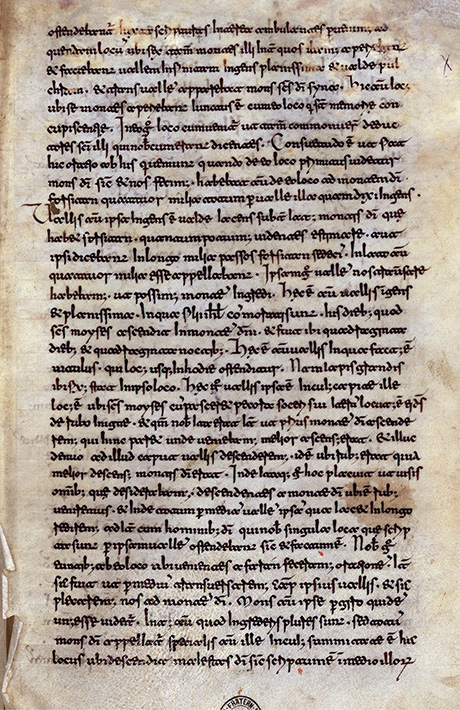
By the late sixth century, the Holy Land had become a crossroads of peoples. The Itinerarium Antonini Placentini, by an unnamed traveler from Piacenza, portrays this plural world. He visits the “Baths of Moses” in the Callirrhoe Valley, where hot springs still run between cliffs and palms.
Here he observes monks in prayer, the sick seeking healing, and Arab merchants — the earliest known account of coexistence between Byzantine Christians and pre-Islamic Arab tribes, whom he calls Saraceni. He describes pilgrims filling small flasks with Jordan water — the clay ampullae that would become the first souvenirs of sacred travel, now displayed in museums from Jerusalem to Cologne.
With this account, Transjordan ceases to be a biblical margin; it becomes a frontier of exchange, where desert faith met caravan routes.
Arculf: A monk in the age of Islam (c. 680 CE)
The final early witness, Arculf, a Frankish monk, traveled through the Holy Land shortly after the rise of Islam. Shipwrecked on his return, his story survived through Adomnán of Iona, who transcribed it in De locis sanctis.
Arculf’s approach is almost scientific: he measures the Jordan’s width, notes its current, and describes the Dead Sea — “where nothing lives, but everything floats.” He records the persistence of monastic life along the river despite political change. In his calm voice, the continuity of ritual and observation replaces triumphal tone with quiet endurance.
The mosaic of travelers
Between the Pilgrim of Bordeaux and Arculf stretches an arc of more than three centuries. Across that span, the landscape of belief evolved — from imperial roads to Byzantine monasteries, from Roman geography to early Islamic frontiers.
Through five distinct travelers — the anonymous Roman, the Galician woman, the monastic geographer, the Lombard wanderer, and the shipwrecked Frank — Jordan became the eastern half of the Holy Land’s story, the side from which one looks toward Jerusalem and the desert beyond.
At sunset in Al-Maghtas, their silhouettes seem to return: the scribe from Bordeaux with his wax tablet, Egeria writing letters to her sisters, Theodosius tracing routes, the pilgrim of Piacenza filling his clay ampulla, and Arculf sketching the Jordan’s flow. Their dispersed footsteps still draw one enduring word in the sand: to cross.
AI Transparency Notice
PilgriMaps uses artificial intelligence tools to assist in the research, drafting and translation of editorial content. All AI-assisted content is reviewed, edited and verified by our editorial team before publication. We contrast information against primary sources, specialist literature and on-the-ground knowledge to ensure accuracy, cultural sensitivity and editorial integrity.
AI is one tool among many in our workflow. The judgement, curation and responsibility for everything published on this platform remain entirely human.
Viator Media S.L. — in compliance with the EU Artificial Intelligence Act (Regulation EU 2024/1689).
This post is also available in: