Joseph – described in the Bible as the “father” of Jesus – is among the most enigmatic figures in Christian history. Not a single word spoken by him is recorded in the scriptures. Yet his actions – such as marrying a woman expecting a child not his own, or saving his family by fleeing to Egypt – portray a decisive and generous man.
Devotion to Joseph has steadily grown over the centuries. In 1870, Pope Pius IX proclaimed him patron of the Catholic Church. He is also the patron of several countries and cities, as well as of workers and families. One of the most widespread Catholic practices is invoking his intercession at the moment of death.

This leads to an intriguing question. Given Joseph’s profound spiritual influence—and the long-standing Christian practice of venerating the tombs and relics of saints, particularly in the Holy Land—how is it that the burial place of such a prominent figure remains uncertain?
Today, two sites claim to be the final resting place of Mary’s husband. One, with strong arguments in its favor, is located in Nazareth, the town where the Holy Family lived. The other lies in Jerusalem and is linked to another remarkable figure: the only woman who ruled the Holy City in her own right.
Bringing the family together
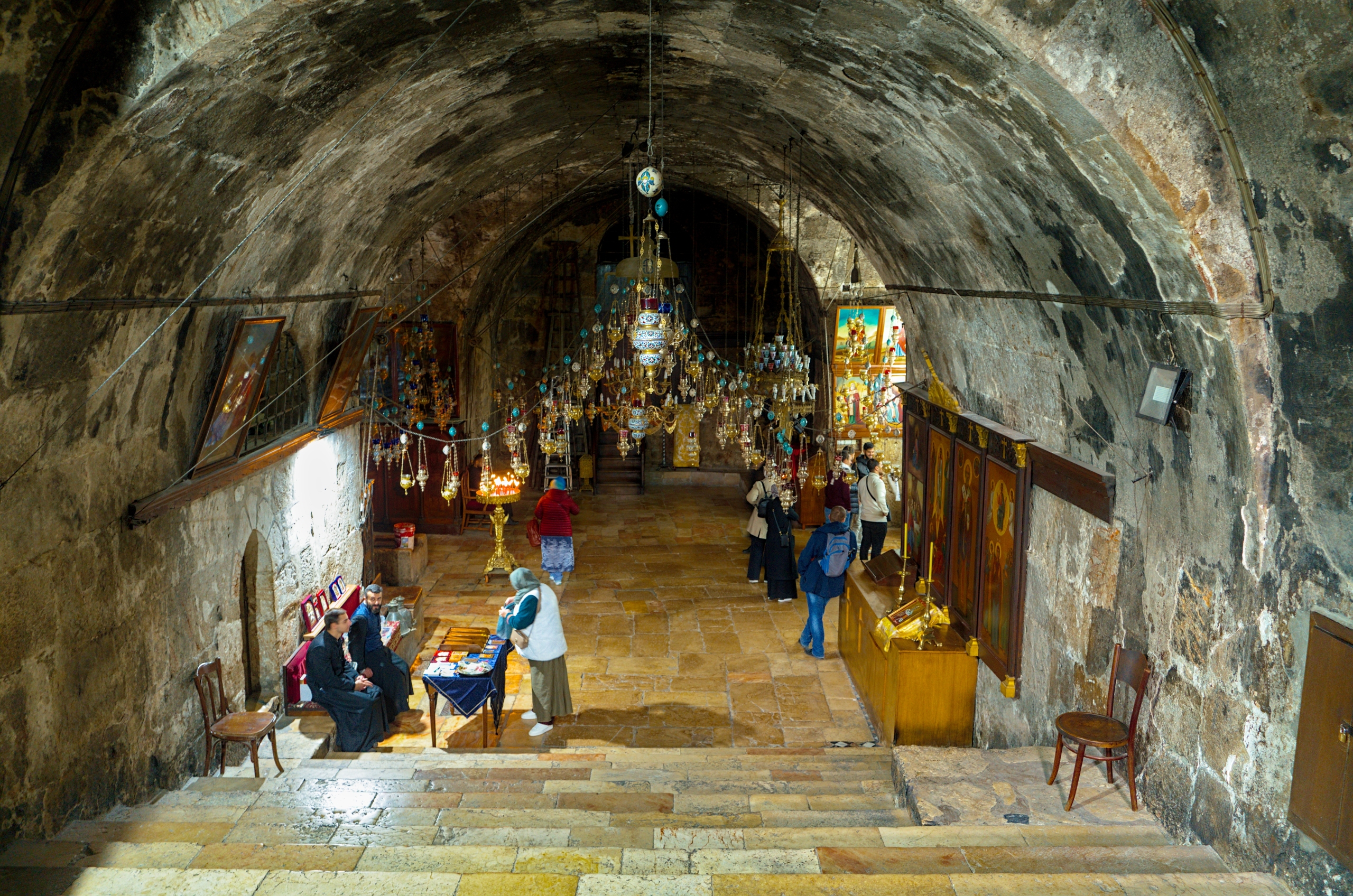
Near the Garden of Gethsemane and the Basilica of the Nations stands another church known as the Tomb of Mary. Dating back to the fifth century, the building now lies below ground level. To reach the chamber traditionally identified as the place where Mary’s body rested before the Assumption, visitors descend forty-seven steps in near darkness.
Halfway down the staircase, two side chapels open off the stairway. One contains a tomb dedicated to Saint Joseph, and the other to Mary’s parents, Joachim and Anne. This symbolic arrangement—with Mary at the center and, on either side, her husband and her parents—reflects the intention of gathering the Holy Family around the Virgin’s resting place.
Originally, however, these chapels served a very different function. They were royal tombs from the Crusader period. During the reign of Queen Melisende (1131–1153), the only woman to rule the Crusader Kingdom of Jerusalem with effective authority, the shrine of Mary was restored and expanded. The queen chose the sanctuary as her own burial site and transformed the crypt into a space organized around a symbolic family structure.
The chapel now dedicated to Joachim and Anne originally served as Melisende’s mausoleum, while the opposite chapel—today associated with Saint Joseph—held the remains of other women from the royal family. Melisende left not only her body there but also a distinctive theological and artistic imprint.
A cultivated and determined patron, she promoted devotion to biblical figures connected with the life of Jesus. She sponsored the restoration of the Church of the Holy Sepulchre, built the Church of Saint Anne near the Pool of Bethesda, and renewed the sanctuary complex in the Valley of Josaphat, giving it a unified visual and spiritual character. The placement of Joseph, Joachim, and Anne beside Mary’s tomb was not accidental; it reflected a deliberate vision of an extended Holy Family, physically represented in death as in life.
Contemporary chronicles record that Melisende “was buried, like her mother before her, in the abbey of Saint Mary in the Valley of Josaphat, which had always been dear to her.” Her tomb—considered by some historians the most magnificent in the crypt—became the final great funerary monument of the Crusader dynasty in Jerusalem, surpassing even those of several kings.
Although the association of the site with Saint Joseph is symbolic rather than historical—there is no record that any relics of the saint were ever deposited there—it has endured in the architectural configuration of the sanctuary. This raises the possibility that Joseph’s actual burial place lies elsewhere.
The “Tomb of the Just” in Nazareth
In Nazareth, an ancient local tradition pointed to a burial site known as the “Tomb of the Just” as the place where Joseph was laid to rest. The site came to light unexpectedly in 1881, when the Sisters of Nazareth convent—located opposite the Basilica of the Annunciation—began excavating the foundations of their residence.
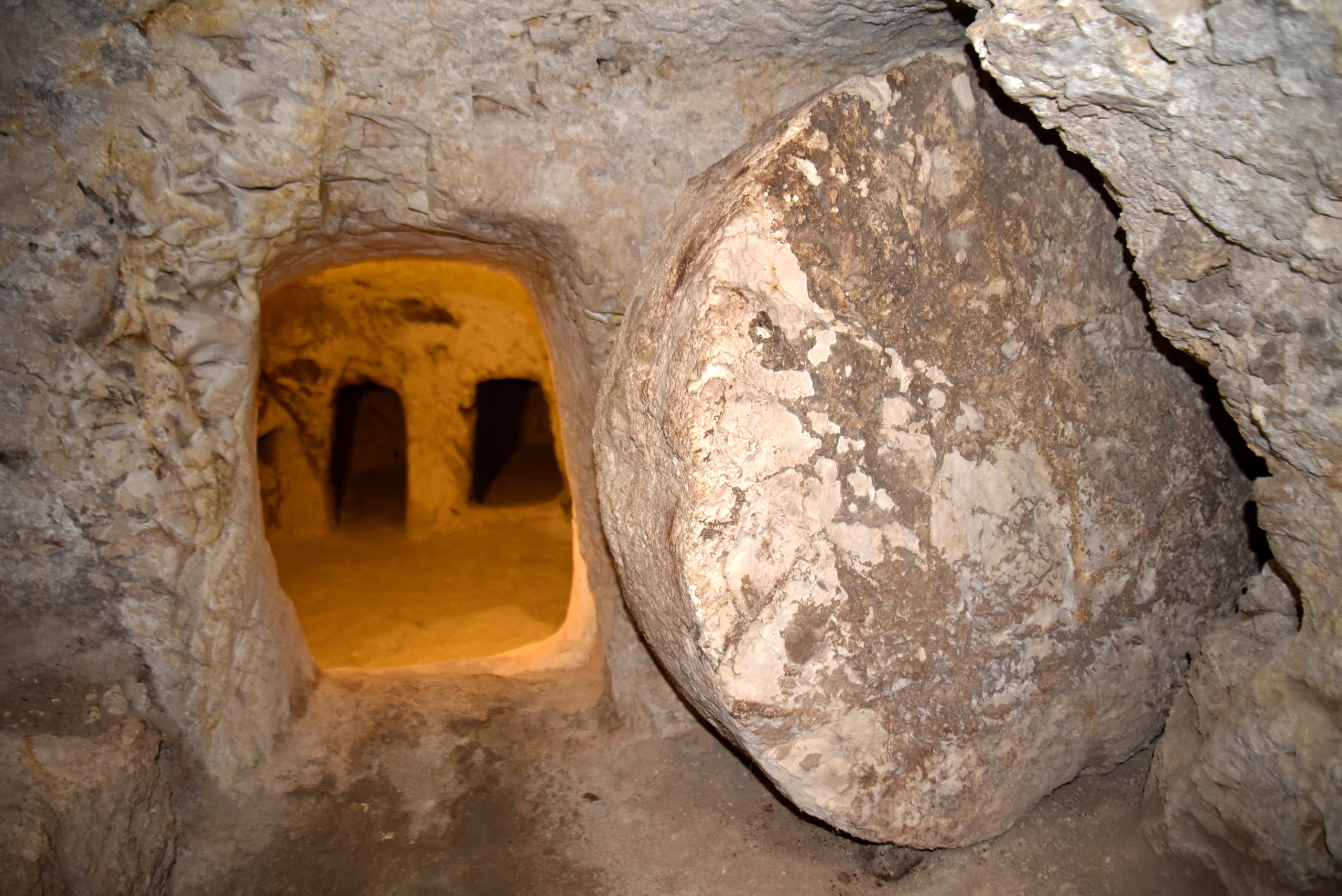
During the work, the nuns uncovered a complex network of underground spaces containing remarkable remains: fragments of walls and rooms from the Roman period, traces of an early Byzantine church, and several rock-cut tombs.
Among these features stands a funerary chamber with kokhim (burial niches typical of the first century) and a large rolling stone used to seal the entrance—a design similar to that of Jesus’ tomb in Jerusalem. Given the modest character of Nazareth in the first century, such an aristocratic-style tomb would likely have belonged to a person of notable status.
The discoveries beneath the convent also suggest that Nazareth became a place of strong Christian memory in later centuries. A Byzantine church was first built over the supposed tomb of Joseph, followed by a larger expansion during the Crusader period.
Modern discoveries
Modern excavations led by archaeologist Ken Dark of the University of Reading since 2006 have confirmed the significance of the site. Beneath the remains of the Byzantine chapel, researchers identified a first-century Jewish dwelling, complete with walls, stairways, and stone vessels—clear evidence of domestic use during the period traditionally associated with Jesus’ childhood.
These findings correspond with a description written around the year 670 by the abbot Adomnán, drawing on the account of the pilgrim Arculf. He described a church in Nazareth built over the house where Jesus spent his youth, located “between two tombs” and close to a spring.
The Sisters of Nazareth convent stands near the traditional site of Mary’s house—the location commemorated by the Basilica of the Annunciation—and preserves indications of a blocked spring beneath its foundations. These details correspond more closely to the early pilgrim’s description than the later Franciscan identification.
Research at the site continues, and the identification cannot yet be considered definitive. Nevertheless, many scholars regard it as plausible that this archaeological complex in Nazareth—the so-called “Tomb of the Just”—marks the place where Joseph died and was buried. In later centuries, early Christians may have commemorated the location by building a sanctuary above both his tomb and the house associated with the Holy Family.
The Journey of Joseph and Mary to Bethlehem: A Probable Route
AI Transparency Notice
PilgriMaps uses artificial intelligence tools to assist in the research, drafting and translation of editorial content. All AI-assisted content is reviewed, edited and verified by our editorial team before publication. We contrast information against primary sources, specialist literature and on-the-ground knowledge to ensure accuracy, cultural sensitivity and editorial integrity.
AI is one tool among many in our workflow. The judgement, curation and responsibility for everything published on this platform remain entirely human.
Viator Media S.L. — in compliance with the EU Artificial Intelligence Act (Regulation EU 2024/1689).
This post is also available in: