Before crossing the gate of a temple, the pilgrim stops. They bow slightly, cross the threshold, and make their way to the place of purification. Then come the water, the incense, the candle, the prayer, and the offering. Only at the end, once a bond with the place has been established, may they request the seal that certifies their passage.
The sequence seems simple, but it contains a decisive idea: pilgrimage is not only movement from one place to another. It is also learning how to enter, how to remain, and how to leave.
In Japan, this form of travel is often called junrei. In its classical religious sense, the term designates a pilgrimage through a succession of temples, shrines, or sacred sites. Unlike linear itineraries that lead toward a single final destination, many Japanese pilgrimages take the form of a circuit or a network. Each stop matters in itself, but also in relation to those before and after it.
The traveler does not simply arrive somewhere. They repeat gestures, cross landscapes, and gradually modify their conduct. Through repetition, geography becomes discipline.
A pilgrimage of many centers
There is no single Japanese junrei. The term encompasses a family of practices that connect temples, shrines, mountains, and communities of welcome.
The best-known example is the henro of Shikoku, a circuit of 88 temples associated with Kūkai, also known as Kōbō Daishi, one of the great figures of Japanese Buddhism. The complete route encircles the island and can exceed 1,200 kilometers. Its most celebrated motto is dōgyō ninin, “two walking together”: the pilgrim advances symbolically accompanied by the master.
The Kumano Kōdō follows a different logic. It is not a single path but a network of historical roads crossing the Kii mountains and leading to the great shrines of Kumano. For centuries, walking through forests, mountain passes, and villages was understood as part of a process of purification and renewal.
The Saigoku Sanjūsansho, for its part, links 33 temples dedicated to Kannon, the figure associated with compassion. It is considered the oldest Kannon pilgrimage in Japan and gave rise to numerous regional versions for those unable to undertake the original itinerary.
These differences matter. Not every junrei is a henro, and not all routes share the same structure. Shikoku emphasizes the bond with Kōbō Daishi; Kumano integrates landscape and purification with particular intensity; Saigoku organizes the journey around Kannon and the 33 temples. Yet all share one conviction: the sacred site is not isolated. It forms part of a sequence that shapes the traveler through repeated gestures and encounters.
Mount Fuji’s Pilgrimage Traditions Before and After Buddhism
Rules that do not look like rules
The traditional norms of junrei did not emerge as tourist regulations or as a uniform legal code. They arose from ritual, courtesy, bodily discipline, and coexistence with local communities. For that reason, they are less a list of prohibitions than a pedagogy.
In Shikoku, the classical order of a temple visit begins with a bow at the gate. The pilgrim then purifies themselves at the washing basin, rings the bell — if permitted — before worship, offers a candle, incense, and a small donation, and recites sutras in the main hall and in the pavilion dedicated to Kōbō Daishi. Only then do they request the nōkyō, the calligraphed seal that records the visit.
The association of the 88 temples insists that this seal is not a tourist souvenir. Traditionally, it represents a devotional relationship established through prayer or the offering of a sutra. In Saigoku, the goshuin serves a similar function and should not be reduced to a collection of visually attractive stampings.
This distinction is especially relevant today, when temple seals have become popular among visitors and collectors. The traditional norm reminds the pilgrim that the record of a journey cannot replace the experience itself. Photographing, stamping, or logging a visit is not the same as having truly paid attention.
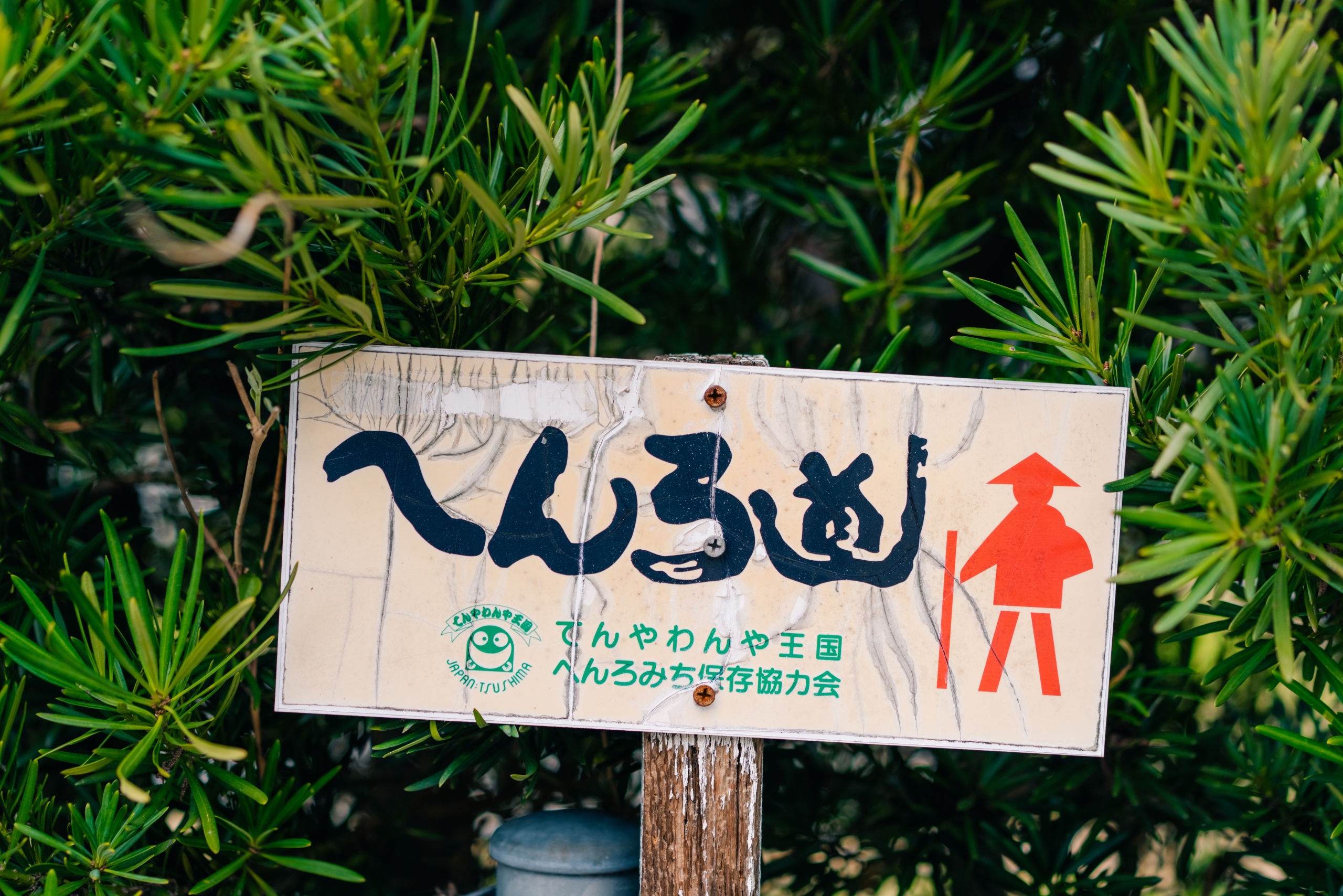
Clothing carries a similar significance. In Shikoku, the traditional pilgrim wears white and carries a stole, a sedge hat, a rosary, and a staff. The white represents purity, but in earlier times it could also evoke a burial shroud: those who undertook the long circuit had to accept the possibility of not returning.
The staff, or kongōzue, is not a simple walking support. It symbolizes Kōbō Daishi himself and must be treated with respect. The old custom of not resting it on bridges recalls a legend according to which the master once spent a night beneath one. The object teaches that walking is never an entirely individual undertaking.
An ethic, not a choreography
It would be a mistake to reduce junrei to the correct execution of gestures. The external norms matter because they express an attitude.
The bow teaches one not to enter indifferently. Purification places interior readiness before petition. Silence prevents one’s own presence from dominating the place. The offering recalls that the journey is not only about receiving. Cleanliness shows that the pilgrim is responsible for what they leave behind.
In Shikoku, the so-called Ten Good Precepts are still presented as a moral guide. They include not killing, not stealing, not lying, avoiding harmful speech, restraining greed, and not being dominated by anger. They do not function as a policing system, but as a measure of personal transformation.
The road continuously tests that ethic. Fatigue, rain, delays, and the friction of communal life can turn pilgrimage into an exercise in irritation. Discipline consists in observing how one responds.
It counts for little to complete hundreds of kilometers if the pilgrim ends by treating those who serve them with impatience, leaving rubbish behind, or blocking the path to take a photograph. The true measure of the journey is not distance, but conduct.
Receiving without demanding: the meaning of osettai
One of the most distinctive traditions of Shikoku is osettai, help offered spontaneously to the pilgrim. It may take the form of food, drink, lodging, directions, or a small gift.
It is not a tip or a contracted service. Nor is it something the walker can claim. The help arises from the community and is received with gratitude.
Osettai creates a relationship that goes beyond economic exchange. Those who offer participate symbolically in the pilgrimage; those who receive must do so without appropriating the generosity of others. Expressing thanks, not taking advantage, and avoiding comparisons between gifts are all part of the ethic of the road.
This tradition carries a lesson of considerable contemporary relevance. The modern pilgrim depends on a network of people who maintain paths, manage lodgings, clean temples, and update signage. The romantic image of the completely self-sufficient traveler conceals that collective labor.
The motto “two walking together” can also be understood in this way: no one walks alone, even when covering the route in solitude.
How to live ancient norms today
The continuity of junrei does not depend on reproducing exactly the appearance of the past. The routes today accommodate very different forms of participation.
Wearing the full traditional outfit is not obligatory. Many pilgrims use technical clothing and add only a white vest, a stole, or the staff. What matters is that these elements do not become a costume. To wear them is to accept the conduct associated with them.
Nor is it necessary to cover the entire route on foot. Shikoku can be completed walking, by bicycle, car, or bus. Saigoku often relies on the railway, and urban circuits exist that combine temples and public transport. Walking retains a special symbolic value, but using modern means does not automatically eliminate the experience.
The question lies in attention. A vehicle allows faster arrival, but it can reduce the journey to a rapid succession of car parks and seals. The challenge is to prevent speed from eroding the capacity to stop.
Those unfamiliar with the sutras are not excluded either. A bow, a moment of silence, or a personal intention can be enough. It is not necessary to feign a faith one does not possess. What is necessary is to recognize that the temple carried meaning long before the visitor arrived.
Technology can also be integrated naturally. Digital maps, reservations, and closure alerts make the pilgrimage easier to navigate. In Kumano, official services offer luggage transfers, difficulty profiles, and landslide updates. These resources do not contradict tradition; they allow the landscape to be crossed more safely.
The problem begins when the phone occupies the center of the experience. If every temple becomes a photograph and every stage a performance metric, the instrument ends up imposing its own logic on the road.
New rules for an ancient courtesy
Contemporary pilgrimages are subject to regulations their earliest walkers never encountered. There are fixed hours for receiving seals, mandatory reservations, camping restrictions, fire prohibitions, and temporary closures after typhoons or landslides.
In Kumano, World Heritage status has reinforced the protection of the landscape. Free camping is not permitted on certain sections; leaving rubbish, straying from the route, and damaging flora and fauna are all prohibited. In Shikoku, associations publish diversions for construction work and rainfall. In Saigoku, changes to transport or the opening hours of individual temples condition the planning of each day.
These rules may seem purely administrative, but they continue an ancient obligation: not turning one’s own pilgrimage into a burden for others.
Booking accommodation in advance avoids arriving unannounced in communities with limited resources. Respecting a diversion protects both the walker and the maintenance teams. Carrying out one’s rubbish expresses the same modesty as the bow at the gate.
Modern regulation has changed the language of the norm, but not necessarily its spirit. What was once expressed through ritual and custom now also appears in maps, ordinances, and safety protocols.
Pilgriming without being Buddhist
Contemporary junrei accommodates a wide range of motivations. People walk to honor someone who has died, to pray for health, to face a crisis, to encounter a heritage, or to step back temporarily from routine.
Not all pilgrims consider themselves believers. Some begin the road out of cultural or sporting interest and discover a deeper experience along the way. Others maintain a secular perspective throughout. The decisive difference is not the label “pilgrim” or “tourist.” It is behavior.
A visitor without faith can act with great respect. A self-declared pilgrim can reduce the route to a competition. Authenticity depends less on claiming an identity than on listening, learning the basic gestures, and accepting that the place does not exist simply to satisfy the traveler.
Learning not to pass through
Junrei has survived because its forms can change without the core disappearing. The clothing can be simplified, the map can move to a phone, and a train can replace some days of walking. What should not be lost is the discipline of attention.
To pilgrim in Japan means entering without imposing oneself, receiving without demanding, walking without leaving a burden behind, and understanding that the seal is worth no more than the encounter.
In the end, the deepest teaching of junrei does not belong exclusively to Buddhism or to Japan. It speaks of a way of being in the world: stopping before what others consider sacred, being grateful for help received, and recognizing that no road belongs to us entirely.
The contemporary pilgrim does not need to imitate exactly those who walked these routes centuries ago. They need to learn, as those walkers did, not to pass through places, people, and landscapes as though none of them carried meaning.
New Confucianism and the pilgrim self: Walking as moral cultivation
AI Transparency Notice
PilgriMaps uses artificial intelligence tools to assist in the research, drafting and translation of editorial content. All AI-assisted content is reviewed, edited and verified by our editorial team before publication. We contrast information against primary sources, specialist literature and on-the-ground knowledge to ensure accuracy, cultural sensitivity and editorial integrity.
AI is one tool among many in our workflow. The judgement, curation and responsibility for everything published on this platform remain entirely human.
Viator Media S.L. — in compliance with the EU Artificial Intelligence Act (Regulation EU 2024/1689).
This post is also available in: