The Confucian tradition has no word for pilgrimage in the Christian sense. What it has is something older and, in certain ways, more demanding: the idea that the self is never finished, and that the body in motion is one of the most serious instruments of moral formation we possess.
On the eastern slope of Mount Tai in Shandong province, there is a stairway of 6,293 stone steps that has been climbed by emperors, scholars, peasants, and pilgrims for more than three thousand years. The ascent takes between four and six hours. At the summit, on clear days, the plain of the Yellow River stretches below in every direction, immense and silent. People weep up there with some regularity. They are not always sure why.
Confucius himself climbed it. The Analects record him standing at the summit and observing that the world below seemed small. The remark has been read for two and a half millennia as something more than a geographical observation.
A tradition without a word for pilgrimage
Classical Confucianism does not have a term that maps cleanly onto what the Christian tradition calls pilgrimage. This is not an accident. The Confucian framework is relentlessly this-worldly: it locates moral life precisely in the friction and care of social existence — between parent and child, teacher and student, friend and friend. Withdrawal from that web, even for sacred purposes, sits uneasily with a tradition that insists the self is formed only in relationship.
And yet people climbed the mountains. Scholars traveled enormous distances to study under masters. The category was different. The practice was very much present.
What the Confucian tradition offers in place of pilgrimage is xiushen — self-cultivation — and a spatial philosophy it developed over centuries through the mountain tradition and what the contemporary philosopher Tu Weiming has called the “anthropocosmic” understanding of human personhood.
The mountain as moral instrument
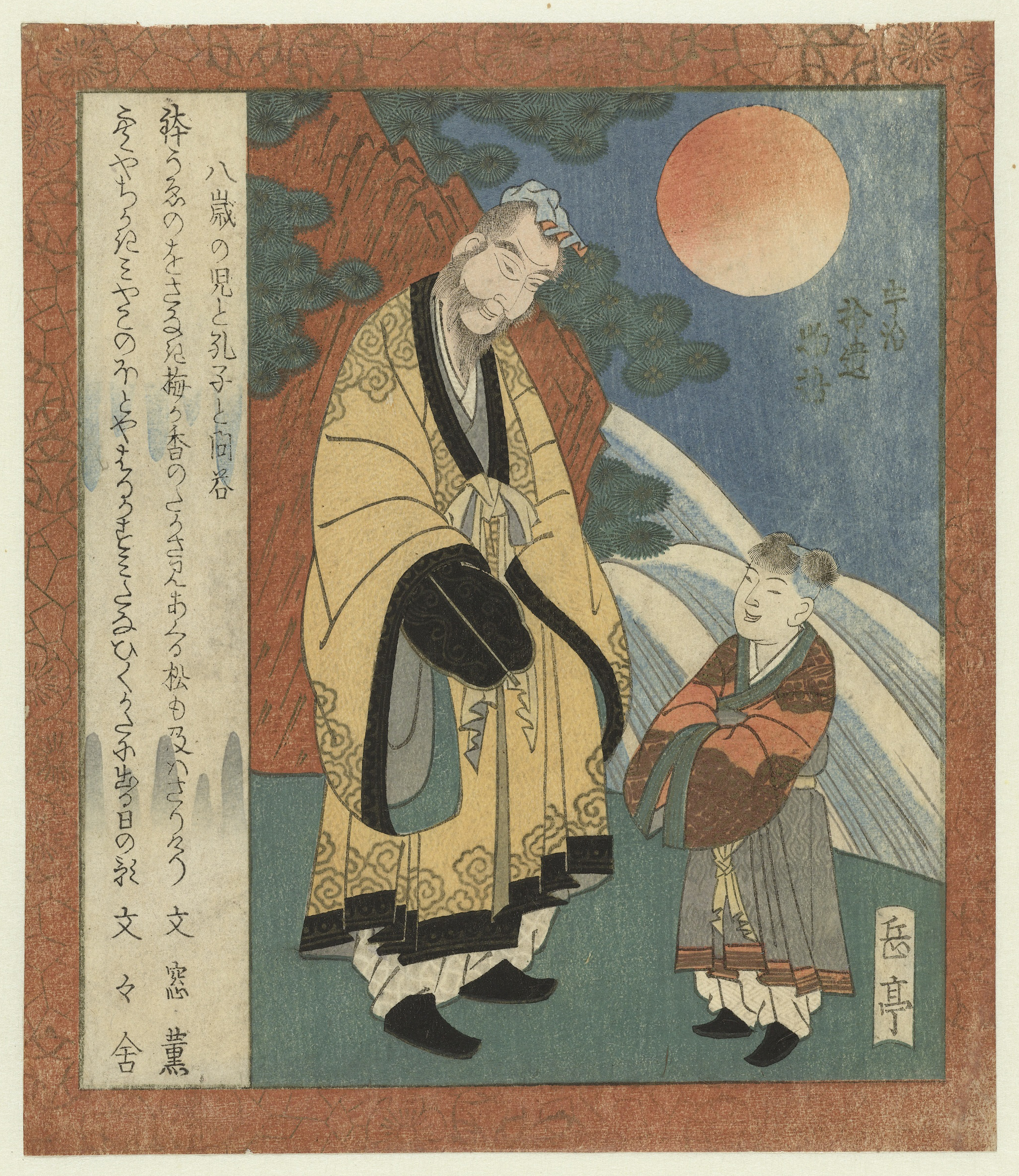
The Five Sacred Mountains of China have been sites of imperial ritual, scholarly retreat, and popular devotion since the Zhou dynasty. They are sacred not because the gods live there but because they are places where the moral seriousness of the cosmos becomes physically legible.
The climb matters as much as the summit. The Neo-Confucian philosopher Wang Yangming, writing in the fifteenth century, described moral cultivation in terms that map almost exactly onto the phenomenology of a difficult ascent: resistance encountered, effort sustained, the clarification of intention that comes when the body is fully committed to a task the mind initially doubted. His concept of the unity of knowledge and action — zhixing heyi — insists that moral understanding does not precede practice but emerges from it. You do not understand perseverance and then climb. You climb, and in climbing, you come to understand.
A mountain ascent, in this framework, is not a metaphor for moral development. It is moral development, conducted in stone and altitude and weather.
New Confucianism and the unfinished self
The twentieth-century movement known as New Confucianism — associated with Xiong Shili, Mou Zongsan, Tang Junyi, and Tu Weiming — reframed xiushen as a genuinely open-ended, never-completed project. The self, in Tu’s account, is constitutively relational: it does not exist prior to its relationships but is continuously formed through them. And those relationships extend outward in concentric circles that do not stop at the boundary of the human — they encompass family, community, society, and ultimately Heaven and Earth.
This has direct implications for movement through the world. If the self is relational and unfinished, and if those relations extend to the natural world, then journeying through landscape is not a departure from the site of moral formation. It is one of its primary locations. The walker who moves through mountain terrain, through river valleys, through the territories of ancestors and strangers, is not escaping the conditions of self-cultivation. They are intensifying them.
Qufu and the contemporary revival
On September 28th each year — the traditional date of Confucius’s birth — the city of Qufu in Shandong hosts a ceremony observed in various forms for more than two thousand years. In recent decades the anniversary gatherings have grown substantially, drawing scholars, students, and visitors from across the Confucian cultural sphere: China, Korea, Japan, Vietnam.
Whether this constitutes pilgrimage is a question the participants themselves debate. The official framing is cultural rather than spiritual. Many scholars would resist the language of pilgrimage as too religious, too individual. And yet people stand before the tomb of Confucius with an attentiveness that is difficult to describe in purely secular terms. They bring their children. They stand in silence longer than the occasion strictly requires.
Tu Weiming has suggested that what happens at Qufu is something existing categories — religious pilgrimage, secular tourism, patriotic ceremony — do not quite capture. It is, he argues, an act of self-location: individuals and communities placing themselves within a tradition that extends backward into deep history and forward into an open future, taking on obligations and aspirations that are genuinely transformative.
That is, in the end, what every pilgrimage worth the name attempts.
The pilgrim who returns
The Confucian journey has a structure that distinguishes it from most Western models of pilgrimage: it is always, explicitly, in service of return. One leaves not to arrive somewhere else but to come back changed — more capable of moral discernment, more adequate to the relationships and responsibilities that were always already waiting.
The mountain was never the destination. The plain below, with all its difficulty and all its beauty, was. The mountain was just where you went to remember that.
Further reading: Tu Weiming, Confucian Thought: Selfhood as Creative Transformation (1985); Wang Yangming, Instructions for Practical Living, trans. Wing-tsit Chan (1963); Rodney Taylor, The Religious Dimensions of Confucianism (1990).
AI Transparency Notice
PilgriMaps uses artificial intelligence tools to assist in the research, drafting and translation of editorial content. All AI-assisted content is reviewed, edited and verified by our editorial team before publication. We contrast information against primary sources, specialist literature and on-the-ground knowledge to ensure accuracy, cultural sensitivity and editorial integrity.
AI is one tool among many in our workflow. The judgement, curation and responsibility for everything published on this platform remain entirely human.
Viator Media S.L. — in compliance with the EU Artificial Intelligence Act (Regulation EU 2024/1689).
This post is also available in: