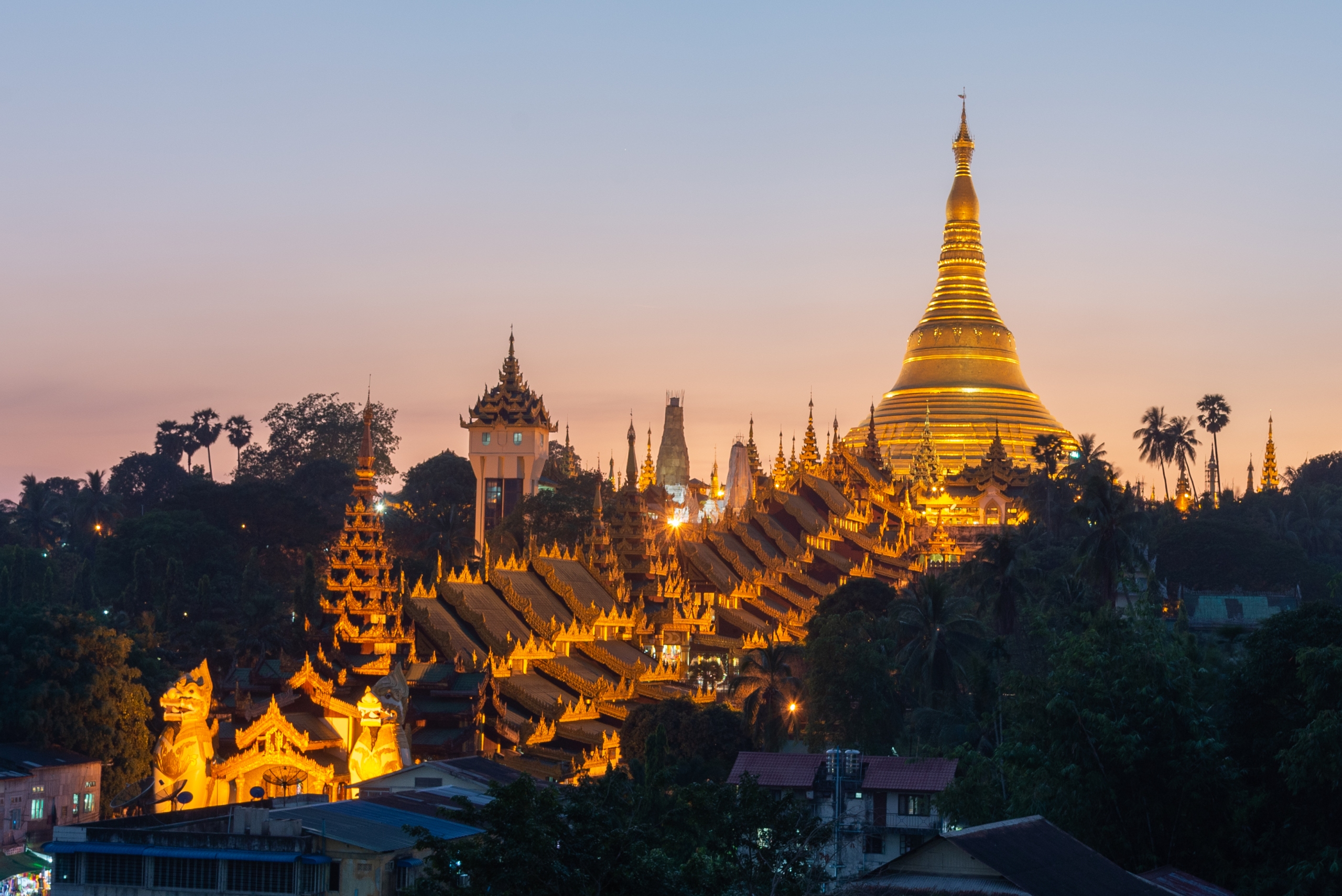
Rising from the flat, dusty plains of central Myanmar, the Shwedagon Pagoda gleams gold under the tropical sun – its bell-shaped stupa, ringed with terraces and crowned with a hti spire, dominating the skyline of ancient Bagan. For nearly a millennium, Shwedagon has drawn pilgrims, kings, and wanderers alike, forming one of the most revered and architecturally influential shrines in Southeast Asia.
Its significance lies not only in its aesthetics or age, but in its claimed status as a relic shrine – a reliquary structure believed to enshrine bones and other corporeal remains of the historical Buddha. This belief has positioned Shwedagon as a critical destination in the pilgrimage networks of the Theravāda Buddhist world, and as a potent symbol of religious legitimacy and cosmic order.
Bagan: Sacred Capital of the Irrawaddy Plain
The city of Bagan, located on the eastern bank of the Irrawaddy River, was the capital of the Pagan Kingdom from the 9th to the 13th century CE. During this time, it became one of the most important centers for the institutionalization of Theravāda Buddhism. More than 2,000 temples and pagodas, some still standing, were constructed across its arid plain – an unparalleled testament to the fusion of spiritual ambition and architectural ingenuity.
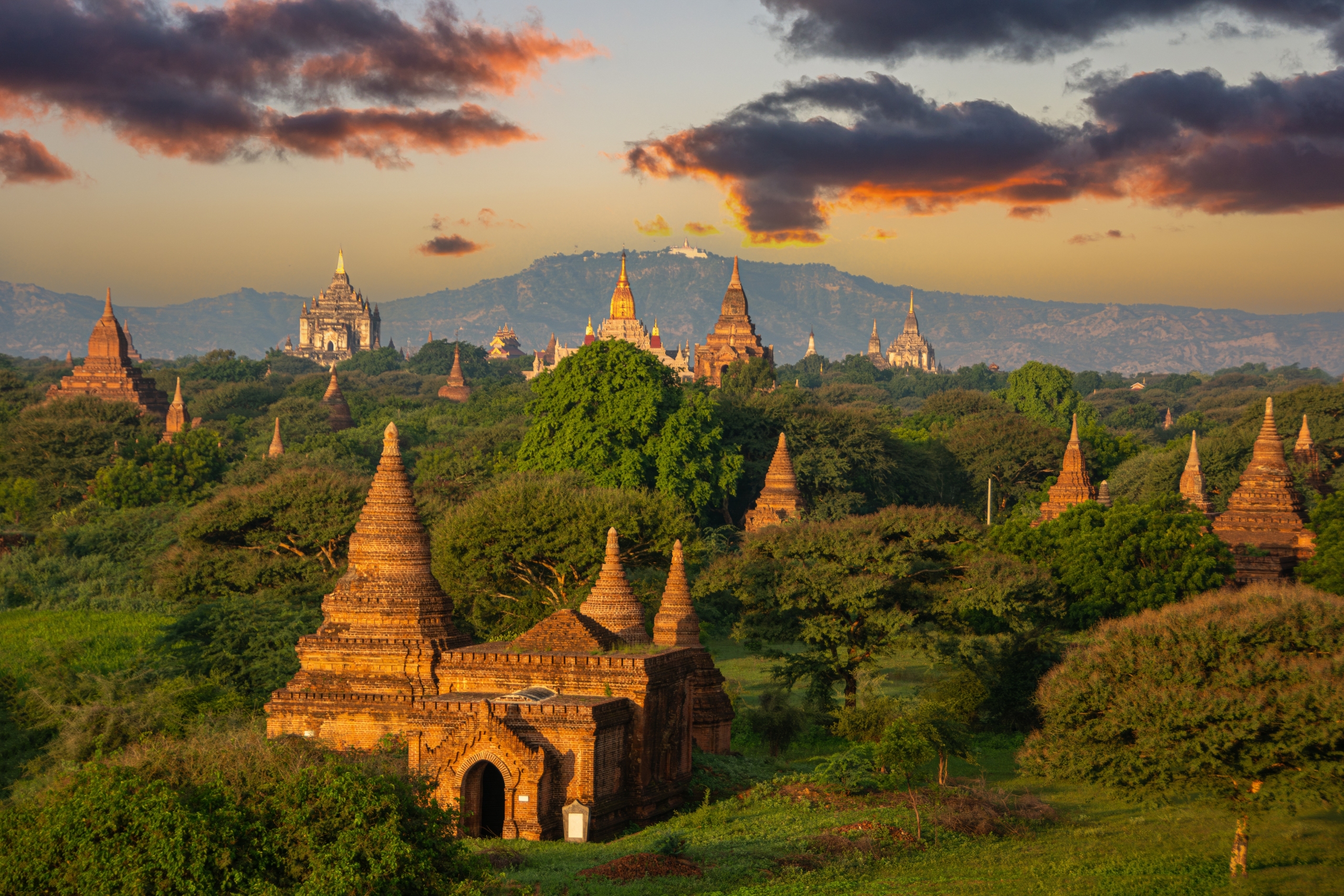
Among them, Shwedagon holds a special place. Unlike many other structures in Bagan built by monastic patrons or minor royals, Shwezigon was a royal foundation, intended as both a sacred reliquary and a political monument.
The Relics Within: Mandate and Merit
Tradition holds that Shwedagon enshrines relics of the Buddha’s frontal bone, collarbone, and tooth, making it one of the oldest and most revered relic pagodas in Myanmar. While physical verification of such relics remains outside the scope of archaeological certainty, what matters culturally is their perceived authenticity. The pagoda has long served as a physical anchor for devotion, pilgrimage, and state-sponsored piety.
The construction of relic stupas like Shwedagon followed an established Indic and Southeast Asian pattern, where the presence of the Buddha’s remains offered not just spiritual merit, but cosmic legitimacy. For King Anawrahta (r. 1044–1077 CE), credited with initiating the project, the pagoda was a symbol of his embrace of Theravāda orthodoxy and a declaration of religious unity within his expanding kingdom.
His successor, Kyansittha (r. 1084 – 1113 CE), completed the stupa, further integrating it into a larger program of royal patronage and canonical Buddhism.
Architecture as Doctrine
Shwedagon’s design represents an early and influential model of the Burmese Buddhist stupa. Its structure reflects symbolic geometry common in Buddhist cosmology: a square base (earth), circular terraces (heavens), and the spire (axis mundi). The gilded surface, maintained through centuries of votive offerings, emphasizes both its spiritual luminosity and its material opulence.
A series of bronze bells, stone inscriptions, and glazed plaques around the base of the structure depict Jātaka tales, or stories of the Buddha’s past lives. These visual narratives allow pilgrims to engage with moral teachings while circumambulating the stupa – a practice that remains central to the site’s ritual use.
Pilgrimage and Ritual
Historically, Shwedagon formed a key node in pilgrimage routes that connected Bagan to other sacred sites across Upper Myanmar. Seasonal festivals, particularly during the full moon of Nadaw (November – December), draw large numbers of pilgrims who come to pay homage, offer food to monks, and light candles around the terraces.
Pilgrims typically follow a clockwise path around the stupa, mirroring the sun’s course and aligning with traditional Buddhist ritual movement (pradakṣiṇā). Offerings of lotus flowers, incense, and gold leaf are common, while many stop to read the site’s inscriptions, written in Pali, Mon, and Burmese.
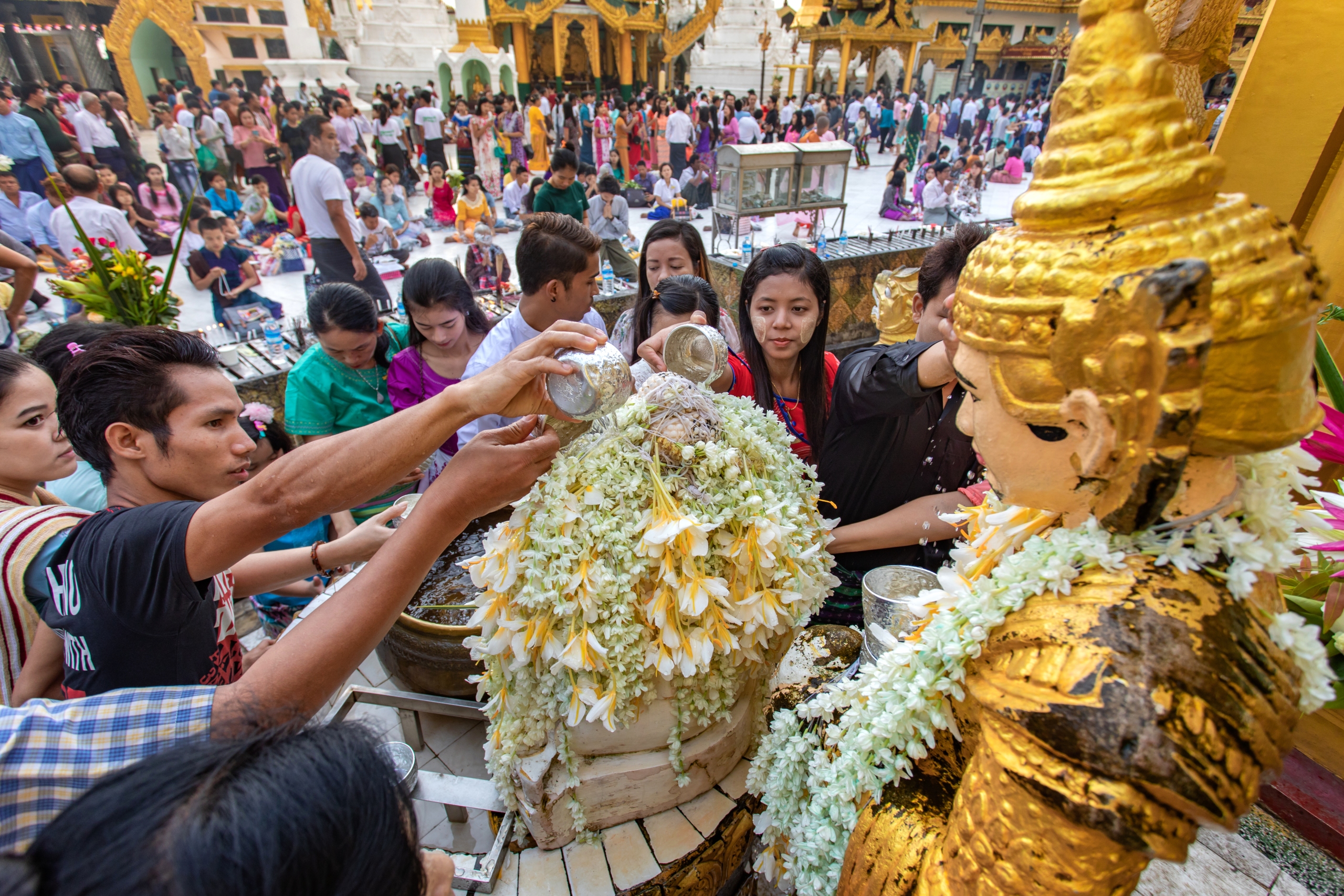
Today, as in the past, the pilgrimage is less about doctrinal instruction and more about bodily movement through sacred space, an enactment of presence before the relic, and a connection to the deep time of Theravāda heritage.
Shwedagon in Contemporary Myanmar
Despite cycles of political change and natural disaster, Shwedagon has remained an active site of worship. It is often seen as a bridge between monarchical traditions and modern religious life, with local residents continuing to serve as custodians of the shrine.
Since the late 20th century, Bagan has seen renewed attention as both a pilgrimage site and a tourist destination. In 2019, the Bagan Archaeological Area was inscribed as a UNESCO World Heritage Site, recognizing not only its built heritage but also its ongoing ritual landscape.
For pilgrims, Shwedagon continues to offer both a destination and a point of departure – a place where cosmology, kingship, and devotion meet in gold-clad form. For travelers, it stands as an open invitation to explore how material culture carries meaning across centuries, and how sacred geography endures even amid geopolitical shifts.
Planning a Visit
Shwedagon Pagoda is located in Nyaung-U, just northeast of Old Bagan. It is accessible by road and air from Yangon and Mandalay. The best time to visit is during the cooler months from November to February, when pilgrimage festivals coincide with favorable weather.
Nearby temples of note include:
- Ananda Temple: A masterpiece of symmetry and stone carving
- Thatbyinnyu Temple: The tallest structure in Bagan
- Htilominlo Temple: Known for its ornate stucco work
Visitors are expected to dress modestly, remove shoes upon entry, and observe local customs. While photography is permitted in most areas, discretion is advised during ritual observances.
AI Transparency Notice
PilgriMaps uses artificial intelligence tools to assist in the research, drafting and translation of editorial content. All AI-assisted content is reviewed, edited and verified by our editorial team before publication. We contrast information against primary sources, specialist literature and on-the-ground knowledge to ensure accuracy, cultural sensitivity and editorial integrity.
AI is one tool among many in our workflow. The judgement, curation and responsibility for everything published on this platform remain entirely human.
Viator Media S.L. — in compliance with the EU Artificial Intelligence Act (Regulation EU 2024/1689).
This post is also available in: